Funding the future
Investing in student research tackles youth unemployment while building Canada’s future economy.


As U.S. tariffs push Canadians to “build strength at home,” university students are facing some of the highest unemployment rates in more than a decade.
Now that the 2025 federal budget has allocated $635.2 million for work-integrated learning, Canada has an opportunity to address both challenges.
By directing investment into undergraduate research jobs more of Canada’s brightest young people can gain meaningful work and the country can grow its talent pipeline for future made-in-Canada discoveries and innovation.
We don’t have to look far to see how it works. Recently, a research team from McMaster University and Massachusetts Institute of Technology (MIT) discovered a new antibiotic that targets inflammatory bowel diseases (IBD). The team used a new type of artificial intelligence to predict exactly how the drug works, likely the first time AI has been used in such a way.
The story began, however, years earlier when Jon Stokes, the study’s principal investigator and assistant professor in McMaster’s Department of Biochemistry and Biomedical Sciences, was a high school student. During the summer he worked mowing lawns and found himself at the home of John Kelton, former dean and vice-president of McMaster’s Faculty of Health Sciences.
Dr.Kelton invited Mr. Stokes to spend the summer working in his lab before becoming a student at McMaster. During his studies, Mr. Stokes joined Professor Eric Brown’s lab where he completed an undergraduate thesis project that evolved into a PhD in antimicrobial chemical biology.
Today, Dr. Stokes’ startup company, Stoked Bio, has already licensed the new antibiotic and is optimizing it to treat millions of people affected by Crohn’s disease and other related conditions.
Dr. Stokes was an undergrad in 2009 when summer youth unemployment peaked at 18 per cent, just slightly higher than this past summer’s rate of 17.9 per cent.
The one million undergraduate students in Canadian universities today are, like Dr. Stokes, the country’s most promising pool of young talent. But we often only hear about them in relation to tuition costs or international student caps. The most cynical view undergrads as a revenue source. In truth, they are our best hope for our future.

Across Canada, undergraduate student researchers are fuelling discoveries at many of our top research-intensive universities through research internship programs, summer job placements and research experiences that span all disciplines, from science to engineering and the humanities.
Their transformative potential lies, in part, inside the unique relationship between faculty and students – a connection that is not purely hierarchical. Like a porous membrane, knowledge and ideas flow in two directions.
To put it plainly, undergrads are not just conducting research. They are often driving it.
Even in their first year, students are determining the direction of research. They’re designing how topics are approached and communicating complex findings to the world.
Outside formal research internships, they are learning from and influencing graduate students. They are also completing thesis projects as part of their coursework, publishing in peer-reviewed and student research journals, and forming student research clubs.
Undergraduate students are shaping Canada’s research and discovery landscape by asking questions sometimes missed by experienced faculty, including: “How might we do this differently?”
In my own research and teaching, undergrads have posed important questions about the function of blood vessels after hot yoga and in people with polycystic ovarian syndrome. Ten years ago, students began asking why we don’t include women using hormonal contraceptives in our research. I didn’t have a good answer.
Five years ago, my lab embarked on a five-year journey to examine the effects of poor sleep on the functioning of blood vessels after a student wondered about the impact on the cardiovascular system of staying awake all night to study for an exam.
There is a wealth of research that links undergraduate research programs with better career outcomes for students. Developing talent and helping students reach their highest potential must always be at the forefront of every university’s mission.
But by increasing investment in undergraduate researcher opportunities, we can activate what may be even more powerful: capturing and scaling the insights of thousands of our best students. With their lived experiences and collective imagination, our country’s research activity will more closely reflect the innovation potential of our great nation.
Canada is doing better than many countries on this front through federal and provincial funding structures that fund students rather than projects. Many of our programs give students a degree of independence and flexibility, both hallmarks of innovation.
The Natural Sciences Engineering Council of Canada (NSERC) provides program funding with flexibility for researchers. The advantage here again is that faculty can hire students who can then enjoy a degree of freedom beyond a narrowly defined project.
But if we really want to protect our future, we must invest more in the people with the most potential, and these are our youth.
Conversations about research and Canada’s “innovation ecosystem” often feel disconnected from the lives of people. As trade tensions rise and Canada looks to drive innovation at home, it’s worth remembering that our future depends on our young people.



Featured Jobs
- Occupational Therapy - Assistant or Associate ProfessorDalhousie University
- Marketing - Faculty Position, Tenured or Tenure TrackUniversity of Alberta
- Canada Impact+ Research ChairInstitut national de la recherche scientifique (INRS)
- Vice President, Finance & AdministrationOCAD University
- Health Sciences - Assistant ProfessorSimon Fraser University
More from Opinion
-

Why should academic freedom protect ineffective teaching?
The status quo is in desperate need of change.
-

Quebec launches network of reseach chairs in science diplomacy
Acting in the roles of diplomats and advisors, scientists can help solve pressing world problems, argues Quebec Chief Scientist Rémi Quirion.
-

The Human Algorithm
As artificial intelligence reshapes the workplace, the most valuable skills aren't technical — they're fundamentally human.
-

The tyranny of the average
Driven by statistics, AI homogenizes humanity and devalues outliers.
More from Research
-
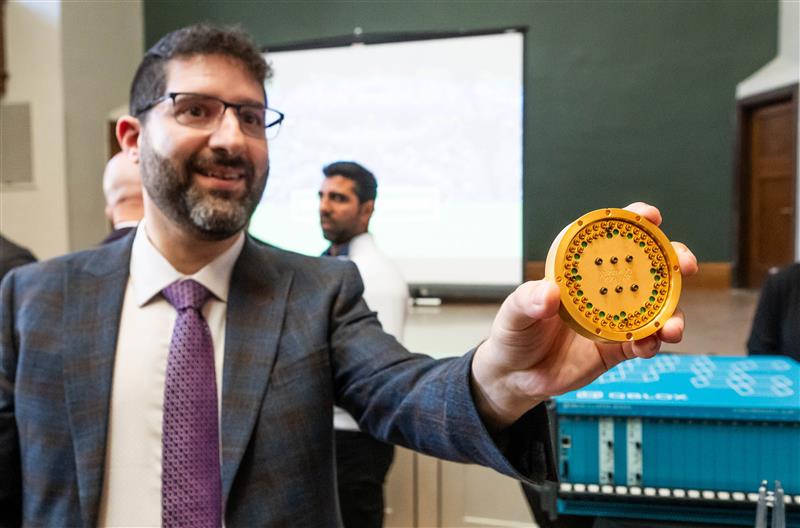
University of Saskatchewan acquires quantum computer to boost research capacity
Campus access to the technology will expand research possibilities.
-

Federal science cuts may have ripple effect on universities
Departmental belt-tightening in Budget 2025 adds to a long history of government reductions in scientific research.
-

Research VPs empower discovery
An impressive list of women are leading research at universities across the country.
-

How to craft a strategic research statement
Identifying themes in your work history can help you move from a laundry-list to a compelling story.
More from In My Opinion
-

Adopting AI is a social contract
Integrating artificial intelligence into our societies and personal lives binds us to certain futures and forecloses the possibility of others. Are we ready to accept the consequences?
-

GenAI is in — so why are we still burnt out?
Will generative artificial intelligence end up diminishing, or increasing, researchers' workloads?
-

Recalibrating Canadian universities to meet the Mark (Carney)
How university leadership can better support Canadian innovation and economic growth.
-

Diversity strengthens discovery
What Nobel Laureates reveal about diversity, discovery and societal impact.

Post a comment
University Affairs moderates all comments according to the following guidelines. If approved, comments generally appear within one business day. We may republish particularly insightful remarks in our print edition or elsewhere.