Public engagement: duty or detriment?
Should speaking on topics of public concern be part and parcel of academic life?


In honour of the new year, we thought we’d tackle the mysterious third pillar of scholarly life often called: “other academic duties” or “community service.” These duties can be so varied that it’s challenging to define this aspect of the job. Since we have to start somewhere, let’s talk about something that’s part and parcel of academic life for some, but doesn’t feature at all for others: speaking to the general public.
When a university hires you, it implicitly vouches for your expertise. Although that expertise is usually expressed through teaching and research, we believe academic knowledge should reach beyond the institution. Society has everything to gain when you contribute your expertise to public debate. Polls show that the public generally trusts university professors; it’s because of this trust that scholars are frequently asked by the media for their informed, research-driven views.
Perhaps a journalist has already reached out for your insight on current events. Some scholars are happy to speak to the media, even if the topic has little to do with their area of expertise. Others shy away from it for any number of reasons, including time limitations, fear of surprise or trick questions, or doubts that their expertise is relevant. Interview requests from journalists often arise unexpectedly after a turn of events. For example, highly specialized expertise on a particular country or global region can be very much in demand after conflict breaks out in that area. Yet speaking to the media can also be time-consuming. Even a brief statement requires considerable preparation to ensure your answers are clear and nuanced. When our expertise is sought by news reporters, should we offer it?
Academia currently privileges research and teaching when assessing candidates for tenure or promotion, while de-emphasizing public engagement. Scholars are seldom promoted just because they’ve been quoted in the newspapers. Put another way, an academic’s career often benefits more from writing peer-reviewed articles than from shedding light on an issue by signing a joint letter for media release.
Whether academics should participate in public debate is an argument almost as old as universities themselves. In the interests of space, we’ll focus on two of the myriad authors who have written about it: the 19th century sociologist Max Weber and his 20th century counterpart Pierre Bourdieu. In The Vocation Lectures, Dr. Weber argued that sharing one’s opinion flies in the face of scientific neutrality. Meanwhile, Dr. Bourdieu argued in The Weight of the Worldthat possessing knowledge without sharing it is akin to deciding not to help a person in peril.
Dr. Weber’s view is rooted in the idea that scholars must not introduce their personal values into their scientific work. He noted that science merely explains how things work and cannot itself assess whether something is good or bad. The role of the scholar is, therefore, to clarify facts without advocating for any particular action or ideal. Dr. Weber argued that when researchers become activists, they risk introducing bias into their methods, hypotheses and conclusions, thus jeopardizing their academic credibility.
Dr. Bourdieu, however, rejected the idea of a dichotomy between scientific work and political engagement, especially near the end of his professional life. He argued that knowledge gained through empirical research can become a tool for social emancipation. Engaged scholarship, he believed, sheds light on the inner workings of oppression — and can be mobilized against it. Mastering scientific methods, he argued, is necessary to ensure that political actions are reasonable and informed.
As for where we fall on the issue, both authors of this piece have written letters to the editor throughout our careers. Of course, writing these missives takes up precious research and teaching time, as does appearing in broadcast media. But you don’t need to shoulder the burden alone. Setting up a speaking rotation within your research team can help you distribute the workload instead of forgoing public contributions altogether.
On a purely self-interested note, sharing your knowledge with the public is a good idea because granting councils increasingly value contributions that support healthy dialogue between science and society. An even better reason is to counter the proliferation of fake news in the media. Why not add some real news into the mix? Everyone benefits: society gains an informed perspective, and you gain another line for your CV. If you’re asking yourself, “why speak to the public?” a better question might be: why not?



Featured Jobs
- Soil Physics - Assistant ProfessorUniversity of Saskatchewan
- Medicine - Associate or Full Professor (Kidney Health)Université de Montréal
- Finance - Faculty PositionUniversity of Alberta
- Anthropology of Infrastructures - Faculty PositionUniversité Laval
- Sociology - Tenure-Track Position (Crime and Community)Brandon University
More from Career Advice
-

Documenting your work for promotion and tenure
Setting up a filing system now is a gift to your future self.
-
The University of Manitoba strengthens engagement with retired academics
A new project offers emeriti many ways to connect.
-

Universities must appeal to non-traditional students
Meeting mid-career education needs is win-win for non-traditional students and academic institutions.
-

Understanding research-creation at SSHRC
Artistic works that explore socio-cultural questions may qualify for this unique grant.
More from Communication
-

Prof pas prof, j’y vais: conference anxiety
Shining a humorous light on some of the tasks that academics deal with on a regular basis.
-

Improving universities’ public standing
How universities can help make their case.
-
Researchers investigate the effectiveness of public health messaging during the pandemic
Public health communicators, they say, need to show humility, admit what they don’t know, and most importantly foster a two-way dialogue.
-
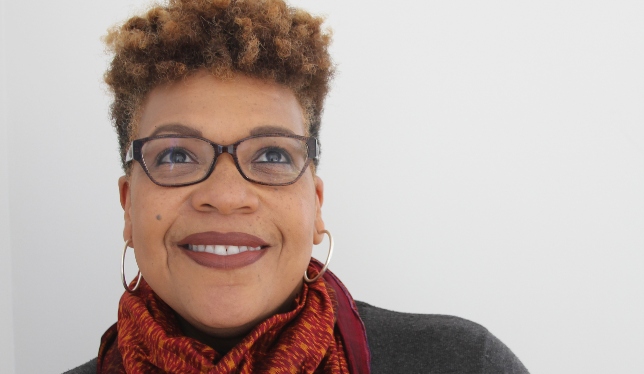
Why this professor launched an Instagram Live show about COVID-19 and vulnerable communities
A Q&A with Tanya Sharpe, founder of U of T’s Centre for Research and Innovation for Black Survivors of Homicide Victims, about her timely new discussion series 30@8:30.
More from Career Advice Articles
-

Collegiality: the joys and pitfalls of a non-hierarchical workplace
Grounded in shared governance, collegiality is a demanding ideal that balances power, equity and collective learning.
-

Supporting students through better communication
Three practical strategies to enhance student success.
-

Narrative CVs put researchers front and centre
New format is a vast improvement over the old Canadian Common CV.
-

Let’s talk about workload
If the judgement of our peers drives overwork, can conversations among peers alleviate it?


Post a comment
University Affairs moderates all comments according to the following guidelines. If approved, comments generally appear within one business day. We may republish particularly insightful remarks in our print edition or elsewhere.