Understanding research-creation at SSHRC
Artistic works that explore socio-cultural questions may qualify for this unique grant.

Question:
I’m mid-career with an established program of research, but since I got tenure, I’ve been slowly developing my creative writing practice. I’ve received SSHRC grants in the past, and I want to submit a research-creation project for the next round of the Insight Development Grant. SSHRC says that “[p]roposals should contain both a developed scholarly apparatus and an integral connection to contemporary literary/artistic practices.” So what’s the difference between what SSHRC calls “research-creation” and what the Canada Council calls “artistic research”? How do I know which funder to apply to?
– Anonymous, Education Studies
Dr. Editor’s answer:
I’ve got a short answer and a long answer for you, dear letter-writer. The short answer is: if you have a research project that advances understandings of people, culture, or society and that involves artistic creation as a part of your methodology — not simply having participants draw pictures or take photos, but having practicing artists, perhaps yourself, use their practice in the development of new knowledge — then that’s a SSHRC research-creation project. If you have an idea for a book you want to write, and you’ll do some research to help you write the book, that’s a Canada Council project.
To put it another way: if you want to write a poetic autobiography, that’s artistic work; if you want to write a poetic autobiography to better understand how environmental and nonhuman factors become part of human bodies and selves — as in Adam Dickinson’s 2018 collection Anatomic, funded by SSHRC in 2010 — that’s research-creation.
To learn more about what makes for a great research-creation project, I searched the SSHRC Awards Search Engine for the keyword “research-creation,” and contacted three successful SSHRC research-creation funding recipients for their advice. (The database has sadly not been updated since 2023/24, but SSHRC assures me that information from 2024-25 will be available soon.): Aiyun Huang, a percussionist and professor at the University of Toronto; Stephanie Springgay, a professor and the Director of the School of the Arts at McMaster University; and Kathleen Vaughan, a professor of art education and the Concordia University Research Chair in Art + Education for Sustainable and Just Futures. I’m deeply appreciative to these three artist-researchers for sharing their perspectives and advice with future SSHRC applicants. Here’s what they recommended:
1. Think in terms of research questions
“You can’t start a SSHRC grant application thinking about what you want to make,” advises Dr. Springgay. “You have to think about the objectives, the research question, the literature within which your work is embedded, and then where in that literature are the gaps and holes into which your new knowledge will contribute.” In short, you’re looking to address some socio-cultural concern, whether that’s climate justice, or accessibility in higher education, or what it is to be human, or whatever broad subject is the focus of your work.
Of course there are limitations on Dr. Springgay’s advice: an artist-researcher who is a painter is going to have an idea of the type of painting they want to ultimately create before sitting down to write their grant application. But Springgay’s overarching point — that the starting point for your grant should be inquiry, not a specific artwork — echoes both SSHRC’s guidance and the recommendations I heard from SSHRC peer reviewers: the Fine Arts and Research-Creation peer review committee is interested in new insights, new areas of knowledge — that is, in unique, poignant, and compelling ways of looking at the world.
This emphasis on new knowledge, not outputs, makes sense when you consider the diversity of expertise on the Fine Arts and Research-Creation committee. SSHRC publishes the names of peer reviewers after the competition is finished; the 2025 committee included artist-researchers from a range of media — virtual reality, architecture, design, digital music and mixed-media visual art — as well as researchers with expertise in Rococo art, Quebec theatre, German music and horror film. While I don’t recommend trying to guess which of these reviewers will still be there in 2026 — there are too many variables at play to know who’ll choose to stay on — I think that Googling the most recent committee members to see their expertise provides you with a good sense of the true breadth of the people who’ll be scoring your proposed work. And when you think of this broad expertise, you can see that one of the few things these reviewers have in common is their shared interest in both art and human understanding. So instead of getting them excited about your novel, get them excited about your ideas, your questions, your big-picture concerns.
Speaking to such a broad disciplinary audience can be a challenge for many artist-researchers, as Dr. Huang told me: “SSHRC is for people working in many different disciplines. I’m a musician, but I have to communicate to SSHRC the same way an architect might. That can be a challenge for artists who spend more time doing than they do thinking about how to articulate what they’re doing.” Yet, as an artist, your perspective is crucial: “there are questions and changes that artists are in a unique position to take on.”
2. Integrate your artistic practice within your methodology
If your data collection and analysis are separate from your artistic production, then you aren’t doing research-creation. Says Dr. Vaughan: “a good research-creation project is first and foremost centred in artistic practice, in which the creation is the basis of the research and the means of generating knowledge.” SSHRC describes this requirement as “sustained, reflective research set directly and actively within the creation process itself” (SSHRC 2025).
Research-creation is thus distinct from arts-based qualitative methods like photo-elicitation interviews (e.g. Harper 2010) or semi-structured interviews with drawing (e.g. Guillemin 2004), in which research participants create and interpret their own artworks. Usually, these participants aren’t practicing artists, and their artistic production is part of data collection, not a method of analysis or knowledge-generation.
In contrast, consider Dr. Vaughan’s Walk in the Water | Marcher sur les eaux (2016–2020), which integrates a textile map and audio walk in its unpacking of the social, environmental and cultural histories and meanings of the St. Lawrence River and Montreal’s Pointe-St-Charles riverscape specifically. The project explored questions like “how can our river become ‘home’?” We can imagine an alternative version of Dr. Vaughan’s project — one that involves the same topic, similar research questions, even the same set of interviewees — but if artistic production and practice weren’t part of the methods of inquiry, it wouldn’t be research-creation.
3. Treat it as seriously as you would any other discipline or method
In closing, dear letter-writer, I want to remind you that artistic expertise is as rigorous as any other academic field. If you’re trained as a qualitative researcher, you wouldn’t assume that you can run statistical regressions without the support of a team or many years of training and experience. The same is true for research-creation. If you’ve been developing your creative writing practice by reading The Artist’s Way and doing morning-pages for the past year, then I anticipate you don’t yet have enough expertise to successfully carry off a research-creation project. Says Dr. Springgay, “I’m often surprised at other disciplines’ lack of recognition of artistic expertise and labour. It can be challenging when other fields try to ‘art up’ research — it does a disservice to the arts.” And it likely wouldn’t be funded. So make sure that you’ve published or exhibited — that your work has been recognized by peers as high-quality — before you begin designing that research-creation project. That, or hire some professional artists to work alongside you — and pay them at CARFAC rates.


Featured Jobs
- Psychology - Assistant Professor (Clinical Psychology)Western University
- Global Inequalities and Trade - Faculty PositionUniversité Laval
- Theatre and Film - Assistant Professor Without Review (Performance Practice)The University of British Columbia
- Director, Human Research Ethics & Strategic AdvisorUniversity of Manitoba
- International Studies - Faculty Position (Arctic Defence and Security)Université Laval
More from Career Advice
-

From doctoral student to entrepreneur
Resources abound to help you turn your PhD research into a business startup.
-

Internationalizing Truth And Reconciliation through multilingual storytelling
Faculty share stories in their home and heart languages in the University of the Fraser Valley’s Leq'áleq’el Video Series.
-

Show it clearly: illustrating a report for your community partners
Part II: How to design figures that tell your story.
-

Life lessons from the World Happiness Report
Happiness is a gift for elders to pass on to the younger generation.
More from Research
-

Science in French? Bien sûr!
As English dominates the publication landscape, support for French-language research is a strategic investment in the quality, equity and the future of knowledge.
-
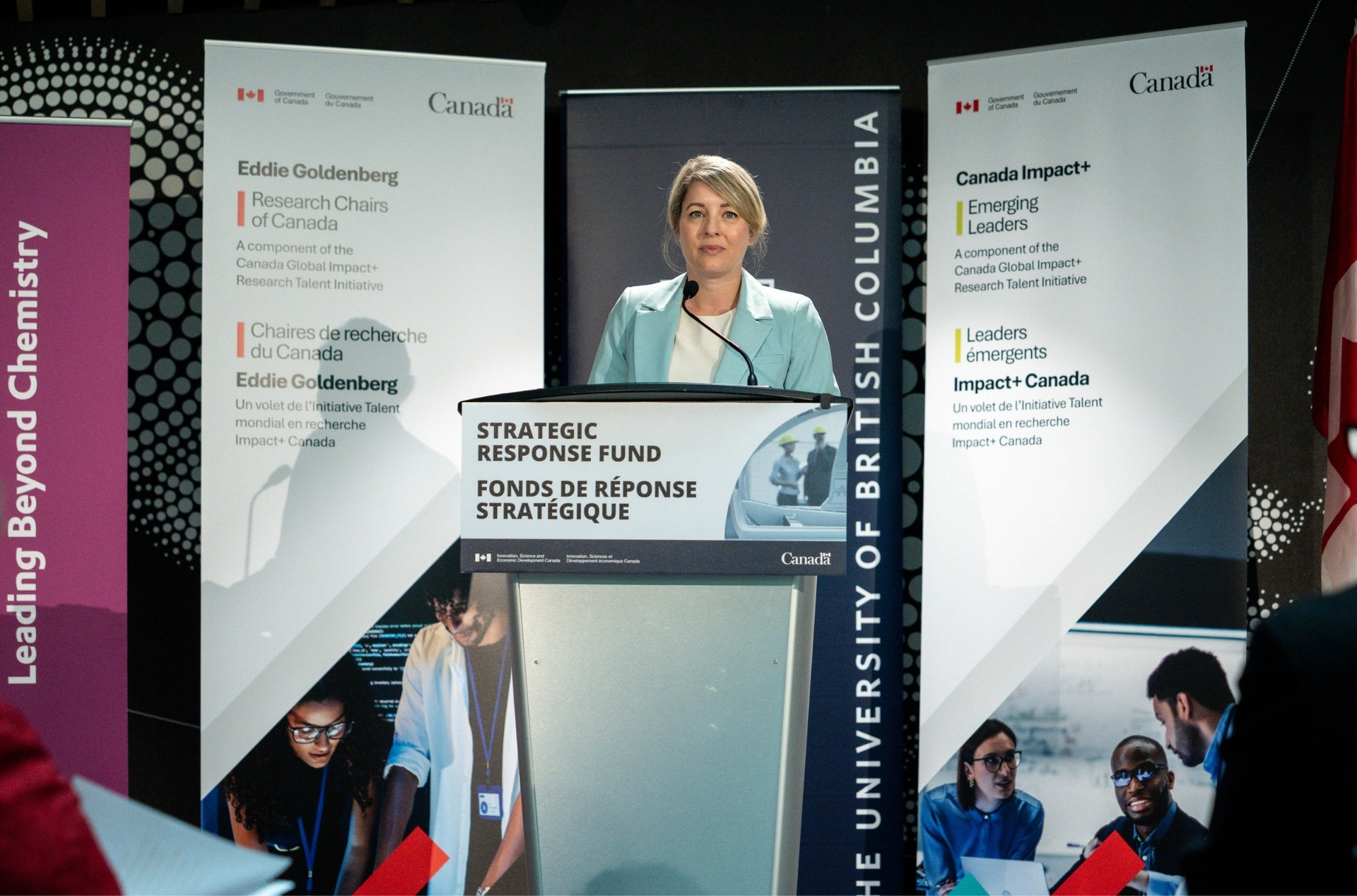
Ottawa announces 64 new research chairs in international talent attraction strategy
Top-tier researchers from 13 countries to join Canadian universities in first wave of appointments.
-
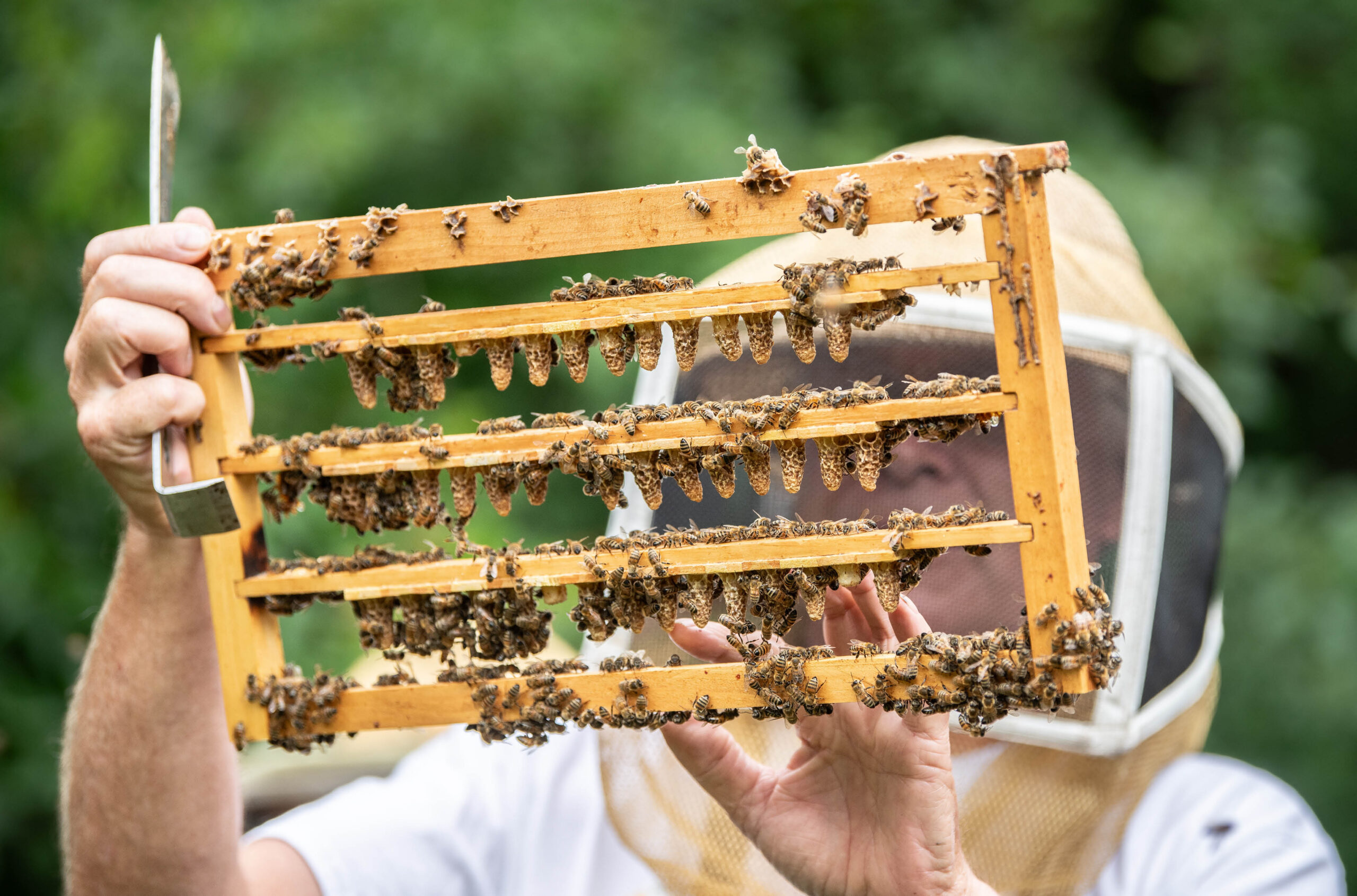
A look inside the hive: celebrating honey bee research at two Canadian universities
As MacEwan University marks 10 years of bees on campus, the University of Guelph kicked off the year by unveiling its newest centre for honey bee research.
-

Canada needs a national strategy to protect scholars at risk
Supporting displaced academics is a strategic investment in Canada's research and innovation ecosystem.
More from Ask Dr. Editor
-

Say it plainly: Writing a report for your community partners
Part I: How to break away from scholarly style and serve the people who made the research possible.
-

The academic’s guide to pitching for podcast interviews
Three tips for snagging a spot on your favourite series.
-

How to translate your knowledge for an industry audience
Getting buy-in from industry professionals means understanding their point of view and speaking their language.
-

How to hook an SSHRC postdoc grant
Two tips for a catchy opening that will make your proposal stand out.

Post a comment
University Affairs moderates all comments according to the following guidelines. If approved, comments generally appear within one business day. We may republish particularly insightful remarks in our print edition or elsewhere.