Taking the loneliness out of academic writing
Group writing retreats for PhD students can lower psychological distress and improve well-being.


Recent conversations about well-being and psychosocial risks in demanding workplaces have struck a chord with academics. These conversations ring especially true for doctoral students, almost half of whom struggle with their mental health. Brilliant and creative students, motivated to contribute to the scientific community, are nevertheless struggling and abandoning their degrees. One contributing factor is that pursuing a PhD can be very isolating, especially in the humanities and social sciences.
Students choose the humanities and social sciences because they enjoy reflecting on, conferring with, and understanding other people. Yet doctoral students so often spend their days locked in an office, reading, writing and doubting — alone. It’s a brutal contradiction. How can learning about other people be such lonely work? Unlike in the natural and technological sciences, scholars of the humanities and social sciences have few opportunities to join research teams or labs. They have to rely on their ability to motivate themselves.
Researchers, clinicians and Quebec’s minister of higher education are seeking ways to improve PhD students’ mental health. To this end, I looked into whether academic writing retreats could help ease student isolation.
In an experimental study of 100 PhD students, I compared the effects of participation in a structured writing retreat organized by Thèsez-vous against a control group. The results were astonishing: most participants saw their psychological distress drastically decrease, while their emotional, psychological, and social well-being ranked higher than the control group.
Two main factors explain this improvement. First, participants reported that a clear work structure made them much more productive. The retreat leveraged pomodoro-style timed writing blocks, interspersed with screen breaks, and offered task-management support using the SMARTER method. Being able to make real headway felt liberating for many participants.
Participants enjoyed socializing with peers and took comfort in knowing they weren’t alone in their struggles. They also noted other, more indirect benefits that helped them make progress and improved their well-being, including room and board, immersion in nature, and restorative activities like hiking.
Interestingly, everyone took away something different from the experience. Some appreciated the opportunity to concentrate and make writing progress, while others benefited more from the breaks and social aspects. This serves as an important reminder that different people have different needs, and that needs may evolve over time.
Feelings of isolation aren’t limited to doctoral students. The community, structure, tools, breaks, and restoration at a retreat could benefit all academics. Students, researchers, and professors alike face writing obstacles, be it due to a lack of structure or peer motivation.
There’s no miracle cure, and the issue is bigger than just self-care. It’s about knowing that academic writing is easier when we’re supported by our community and rallying that support for ourselves.
As mental health becomes more fragile among academics, these retreats offer concrete ways to prevent psychological distress and bolster well-being. Without them, we deprive ourselves of a powerful tool to make academic writing easier and kinder, especially for scholars in the unexpectedly solitary humanities and social sciences.



Featured Jobs
- Canada Impact+ Research ChairInstitut national de la recherche scientifique (INRS)
- Occupational Therapy - Assistant or Associate ProfessorDalhousie University
- Marketing - Faculty Position, Tenured or Tenure TrackUniversity of Alberta
- Health Sciences - Assistant ProfessorSimon Fraser University
- Vice President, Finance & AdministrationOCAD University
More from Opinion
-

Why should academic freedom protect ineffective teaching?
The status quo is in desperate need of change.
-

Quebec launches network of reseach chairs in science diplomacy
Acting in the roles of diplomats and advisors, scientists can help solve pressing world problems, argues Quebec Chief Scientist Rémi Quirion.
-

The Human Algorithm
As artificial intelligence reshapes the workplace, the most valuable skills aren't technical — they're fundamentally human.
-

The tyranny of the average
Driven by statistics, AI homogenizes humanity and devalues outliers.
More from Research
-
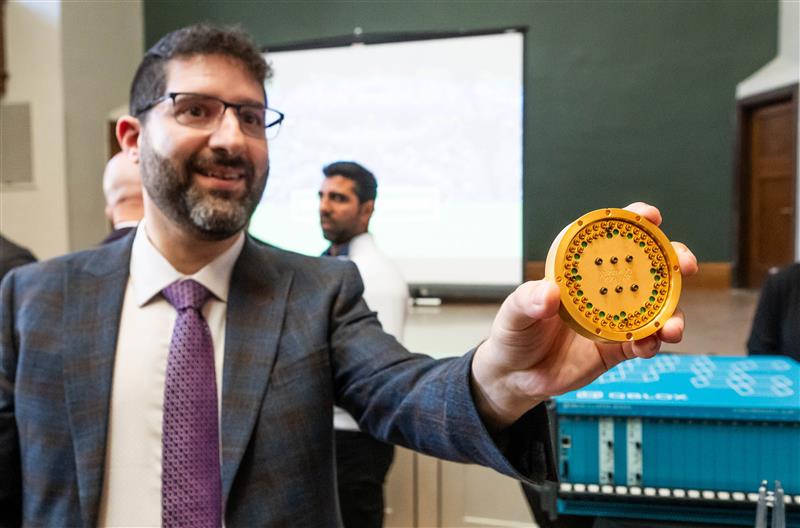
University of Saskatchewan acquires quantum computer to boost research capacity
Campus access to the technology will expand research possibilities.
-

Federal science cuts may have ripple effect on universities
Departmental belt-tightening in Budget 2025 adds to a long history of government reductions in scientific research.
-

Research VPs empower discovery
An impressive list of women are leading research at universities across the country.
-

How to craft a strategic research statement
Identifying themes in your work history can help you move from a laundry-list to a compelling story.
More from In My Opinion
-

Adopting AI is a social contract
Integrating artificial intelligence into our societies and personal lives binds us to certain futures and forecloses the possibility of others. Are we ready to accept the consequences?
-

GenAI is in — so why are we still burnt out?
Will generative artificial intelligence end up diminishing, or increasing, researchers' workloads?
-
Recalibrating Canadian universities to meet the Mark (Carney)
How university leadership can better support Canadian innovation and economic growth.
-

Diversity strengthens discovery
What Nobel Laureates reveal about diversity, discovery and societal impact.


Post a comment
University Affairs moderates all comments according to the following guidelines. If approved, comments generally appear within one business day. We may republish particularly insightful remarks in our print edition or elsewhere.
1 Comments
Excellent point for PhD students and faculty too! See https://uwindsor.scholaris.ca/items/692e30d1-9eaa-4496-bd6b-5b034d49d446
UWindsor has used the strategy for grant writing and more with great success. We live in an age where trust and psychological safety are low. When you enter a team of people writing together, the silos lower and the anxiety is managed. You are surrounded by supportive success and inspiration. My favourite memory was writing next to the rhythmic typing of one of our many successful grant writers. There were ritardandos, accents, and crescendos finished by a Beethoven like grand fourth movement perfect cadence.
We have begun doing the same adapted retreat day for the students of our UWill Discover conference. The presentations are significantly improved and the networking among students is extraordinary. More importantly, we undergraduate thesis students presenting at national and international conferences who are regularly mistaken for graduate students. It’s a magnificent practice and I am glad you are writing about it!