Degrees of Change
British Columbia’s funding pressures, shifting enrolment and policy reforms signal sweeping changes ahead for colleges and universities across the province.

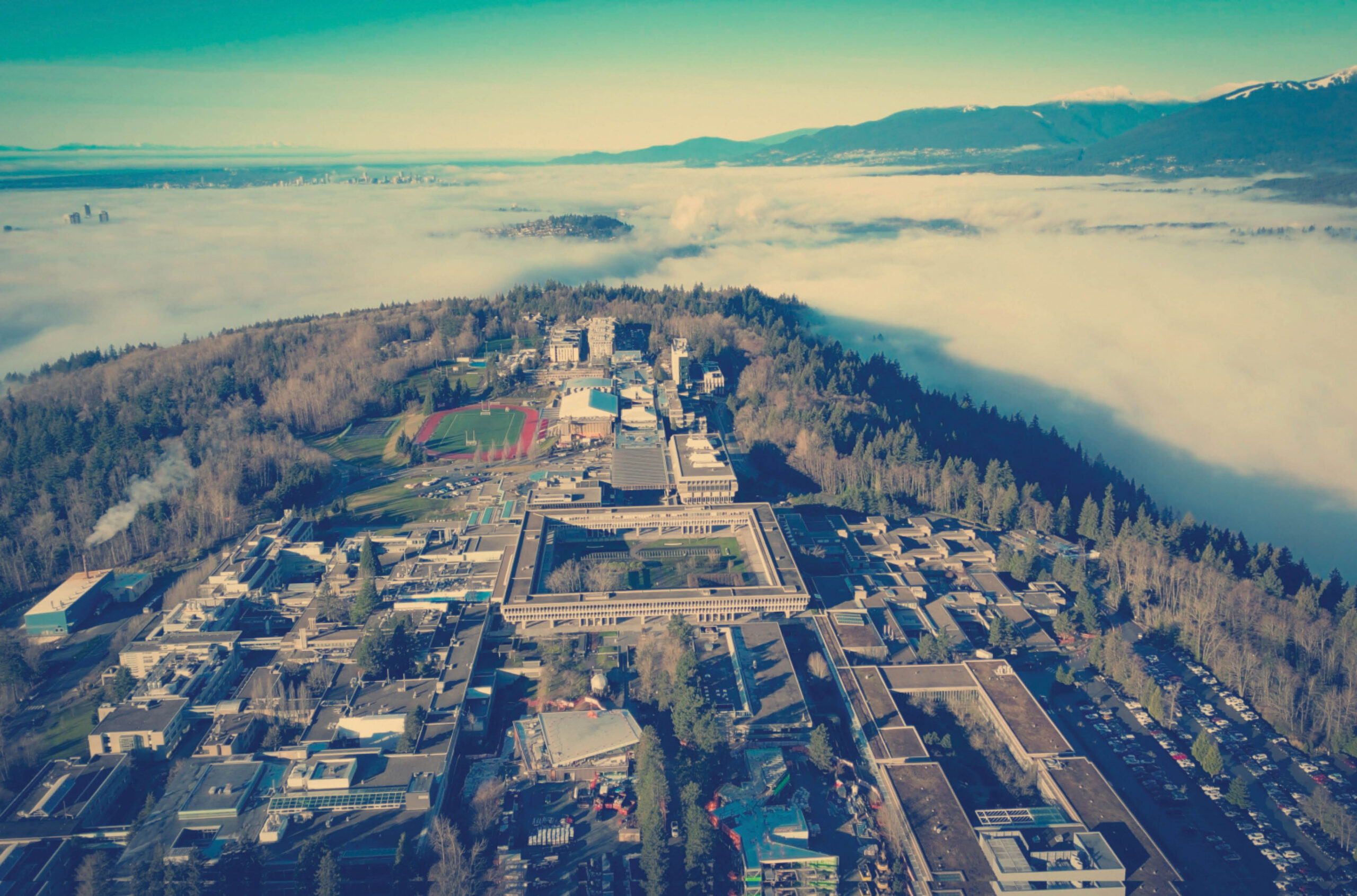
In the early 2000s, British Columbia was on a roll. People were moving here steadily. There was a sense that the province needed to send a big signal that it was transitioning from an economy that relied on 19th-century extractions of raw wood, minerals and seafood to a modern, knowledge-based, technologically advanced economy. So the relatively new B.C. Liberal government decided to make a bold change in colleges and universities.
In 2004, then-premier Gordon Campbell promised $1 billion to create 25,000 new student seats by 2010. Most of the funding was allocated to build new campuses, leaving a modest amount for staff and faculty.
In 2008, as part of that exuberance about higher education, the province transformed five colleges into “special-purpose universities,” though that was never matched by any notable increase in money to run them. Instead, everyone in the system was quietly and, in later years, not so quietly urged to cover anything extra they needed through international-student tuition money.
That tide has turned. The international-student safety valve, with around 175,000 enrolments in the 2023-24 academic year that accounted for up to 40 per cent of all students at some B.C. institutions, was severely restricted almost overnight by a federal Liberal government facing an election and backlash over reports of abuses of the system across the country, particularly in Ontario.
Ottawa announced a 35 per cent cut in study permits in 2024 and then another 45 per cent cut last year. The number of study permits authorized by the federal government for B.C. in December was 32,596, although graduate students will receive an exemption for 2026. Another small sign of relief was that the province allocated 80 per cent to public institutions, only 20 to private ones. That was a significant shift from the previous year, when the province allocated only 53 per cent to the public institutions.
Still, after the last few years, a record number of institutions in the province are now either limping through on their reserves or running deficits, after getting provincial permission to do so during COVID-19 and then being hit with the student reductions.
Reckoning
With all that, the almost 20-year-old expansions and rebrandings are now facing a major re-think. Last November, the provincial government ordered a review of its public post-secondary system – 25 institutions that include six research universities, five teaching universities, three specialized institutes, and 11 colleges spread across the most mountainous province in Canada, the size of several European nations together.
No one is expecting it to be a small tinker to a system that now receives $3.4 billion in government money for the approximately 450,000 domestic and international students enrolled. Nor are they expecting a magical infusion of dollars, since the review spells out that there is no new money available. Despite some gains for the post-secondary sector, the province’s recent February budget, which pushes B.C. into new levels of deficits, provided no sign of relief from that grim accounting.
“This will be a real reckoning about what’s next for the sector. And this latest review is filled with red flags about what they’re up to.”
“It’s going to be one of those generational transformations … including possible closure of institutions,” said Annabree Fairweather, the executive director of the Confederation of University Faculty Associations of BritishColumbia. Hers is just one of the many organizations bracing for the outcome of that review. “It’s quite devastating for everyone. What we’re seeing now is that the special purpose teaching universities are especially vulnerable.”
The Federation of Post-Secondary Educators of BC echoes that concern.
“We’re kind of at a crossroads,” says Michael Conlon, the organization’s executive director. “B.C. was the most leveraged with international students after Ontario. This will be a real reckoning about what’s next for the sector. And this latest review is filled with red flags about what they’re up to.”
And the B.C. Federation of Students is even more dismayed as the news rolls in regularly about programs being cut – at both colleges and universities – even before the review is finished.
With 177 closures counted so far since 2024, including the gerontological nursing program at Selkirk College in eastern B.C. and the social-worker diploma at the College of New Caledonia in the north, federation chair Debi Herrara Lira is worried about the impact on students.
“Students whose programs have been cut will be impacted by having to delay their graduation, having to relocate schools and/or communities, or losing access to higher education altogether,” she says.
But the review is not just about money or the number of programs.
The NDP government keeps emphasizing how important it is to them that the post-secondary system contribute to strengthening B.C.’s economy.
That focus has meant some money for key initiatives. Simon Fraser University (SFU) will get $520 million over the next few years to create a new medical school, the first in Western Canada in 60 years, due to start accepting students in August in the rapidly growing suburb of Surrey. And the province also announced $241 million for trades training, money that is intended to cover some shortfalls in those equipment-heavy expensive programs at places like Thompson Rivers University (TRU) in Kamloops, the B.C. Institute of Technology in Burnaby, Vancouver Community College (VCC), and various programs in more rural areas from the Fraser Valley to Quesnel or Prince Rupert.
Administrators at the province’s universities and colleges are welcoming those new investments. And many also see that the review could help address some long-term problems. But no one denies a significant shift is coming.
“The system is under incredible stress,” says Joy Johnson, president of SFU, one of the province’s six research universities along with the University of British Columbia (UBC), University of Victoria, University of Northern British Columbia (UNBC), Thompson Rivers University and Royal Roads University.
Besides the reality that provincial grants haven’t kept up with costs for years and that the federal decision to cut international study permits hit with the force of an unannounced tsunami, universities are constantly being asked by the province to do more in relation to a stream of social initiatives, she says. Drug-overdose prevention, naloxone training, sexual-assault and anti-racism education are just a few areas where post-secondary institutions have been urged to bolster efforts.
Dr. Johnson acknowledges there is inevitably going to have to be some scaling back and close examination by each institute of what puzzle pieces it is contributing to the whole system.
“I do think we have too many course offerings. We end up with a lot of niche courses with very few students,” she adds. “And I think the days of us competing with each other are over.”
But it’s challenging for each institution to calculate precisely how to do that, especially as they are working to keep up with the need for new kinds of degrees and training in emerging areas, from artificial intelligence – something UBC is focusing on – to a new master’s degree in the School of Sustainable Energy Engineering at SFU, one of 85 new degree programs introduced throughout the province in the last five years.
Even before the last few roller-coaster years, there were long-standing problems that had been identified many times in the past two decades, including in a provincial review ordered in 2022. Among them: A mystifying system of block funding that didn’t seem connected to enrolment numbers, almost two decades of two-per-cent-a-year tuition-increase caps that created bigger inequities among institutions every year, and a slow decline in domestic student enrolment. Then there is the problem that the mandates of the new teaching universities have gotten muddled, with a lot of confusion about how much research they should take on or how many programs they should run.
The 2022 review conducted by Don Wright, a former deputy premier under NDP leader John Horgan, focused heavily on financial issues and the overreliance on international students – who pay as much as five times the tuition than domestic students – for revenue.
In his spring 2023 interim report (shelved some time after David Eby became premier in November 2022 but obtained by the B.C. Federation of Students through a freedom of information request), Mr. Wright noted that the block funding amounts for different institutions had no correlation with the number of students studying or enrolment targets. Worse, “it is understood that there are no financial consequences for institutions that under-deliver on their targets … they do not have their funding reduced.” There was also no additional money for institutions that over-delivered, he noted.
“Twenty years of this zero-consequence funding approach has resulted in a management culture … of ‘don’t manage, rather complain about inadequate funding,’” he wrote.
University and college representatives told Mr. Wright they were worried about being too reliant on a volatile source of funding coming from only a handful of countries. At that point, international students had reached 30 per cent of total enrolment, the report said, which put it at the level where administrators started to see “internal pushback from domestic students and faculty.”
“Every institution wanted to be everything to everyone. Now it’s not feasible that each institution can be everything to everyone.”
The report’s assessment was that it would take a “material increase” of about $200 million a year to get the system on better footing. “Without such an increase, funding review will essentially be a zero-sum exercise with absolute winners and losers.”
Since that report, the federal government’s international study-permit cap has rocked the post-secondary world, with virtually every institution scrambling to make up for government funding and tuition revenue that was covering less and less of the total budget every year.
Kwantlen Polytechnic University, where international students accounted for roughly 40 per cent of the total enrolment of more than 20,000 in 2022, has had to make big adjustments. As has Langara College, where international students represented 39 per cent of the total student enrolment of about 19,000 in the 2022-23 academic year, has since had to let go of more than 150 faculty.
Even at or the province’s biggest university, UBC, with almost 73,000 students in 2024-25 at its two campuses in Vancouver and Kelowna, university leaders continue to cope with the fallout.
“International student visa caps have been damaging to Canadian higher education since their introduction,” says its president, Benoit-Antoine Bacon, in an email statement to University Affairs. “UBC is continuing to engage with sector partners and associations as well as both the federal and provincial governments to ensure the university can continue to attract exceptional international students from around the world.”
The current review’s terms stipulate that there is no new money available for either institutions or programs. To all outward appearances, that’s the zero-sum, winners versus losers, situation that Don Wright talked about.
That has everyone wondering what amalgamations, streamlining, consolidations or closures might be part of the final recommendations from former deputy minister and former Emily Carr University of Art + Design board chair Don Avison, expected to be released in April.
British Columbia’s Minister of Post-Secondary Education and Future Skills, Jessie Sunner, is predictably staying away from any hints about what the outcome might be. But she didn’t rule out any possibilities when asked.
“I told Don I want him to be bold and brave and come up with things that are creative and innovative with the ultimate goal that we are ensuring that we maintain accessibility and affordability,” she says. “Nothing is pre-determined. But we have to make sure long-term stability is there, so that we aren’t at the whims of a federal-government change or something else happening in the world. This is a holistic approach to our sector to ensure that we have a clear pathway to how are we going to stabilize institutions and have operational resilience going forward.”
Minister Sunner also stays away from being critical of the conversion of colleges into universities in 2008.
“It was a different time. It was well-intentioned. But every institution wanted to be everything to everyone. Now it’s not feasible that each institution can be everything to everyone.”
Shock-proofing the future
For B.C., unlike smaller provinces, that path to efficiency is complicated by its vast mountainous geography and what has always been a publicly stated goal of making post-secondary education accessible to as many as possible. That has meant that sometimes, to make sure someone from Fort St. John or Duncan can get an information technology diploma, a healthcare assistant certificate diploma or enough academic courses to eventually transfer to university, there are inevitably smaller classes and fewer opportunities for economies of scale.
Many are mounting energetic campaigns to re-align their university or college under a core focus rather than be put into the care of a bigger institution nearby or be shuttered.
Dennis Johnson, interim president at Nanaimo’s Vancouver Island University (VIU) – formerly Malaspina College – knows that everyone thinks his teaching university is at a critical juncture.
When an education researcher recently suggested VIU was going to be the next Laurentian University — the institution in Sudbury, Ont., that was almost forced to close five years ago and had to file for creditor protection –Dr. Johnson answered, “Not a chance.”
He said the university has been fighting hard to ensure it survives and the efforts of the last two years are paying off. It meant ending the master’s program in community planning, the dental hygiene assistant certificate, and three music programs. Another 18 programs were phased out or suspended.
“I definitely see we will get VIU off the naughty list.”
Those kinds of program and course cuts are happening or are about to be announced at some other institutions, as they struggle to get their finances in order.
At UNBC in Prince George, interim president Bill Owen says his institution started a process of testing each program four years ago to ensure it was needed and future-proofed, well before the overnight international-student cut upended higher education across the country.
Unlike VIU, B.C.’s northern university had some reserves it could use until it reached equilibrium between its spending and income. It drew $2.5 million last year and is looking at dipping into those reserves again this year before returning to a stable financial position.
In spite of the worries that the review is prompting, every president interviewed for this article highlighted two hallmarks of the province’s post-secondary culture that could improve things system-wide without incurring significant costs: collaboration and technology.
British Columbia’s college and university world is already set up as a system that is better integrated than any other province in Canada, because it established early on a mechanism for transfer credits among all of the public post-secondary schools. That makes it relatively painless for students to move around. The transfer system is mainly used by those who do one to three years of college and then transfer their credits to their preferred university to complete a degree. But it also allows students to pick up courses they need at any institution for any kind of credential.
“We have to make sure long-term stability is there, so that we aren’t at the whims of a federal-government change or something else happening in the world.”
At VCC, president Ajay Patel knows of one young woman who is nominally going to graduate from Langara College with a diploma, but she has acquired some of her needed courses at both his institution and at Douglas College in New Westminster. Travelling to those schools is a 60-kilometre circuit but there is rapid transit to all of them, so it’s easily doable.
“There’s a huge opportunity to collaborate across all areas of study,” adds Mr. Patel.
Technology – things like haptic gloves for people training in trades or virtual nursing exercises – has also made it much easier to deliver some parts of an education program so that students aren’t required to travel long distances for in-person classes.
At TRU, president Dr. Airini talks about collaboration of a different kind – one that comes from combining the teaching and research functions in a way that serves the whole community, as well as the students.
“If we have a flood down the road in Chase, this is the university that can help with the plumber that fixes it and the hydrologist that studies it. Or if a guy doing welding has an idea about a gas combination for a hotter flame, they can invent a better way. We do use-inspired research.”
Universities and colleges outside the Lower Mainland are particularly anxious to get more international students back into their classrooms.
“It really matters to be in a place where we have the diversity and benefits of international students,” says Dr. Airini, a New Zealander who completed her PhD in Canada as an international student.
In the meantime, as everyone lobbies the federal government for some relaxation, it’s a hard go as post-secondary leaders continue to face choices like cutting whole programs, taking huge chunks of money from reserves, or continuing to be mired in debt.
In Prince George, Bill Owen is choosing to see this as a moment to make the whole post-secondary system more shock-proof because this likely isn’t the last crisis B.C. universities and colleges will face.
“We’ve been framing this as resilience, he says. “Because in two more years, there’s going to be a different crisis that hits us.

More from Features
-
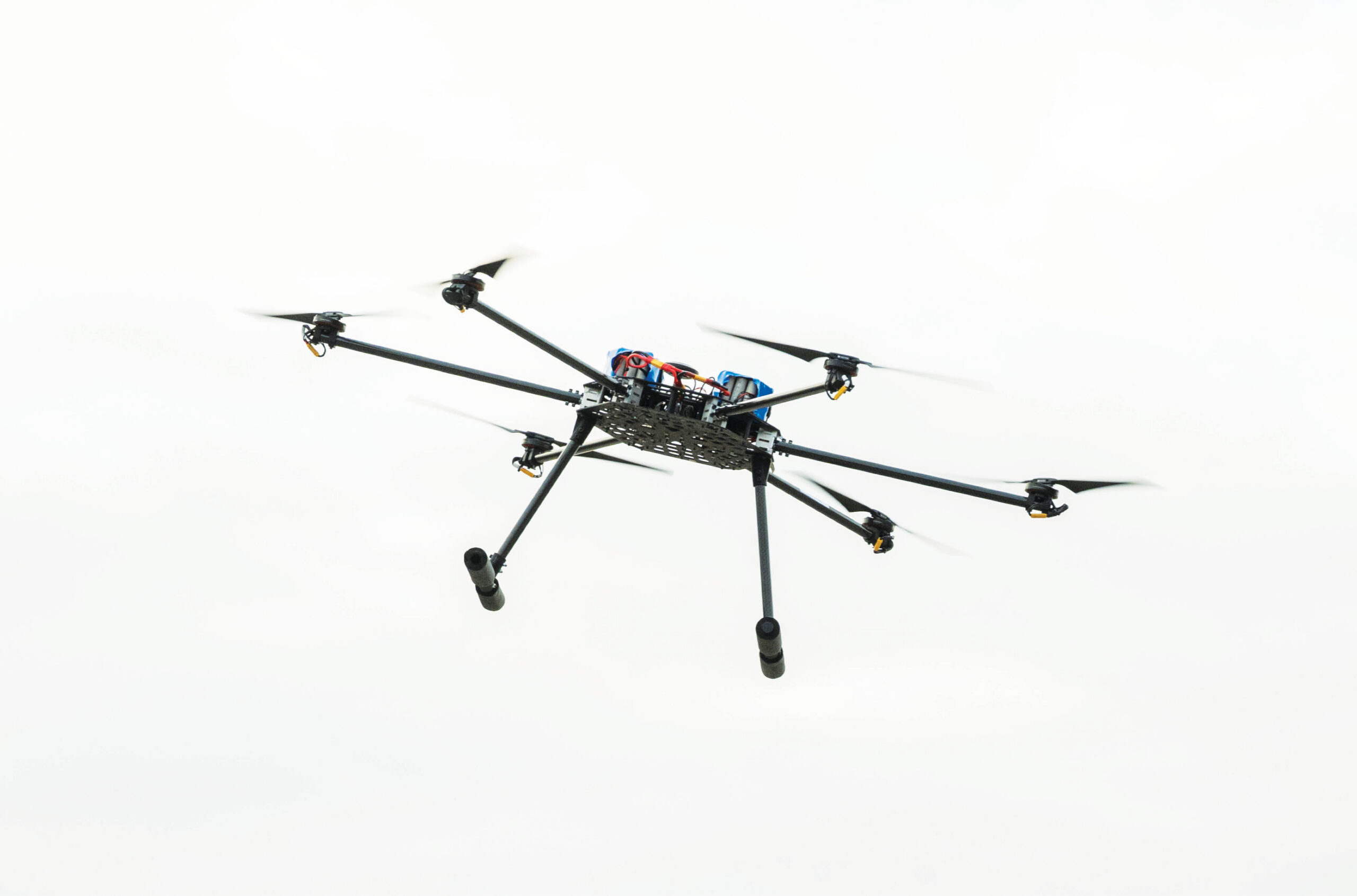
Flight of the Valkyrie
Waterloo engineering students compete for glory with an AI-enhanced urban firefighting drone.
-

Behind the curve
Learning to embed AI in the medical curriculum.
-

The grey area of artificial intelligence
As AI transforms university practices, legal and ethical challenges are multiplying.
-

The King and AI
A team of international scholars tackles a historical work of epic proportions.
More from Policy
-
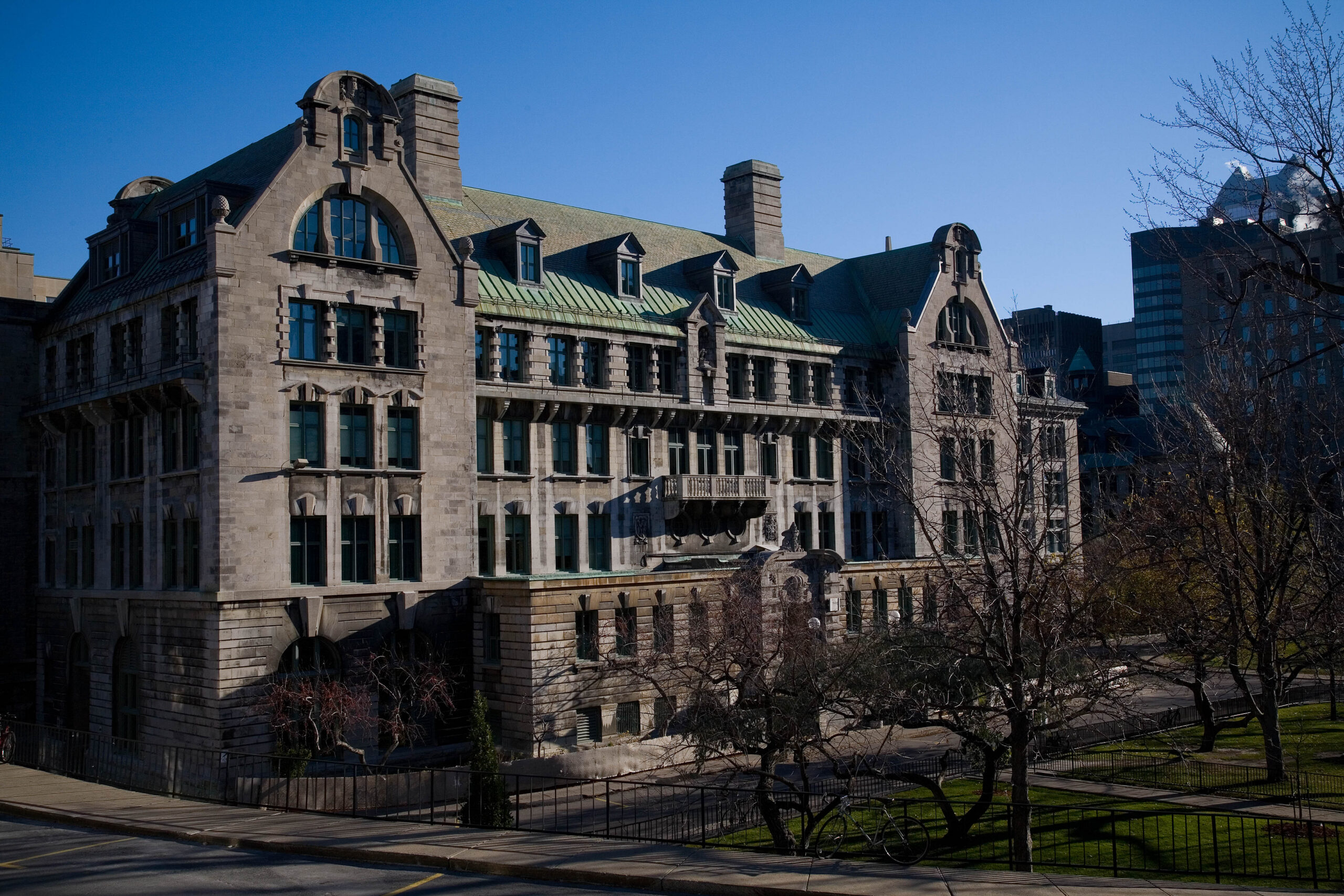
McGill appoints French emissary, makes peace with province
After dropping its legal battle over out-of-province tuition hikes, the university increases its efforts to promote French language and culture.
-
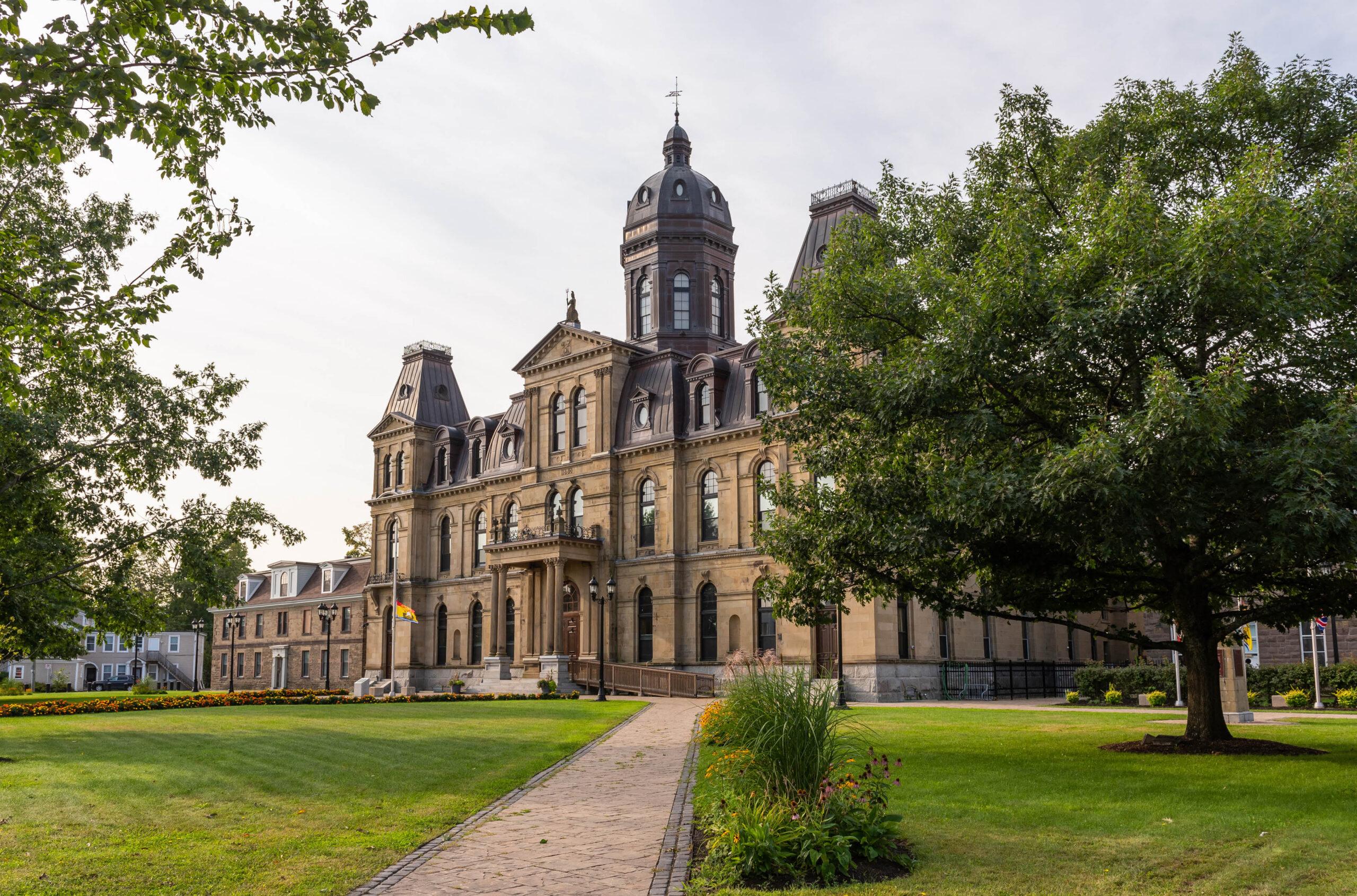
Profs decry ‘catastrophic’ cuts proposed by NB government
'There are 20+ campuses in NB for 860,000 people. Do we need them all?' Read all 16 government suggestions.
-

Universities have a critical role to play in the fight against “forever chemicals”
As PFAS contamination spreads, universities must champion interdisciplinary learning, ethical reform and community partnerships, says Robert Bilott, the attorney at the center of Dark Waters.
-
Ontario lifts tuition freeze, injects $6.4B in post-secondary sector
New provincial strategy also overhauls student assistance program and promises to align university programs with labour market.
More from Feature articles
-

Wags over worries
A look at how campuses across Canada use pet therapy programs to support students’ mental health.
-

Top 10 movies about university life
In honour of Academy Awards season, here’s our list of the best films about professors, students and out-of-control frat boys.
-
Reaffirming the role of universities
Lessons from the U.S.
-
Are universities ready for cyberattacks?
Canadian universities stand in the crosshairs of cybercriminals: Q&A with Benoît Dupont, Canada Research Chair in Cyber-resilience.

Post a comment
University Affairs moderates all comments according to the following guidelines. If approved, comments generally appear within one business day. We may republish particularly insightful remarks in our print edition or elsewhere.