Heading to France for your master’s?
Quebec’s Bourse Frontenac could help fund your graduate studies.

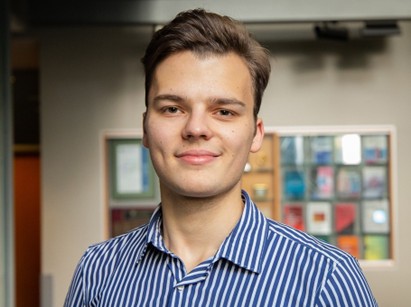
When I decided to pursue a master’s in international governance and diplomacy at Sciences Po Paris, I knew it would give me the chance to experience a different academic culture at one of Europe’s leading diplomatic centres. Like most people, I didn’t realize that Quebec offers a provincial scholarship to support exactly this kind of path. Awarded by the Fonds de recherche du Québec (FRQ), the Bourse Frontenac provides $6,000 in financial aid each year to Quebec students pursuing their graduate studies in France.
My experience at Sciences Po Paris
I received a Bourse Frontenac for 2024–25, and the year that followed was one of the most rewarding of my life, both academically and personally. Above all, I came to understand why Sciences Po Paris is a global leader in political science.
I had the opportunity to learn from practitioners such as Vuk Jeremić, former President of the UN General Assembly, and Dmytro Kuleba, former Ukrainian Minister of Foreign Affairs, who shared their insights and strategies for navigating today’s complex geopolitical landscape. This was complemented by open seminars with global researchers; diplomatic breakfasts with representatives from UN-affiliated agencies; and visits to embassies, including those of Germany and Mexico, where we got advice from ambassadors.
Sciences Po’s interactive teaching approach also involved taking on creative challenges, such as a simulation of a UN secretary-general election, in which I successfully secured France’s candidacy for the political affairs portfolio; a mock trade dispute at the World Trade Organization; and a podcast on digital governance in the European Union.
Through this hands-on approach, I specialized in artificial intelligence and digital information warfare, analyzing how China, Russia and the United States utilize emerging technologies and soft power to further their geopolitical objectives. This work helped me reach the final round of the Youth Innovation Competition on Global Governance (YICGG2025) organized by Fudan University in Shanghai, China, where I proudly representedQuebec alongside my Sciences Po team.
Applying for the Bourse Frontenac
This is exactly the kind of path the Bourse Frontenac was designed for. Although administered by the FRQ’s Nature and Technologies sector, the scholarship is open to students in human and social sciences, humanities, fine arts, natural and health sciences, and engineering. While Quebec’s Ministry of Internation Relations and Francophonie (MRIF) is an official partner, the scholarship also applies to programs offered in English in France. However, the entire application must be written in French in keeping with the FRQ’s general rules.
Whether you’re in a Quebec-France joint degree program, a standalone master’s program in France, or a university exchange of at least three months, the application process is the same. You’ll be asked to outline your interest in the program, your academic and professional background, and your proposed area of study. Give yourself plenty of time to write each section carefully and clearly demonstrate how your studies in France fit into your broader academic path.
The scholarship also comes with a bonus opportunity: at the end of your year or semester abroad, you can compete for the Prix de la meilleure mobilité Québec-France — a $1,000 award for the most creative multimedia project showcasing your experience in France.
Beyond the classroom
Beyond the classroom, I explored France by train and car, taking in the medieval Mont-Saint-Michel, the cliffs of Etretat, the student city of Lyon and the châteaux of Chantilly, Chambord and Saint-Germain-en-Laye. I spent the year at Cité Internationale Universitaire de Paris (CIUP), a sprawling campus of national pavilions representing more than 40 countries — part university residence, part Olympic village. Living in the brand-new Maison d’Égypte residence, which had a tropical feel complete with towering indoor palm trees, I found myself becoming an informal ambassador for Quebec and Canadian culture.
My French friends got a taste of Quebec, too — sometimes literally, in the form of maple syrup — and learned about student life in Montreal, Quebec cuisine and amusing Quebecisms like service au volant (drive-thruservice). The friendships we formed at the CIUP and Sciences Po led to rich cultural exchanges and trips across the EU. I am already looking forward to welcoming some of my fellow international students from Georgia, Italy and Romania to Quebec in the coming years.
Ultimately, when you find yourself strolling along the Seine after a day of lectures, with the Eiffel Tower illuminated in the distance, you realize that these are the experiences that matter — made possible by the university, the Bourse Frontenac and, of course, the welcoming community waiting on the other side of the Atlantic.
Featured Jobs
- Toldo Chair in Christian StudiesAssumption University
- Theatre and Film - Assistant Professor Without Review (Performance Practice)The University of British Columbia
- Psychology - Assistant Professor (Clinical Psychology)Western University
- Global Inequalities and Trade - Faculty PositionUniversité Laval
- Movember Institute Discovery Research Program FellowshipsThe University of British Columbia
More from Career Advice
-

How serendipity built a cross-disciplinary career
Taking research positions out of economic necessity allowed me to gather a broad set of skills and knowledge.
-

From doctoral student to entrepreneur
Resources abound to help you turn your PhD research into a business startup.
-
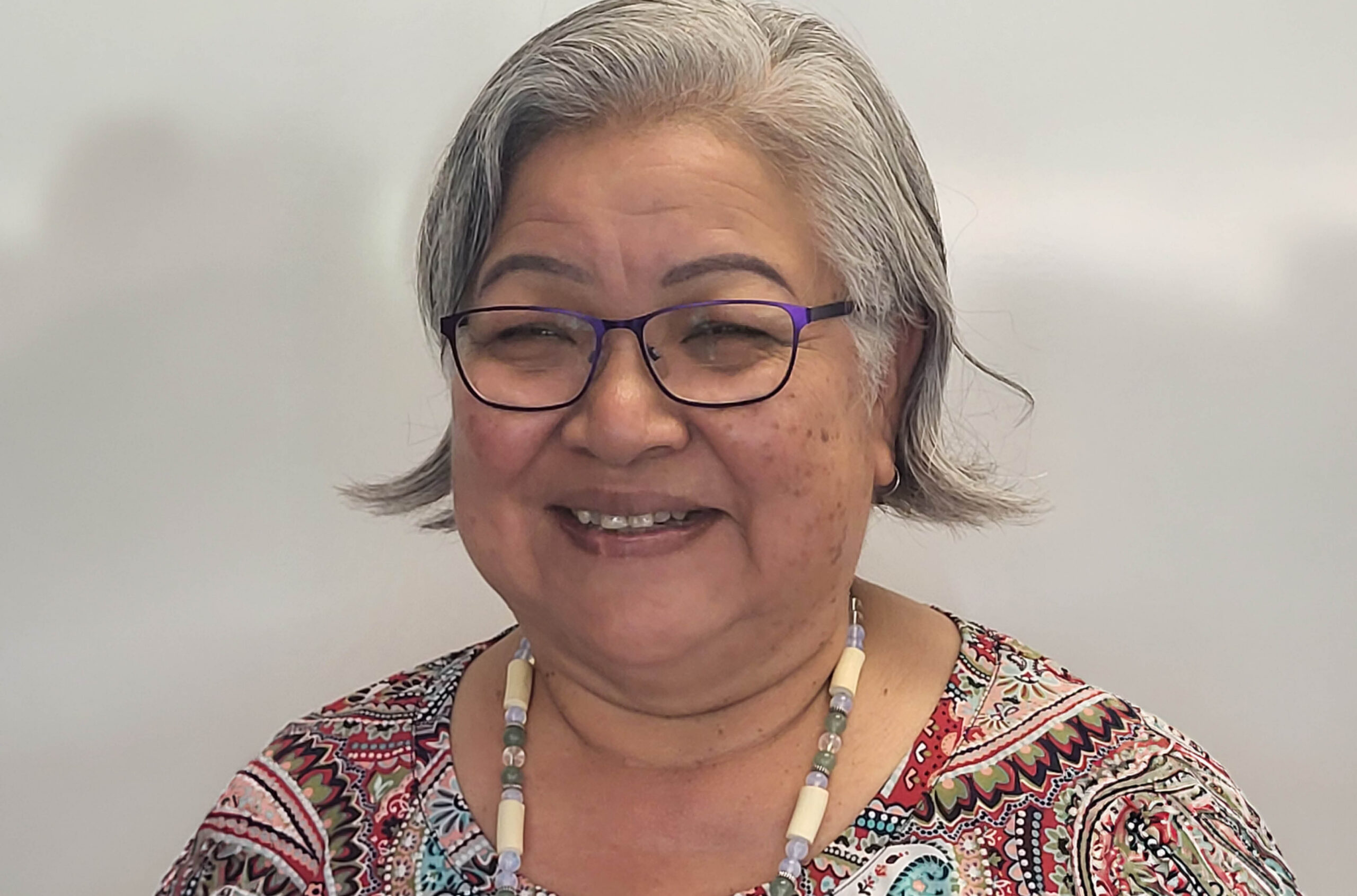
Internationalizing Truth And Reconciliation through multilingual storytelling
Faculty share stories in their home and heart languages in the University of the Fraser Valley’s Leq'áleq’el Video Series.
-

Show it clearly: illustrating a report for your community partners
Part II: How to design figures that tell your story.
More from Students
-

Students and seniors under the same roof
Intergenerational living helps with loneliness and the high cost of rent.
-
U Sports alum lace up for PWHL season
Canadian grads eager to show their mettle on women’s pro hockey teams.
-

The hidden problem of student homelessness
As high rents push more students into precarious housing, it's time to stop romanticizing the 'poor scholar'.
-

Kids with wealthy grandparents more likely to attend university
High-income grandparents can compensate for low-income parents in higher-ed access, a recent study shows.
More from Graduate Matters
-

The paradox of doctoral learning
Completing a PhD doesn’t mark the end of learning, but rather the loss of the illusion that learning ever ends.
-

PhD studies: perception vs reality
How do I tell my friends and family about what I really do as a doctoral student?
-

Thriving after your PhD
Evidence and advice from postdocs about finding your footing in the working world.
-
Studying in French as an anglophone? Mais oui!
Pursuing graduate studies in a second language is daunting but, ultimately, rewarding.


Post a comment
University Affairs moderates all comments according to the following guidelines. If approved, comments generally appear within one business day. We may republish particularly insightful remarks in our print edition or elsewhere.
2 Comments
Why only Quebec students and not all French educated students across Canada?
I am curious to know if this bourse Frontenac administered by FRQ is also available to Quebec students wishing to pursue a master’s program not in France but in the UK, USA, or in any non french speaking universities?