Conservative MP wraps up campus tour aiming to “Restore the North”
Modelled on the late American conservative firebrand Charlie Kirk, Jamil Jivani’s tour brought discussion of economics, immigration and identity to universities across Canada.

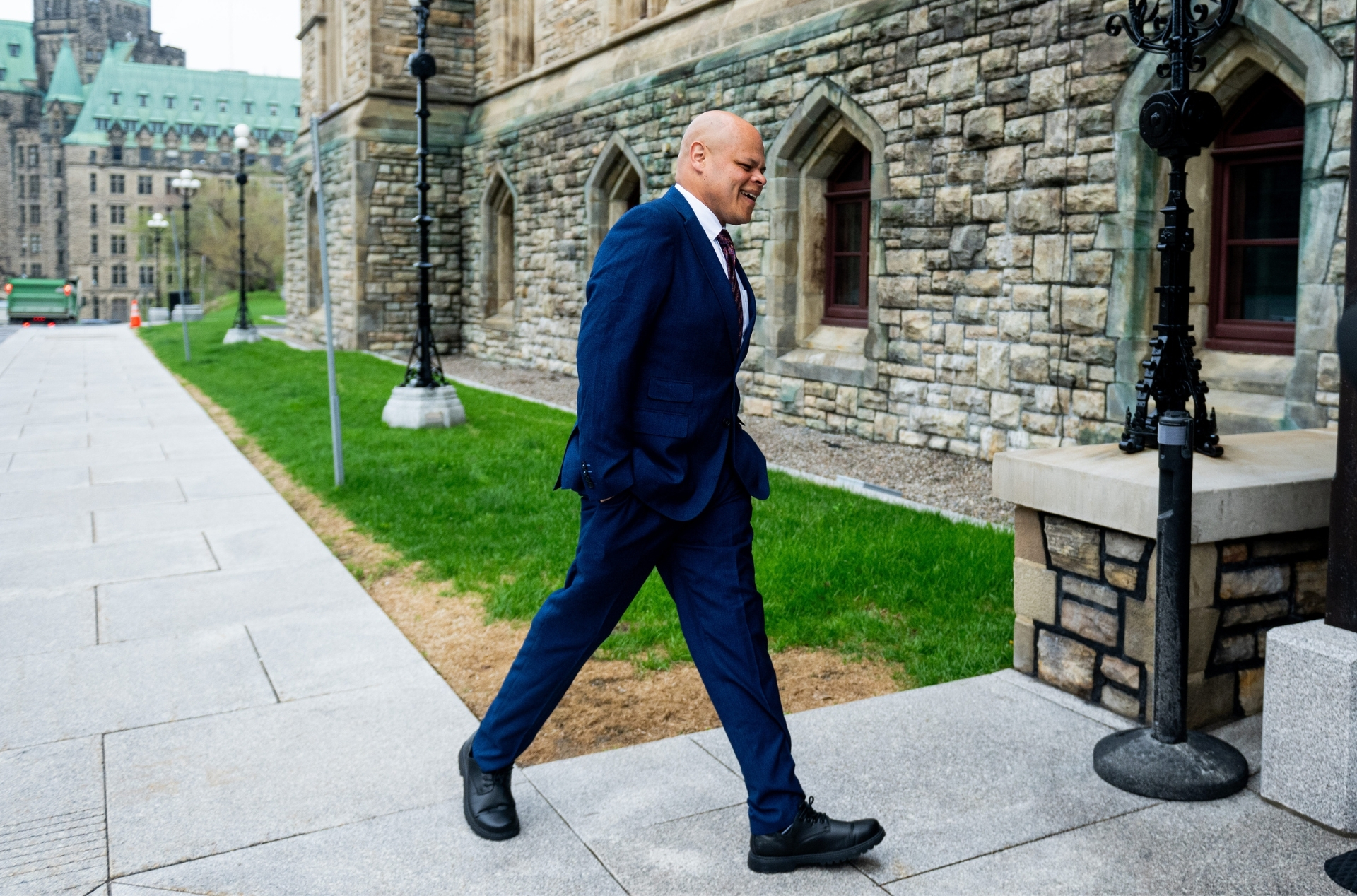
Conservative MP Jamil Jivani wrapped up his “Restore the North” tour last week after visiting nearly two dozen college and university campuses, where he lambasted the economic and immigration policies of successive Liberal governments and asked attendees to suggest ideas to “restore the promise of Canada.”
Beginning last fall, Mr. Jivani, who represents the riding of Bowmanville–Oshawa North, made nearly two dozen stops on his tour, acknowledging in a February interview with Breitbart News Saturday that the campaign was modelled on that of Charlie Kirk, the American Trump booster and conservative activist who was assassinated while speaking at a Utah Valley University event last September.
“We started planning it before the great Charlie Kirk was assassinated,” Mr. Jivani told Breitbart News Saturday in mid-February “and we’ve been doing this tour since October now, very much like Charlie did — open concept, open dialogue.”
Jivani told Breitbart the biggest concern he’d heard was from young men who were worried about how immigration was affecting their job prospects.
While the tour provided a space for young men to express their problems and ideas, it also served as a recruitment tool for the Conservative Party and the broader conservative movement, said Luc Cousineau, a faculty member at Dalhousie University and co-director of research at the independent think-tank Canadian Institute for Far-Right Studies.
“Jamil Jivani and the other folks that are bringing this movement into Canada… they will simultaneously talk about how disadvantaged young men are with, for example, access to post-secondary education, but also focus their efforts on post-secondary education,” said Dr. Cousineau. “There are still a lot of young men in post-secondary education in Canada. And so this is a location where, if you are looking to target young men that have higher earning potential and higher influence potential, post-secondary institutions are still the place to do that.”
Participants discuss how to ‘restore the promise of Canada’
In a classroom on Dalhousie University’s Sexton Campus last Tuesday, a crowd of about fifty people — mainly composed of young men and including more than a dozen members of the Dalhousie Conservative Club — attended Mr. Jivani’s event.
“Our quality of life is objectively declining. It is just a fact based on health-care metrics, based on purchasing power, based on economic opportunity for young people,” Mr. Jivani said in his opening remarks to the Halifax audience. Mr. Jivani then invited attendees to share their views on how to “restore the promise of Canada.” Eleven speakers – ten young men, one senior man and one woman – stepped up to express their concerns and ideas.
The word “restore” was left open to broad interpretation, with different speakers having different opinions about what Canada might have lost that needed to be “restored.” Some spoke of economic revival, raising issues such as natural resource development, cost of living, youth unemployment, and the wealth gap between generations.
Others spoke of their desire to “restore” a cultural or even ethnic “Canadian identity” — a terrain that proved more complicated for Mr. Jivani, the Canadian-born son of a Christian, British-Canadian mother and a Kenyan Muslim father, to navigate.
Immigration blamed for economic, cultural issues
“Immigration is obviously the core issue,” said the first speaker, “and it seems like all the economic problems we have stem from that.”
Mr. Jivani said he agreed that immigration was a “huge issue” and argued that the “flooding of temporary workers into our country” had depressed wages and job prospects for Canadians. He further argued that too much immigration was putting Canadian culture in jeopardy.
Yet when a later speaker said he was concerned that “heritage Canadians” – which he defined as “descendants of the pioneers who built this country” — were on the way to becoming “a minority in our homeland,” it was a bridge too far for Mr. Jivani.
“I will never use terms like ‘heritage Canadian,’ I reject it outright, okay? To me … we have founding nations as a country, British and French, those founding nations have language and history and culture, and lots of people who might come from, frankly, all different parts of the world are able to participate in that language, history and culture,” he said. “Where I think we’ve made a big mistake [is when] we started to welcome so many people that assimilation is not even possible. That, to me, is the problem.”
When pressed by the audience member, Mr. Jivani retorted: “You are not more Canadian than I am because my father’s from Africa. And I will never let a person tell me they’re more Canadian than I am.”
Focus on young men
For at least a decade, Mr. Jivani has been interested in the question of why so many young men feel alienated from contemporary Western society. In his 2018 book Why Young Men: Rage, Race and the Crisis of Identity, he wrote about growing up with a single mother and an absentee father in a largely Black and Muslim immigrant community in suburban Toronto. He explained how he felt alienated at school where “we never talked about the police, about racism or about broken families”; how he and his friends looked for role models in drug dealers, rappers and Islamic extremists; and how he was “part of the intergenerational cycle of fatherlessness that makes young men vulnerable to people posing as authorities on masculinity.”
After struggling in high school, Mr. Jivani eventually succeeded in attending Yale Law School, where he became friends with the current U.S. Vice-President, J.D. Vance and, later, delivered a Bible-reading at his wedding. Baptised as a Christian in his thirties, Mr. Jivani has ties to the Trump administration through his friendship with Mr. Vance. In early February, he unilaterally chose to visit the White House, attending a National Prayer Breakfast in the U.S. capital and meeting with officials from the Trump administration, including Mr. Vance and Secretary of State Marco Rubio.
In his 2018 book, Mr. Jivani compared his outreach to young men to “President Barack Obama’s My Brother’s Keeper initiative, which focuses on the lives on young men without undermining other efforts to achieve justice and equality.”
But Dr. Cousineau — an instructor and internship supervisor in the School of Health and Human Performance at Dalhousie, whose research topics include men’s rights groups and far-right extremism — said Mr. Jivani’s current message differs significantly from his earlier writings.
“In his book he talks about this in a much broader sense, talking about the larger social systems that create oppression and repression,” Dr. Cousineau said.
By contrast, Dr. Cousineau argued, the discourse in Mr. Jivani’s Restore the North tour is more “blame-oriented,” encouraging people who feel aggrieved, in this case young men, to point the finger at someone for their woes.
The approach, Dr. Cousineau argued, echoes the kind of populism used by the Trump administration: “How he’s trying to engage with young people, and young men in particular, the way he’s trying to raise the temperature in order to achieve a goal — these are tactics that we have seen very recently in the U.S.”
Recruitment and ambition
Dr. Cousineau said Mr. Jivani’s purpose for the tour is likely primarily to build support for the Conservative Party of Canada. “I think another really important part is to recruit to his own brand,” he said. “With a leader potentially in trouble…I don’t think it would be too significant a step to say Jamil Jivani might be somebody who is looking at themselves and saying, ‘Perhaps I could be that.’”
Ben Sellar, a member of the Dalhousie Campus Conservatives club who attended the Restore the North event, said he appreciated a lot of what Mr. Jivani said. “But I think the bigger takeaway was some of the young guys that asked questions kind of were tiptoeing on very controversial rhetoric and issues,” said Mr. Sellar.
“Not that I necessarily totally disagree with them, but I think that is kind of a warning sign for the party that sometimes we need to moderate ourselves.”

More from News
-
Ottawa won’t restrict student visas from countries with high asylum-claim rates
India will help Canada ‘crack down’ on student program abuses, high commissioner says.
-

Students and seniors under the same roof
Intergenerational living helps with loneliness and the high cost of rent.
-

U Sports alum lace up for PWHL season
Canadian grads eager to show their mettle on women’s pro hockey teams.
-

The hidden problem of student homelessness
As high rents push more students into precarious housing, it's time to stop romanticizing the 'poor scholar'.
More from Students
-

Kids with wealthy grandparents more likely to attend university
High-income grandparents can compensate for low-income parents in higher-ed access, a recent study shows.
-

The paradox of doctoral learning
Completing a PhD doesn’t mark the end of learning, but rather the loss of the illusion that learning ever ends.
-

Ottawa extends successful program to recruit French-speaking international students
Minority communities, universities, benefit from demographic boost of young francophones.
-

Fostering Black brilliance
At two Atlantic Canadian universities, small teams are thinking big to promote the scientific potential of students of African descent.
More from Articles
-

Parliamentary committee urges stronger support for research in French
Granting agencies should consider funding targets specifically for French-language projects, the Standing Committee on Science and Research recommends.
-
Remove EDI from research funding decisions, parliamentary committee says
The Standing Committee on Science and Research says ‘discriminatory’ EDI policies are ‘weakening the quality of Canadian research’.
-

Good medicine: new programs train country doctors
Université de Montreal follows Queen’s prescription to heal the shortage of family physicians in rural areas.
-
Universities struggle to be heard in Quebec election
In a campaign dominated by the U.S. trade war and the soaring cost of living, universities assert their continued importance.


Post a comment
University Affairs moderates all comments according to the following guidelines. If approved, comments generally appear within one business day. We may republish particularly insightful remarks in our print edition or elsewhere.