Ontario unis avoid fiscal abyss, still anticipate cuts
Universities relish a multi-billion-dollar provincial infusion, but budgeting remains frugal for 2026-27.
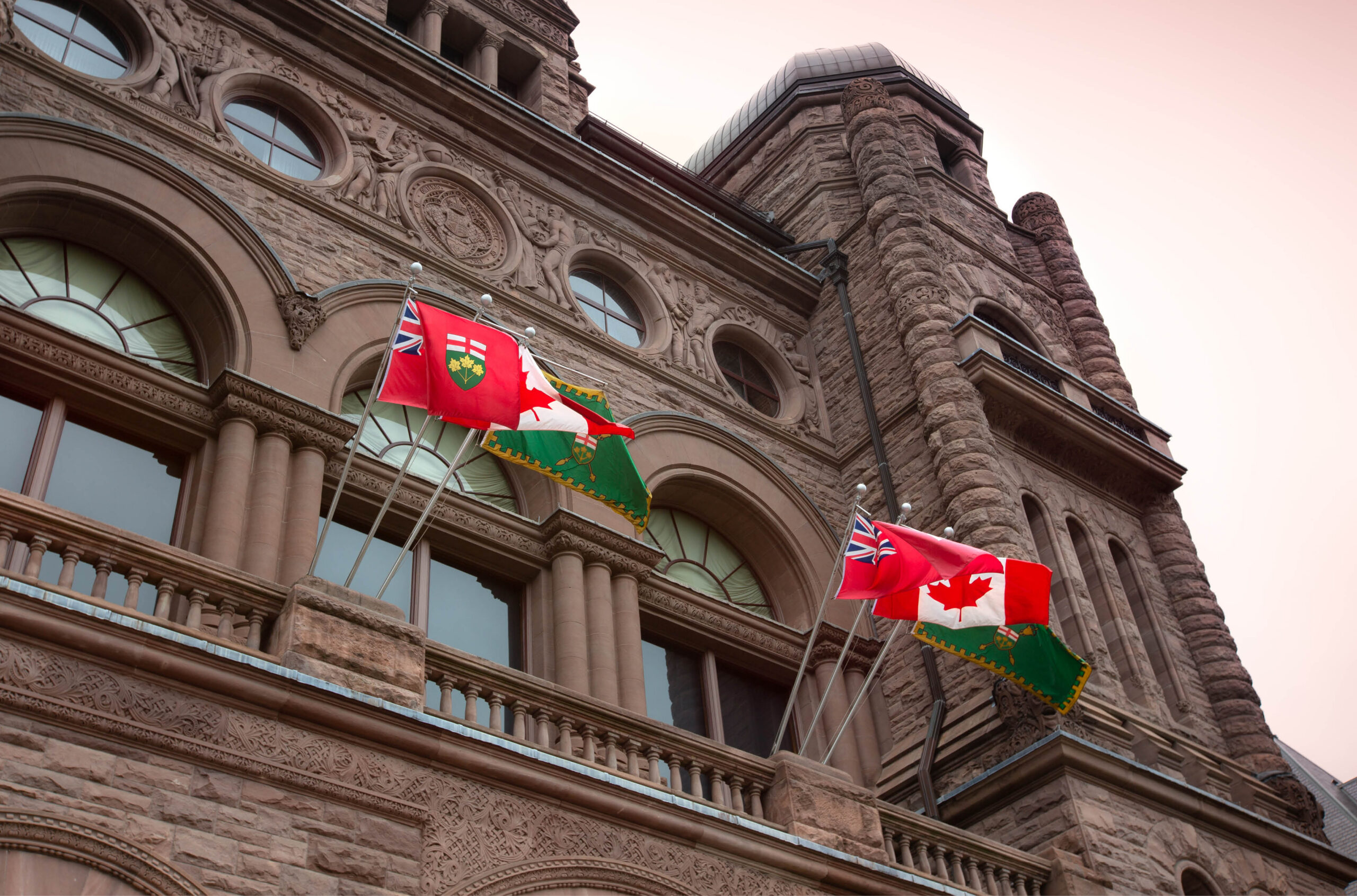
Ontario university budgets for 2026-27 have avoided tumbling over a previously predicted financial cliff in the wake of significant new provincial funding announced this winter, but some universities say they still need to make cuts to balance their books.
The Ontario government’s February announcement of an additional $6.4 billion over four years to colleges and universities, as well as the end of a seven-year tuition freeze, “went a long way to closing a growing funding gap by a historic degree,” said Steve Orsini, president and CEO of the Council of Ontario Universities (COU), which lobbied the province for improved grants for several years in the face of relatively stagnant base funding and frozen tuition. Nevertheless, “there’s still some heavy lifting that universities will have to do to continue the drive for long-term financial sustainability.”
At the University of Waterloo, some of that heavy lifting includes a planned $20 million in cuts to help remedy a $33.7-million structural deficit, even though the university anticipates receiving a net of nearly $36-million more than last year in provincial operating grants.
“Without that additional funding, we would have been in a position for significantly more budget reduction requirements,” said Jacinda Reitsma, the university’s vice-president, administration and finance. “The financial relief is welcome but also the clarity on what we may expect in future years as we work through long-term planning.”
Universities await funding allocation details
Other universities have echoed that sentiment. At the same time, they’ve had to prepare budgets based largely on the provincial government’s preliminary estimates of what individual universities will be allocated under the new funding. Universities are still waiting on details and further confirmations from the province, causing some to delay their budget approvals. The provincial government has also encouraged universities to adopt longer-term budget planning processes, requiring updates to a more extensive plan based on the recent funding changes.
“We are taking the time to get this right,” Lisa Philipps, interim president and vice-chancellor of York University in Toronto, said in a published statement on April 22. York’s multi-year budget plan, passed last year, projected a $67.4-million deficit for 2026-27. An updated budget, however, is expected to be finalized in June. “Our efforts right now to keep York on track to eliminate its structural deficit are critical to ensure the University can advance its distinctive mission and create positive impact for students and society over the long term,” Ms. Philipps said.
Trent University in Peterborough, reported to be facing nearly $12-million in cuts in the next academic year, said it was waiting to receive detailed allocations from the province before releasing its budget details. The University of Windsor similarly said its budget would not be released until its approval process was completed.
Effects of visa cuts and tuition freeze linger
The federal government’s cut to international student permits in 2024 exacerbated the grim financial picture for Ontario universities, especially for those that had leaned heavily on that revenue stream. While the provincial government did announce additional funding, including $750-million in April 2025 for more student places in STEM programs, that money was not permanent.
The provincial government’s recent funding improvements “do not fully offset the cumulative impact of years of earlier tuition reductions, inflation and enrollment disruptions,” said a summary of Carleton University’s April 28 board of governors’ meeting, where members passed an operating and ancillary budget with a $32-million deficit. “Tuition revenues continue to lag behind cost growth, particularly as inflation-adjusted domestic tuition remains significantly below pre-2019 levels,” the summary stated.
Northern Ontario’s Algoma University, which was found in 2022 to have drawn 76 per cent of its tuition revenue from international students at its Brampton campus in the province’s south, is facing a projected $16.45-million deficit in the coming year. Its own figures show that enrolment has plummeted from 13,600 students in 2023-24 to an expected 3,292 next year.
Job cuts are expected, and part-time instructors, most of whom teach at the Brampton campus, have already seen a nearly 50 percent cut in the number of courses they teach between the winter 2025 and winter 2026 terms. The university’s original campus is located in Sault Ste. Marie, and it also operates a campus in Timmins.
“The trend is very clear,” said Vinay Yarlagadda, vice-president of the Ontario Public Service Employees Union Local 685, representing about 150 part-time instructors at Algoma U. He said his members have been warned by the administration that they will bear the brunt of academic job cuts. Still, Mr. Yarlagadda is hopeful that the effects of the boom and bust in international student enrolment will start to settle out soon. “We’re close to being back at the 2019 levels with the student body here in Brampton,” he said. “Hopefully our levels won’t fall any further and they’ll start to rise again. I’m optimistic.”
Some expect balanced budgets
Lakehead University in Thunder Bay is expected to present its budget to its board in early June. Projections from late April showed a proposed balanced budget. The province’s additional funding was “welcome news and provides a timely and sustainable funding framework for the sector,” said Gillian Siddall, Lakehead’s president and vice-chancellor, in an emailed statement.
Laurentian University in Sudbury, which remains under a provincial exit loan agreement following insolvency proceedings five years ago, projected a $1.4-million surplus for the coming academic year and anticipated it would gain $6.8 million in operating grants due to the province’s February announcement.
The University of Toronto, with its history of financial strength and a healthy endowment, said it will have a balanced budget in 2026-27. Nevertheless, it plans to trim $20 million through “staff reductions across the university,” mainly through attrition and elimination of unfilled positions, and by reducing discretionary spending.
Looking to the long term
Mr. Orsini, under whom the COU has consistently positioned Ontario universities as ideal partners to the provincial government’s pro-business economic ambitions, said that when it comes to post-secondary finances, government, universities and students each have a responsibility. The province has “really stepped up to the plate” with its February announcement; students have a role through the two-per-cent tuition hike they’ll face in September; and universities will “have to continue to work with our administration, faculty and staff to continue to find additional savings to help ensure long-term financial sustainability. That was always our commitment,” he said.
Students reliant on financial aid, however, worry about what’s to come under the Ontario Student Assistance Program (OSAP). The province’s February announcement signalled that OSAP would become primarily loans-based, with no more than 25 per cent of a student’s package comprised of non-repayable grants. “OSAP is no longer functioning in the way hundreds of thousands of students were originally promised,” said Cyrielle Ngeleka, chairperson of the Canadian Federation of Students-Ontario, in a written statement. As well, she said students worry that ongoing cost pressures at universities “will result in larger class sizes and reduced course offerings while government funding remains largely insufficient to meet the current needs of students and the institutions meant to receive them.”
Among the details still to be determined is each institution’s share of 70,000 additional student seats that were part of the Ontario government’s February announcement. Some 30,000 of those will be reserved for domestic students already enrolled at colleges and universities who were not previously funded by provincial grants. The remaining 40,000, which institutions will have to apply for, are allocated to the province’s priority areas such as STEM, health care and education, Mr. Orsini said. Annual capital and equipment allocations are also still to be finalized.
Strategic mandate agreements, which universities negotiate with the province every five years to set institutional priorities, performance targets, and funding-related parameters, are also in the process of being revised to incorporate the changed funding policy, he said.
Come next fall, Ontario university students “will still see programs realign to be more financially sustainable,” Mr. Orsini predicted. “But they’ll have more supports in those programs. Whether it’s equipment, whether it’s quality, teaching — all those things will give students a better experience.”

More from News
-

Students and seniors under the same roof
Intergenerational living helps with loneliness and the high cost of rent.
-

U Sports alum lace up for PWHL season
Canadian grads eager to show their mettle on women’s pro hockey teams.
-

The hidden problem of student homelessness
As high rents push more students into precarious housing, it's time to stop romanticizing the 'poor scholar'.
-

Parliamentary committee urges stronger support for research in French
Granting agencies should consider funding targets specifically for French-language projects, the Standing Committee on Science and Research recommends.
More from Budget
-

NL increases funding for post-secondary, confirms tuition freeze
Memorial University still faces “hard decisions” for upcoming operating budget.
-
Universities Canada, CAUBO warn federal action is needed as Canada’s universities face worsening financial outlook
A coordinated immigration policy, tax relief and fiscal crisis safeguards are recommended to sustain sector.
-

$21 M allocation gives USudbury ‘a solid foundation to build on’
Provincial funding allows the northern Ontario university to continue operating after its breakup with Laurentian.
-

Ontario budget reaffirms $6.4 B post-secondary funding boost, adds money for infrastructure
Millions more allocated to research, clinical nursing training, and French-language education.
More from Articles
-

Remove EDI from research funding decisions, parliamentary committee says
The Standing Committee on Science and Research says ‘discriminatory’ EDI policies are ‘weakening the quality of Canadian research’.
-

Good medicine: new programs train country doctors
Université de Montreal follows Queen’s prescription to heal the shortage of family physicians in rural areas.
-

Universities struggle to be heard in Quebec election
In a campaign dominated by the U.S. trade war and the soaring cost of living, universities assert their continued importance.
-
Quebec’s English-language universities embrace new French requirements as fall cohort begins
McGill, Concordia and Bishop’s universities roll out new initiatives to encourage students to learn French on and off campus.


Post a comment
University Affairs moderates all comments according to the following guidelines. If approved, comments generally appear within one business day. We may republish particularly insightful remarks in our print edition or elsewhere.