How to translate your knowledge for an industry audience
Getting buy-in from industry professionals means understanding their point of view and speaking their language.

Question:
Now that I’ve got tenure, I’m keen to have more influence on practice, and I know that my research findings, if implemented, would both save money and improve safety. I’ve published extensively and presented at conferences, but when I approach industry contacts, I get polite interest and no uptake. One director said my work was impressive, but he didn’t see how it could be integrated into their workflow. I know the cost savings should be compelling — what am I missing in how I communicate this research to actually influence practitioners?
– Anonymous, Civil Engineering
Dr. Editor’s response:
That director gave you valuable feedback, dear letter-writer, even if it wasn’t what you wanted to hear. His comment reveals the problem: you’re leading with what you’ve assumed matters — your findings and their cost savings — rather than what matters to him — workflow integration and operational realities.
It sounds like you’ve been doing what most researchers do when they want to influence practice: publishing, presenting and pointing to the logic of your findings. But this approach starts at the wrong place. To learn more about effective knowledge mobilization strategies — ones that influence change on the ground — I spoke with Dawn Henwood, founder of Clarity Connect, a knowledge mobilization consultancy.
Dr. Henwood argues that researchers tend to jump straight to education — the “if only they understood the importance of these findings!” approach. Instead, Dr. Henwood sees knowledge translation as having three pillars: engage, educate and inspire. You’ve been focused almost entirely on the middle pillar, but that alone isn’t going to work. Here’s what Dr. Henwood advises instead:
Start with engagement: making people care
Before anyone will want to learn about your, say, bridge-inspection methods, they need to care about the problem you’re solving. If you want to talk about inspection efficiency metrics, start first by telling a story. Maybe it’s the infrastructure manager who told you about shutting down a bridge for emergency repairs during rush hour, or the engineer who described discovering critical damage that had been missed by conventional methods. Frame your research around these human experiences: the stress of unexpected closures, the weight of responsibility for public safety, the frustration of aging infrastructure.
Dr. Henwood emphasizes that you need to frame your ideas to fit your audience’s perspective, as if you’re saying, “I see how you see the world; let’s look through this window together.” What does the world look like from a transportation director’s desk? They’re juggling budget constraints, political pressures, staff shortages and the daily reality of maintaining deteriorating infrastructure. They’re not thinking about research papers; they’re thinking about whether they can keep bridges open safely until the next budget cycle.
Move to education: teaching without lecturing
Once you’ve established why someone should care, then you can educate them about your approach. But education in this context doesn’t mean being authoritative or lecture-y: it requires creating a climate in which people feel seen and understood.
Start by building on what your learners already know. Transportation professionals understand bridge inspection; they know the current methods, the time requirements, the costs. Meet them where they are. Instead of explaining your findings from scratch, position it as, “you know how current visual inspections can miss subsurface deterioration? Here’s an approach that addresses that limitation while actually reducing inspection time.”
Next, break complex concepts into digestible bits. Don’t present your entire research program; instead, focus on a single, clear application. Create a hierarchy of information that allows people to grasp the core innovation before you add complexity. Use examples and stories throughout, not just data tables. A case study of one bridge assessment that caught problems early, prevented a closure, and saved money will be more memorable than aggregate statistics across your study sample.
One often-effective option is to show your audience how a specific change will look or feel or benefit them. Instead of saying “our method could reduce costs,” try: “our model shows that using this approach will cut inspection budgets by 30 per cent while actually improving safety outcomes — and the transition takes three months, not three years.” Paint the contrast between their current state and their future state, and make the path between them feel manageable.
Dr. Henwood recommends that you convey your main point through a simple, memorable visual. Data visualization is naturally part of engineering writing, but when you’re writing for practitioners, think about using visuals to communicate concepts as well as data. Instead of strain measurements and structural analysis charts, try process diagrams that show workflow integration, before-and-after comparisons of inspection timelines, or simple cost breakdowns that municipal finance officers can understand. As Dr. Henwood told me, “in most situations, it’s a mistake to assume that an industry partner will read a document from beginning to end. Think about how you can make your documents easy to skim. That may mean communicating more through graphics than through paragraphs.”
End with inspiration: enabling action
Dr. Henwood argues that building awareness isn’t good enough — you need to inspire specific action. What exactly do you want that transportation director to do?
Consider what success looks like for your audience. The director needs to justify new approaches to highers-up, manage risk and demonstrate fiscal responsibility. How does adopting your method make their job easier? What simple, concrete next step can they take?
Maybe the action you want isn’t full implementation — maybe it’s “ask your chief bridge engineer if this might work for one structure in your inventory.” Maybe it’s “have a conversation with your neighbouring municipality about piloting this approach jointly.” Be specific about the action, and make it feel personally rewarding, not risky. Dr. Henwood notes that “your goal isn’t exactly to mobilize research knowledge, because knowledge on its own is powerless to create change. You must mobilize the people who will transform knowledge into action. Consider your audience your collaborators and suggest specific ways you can work together to move your research forward and achieve practical results.”
Rethinking your communication strategy
Your final step is to go where your audience already spends their time. You might need to publish a case study in a trade journal or work with a professional association to deliver a webinar or be interviewed on a podcast.
Better yet, find champions within practice who can carry your knowledge forward. Is there one progressive company or forward-thinking bridge engineer who’s willing to pilot your approach? Their testimonial will be worth more than a dozen of your presentations. Dr. Henwood emphasizes that knowledge mobilization works best when you empower champions — people in industry who can advocate for your approach using language and examples that resonate with their peers.
That director who told you that he couldn’t see workflow integration was actually giving you valuable guidance about what you need to demonstrate. He wasn’t asking you to prove your research was rigorous; he was asking you to show him how it fits into Tuesday afternoon with three staff on vacation and an unexpected budget cut. Tell him a story that acknowledges his reality — one that empathizes with and adopts his perspective — and you’ll get closer to seeing your findings move into application.


Featured Jobs
- Architecture - Assistant Professor (Digital Fabrication, Design Computation, and Design/Build)Laurentian University
- Director, Human Research Ethics & Strategic AdvisorUniversity of Manitoba
- KAUST Global Fellowship Program - Postdoctoral Fellowship (Call 2027)King Abdullah University of Science and Technology
- Music - (4) Assistant Teaching Professors (String Quartet)University of Victoria
- Public Law - Assistant or Associate ProfessorUniversity of Ottawa
More from Career Advice
-

The paradox of doctoral learning
Completing a PhD doesn’t mark the end of learning, but rather the loss of the illusion that learning ever ends.
-

The secret to good labour relations
Two negotiators — one from a faculty association, one from a university administration — share their advice for building trust and achieving the common good.
-

Teaching in the great outdoors
A unique creative writing class at the University of Toronto connects students to nature.
-

From scholar to loller
The joys of retiring early.
More from Research
-
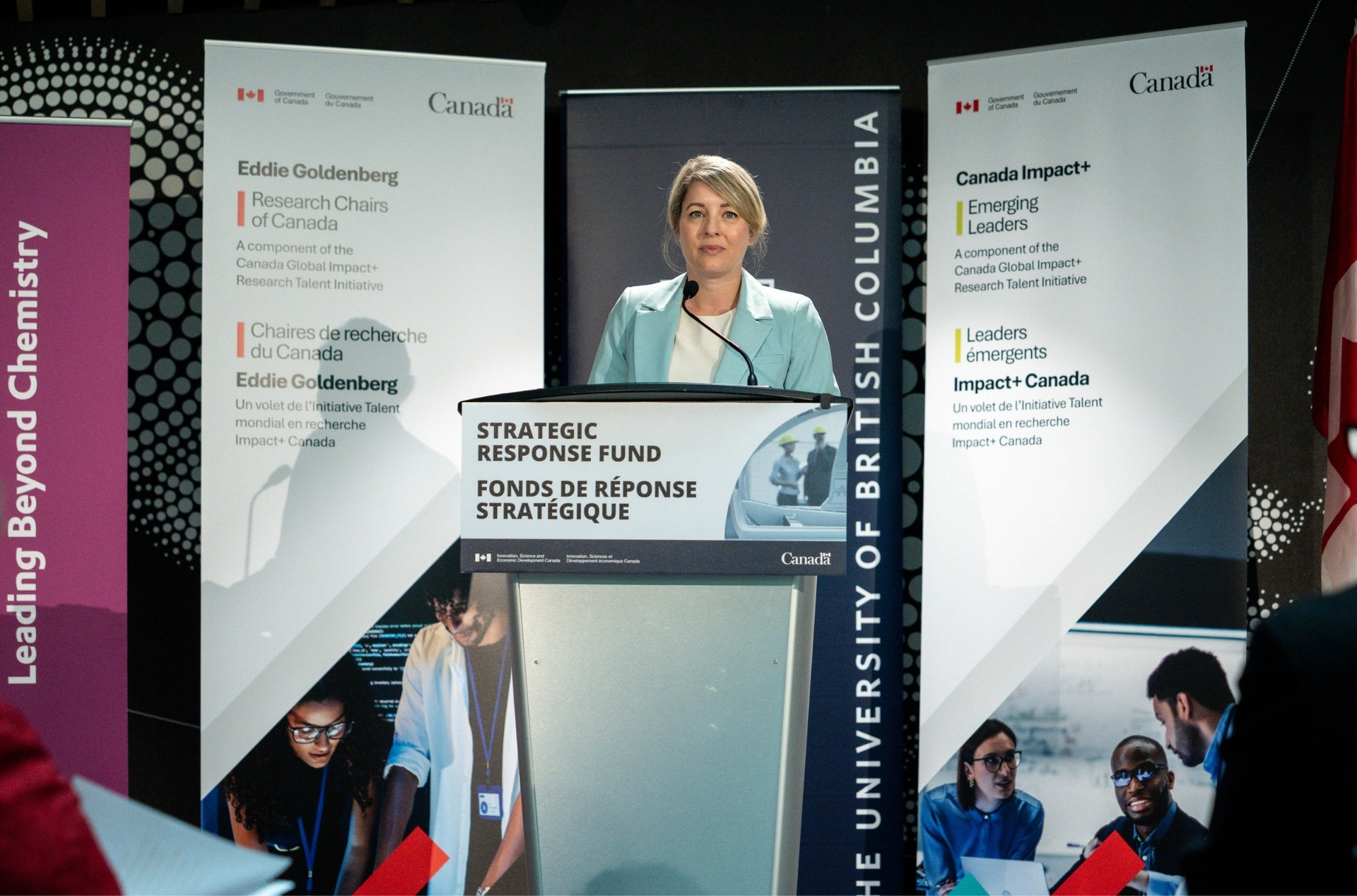
Ottawa announces 64 new research chairs in international talent attraction strategy
Top-tier researchers from 13 countries to join Canadian universities in first wave of appointments.
-

A look inside the hive: celebrating honey bee research at two Canadian universities
As MacEwan University marks 10 years of bees on campus, the University of Guelph kicked off the year by unveiling its newest centre for honey bee research.
-

Canada needs a national strategy to protect scholars at risk
Supporting displaced academics is a strategic investment in Canada's research and innovation ecosystem.
-

Proposed Alto rail route slashes through Queen’s field biology station
Federal government praises the wilderness station as ‘globally unique,’ considers cleaving it with high-speed train.
More from Ask Dr. Editor
-

Say it plainly: Writing a report for your community partners
Part I: How to break away from scholarly style and serve the people who made the research possible.
-

The academic’s guide to pitching for podcast interviews
Three tips for snagging a spot on your favourite series.
-

How to hook an SSHRC postdoc grant
Two tips for a catchy opening that will make your proposal stand out.
-

Dr. Editor’s summer reading list
Five books to improve your academic writing.

Post a comment
University Affairs moderates all comments according to the following guidelines. If approved, comments generally appear within one business day. We may republish particularly insightful remarks in our print edition or elsewhere.