
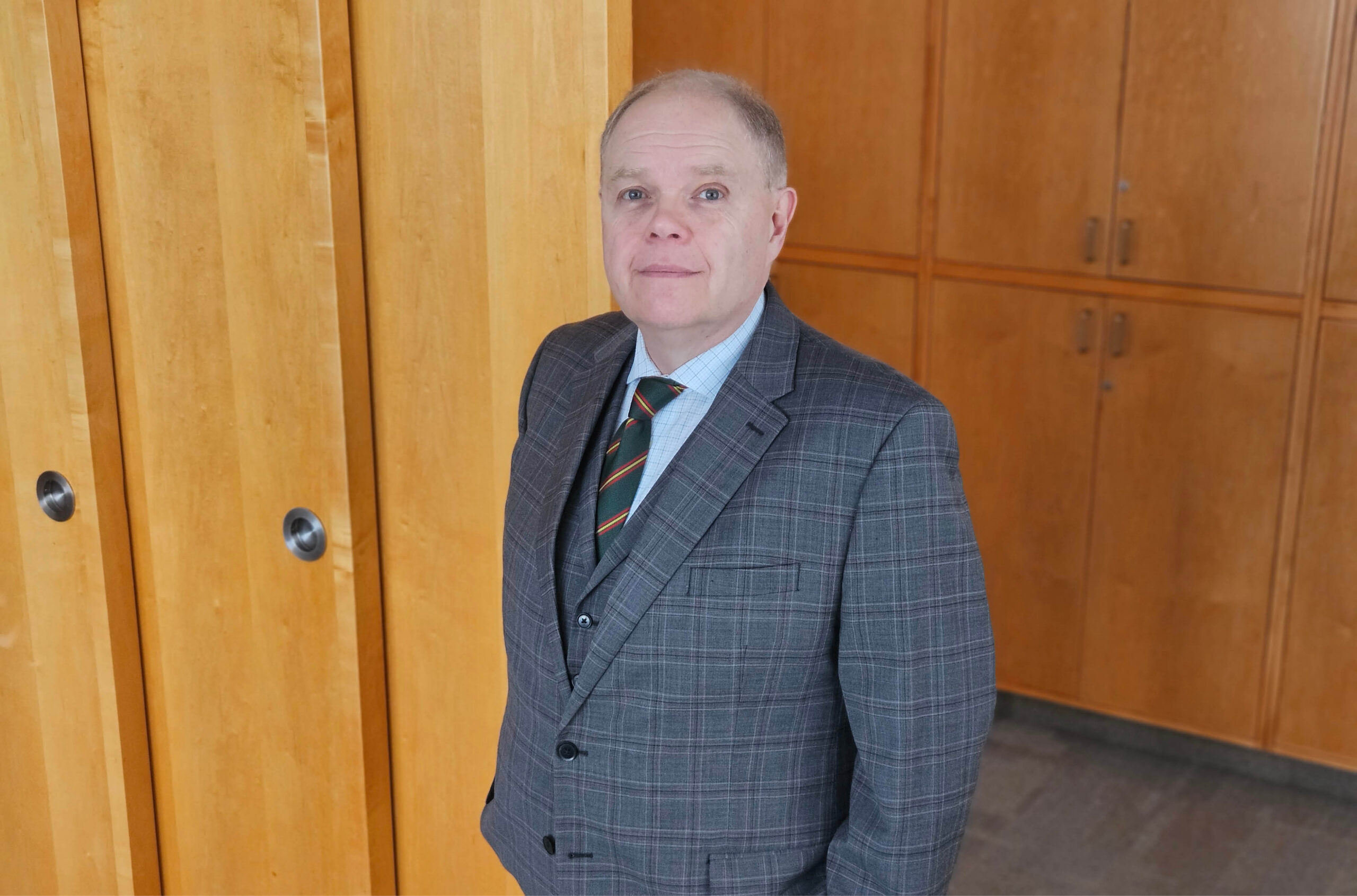
A career transition can be a strategic realignment. For Dr. Kevin McCormick this isn’t retirement. It’s redeployment.
In 2006, McCormick was appointed President and Vice-Chancellor of Huntington University in Greater Sudbury. Over a 19-year tenure, he led the institution through growth, institutional change, and increasingly complex external challenges.
Now, with his appointment as President Emeritus, and new role as a board member, he is turning his attention to an area that has increasingly defined his trajectory: international engagement.
For more than a decade, McCormick has been laying the groundwork for Huntington to expand its horizons globally. As the Founding President of many of the university’s international institutes, McCormick maintains a vested interest in their ongoing success and development. This is why, during this period of professional evolution, he has chosen to continue to play a role in actively guiding the next phase of growth for two of Huntington’s most successful international endeavours – the Canadian Institute for Human Rights and Global Health, along with the Peruvian Canadian Institute.
Active in nearly 25 countries, with significant engagement in West Africa, both international institutes have moved well beyond exploratory partnerships; establishing sustained relationships with government ministries, academic institutions, and private-sector partners. These connections have translated into formal agreements; strategic partnerships that have the potential to lead to program development and other academic or research initiatives for the university.
For McCormick, the transition reflects both opportunity and necessity.
“I’ve been considering this for some time,” he noted, emphasizing timing and priorities. Huntington is now positioned to expand program development in meaningful ways while strengthening partnerships that align closely with its academic mission and values.
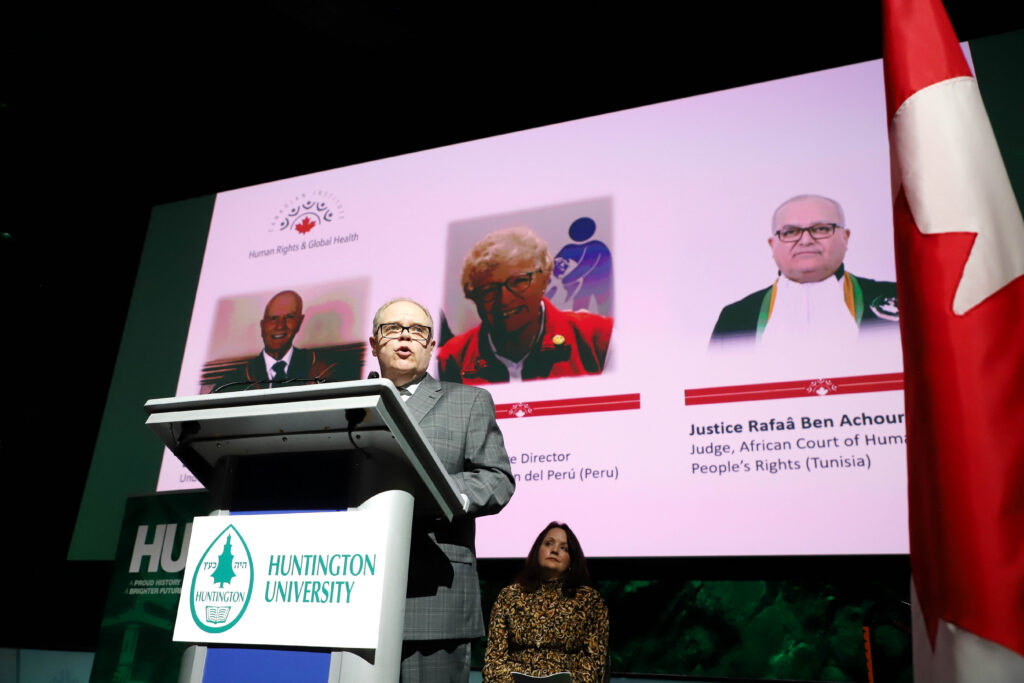
What began as a complementary portfolio has evolved into a central pillar of McCormick’s commitment.
Colleagues and collaborators view the transition as a logical progression. Mary-Liz Warwick, Past Chair of the Huntington University Board of Regents, emphasized successes in McCormick’s long-standing work in international relations, social justice, refugee issues, and human rights.
Ambassador Roberto Rodríguez Arnillas, Director General for the Americas with Peru’s Ministry of Foreign Affairs, points to McCormick’s long-standing international orientation. His work across governments, embassies, and academic institutions has consistently emphasized cross-border collaboration. This new role consolidates that trajectory.
Similarly, Laurence Burgorgue-Larsen of the Sorbonne highlights McCormick’s capacity to convene diverse stakeholders and sustain productive partnerships. Strategic vision with a collaborative approach that has been central to the success of Huntington’s international initiatives.
Dr. Livy Visano, Huntington Board member and Undergraduate Program Director in the Department of Equity Studies at York University, says McCormick has demonstrated consistent effectiveness across institutional, community, and national contexts. He adds that his leadership has generated significant international credibility—an asset that will be central to the next phase of Huntington’s development.
That integrity is reinforced by a sustained record of his own personal philanthropic and capacity-building work. In recent years, McCormick has focused on expanding access to education by addressing financial barriers directly. In 2022, he focused on enabling students with special needs in Latin America to pursue and complete academic programs that might otherwise have remained inaccessible.
During the COVID-19 pandemic, this commitment extended to supporting a cohort of medical students in Burkina Faso, ensuring continuity in their training at a time of global disruption. In recognition of these and other contributions to education, McCormick was awarded the Knight of the Order of the Stallion, the country’s highest national honour.
Complementing these efforts is the Maple Leaf Awards Program, an initiative he established to support scholars from developing countries which facilitates research dissemination and participation in international conferences.
Beyond the academic sphere, McCormick’s service with the Canadian Armed Forces – including roles with the Irish Regiment of Canada and as Honorary Colonel with the 4th Canadian Division – reflects an additional dimension grounded in service and institutional commitment. “Project Honour and Preserve” is personally funded the project raising awareness of the sacrifices and contributions made by Canadian Veterans across decades.
For McCormick, these varied strands – administrative leadership, international collaboration, and philanthropy – are unified by a consistent philosophy. “This is a vocation, not a job,” he said. “You do what you love, and love what you do.”
As McCormick transitions into this next phase, the focus is clear: Huntington’s international institutes are positioned for continued growth, with expanding networks, deeper partnerships, and increasing influence.
In that context, McCormick’s shift is less a conclusion than a continuation – one aligned with both his personal ethos and the institution’s evolving priorities.

More Sponsored Content
-
MDPI Toronto Summit 2026: Bringing together leaders to shape the future of scholarly publishing
Highlights, key discussions, and insights from two days of collaboration, innovation, and open dialogue across leaders within the global research community.
-
Meet Kevin McCormick, Founding President of the Canadian Institute for Human Rights and Global Health
Bringing capacity to global engagement.
-

From business journalism to entrepreneurial support
A Moroccan BCDI 2030 Scholar committed to empowering women entrepreneurs.
-

Interactive simulations transforming business education
Engaging students through immersive experiential learning while providing personalized support for instructors.

Post a comment
University Affairs moderates all comments according to the following guidelines. If approved, comments generally appear within one business day. We may republish particularly insightful remarks in our print edition or elsewhere.