




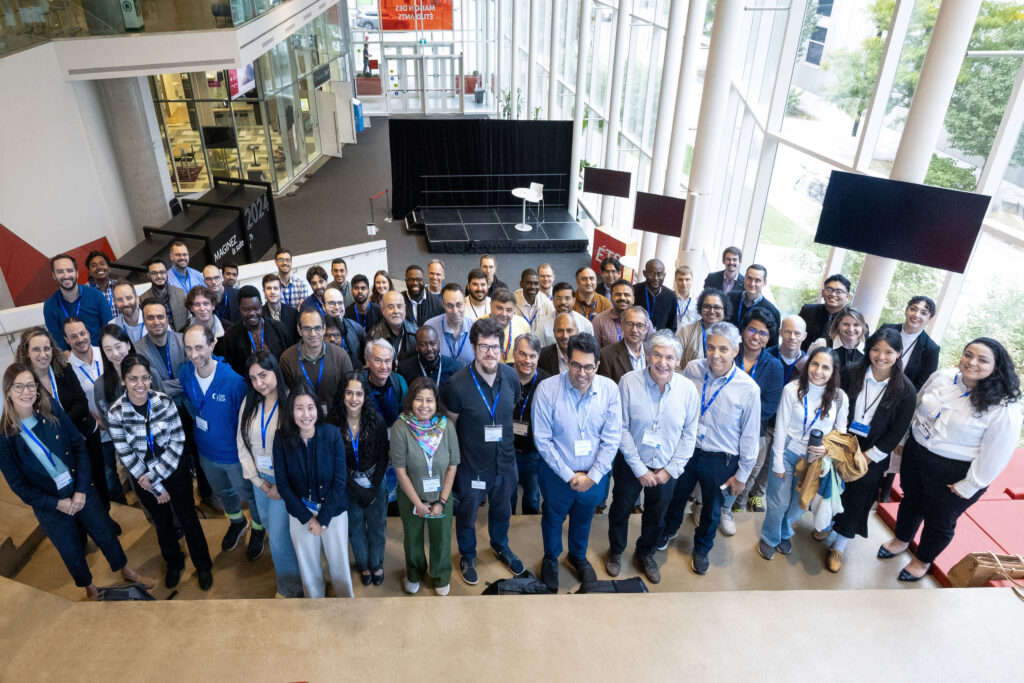
MDPI Canada, in collaboration with the Regroupement Stratégique en Microsystèmes du Québec (ReSMiQ), successfully hosted the fourth edition of its North American Subject Workshop series and its first workshop dedicated to Electrical and Electronic Engineering. Entitled “Microelectronics, Microsystems, Sensors and Their Applications,” the event welcomed close to 100 participants to the École de technologie supérieure (ÉTS) campus in Montréal, bringing together researchers, academics, graduate students, postdoctoral fellows, and industry professionals from across Canada.
The workshop provided a platform for scientific exchange and interdisciplinary discussion, highlighting recent developments in microelectronics, microsystems, and sensor technologies. Through invited presentations, technical discussions, and a student poster competition, attendees explored emerging research trends while strengthening connections within the Canadian engineering research community.
The event was chaired by Prof. Ricardo Izquierdo (ÉTS) and opened by Summer Huggard, MDPI Canada Operations Manager, who acknowledged the contributions of ReSMiQ and ÉTS to the organization of the workshop.
The program featured presentations from seven invited speakers representing leading Canadian institutions and research groups: Prof. Frédéric Nabki, Prof. Behraad Bahreyni, Prof. Ion Stiharu, Prof. Sharmistha Bhadra, Prof. Eihab M. Abdel-Rahman (virtual presentation), Prof. P. Ravi Selvaganapathy, and Dr. Jhonattan Córdoba-Ramírez.
Presentations addressed a wide range of topics, including integrated microsystems, microelectromechanical systems (MEMS), graphene and reduced graphene oxide technologies, organic and solution-processed electronics, resonant sensors, low-cost sensor fabrication and integration methods, and multiresonant plasmonic metasurfaces for biosensing.
Collectively, the sessions highlighted advances in sensing technologies, nanofabrication, sustainable electronics, and point-of-care diagnostic applications. These research areas also reflect the interdisciplinary scope of several MDPI journals, including Sensors, Actuators, Machines, Micromachines, Electronics, Drones, and Micro, which publish research spanning sensor technologies, robotics, microfabrication, electronics, and emerging microsystems applications.
Alongside the academic discussions, the workshop also included an overview of the current scholarly publishing landscape in Engineering and Electrical and Electronic Engineering, examining relevant developments and trends in the field, particularly within Canada.
Reflecting on the event, Prof. Ricardo Izquierdo shared his perspective:
“I was very pleased with the way the workshop came together. It brought close to 100 people to ÉTS, including researchers, students, postdoctoral fellows and industry professionals, and created a lively setting for sharing ideas across microelectronics, microsystems and sensor technologies.
For ReSMiQ, the workshop was especially valuable for our students. They had the opportunity to hear from leading researchers in the field and to present their own work through the poster competition. I was also glad that we could invite coordinators from other strategic research clusters. Bringing these groups together helped strengthen connections across research communities and opened the door to further exchanges.
The range of topics—from integrated microsystems and MEMS to graphene technologies, organic and solution-processed electronics, resonant sensors and biosensing—showed how broad and interconnected this research community has become. My thanks go to MDPI for its continued help and support in organizing the workshop, and to the speakers, participants, students and colleagues at ÉTS and ReSMiQ who contributed to its success.”
Showcasing the Next Generation of Engineering Research
A key feature of the workshop was the poster competition, which showcased research from graduate students and postdoctoral researchers. Across two dedicated sessions, 31 presenters shared their work, contributing to scientific discussion and knowledge exchange throughout the day. The competition provided early-career researchers with an opportunity to present their findings, receive feedback from peers and experts, and build connections within the broader research community.
At the conclusion of the workshop, poster competition winners were recognized during an awards ceremony. Entries were evaluated by a panel comprising representatives from ReSMiQ and MDPI, primarily assessing the effectiveness and clarity of research communication across the diverse range of scientific topics. Congratulations to the winners: Gabriel Gandubert, Régis Guertin, and Suaid Tariq Balghari.
Looking Ahead
The MDPI and ReSMiQ Montréal Subject Workshop marked an important milestone for the North American Subject Workshop series. The collaboration strengthened connections within Montréal’s engineering research community and provided a valuable forum for knowledge exchange among researchers, students, and industry stakeholders.
MDPI thanks ReSMiQ, ÉTS, all invited speakers, attendees, poster presenters, and organizing colleagues for their contributions to the success of the event.
MDPI’s next Subject Workshop in its North American series will be held in Toronto on November 27, highlighting the field of geosciences: “Earth Observation for a Sustainable Planet: Integrating Big Data, AI, and the Geosciences”
This workshop will gather researchers and professionals working across Earth observation, geosciences, and data-driven environmental science to examine how AI, big data, and Earth observation technologies are advancing sustainability and improving Earth system understanding.
Free registration is available for all participants, and lunch and coffee breaks will be provided. Register here: “Earth Observation for a Sustainable Planet: Integrating Big Data, AI, and the Geosciences”
For more updates on this and other upcoming workshops, follow MDPI Canada on LinkedIn and Facebook, and MDPI USA on LinkedIn.

More Sponsored Content
-
MDPI and ReSMiQ Bring Together Canada’s Engineering Research Community at Montréal Workshop
MDPI and ReSMiQ brought nearly 100 researchers, students and industry professionals together in Montréal to explore advances in microelectronics, microsystems and sensor technologies.
-
MDPI Toronto Summit 2026: Bringing together leaders to shape the future of scholarly publishing
Highlights, key discussions, and insights from two days of collaboration, innovation, and open dialogue across leaders within the global research community.
-
Meet Kevin McCormick, Founding President of the Canadian Institute for Human Rights and Global Health
Bringing capacity to global engagement.
-

From business journalism to entrepreneurial support
A Moroccan BCDI 2030 Scholar committed to empowering women entrepreneurs.


Post a comment
University Affairs moderates all comments according to the following guidelines. If approved, comments generally appear within one business day. We may republish particularly insightful remarks in our print edition or elsewhere.