Help! AI stole my students’ brains!
Why professors must teach undergrads to think critically about artificial intelligence tools.


If you’re like me, you’ve been reading with disquiet a growing number of studies that show how AI is already diminishing cognitive and creative abilities, in a process now called cognitive offloading. There are already so many, published in journals including Societies, Springer Nature, Science Direct, the Journal of Computer Information Systems and more.
I can see the value of “keeping the human in humanities”, as Dr. Timothy Pettipiece so eloquently put it, when he argued that technology-free classrooms could help students acquire the very skills that would be necessary to use AI effectively. But, before we do that, we need to let students understand the limits of AI. Because right now, undergraduate students trust AI far too much.
It’s difficult to overstate how much undergraduate students, fresh from COVID lockdowns and online learning in the middle school years and freely accessible AI in their high school years, have come to rely on this technology. While hardly definitive, a straw poll in my first-year ancient global history course found that every person in the class had used AI to complete at least one assignment in the last year. Every single person in a 45-person class. A recent KMPG survey discovered that in 2025, 73 per cent of Canadian high school students self-reported using generative AI to help with schoolwork.
Did the students know, I wondered, that free versions of AI chatbots like Copilot and ChatGPT still regularly hallucinate references? Did they understand that much of the “literature” produced by AI chatbots is formulaic and shallow, lacking examples and context? That chatbots were designed to be eager to please, to encourage greater engagement and were not necessarily reliable in tasks as diverse as parsing Latin — Claude agreed with every different way I translated a Latin sentence — to analyzing the trends in Hammurabi’s Law Code—Copilot absolutely refused to write a story based on Hammurabi’s Law Code that followed the principle of lex talionis (reciprocal justice, or the “eye-for-an-eye” principle). Did they really grasp that AI could be used to spread Russian propaganda in the place of reliable information?
To my horror, the answer was a resounding no. Here’s how I know.
To help teach students AI literacy, my first-year premodern global history class had four different assignments designed around asking an AI tool to produce material, then analyzing the output. To do this we used Copilot, since our university had a Microsoft Enterprise licence that provided the students with basic data protection. The assignments ranged from having the students edit AI-produced essays, to analyzing Copilot’s ability to summarize articles, to tweaking prompts in Copilot until it created an accurate map. It was this last assignment that brought home how few students really questioned the accuracy of anything Copilot produced. I saw maps students accepted as accurate in which Africa was labeled as Australia; in which India was in Europe; in which landmasses were labeled as oceans and oceans as continents. It is hard for me to express just how inaccurate the maps produced by Copilot were. They were disasters.
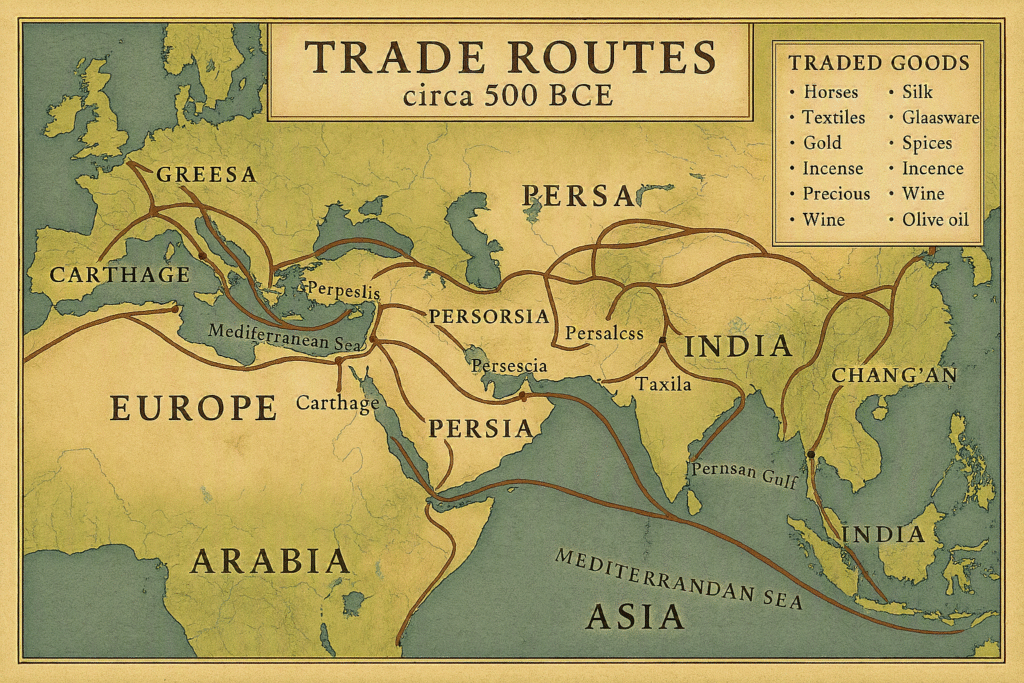
And yet, very few students, only about 25 per cent of those who attempted that assignment, realized that the maps produced were problematic. It wasn’t that the other 75 per cent did not know basic geography; it was that they didn’t even glance at what the AI produced. The absolute trust students put in AI was shocking. Even with an assignment that had warned that AI could generate error-ridden maps, most students just assumed that what the AI generated was accurate.
It is this trust that should worry us educators the most. If students already so trust AI output that they can’t see errors like the continent of Africa being mislabeled, how can we expect them to see the subtle errors that AI introduces? Or disinformation that might be included? Learning how to scrutinize AI responses analytically may be the most important tool we teach for the foreseeable future.
To reinforce the unreliability of AI map production, I added a question on the final exam that asked students to find six errors (both geographical and with respect to ancient trade routes) in a map Copilot produced in response to the prompt: “Please draw common trade routes across Afro-Eurasia circa 500 BCE.” The map is reproduced above; there are far more than six errors. This question was nearly uniformly answered well by the students. What this suggests is that the students could recognize bad geography when they were asked to notice it. But they had to be prompted to notice it. We badly need to instill the skill of always, automatically questioning AI production. We need to inculcate an attitude of constant skepticism and analysis.
Right now, my students don’t believe that they are smarter than any AI. We need to prove to them that they are. And the only way to do this is to teach AI literacy at high schools and in university classrooms. And yes, even in humanities classrooms. The skills we already teach as humanists — analytical reading, constructions of knowledge and critical thinking — can pave the way for using this new tool responsibly and effectively.


Featured Jobs
- Global Inequalities and Trade - Faculty PositionUniversité Laval
- Director, Human Research Ethics & Strategic AdvisorUniversity of Manitoba
- Psychology - Assistant Professor (Clinical Psychology)Western University
- Theatre and Film - Assistant Professor Without Review (Performance Practice)The University of British Columbia
- International Studies - Faculty Position (Arctic Defence and Security)Université Laval
More from Career Advice
-

How serendipity built a cross-disciplinary career
Taking research positions out of economic necessity allowed me to gather a broad set of skills and knowledge.
-

From doctoral student to entrepreneur
Resources abound to help you turn your PhD research into a business startup.
-

Internationalizing Truth And Reconciliation through multilingual storytelling
Faculty share stories in their home and heart languages in the University of the Fraser Valley’s Leq'áleq’el Video Series.
-

Show it clearly: illustrating a report for your community partners
Part II: How to design figures that tell your story.
More from Artificial intelligence
-

Faculty well-being in the age of GenAI
When every student has an AI assistant, the writing teacher's job becomes both harder and more essential.
-
Can you spot an essay written by AI?
Learn the common patterns, limitations, and clues that may reveal AI-generated writing.
-

Gen Z meets genAI
We are the first generation to learn alongside AI. What do we owe the next?
-
AI in universities: the case in favour
Joël Blit argues integrating AI into curricula and pedagogy can make universities more human, not less.
More from Career Advice Articles
-

The secret to good labour relations
Two negotiators — one from a faculty association, one from a university administration — share their advice for building trust and achieving the common good.
-
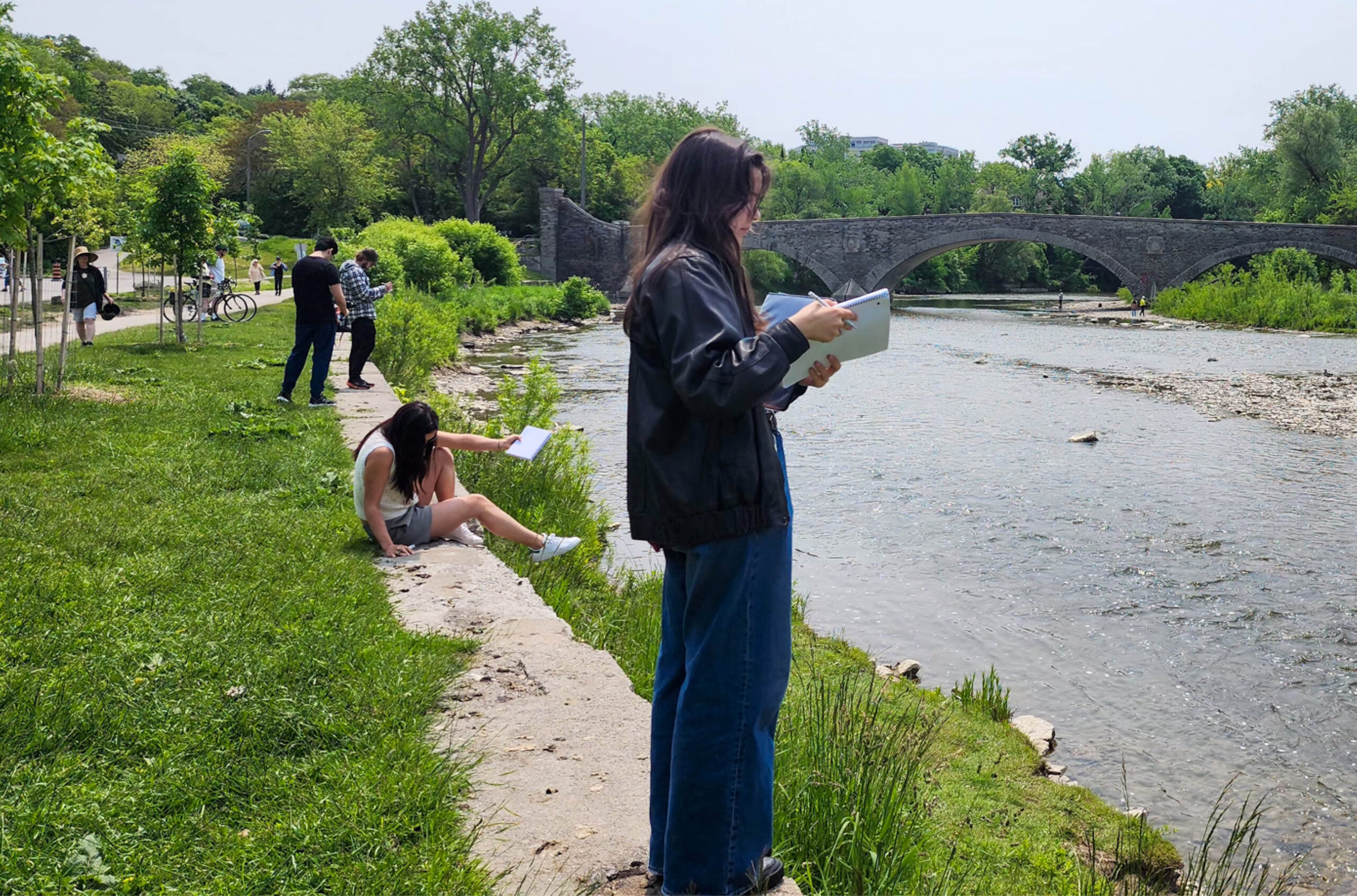
Teaching in the great outdoors
A unique creative writing class at the University of Toronto connects students to nature.
-

Why are multiple-choice questions making a comeback?
Distinguishing the correct answer from plausible, but incorrect, alternatives sharpens students' skills in detecting AI slop.
-

Eight tips to sail through your science or engineering PhD
One-third of people who start a PhD don’t finish within 10 years. Don’t be one of them.

Post a comment
University Affairs moderates all comments according to the following guidelines. If approved, comments generally appear within one business day. We may republish particularly insightful remarks in our print edition or elsewhere.
3 Comments
Donna, your article caught my attention because it is grounded in what you saw students actually do.
By asking students to use AI, examine its responses, and identify its mistakes, you showed that the issue is not only that AI makes errors. It is that many students accepted the AI output without really looking at it. Even obvious errors were missed until they were asked to find them.
Your experiment takes students to a stronger kind of AI literacy. They learn not to accept AI at face value, but to question it, recognize its limits, and become more discerning “users.”
For some time now, I have been advocating what I see as the next step: helping students move from “using” AI and being “users” of AI to “designing” and “building” AI.
For many people, a chatbot still sounds like something only a technical team can create. That is no longer the case. With today’s no-code AI platforms, students can build and customize their own chatbots by deciding what knowledge the tool should use, which sources it should trust, when it should challenge them, and what a good answer should look like.
They can then test it, correct it, compare its answers with reliable sources, and improve it as they learn.
For me, the key word is ownership. Students are not only using AI to learn. They are taking greater responsibility for how they think, question, judge, and learn.
In my introductory lecture for a third-year course requiring essays, when I talk about the essay requirements I now give students examples of AI “idiocy” taken from online sources. One is the response to asking about smoking during pregnancy leading to advice to smoke two or three cigarettes a day, or asking “how many rocks should I eat?” and the AI response being that eating stones is good for one and to “eat at least one small rock per day”. I hope that pointing out such obvious errors will prompt the students to question AI responses if they should resort to use AI for any of their coursework.
I like the article, but using AI responsibly is the problem. Students have already demonstrated that they won’t do this, so trying to split the difference (“responsible AI”) is only going to create more frustration for professors. It’s best to eliminate AI from the classroom by teaching relevant subject material and by using in-class, secure assessments.