Feeling disillusioned? The Pope is on your side
Pope Leo XIV’s encyclical on AI has much to say about the culture of profit, technocracy and competition pervading today’s universities.

I have been observing my own hollowing out for some time within academia. I say this as a tenured professor at one of Canada’s U15 universities who has had the privilege of completing three fully funded graduate degrees in the discipline I stumbled across as a result of my broad interest in what it means to be human: anthropology. In working on research responsive to needs identified by health personnel and communities across many countries, I have been deeply nourished by friendships, solidarity, discovery, challenge and beauty. I do not take for granted that I have a rewarding career that pays the bills and brings me into contact with intriguing colleagues, students full of questions and ideas, and gets me to places I would never otherwise see.
But I have concerns. The texture and direction of academic life these days can feel grey and flat. Breathing room for creativity, reflection and connection — to students, to colleagues, to community, to family — are constrained. Our academic system is organized around neoliberal values of optimized efficiency, private responsibility for well-being and normalized competitiveness.
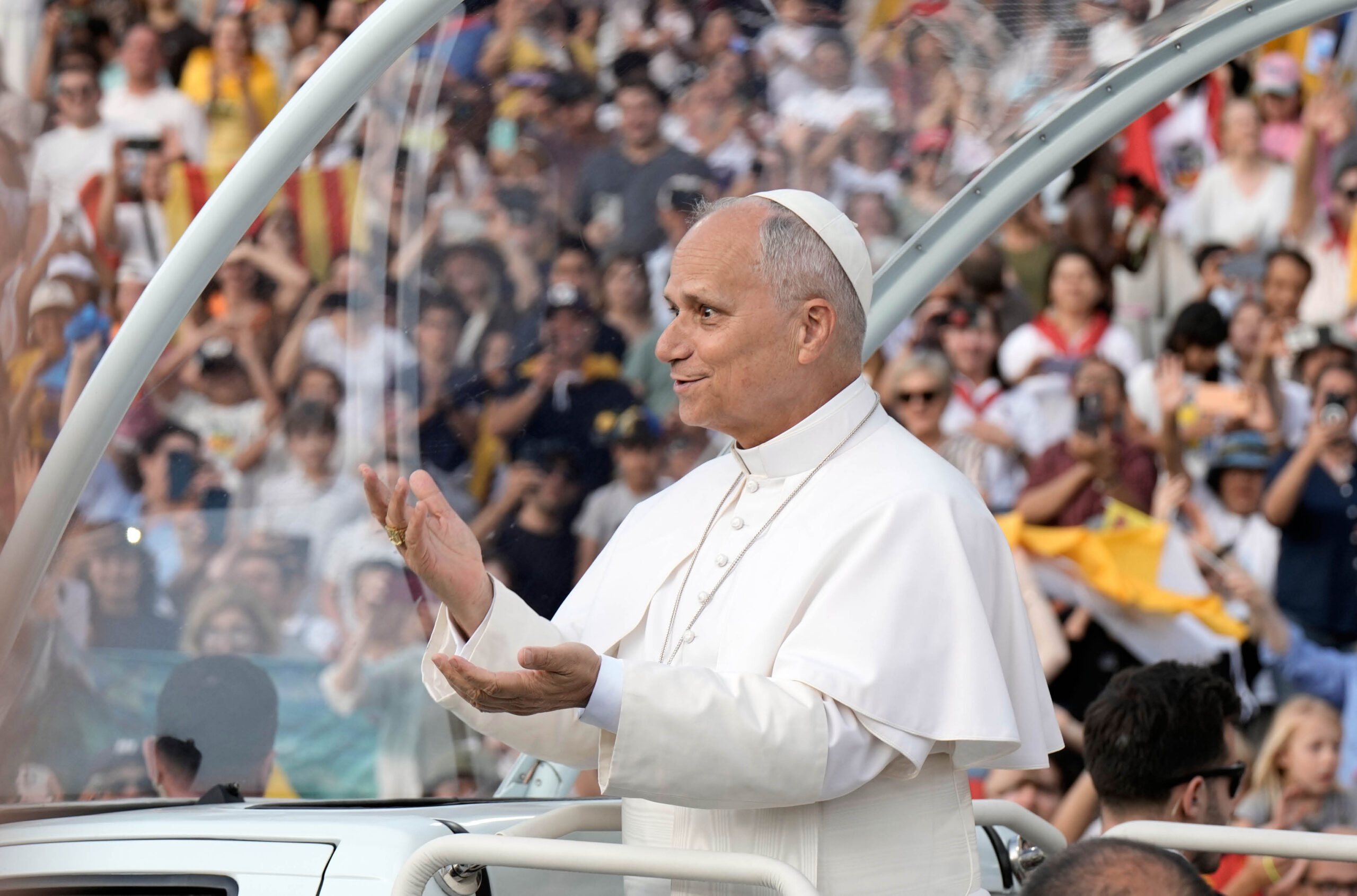
It is in this context that I found myself impressed by Pope Leo XIV’s recently issued Magnifica Humanitas. In this encyclical, the Pope articulates risks and trends of dehumanization that are clearly relevant for thinking about what is being prioritized and encouraged in many universities today.
The risks of the ‘technocratic paradigm’
Citing his predecessor Pope Francis, Pope Leo XIV articulates a concern with the risks to human society posed by a growing “technocratic paradigm.” Within this paradigm, “the logic of efficiency, control and profit alone” dictate “what matters and what can be discarded.” This logic permeates nearly every dimension of the university today. What counts as scholarship is limited to that which can be monetized or ranked. Intellectual labour that is relational, slow, pedagogical, collaborative or community-engaged often struggles for recognition in performance evaluations. As academics — especially in institutions that are funded by the public whom they serve — we are expected to ask what knowledge is for and whom it serves. But this message is at odds with my experience, in which the work that is encouraged and rewarded is that which has resulted, or will result, in dollars for the university.
The pressure for ever-increasing productivity, prestige and grant money feels relentless. This pressure is sometimes subtle, but for the most part explicit. I am tenured, and work a minimum of six days a week, but still I am always looking over my shoulder, wondering if and when an administrator might decide I am not earning my keep — measured solely, it seems, in terms of how much grant money I bring in and how many peer-reviewed publications or presentations I have on my CV. Most academics I know exist in a near-permanent state of acceleration: prepping grant applications while teaching overloaded courses; mentoring students while absorbing administrative work once carried by professional staff; responding to endless emails and reporting requirements.
The language of collegiality and community persists, but conditions for collegial life are few when you are working 50 to 60 hours a week. For the many striving to meet expectations of “excellence” that currently require beating out other workaholic professors, that goal of excellence comes at a cost. An environment where professors are expected to do more with less, and where we are expected to invest our time in fulfilling narrow definitions of production, is also an environment where creativity, risk in thinking, reflection and rest are compromised. This has consequences for the classroom at some point, which bring us to the next good point made by the Pope.
The culture of immediacy that undermines learning
Extending his reflections on the expansion of technology and its grip on daily life, the Pope writes against “a culture of immediacy and hyper-stimulation, which gives rise to fatigue, boredom and apathy.” He sees with this an erosion of practices and conditions necessary for the difficult work of reflection and learning. Many professors like myself take to heart our responsibility to provide students with transformational education: experiences that bring students into dialogue with new ideas and enable them to grow not only in disciplinary expertise, but as human beings and social citizens. When professors are doing the work they want or feel compelled to do, they are energized, passionate and able to convey to their students that the work of asking questions, diving deep, learning, is exciting and worthwhile. When professors are pushed to choose research based on what is most fundable, or to spend their time on outputs that they do not personally value, this erodes energy. It can feel inauthentic, annoying and erode trust in the culture and leadership of the university.
After all, what is our work as academics about? Discovery and advancing knowledge, a respect for one another and diverse ideas, or pushing up our rankings? I have heard many of my colleagues ask university leadership how they are to uphold their commitments to quality education for our students in the face of growing class sizes, fewer teaching assistants, less staff, and fatigue from jacked-up productivity and reporting norms. These questions are invariably met with managerial language about “hard realities” and “strategic priorities.” What are we doing when professors are getting the message that the quality of education is not a priority?
Disarming the AI arms race
Finally, I found the Pope’s call to “disarm” AI inspiring, and worth quoting at greater length. “Disarming AI means freeing it from the mentality of ‘armed’ competition, which today is not limited simply to the military context, but is also an economic and cognitive phenomenon,” he writes. “This entails a race for ever more powerful algorithms and larger datasets, driven by the desire to secure geopolitical or commercial dominance. To disarm means discrediting the assumption that technical power automatically confers the right to govern. To disarm does not mean rejecting technology, but preventing it from dominating humanity.”
Disarming language seems to be what is needed in today’s universities. In Canada, universities have become deeply shaped by competitive logics: competition for funding, rankings, prestige, enrolments, visibility and institutional survival. Yet many of us are here because we believe knowledge is a collective and public good. We believe learning requires dialogue, debate, relationships and time. And we see scholarship as linked to preserving humanity, attending to injustices and deepening understanding of these and diverse ways of being, thinking and acting. This is about peace, not war. Just as “disarming AI” in the Pope’s encyclical does not mean abandoning progress, “disarming” the university does not mean abandoning ambitious scholarship or thought leadership. It means refusing the idea that our worth as humans is reducible to measurable productivity; that education exists primarily for economic benefit; or that life thrives with competition and hierarchies.
Avoiding dehumanization requires action
Pope Leo XIV may not have been writing with university professors in mind, but his messages are on point. Letting corporations take over norms of governance is not in humanity’s interest. Avoiding dehumanization requires action and intention. The Pope, speaking as the head of the Catholic Church, embodies another core message relevant to those of us who might be tempted to give up on the university’s potential to serve the collective good. The Pope has spoken: Do not give up on the old institutions, and do not be afraid to rock the boat.
Logics of extraction, speed, manufactured scarcity and competition are not inevitable. Universities in Canada are not organized as they are based on natural law. They are the outcomes of human decisions and choices. They can be reorganized around messages and norms other than fear, competition and optimization. They can be organized around mutual care, solidarity, democratic governance and humanity for example. Perhaps the first step is to guard against our own hollowing out. To ask ourselves, as the Pope does: “Where are we going? Toward what goal do we wish to orient ourselves? What direction should we choose as a people and as a human community?”

More from Opinion
-

Faculty well-being in the age of GenAI
When every student has an AI assistant, the writing teacher's job becomes both harder and more essential.
-
Committee’s EDI recommendations are based on flawed logic
Excellence must be sufficiently rigorous and inclusive to identify talent wherever it exists.
-
Building resilience in Arts through interdisciplinary collaborations
In a technology-enabled future, Arts faculties have an opportunity to demonstrate their relevance by making collaboration across disciplines easier and more visible.
-

Science in French? Bien sûr!
As English dominates the publication landscape, support for French-language research is a strategic investment in the quality, equity and the future of knowledge.
More from Artificial intelligence
-

Can you spot an essay written by AI?
Learn the common patterns, limitations, and clues that may reveal AI-generated writing.
-

Gen Z meets genAI
We are the first generation to learn alongside AI. What do we owe the next?
-

AI in universities: the case in favour
Joël Blit argues integrating AI into curricula and pedagogy can make universities more human, not less.
-
AI in universities: the case against
Ping Lam Ip and Andrea DeKeseredy argue generative artificial intelligence has no place in higher education.
More from In My Opinion
-

Why Canadian academics shouldn’t boycott U.S. conferences
Show up in person and do good trouble instead.
-

Canada’s sovereignty is being tested
As Canada faces mounting pressure from the United States, an Indigenous-led exhibition at the Gwangju Biennale offers a timely way to think about conflict, responsibility and the choices ahead.
-

It’s time to boycott U.S. conferences
As trade hostilities continue, we shouldn’t use taxpayers’ dollars to travel stateside.
-

Rebuilding Jewish students’ trust in universities
As students return to campus, discussions of the Middle East conflict deserve a scholarly, responsible and robust treatment that recognizes antisemitism in all its forms.

Post a comment
University Affairs moderates all comments according to the following guidelines. If approved, comments generally appear within one business day. We may republish particularly insightful remarks in our print edition or elsewhere.