Research that gives back
A one-day event brought scholarship winners together to discuss how their work can benefit communities.
For Ugochukwu Okoye, a PhD candidate in anthropology at Carleton University, research isn’t just about making interesting discoveries or achieving publication in peer-reviewed journals.
Rather, it’s about building meaningful, respectful and sustained relationships with the people and communities he’s studying.
A 2024 SSHRC doctoral fellow and recipient of the inaugural Flight 302 Legacy Award, Mr. Okoye’s research focuses on how African societies respond to gaps in state support and “how community-led organizations leverage diaspora networks to advance grassroots development and function as alternative sites of governance.”
Mr. Okoye was one of a dozen panelists at the Scholar to Scholar: Advancing Knowledge, Impact and Community event organized by Universities Canada (publisher of University Affairs) on June 23 at the Ottawa Art Gallery. The day was dedicated to recognizing the contributions of six UC-led scholarship programs: the Canadian Federation of University Women; Flight 302 Legacy Award; International Development Research Awards (IDRA); Queen Elizabeth Scholars; Canadian International Development Scholarships 2030 (BCDI 2030); and the Molloy Medicine Award.
Like Mr. Okoye, many of the panelists spoke on the importance of community engagement in creating change. Although the twelve scholars came from varying disciplines, they broadly agreed that research has the greatest value when it is shaped by the communities it serves and translated into real-world impact. Dr. Atul Jaiswal, research lead at the Perley Health Centre of Excellence in Frailty-Informed Care and an adjunct professor at the University of Ottawa, said: “Research should be a tool for change. If that’s not happening, then what’s the point of doing this research?”
Building meaningful community connections
The first panel of the day revolved around community engagement. Speakers focused on what it means to build meaningful connections within communities across Canada and abroad, and how research can effectively address real-world perspectives and ongoing needs. Participants were asked to share personal experiences, including why their work matters, how it shaped their perspectives, and what benefit it has brought to communities, universities and their own development as academics.
“Community engagement isn’t just one research tool, but I think it’s the purpose of research in general; I think it gives you an opportunity to reflect on your assumptions that you have within the research,” said Dr. Mona Ghadirian, an independent researcher with Participatory Research at McGill University and former Queen Elizabeth Scholar, who sat on the panel alongside Dr. Jaiswal and Mr. Okoye.
Knowledge travels through people
The second panel explored knowledge mobilization, asking scholars to reflect on their work, the opportunities or challenges they encountered, and the information they gained from engaging with broader communities.
Nadia Firoz, a PhD candidate in sociology at Carleton University and 2024 IDRA recipient, offered three important points that students and scholars should remember when beginning their research process:
“My first advice would be to start thinking about knowledge mobilization from day one — don’t leave it for later. Don’t wait until your data is analyzed and your report is written and only then ask who should read this,” said Ms. Firoz, whose work explores how Rohingya refugee women in Bangladesh navigate persecution, forced migration and protracted displacement while articulating resilience, agency, and claims to justice.
“Secondly, I can’t stress this enough … invest in relationships rather than products. Sometimes what happens is we become so focused on outputs … that we often forget that knowledge does not really travel through documents. It travels through people,” she added. “The third piece of advice is to step outside your own discipline whenever you can. Speak to practitioners or policy makers, community organizations, and also researchers from completely different academic fields and disciplines. Because I have found that those conversations will often challenge you to rethink your work, but it will also help you communicate it more clearly and more meaningfully.”
The other panelists were Joy Karinge, a PhD anthropology and African studies student at Carleton and 2025 Flight 302 Legacy Award recipient; and Dr. Kenneth Gyamerah, an assistant professor at Ontario Tech University and 2022 IDRA recipient.
Research for societal change
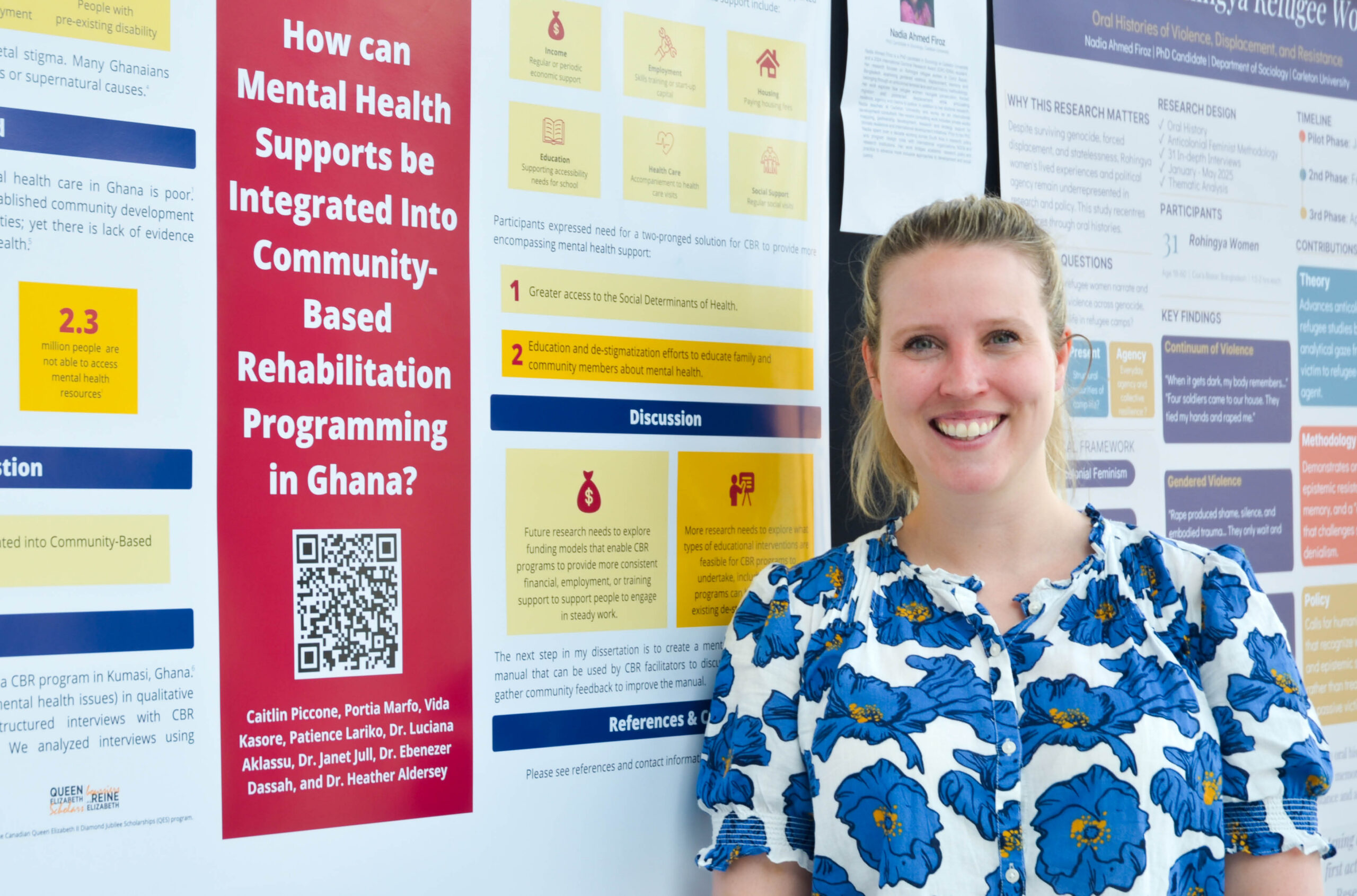
After a quick lunch and networking period, Queen’s University PhD candidates Nodir Ataev (global development), a Flight 302 Legacy Award recipient, and Caitlin Piccone (rehabilitation science), a Queen Elizabeth Scholar recipient, took the stage alongside Claudia Gonzales, a PhD candidate and International Doctoral Research Award recipient in public health at Université de Montréal. In the course of a panel focused on research for societal change, they were asked to reflect on their personal journeys, including motivating factors, specific challenges, and lessons that helped shape their efforts towards lasting change.
For Ms. Piccone, “Research isn’t just about what issues we study, [but] it is also about how we study them. Shifting the power dynamic between the researcher and the community is a really important first step towards creating real societal impact.”
Leadership means inclusion
In the fourth and final panel, scholars were asked to explore and reflect on the role of leadership development in their research and how their experiences with diverse perspectives shaped them as scholars.
For Queen Elizabeth Scholarship recipient Yvonne Ndelle of the University of Ottawa, leadership is about creating an inclusive environment. “The aim is to achieve collective success,” she said. “You’re working to achieve something, you’re working to achieve success, you’re working to empower people, and at the same time, you’re learning and becoming a better version of yourself.”
The other two panelists were Kouessi Anthelme Agbodandé, a BCDI 2030 recipient from the University of Ottawa, and Racheal Wallace, a Flight 302 Legacy Award recipient from Carleton University.
With more than eighty scholars and academics in attendance, the day was a successful celebration of the hard work and dedication put in by scholarship recipients. The key takeaway was to think about the overall impact that your research has on the world — whether in Canada or globally — and how you, as a scholar, can make a difference. As Dr. Gyamerah said: “Your research has something to give the world, and never underestimate the impacts that your weight can drive.”

Featured Jobs
- Toldo Chair in Christian StudiesAssumption University
- Director, Human Research Ethics & Strategic AdvisorUniversity of Manitoba
- Theatre and Film - Assistant Professor Without Review (Performance Practice)The University of British Columbia
- Global Inequalities and Trade - Faculty PositionUniversité Laval
- Psychology - Assistant Professor (Clinical Psychology)Western University
More from News
-
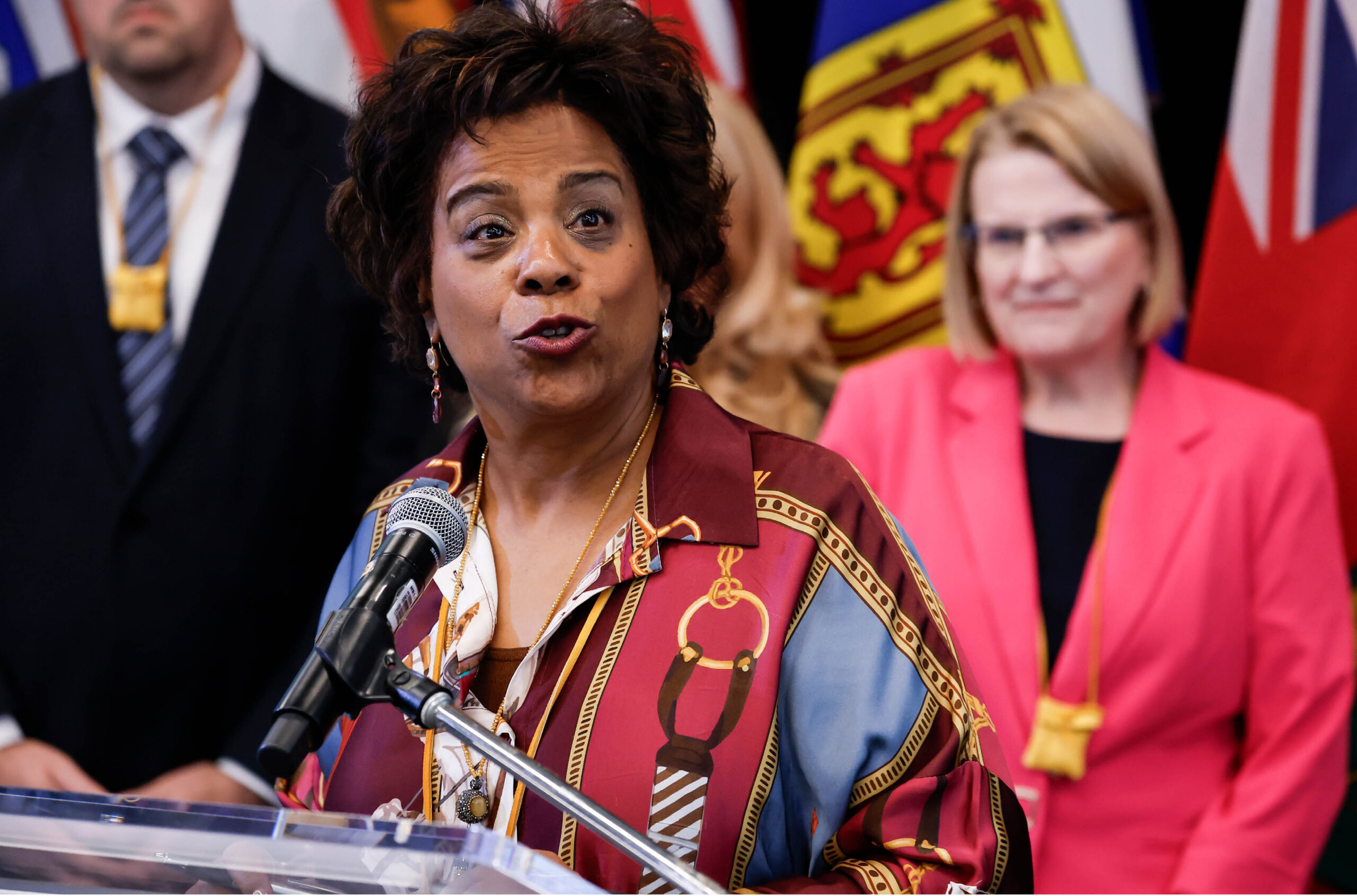
Feds announce $880 million for research
Funding will support both established health scientists and emerging cross-disciplinary researchers.
-
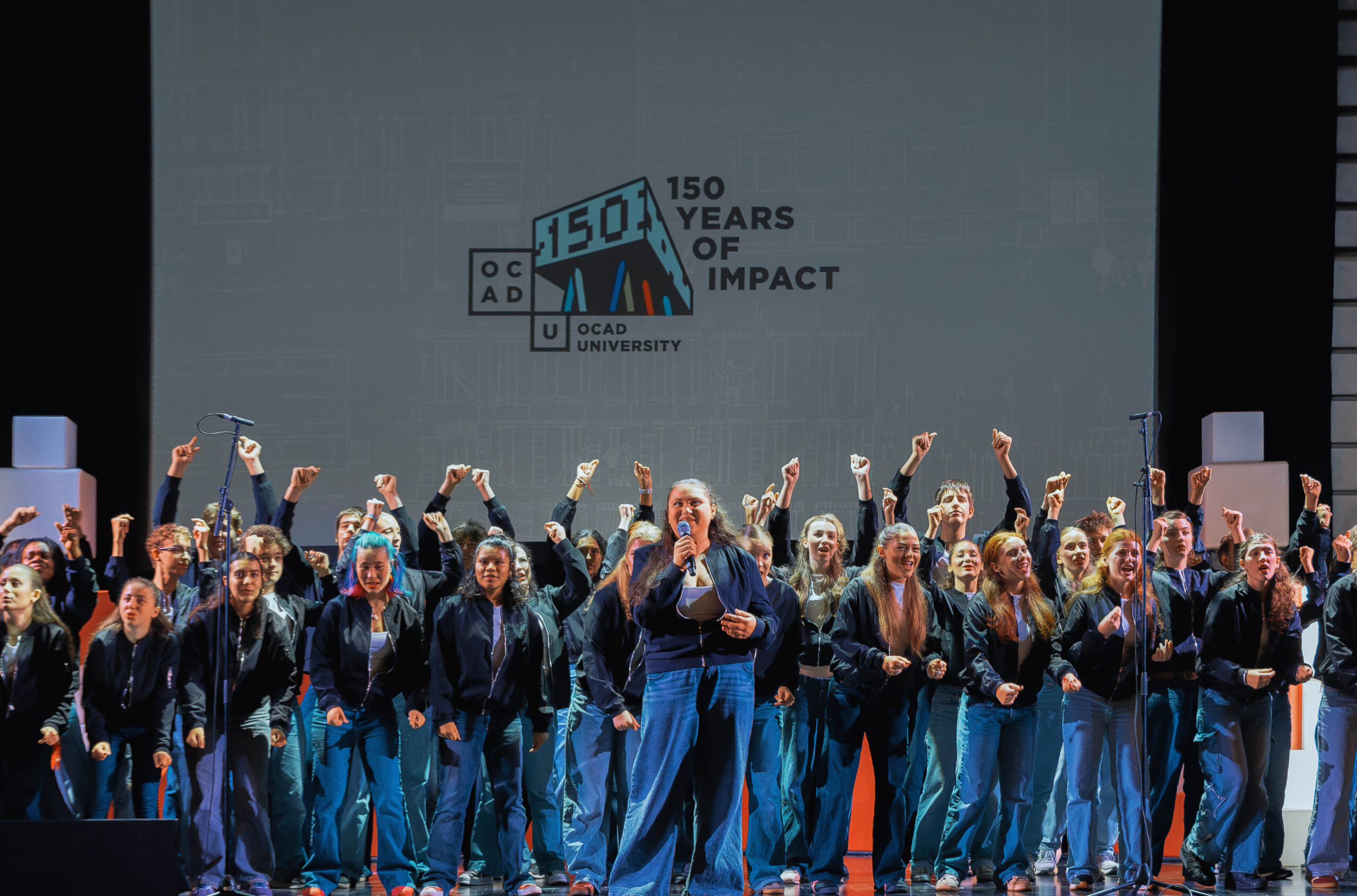
OCAD University celebrates 150 years of shaping Canadian culture
Art and design university launches $6-million campaign for 150 scholarships to mark 150th anniversary.
-

B.C. higher education: tweak or reform?
In the coming provincial election, parties offer different proposals for a system under strain.
-

Canada ‘muddling through’ without national research infrastructure strategy, panel finds
Expert report says fragmented governance and funding threaten Canada's research competitiveness and scientific sovereignty.
More from Research
-

The Nuisance Variable
Two-thirds of Alzheimer’s patients in Canada are women. Why does research still treat them as an afterthought?
-

How serendipity built a cross-disciplinary career
Taking research positions out of economic necessity allowed me to gather a broad set of skills and knowledge.
-

Science in French? Bien sûr!
As English dominates the publication landscape, support for French-language research is a strategic investment in the quality, equity and the future of knowledge.
-

From doctoral student to entrepreneur
Resources abound to help you turn your PhD research into a business startup.
More from Articles
-

Ottawa won’t restrict student visas from countries with high asylum-claim rates
India will help Canada ‘crack down’ on student program abuses, high commissioner says.
-

Students and seniors under the same roof
Intergenerational living helps with loneliness and the high cost of rent.
-

U Sports alum lace up for PWHL season
Canadian grads eager to show their mettle on women’s pro hockey teams.
-

The hidden problem of student homelessness
As high rents push more students into precarious housing, it's time to stop romanticizing the 'poor scholar'.


Post a comment
University Affairs moderates all comments according to the following guidelines. If approved, comments generally appear within one business day. We may republish particularly insightful remarks in our print edition or elsewhere.