When misconduct disappears into university bureaucracy
Universities have procedures for misconduct, but too often lack the governance structures needed to see the patterns that emerge across sectors.

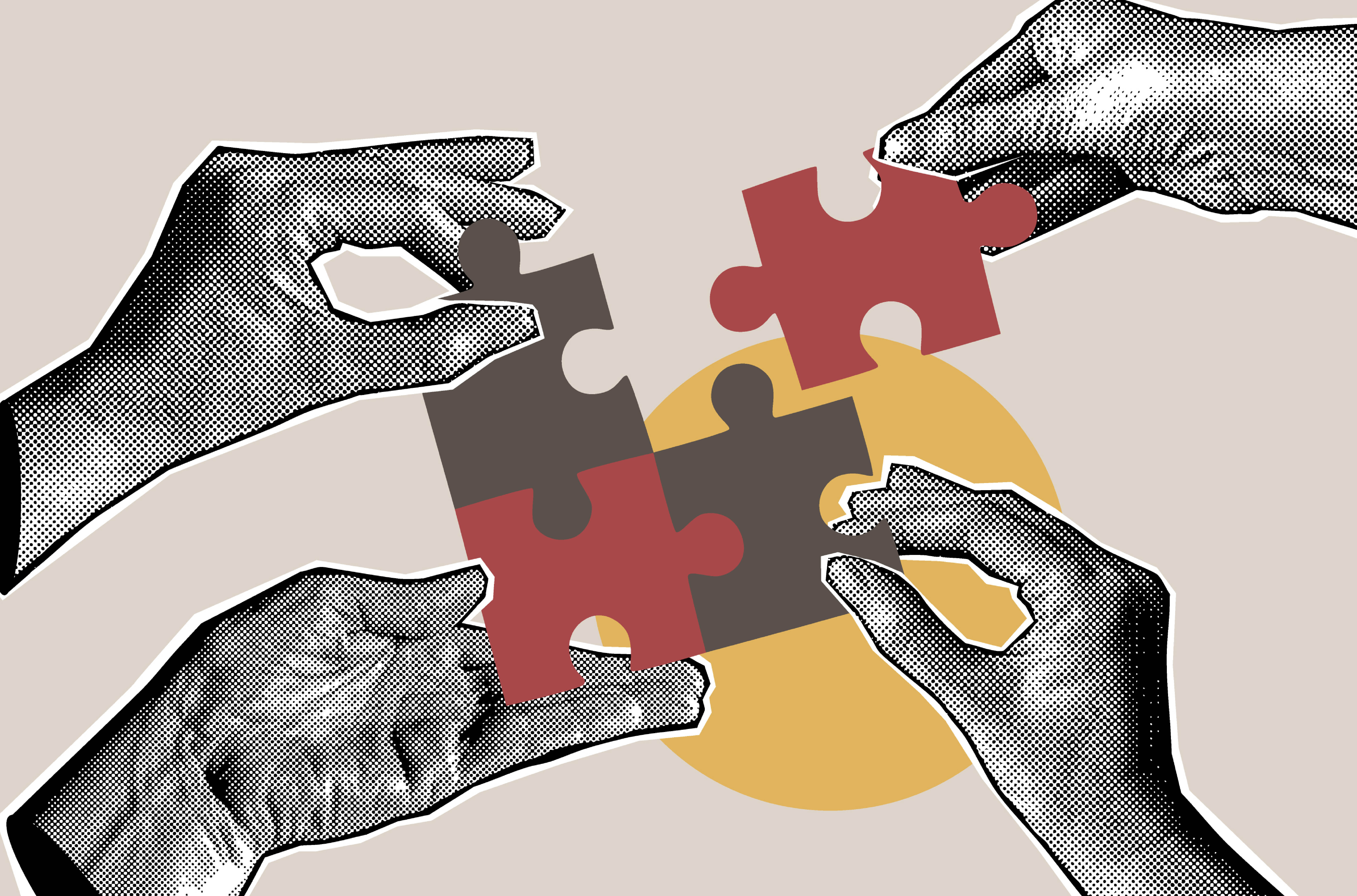
Universities have become very good at creating policies and procedures to deal with misconduct. These are operationalized through equity offices, research integrity processes, ombudspersons, harassment policies, codes of conduct, and training modules for almost every conceivable concern.
This looks like robust governance. But it can also make serious problems harder to see.
A graduate student reports intimidation by a supervisor. A staff member raises concerns about sexual harassment. A junior colleague describes authorship pressure. Someone else flags a conflict of interest or bullying in a research team. Each concern may be real. Each may be routed to the appropriate office. Each office may handle its file within its mandate.
And yet broader patterns of behaviour can disappear.
Having been involved in numerous disciplinary and governance processes, and having spent decades working on conflicts of interest, my experience is that misconduct rarely presents itself neatly: one complainant, one policy, one office, one resolution. Instead, it appears as behaviours spread across relationships, roles and administrative categories.
A conflict of interest may overlap with authorship disputes, sexual harassment or problems with research ethics. A pattern of intimidation may appear through small decisions that each look minor or defensible. A workplace may become toxic without producing the spectacular incident that clearly crosses a line.
Universities are not unaware of these problems. Many have invested significant time and resources in policies and complaint systems. But good procedures do not automatically produce good governance. A university can have many competent offices and still lack a reliable way to understand the scope of the problem. This is where fragmentation becomes dangerous.
READ MORE: When colleagues become bullies – University Affairs
When fragmentation becomes dangerous
One office handles harassment. Another handles research misconduct. Another handles research ethics. Another deals with graduate supervision. Another manages labour relations. Each sees only the part of the problem that falls within its mandate. Each may be focused on resolving its own file. Each may be legally or procedurally constrained in what it can share.
Yet misconduct rarely remains bound by one administrative category. A person who bullies students may also exploit junior colleagues. Someone who retaliates against staff may also manipulate authorship, hiring, access to data or professional opportunities. A senior academic may create harm through years of small decisions that are devastating in combination.
The problem is that university governance systems are often poorly designed to identify and address misconduct that crosses boundaries. The full pattern may not become visible, which means appropriate measures are not taken. People can slip through the cracks, avoid serious sanction, retain supervisory authority or continue to occupy positions of influence despite serious concerns and documented misbehaviour.
This is not a technical problem. It is an ethical and governance problem.
Universities ask students, staff, and faculty to trust institutional processes. They tell people to document, report, cooperate and wait. But when those processes are fragmented, the burden falls back on those with the least power to make the pattern visible. They must remember the history, repeat painful accounts, find allies and hope that someone with authority will see what they see. That is a heavy burden to place on those already harmed.
When patterns go unrecognized until it’s too late
It also creates a familiar institutional failure. The first person who complains looks isolated. The second appears to have a separate grievance. The third may be treated as evidence of interpersonal conflict within a difficult department or service. Only much later, after people have left, careers have been damaged, students have changed supervisors, staff have burned out, or research teams have collapsed, does the pattern become impossible to deny.
Delayed recognition is not accountability. If the pattern is identified only after repeated harm, the system has already failed.
I am not advocating for abolishing separate processes. Harassment, research misconduct, labour relations and conflicts of interest require different forms of expertise and case management. What is needed are mechanisms to connect the dots.
That requires careful design: clear rules for when information can be shared internally, by whom, and for what purpose; independent review when the person named in multiple concerns has significant status, funding or leadership authority; protections against retaliation for those who raise concerns; and documentation and oversight of restrictions placed on those who have engaged in misconduct.
Most importantly, universities need governance structures capable of identifying multiple weak signals that, when taken together, indicate serious risk.
READ MORE: When collegiality breeds contempt – University Affairs
When informality leads to abuse
This is especially important in academia because power is often informal. A supervisor can disrupt a student’s future without overt abuse. A senior colleague can close opportunities without leaving a clear administrative trail. A manager can make life miserable for staff in ways that look like ordinary decisions. Prestige, funding and reputation can make institutions cautious precisely when they should be attentive.
Universities are bound by legal constraints, collective agreements, privacy obligations and requirements for procedural fairness. Those constraints are necessary and important. But they should not become an excuse for institutional blindness. Privacy should protect people from unfair exposure; it should not prevent institutions from acting when serious patterns emerge.
Misconduct survives inside universities not only because some people behave badly, but because institutions often process allegations as isolated events. Fairness requires more than respecting each individual file. It also requires asking whether the institution can recognize patterns of harm before another student, staff member or junior colleague is left to discover them the hard way.



Featured Jobs
- Toldo Chair in Christian StudiesAssumption University
- Movember Institute Discovery Research Program FellowshipsThe University of British Columbia
- International Studies - Faculty Position (Arctic Defence and Security)Université Laval
- Global Inequalities and Trade - Faculty PositionUniversité Laval
- Theatre and Film - Assistant Professor Without Review (Performance Practice)The University of British Columbia
More from Opinion
-

Faculty well-being in the age of GenAI
When every student has an AI assistant, the writing teacher's job becomes both harder and more essential.
-
Committee’s EDI recommendations are based on flawed logic
Excellence must be sufficiently rigorous and inclusive to identify talent wherever it exists.
-
Building resilience in Arts through interdisciplinary collaborations
In a technology-enabled future, Arts faculties have an opportunity to demonstrate their relevance by making collaboration across disciplines easier and more visible.
-

Science in French? Bien sûr!
As English dominates the publication landscape, support for French-language research is a strategic investment in the quality, equity and the future of knowledge.
More from Mental Health
-

Life lessons from the World Happiness Report
Happiness is a gift for elders to pass on to the younger generation.
-
Teaching in the great outdoors
A unique creative writing class at the University of Toronto connects students to nature.
-

When misconduct moves on
Universities need a fair way to share serious misconduct findings across institutions.
-

When collegiality breeds contempt
As academics compete for scarce resources, collective decision-making can lead to abuse — but that’s no reason to dismantle the system.
More from In My Opinion
-

Why Canadian academics shouldn’t boycott U.S. conferences
Show up in person and do good trouble instead.
-

Gen Z meets genAI
We are the first generation to learn alongside AI. What do we owe the next?
-

Canada’s sovereignty is being tested
As Canada faces mounting pressure from the United States, an Indigenous-led exhibition at the Gwangju Biennale offers a timely way to think about conflict, responsibility and the choices ahead.
-

It’s time to boycott U.S. conferences
As trade hostilities continue, we shouldn’t use taxpayers’ dollars to travel stateside.


Post a comment
University Affairs moderates all comments according to the following guidelines. If approved, comments generally appear within one business day. We may republish particularly insightful remarks in our print edition or elsewhere.
4 Comments
This is a very timely article as the Jason Arday case at Cambridge highlighted a case where he plagiarized his PhD thesis and subsequent articles and misled the hiring committee about his personal achievements to get a job he was questionably qualified for. He covered up student requests for assistance by saying something like “you are bright, you can work it out” and did not fulfill obligations to hold classes for the appropriate length of time. However, complaints to the administration through relevant channels were ignored or dismissed as being biased in some way. I think UA readers might be interested in this case study. I has got good press in the UK and US, but little in Canada and Canadian readers should be a aware of potential pitfalls.
Excellent article, informative, and addressing some very serious scenarios that are unfortunately more common than they may seem.
Among the many cases mentioned, one that is not is when bad actors use legitimate reporting mechanisms as tools for furthering harassment, and getting rid of colleagues who may be perceived as threats to their positions of entrenched privilege. Another, is when universities themselves choose to delay investigations and attempts at resolution beyond any reasonable deadline, in order to protect the reputation of the institutions from any possible adverse effects if the reality of the circumstances was to be widely known. We have seen similar situations recently in the news, but I am quite sure that many readers could come up with a number of examples from their own academic experiences.
This is timely. Thank You.
” A workplace may become toxic without producing the spectacular incident that clearly crosses a line.”
A lot of people still use the age-old method of gossiping and sabotaging a rival’s career by spreading rumors etc.