Building resilience in Arts through interdisciplinary collaborations
In a technology-enabled future, Arts faculties have an opportunity to demonstrate their relevance by making collaboration across disciplines easier and more visible.

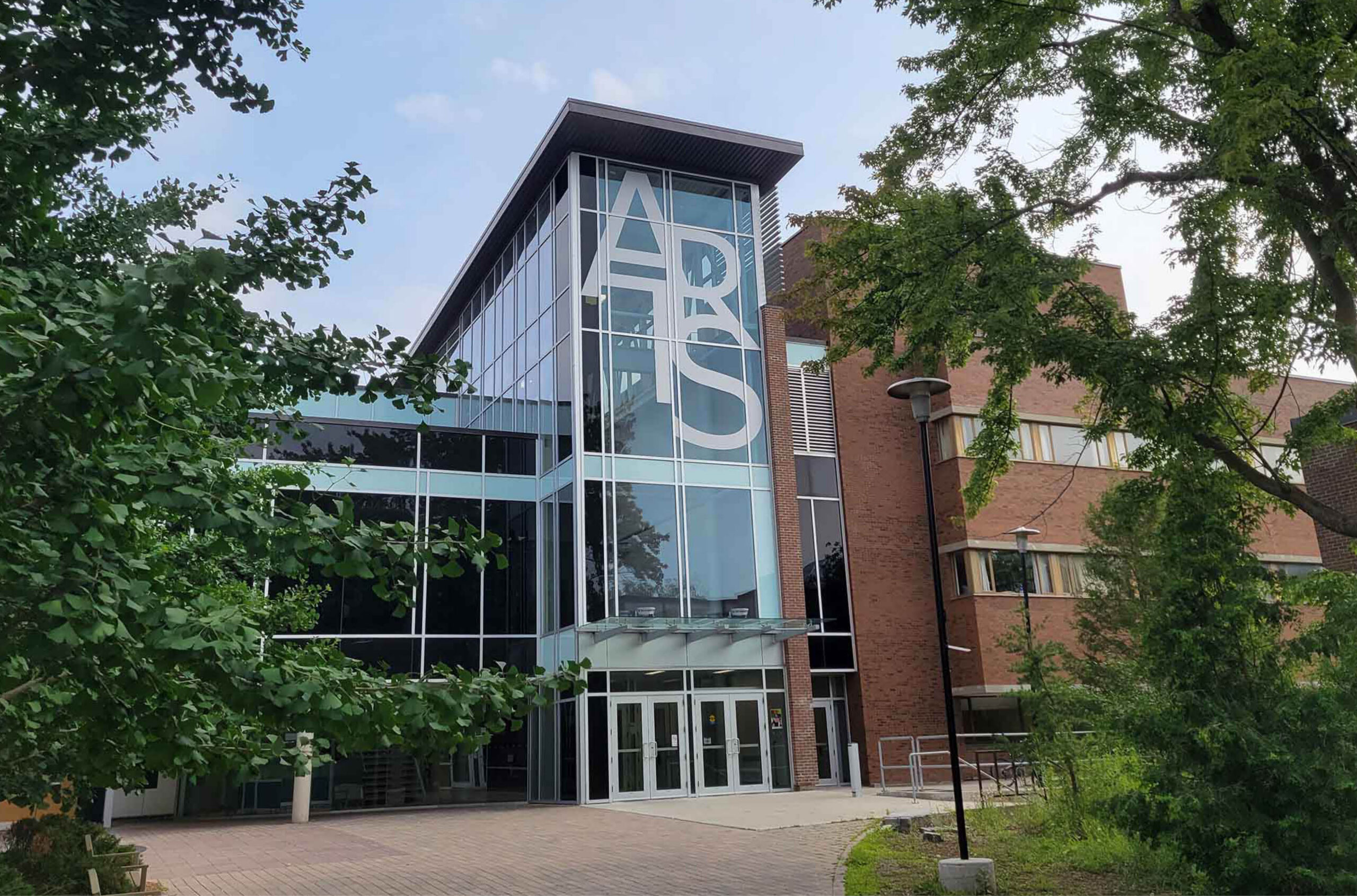
In our time of rapid technological change, Arts disciplines must get out of their own way and address the structural barriers that keep our disciplines apart.
The fast rise of artificial intelligence illustrates the challenge. The most important questions surrounding AI are not only technical, but questions of ethics, governance, society and human behaviour. They require understanding of complexity and putting people at the forefront. Yet Arts scholars are often asked for our critical perspectives only after concerns that the latest and greatest technology might bring irreparable harms to humanity and systems.
At the same time, Arts faculties face growing pressure from students, parents and governments to demonstrate the employability of Arts graduates. Rather than diminishing the importance of Arts disciplines, AI and the technology-enabled future it asserts offer university leaders an extraordinary opportunity to demonstrate the critical need and applicability of an education in areas such as ethics, public policy, economics, psychology and data analysis. If it feels as though we are living in a grand experiment right now, it is because the critical perspectives as checks and balances that arts disciplines supply do not appear to be a serious consideration in tech development. We can address this by making the linkages between arts and STEM fields easier to see and navigate.
We have been trapped in siloes of our own design. Today’s challenges demand collaboration across sectors and areas of expertise. The challenge for university leaders then is to break down the current structures that keep our disciplines apart and create the conditions for this collaboration. If we want to be part of the global disruption, we must first disrupt ourselves. At the University of Waterloo, we altered the way we think about and deliver Arts education and research. We reorganized the Faculty of Arts, transforming 17 academic units into a total of six schools. Our academic programs remain intact. The new model is intended to create stronger connections across the humanities, social sciences and creative arts while making collaboration easier both within Arts and across the university.
Our experience offers an important lesson for other institutions: meaningful structural change cannot simply be imposed from the top down. Faculty, staff and students must help shape it.
Our journey to get to this new structure involved extensive consultation with stakeholders led by a working group made up of an interdisciplinary mix of leaders, faculty and staff. Over nearly two years, we held 101 meetings, consultations, townhalls and informal discussions with students and colleagues across Arts, with institutional leadership, and with the other five Faculties at Waterloo. Universities are typically change-averse. But in an overwhelming show of support for the proposed new approach, 84 per cent of Arts faculty and 95 per cent of staff endorsed the reorganization. It was clearly time for change.
We are already seeing examples of what this new structure can enable. For example, a new minor in AI in data analytics for society is indicative of the open pathways we have created for student learning and research collaboration across disciplines, including between Arts and STEM fields. All six schools are contributing. A new interdisciplinary research fund is supporting five cross-school projects. Facilitating more strategic and interdisciplinary research and teaching collaborations positions our Faculty for success.
Importantly, our reorganization was not driven by short-term financial challenges. While the post-secondary sector in Canada is experiencing major reductions in government funding and a cap on international students, planning for this reorganization predated the current financial strain. There were no layoffs. Our new structure will also help us navigate faculty retirements –- a challenge across the post-secondary sector.
Recent reorganizations within U.S. universities drew protest from students and employees who saw them as corporate tactics to exercise more administrative control. But doing the work of intensive consultation, developing interdisciplinary programming and creating more opportunities for research collaboration will lead to a more positive outcome.
Some Arts faculties could stay as they are forever, not only risking irrelevance, but contributing to uncertainty and squandering the opportunity to help solve some of the most important problems we face. The University of Waterloo’s approach may not be the right solution for every institution, but every Arts leader should be asking the same question: do our traditional structures make it easier or harder for scholars and students to address the complex social, cultural and technological challenges that increasingly define our world?
This is a watershed moment for Arts education. Its future does not depend on abandoning disciplines, but on creating conditions where disciplinary excellence and interdisciplinary collaboration reinforce one another.
A reorganization that tears down silos actually embraces the original spirit of the academy. Leonardo Da Vinci, Isaac Newton, Blaise Pascal, René Descartes, Cheikh Anta Diop, Fabien Eboussi Boulaga and V. Y. Mudimbe for instance, all moved among various disciplines. Their breakthroughs remind us that disciplinary excellence and interdisciplinary dialogue are not competing values. They reinforce one another. More collaborative and interdisciplinary innovations in teaching and research in Arts will contribute to a safer world and a more resilient university system within it.



Featured Jobs
- Global Inequalities and Trade - Faculty PositionUniversité Laval
- Theatre and Film - Assistant Professor Without Review (Performance Practice)The University of British Columbia
- International Studies - Faculty Position (Arctic Defence and Security)Université Laval
- Director, Human Research Ethics & Strategic AdvisorUniversity of Manitoba
- Psychology - Assistant Professor (Clinical Psychology)Western University
More from Opinion
-

Science in French? Bien sûr!
As English dominates the publication landscape, support for French-language research is a strategic investment in the quality, equity and the future of knowledge.
-

Why Canadian academics shouldn’t boycott U.S. conferences
Show up in person and do good trouble instead.
-

It Takes a Village
University presidents require longer time in office and broad support from within and outside their institutions to confront today’s biggest challenges.
-

Gen Z meets genAI
We are the first generation to learn alongside AI. What do we owe the next?
More from Arts
-

It’s time for philosophy to regain its rightful place
With an influence that extends to nearly every intellectual domain, philosophy is indispensable to the mission of a university.
-

Top 10 movies about university life
In honour of Academy Awards season, here’s our list of the best films about professors, students and out-of-control frat boys.
-

Comrades in arms
The Canada-Korea theatrical collaboration, R;Link tells a story of soldiers’ friendships in the Korean War.
-
New coalition forms to advocate for art and design universities
It’s time to shine light on the impact of art and design schools, say presidents.
More from In My Opinion
-

Canada’s sovereignty is being tested
As Canada faces mounting pressure from the United States, an Indigenous-led exhibition at the Gwangju Biennale offers a timely way to think about conflict, responsibility and the choices ahead.
-

It’s time to boycott U.S. conferences
As trade hostilities continue, we shouldn’t use taxpayers’ dollars to travel stateside.
-

Rebuilding Jewish students’ trust in universities
As students return to campus, discussions of the Middle East conflict deserve a scholarly, responsible and robust treatment that recognizes antisemitism in all its forms.
-

When misconduct moves on
Universities need a fair way to share serious misconduct findings across institutions.

Post a comment
University Affairs moderates all comments according to the following guidelines. If approved, comments generally appear within one business day. We may republish particularly insightful remarks in our print edition or elsewhere.