It’s time to boycott U.S. conferences
As trade hostilities continue, we shouldn’t use taxpayers’ dollars to travel stateside.

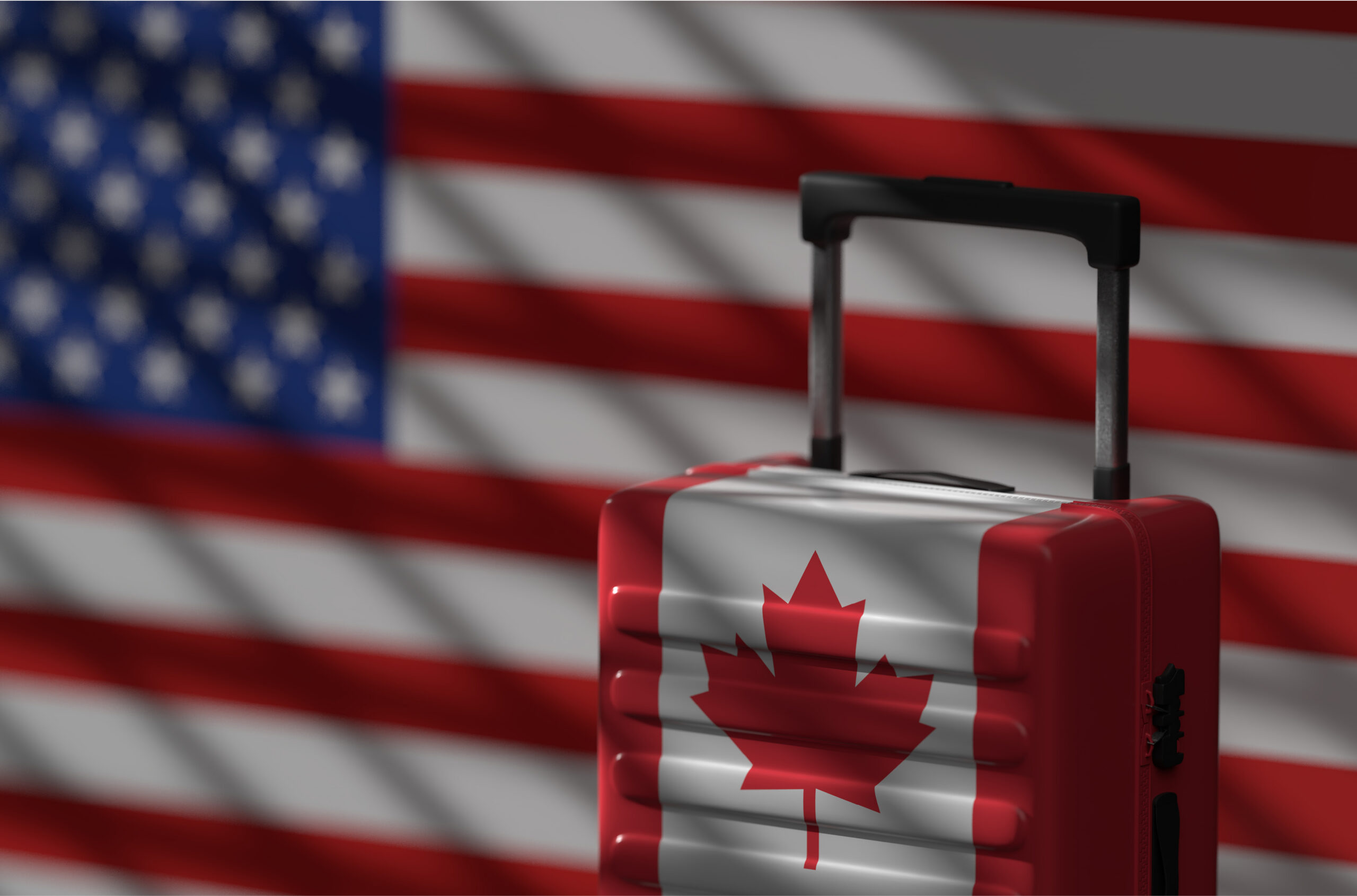
In yet another rant on Truth Social, U.S. President Donald Trump on Aug. 30 called Canada one of the “worst abusers” and boldly stated that he does not want “Canadian anything.” As academics, we should take him at his word and stop going to U.S. conferences. If he does not want anything Canadian, we should certainly not spend our research money (a large portion of which comes from government-funded grants and university allowances) in the U.S. We can justify a travel boycott from a credibility point of view, a moral perspective, and for some practical reasons.
A travel boycott upholds our credibility as academics
I think that most of us agree with the assessment that Mr. Trump’s economic war is unprovoked, insulting and deeply hurtful for Canadian businesses. The Trump administration behaves like a bully that wants to force Canada into submission. Rightfully, we decry this imperialist, rude and insulting behavior. In the vast majority, we also agree that Prime Minister Mark Carney was right to walk away from a trade deal on Aug. 21 that was highly unbalanced and attacked key issues of Canadian sovereignty. In short, most of us have been fast in decrying a bully. Yet not all of us have considered personal actions.
The reality we are facing is that we are in a trade war that will make Canadian businesses suffer and will make workers lose their jobs. In this situation, we should put our actions where our mouths are. In other words, we should not decry Mr. Trump and then bring Canadian taxpayers’ money to the U.S. Rather, we should refrain from travelling stateside for professional reasons until this trade war is over. This strengthens our credibility as academics and sends a strong signal of support not only to the government, but also to our fellow Canadians, especially those who personally suffer from the Trump administration’s unprovoked trade war.
A travel boycott is morally justified
Since Trump II, attacks on academic freedom have been low-hanging fruit within the American administration’s broader autocratization strategy. To illustrate: just one day into his second term, President Donald J. Trump signed Executive Order 14173, entitled “Ending Illegal Discrimination and Restoring Merit-Based Opportunity.” This order decried Diversity, Equity and Inclusion (DEI) related language and research as inherently harmful to America’s ideology and its values. Subsequent orders and policies allowed the government to assume more central control of U.S. universities; cut student financial aid; and restrict researchers’ funding. The results of these policies, coupled with pressure campaigns directed against institutions of higher education, are ideological compliance, self-censorship and changes to the content that is taught. A boycott of U.S. conferences is a means of opposing these infringements of academic freedoms. Because of strong entry restrictions, a boycott can also be a way of saying “no” to a climate that prevents international researchers from many parts of the world from travelling to the U.S.
A travel boycott can strengthen academia in Canada
In 2024, the last time I attended a conference in the U.S., it cost me roughly C$3500. If we simply spend this money at home, we can support Canadian institutions and domestic networking, and potentially entice international conferences to go elsewhere than the United States (and Canada could be a prime destination).
Collaborations and networking should continue
I want to make a distinction in this call to action. The decision “I won’t attend conferences in the U.S.” is not the same as “I will not collaborate with American scholars.” Literally all U.S. scholars I know are critical of the Trump administration; they do not support the policies against Canada, and they oppose the administration’s infringements on academic freedoms. All my friends in the U.S. understand, and often support, my position with regards to conferences in their country, and I see absolutely no reason to stop working with my American colleagues. In times of Zoom and Teams, there is always a way to continue collaborating.
I ask all Canadian academics to join me and many others to refrain from going to the U.S. for professional reasons until this trade war is over.
Of course, such a move does not come without a cost, especially for junior scholars who might rely on new networks in the U.S. more than senior scholars do. Yet networks exist outside of North America; US academics attend international conferences; and in the 21st century, contacts can be made online.
It is worth noting that I make this appeal to boycott business travel south of the border as someone who earned his PhD in the U.S. in 2010. I am extremely grateful for the education I received in Connecticut. I regularly attended the American Political Science Association Annual Meeting and other conferences and workshops for years. Yet I have not crossed the border since President Trump’s second inauguration, and I will continue to avoid doing so at least until this trade war is over.
I never thought that I would call for a professional boycott of our neighbours to the south, but extraordinary times demand extraordinary measures.



Featured Jobs
- Global Inequalities and Trade - Faculty PositionUniversité Laval
- International Studies - Faculty Position (Arctic Defence and Security)Université Laval
- Theatre and Film - Assistant Professor Without Review (Performance Practice)The University of British Columbia
- Toldo Chair in Christian StudiesAssumption University
- Movember Institute Discovery Research Program FellowshipsThe University of British Columbia
More from Opinion
-

An accessible campus is only part of a university’s responsibility
Universities must embed disability knowledge into core professional learning.
-

Faculty well-being in the age of GenAI
When every student has an AI assistant, the writing teacher's job becomes both harder and more essential.
-
Committee’s EDI recommendations are based on flawed logic
Excellence must be sufficiently rigorous and inclusive to identify talent wherever it exists.
-
Building resilience in Arts through interdisciplinary collaborations
In a technology-enabled future, Arts faculties have an opportunity to demonstrate their relevance by making collaboration across disciplines easier and more visible.
More from Academic freedom
-

Why Canadian academics shouldn’t boycott U.S. conferences
Show up in person and do good trouble instead.
-
Attacks on higher education spread globally, including in liberal democracies, Scholars at Risk report finds
Canada urged to defend values amid erosion of institutional autonomy in the U.S.
-

Rebuilding Jewish students’ trust in universities
As students return to campus, discussions of the Middle East conflict deserve a scholarly, responsible and robust treatment that recognizes antisemitism in all its forms.
-

Institutional neutrality: the case against
Jennifer S. Simpson argues that universities must eschew neutrality to advance democracy, ethics and the public good.
More from In My Opinion
-

Science in French? Bien sûr!
As English dominates the publication landscape, support for French-language research is a strategic investment in the quality, equity and the future of knowledge.
-

Gen Z meets genAI
We are the first generation to learn alongside AI. What do we owe the next?
-

Canada’s sovereignty is being tested
As Canada faces mounting pressure from the United States, an Indigenous-led exhibition at the Gwangju Biennale offers a timely way to think about conflict, responsibility and the choices ahead.
-

When misconduct moves on
Universities need a fair way to share serious misconduct findings across institutions.


Post a comment
University Affairs moderates all comments according to the following guidelines. If approved, comments generally appear within one business day. We may republish particularly insightful remarks in our print edition or elsewhere.
4 Comments
A number of my Canadian colleagues and I did this last year. We informed our American hosts we would not travel to the US and they set up a satellite event in Toronto. Colleagues from across Canada came to Toronto and had hybrid sessions with our American colleagues – allowing “free trade” of ideas without compromising our desire to boycott this appalling administration
Well argued, Prof. Daniel. Academic conferences depend on the free exchange of ideas across borders. The academic community should consider whether its conference locations reflect the values of inclusion, accessibility, and academic freedom that we claim to uphold.
Agreed. It is time that Canadian learned societies strengthened our own conferences.
My feelings exactly.
Thank you for writing this.