Why Canadian academics shouldn’t boycott U.S. conferences
Show up in person and do good trouble instead.


On Sept. 9, University of Ottawa political science professor Daniel Stockemer argued in University Affairs that, as Canadians, we should not spend taxpayers’ money to attend American conferences. This, he argued, was a way to push back against the trade dispute. As a Canadian from immigrant and working-class roots, I know a bit about how people’s livelihoods are at stake as a result of tariffs. But stopping trips to the U.S. won’t make a dent in that issue.
What is more taxing is grappling with President Donald Trump’s anti-Muslim, anti-trans, anti-immigrant, racist policies that make going to the U.S. terrifying for so many. So yes, the call to boycott resonates deeply with me as a Black Canadian woman — because I have tried to live by the motto that one should not spend one’s money in places where one is not wanted. And yet, there are compelling reasons to go to the United States precisely because we are not wanted there.
Showing up as a feminist first
I believe in turning up in person to do good trouble. As any feminist scholar knows, we don’t ignore the work that is so obvious and needs doing — we say things that the patriarchy doesn’t want us to say aloud. Since 2022 the New York Times has been reporting that some University of Florida professors have been under attack in their fight for academic freedom as a core value at the university — a fight that goes against the Stop WOKE Act (also known as the Individual Freedom Act) by Republican Governor Ron DeSantis.
The Diverse Solidarity Economies (DISE) Collective that I belong to is also fighting for economic equality writ large and for Black social economies to be recognized, in the U.S. in particular. As a Canadian feminist and political economist, my support has meant showing up to give a lecture at U of Florida on feminist economics and racial capitalism, knowing that the professor’s students had already complained about her defying the Stop WOKE Act.
We can’t just say ‘no’ and refuse to travel to the US; that’s a luxurious position. Instead, we need to show up and to say in person the things that some American professors cannot, because their jobs are on the line. These same professors will travel up north when my academic freedoms are compromised here in Canada as well (see my article on how human rights can be weaponized against Black women scholars). Using Canadian taxpayers’ money feels justified when, as Canadians, we engage in “good trouble” working with disruptors fighting against fascism and siding with African-American feminist scholars under attack.
It’s just so basic: we need to do this work
When the U.S. Supreme Court officially overturned Roe v. Wade in its 2022 ruling on the Dobbs v. Jackson Women’s Health Organization case — ending federal oversight and allowing states to regulate or ban abortions — the International Association for Feminist Economics decided to attend the Allied Social Science Associations (ASSA) conference (a major conference on economics and related fields) in New Orleans. We picketed out front and held a plenary on the very topic. We also debated boycotting the U.S., but as feminists we agreed that going to the conference was vitally needed.
When the Harvard Business School holds an annual symposium titled Race, Gender and Equity at Work, feminist political economists go. A few years ago, I did just that, and gave a keynote address because elite institutions have been so exclusionary, and my work on cooperatives and member-owned businesses that Black people create is needed at big U.S. business schools. We should also go and remind Harvard that we admire the work of political science Professor Claudine Gay, its first Black president, who had to resign after less than a year in the job.
A duty to participate
Frankly, it’s just not that simple for some of us to stop going to the US; our lives are intertwined with families living there. I am connected to the United States: I was born in New York City and lived and worked for a number of years in Tampa, Philadelphia, and New York. My family in the South Bronx, and seeing my friends and collaborators, keep me going. And after too many border issues, I finally caved in and renewed my U.S. passport. I did it to minimize the issues I was having each time I crossed the border.
While I, too, have stopped non-essential U.S. travel, there are plenty of reasons why I think showing up matters. My logic is that I am not going there for Trump or any white supremacist. I am going to the U.S. to advance scholarship, whether a dictator likes it or not. As a public professor, I feel I have a duty to participate in events that require my expertise. The fact is that there will always be bigots. One thing that we do as Black feminist scholars — at least those of us with homegrown values our mamas taught us — is show up in spaces where we are unwanted.
Doing good trouble work
As a professor in political science at the University of Toronto, I was invited to speak at the Women of Color Political Science Symposium in the U.S. this September. I won’t lie: it was tricky. I wanted to cancel my trip to Boston so many times, insulted as a Canadian by the American president intent on crushing us economically. Even after telling organizers I was rethinking my trip due to the trade war and racism there, I decided that I needed to go. And I am sure glad I did go — I happened to be the sole Canadian academic present at the symposium. My presence was critical, as I was able to reach young scholars who are under attack in the academe and outside of it. Hearing traumatic stories of women political scientists being told to take off their hijabs or remove “woke-sounding” words from their research in order to keep their jobs were conversations we needed to have as Black women academics in political science.
As a Black Canadian feminist, I have had a lot of practice going to places where I am not wanted. My rule is that if I have the bandwidth and time, I am going to do my job and keep turning up in undemocratic countries like the U.S., because as academics concerned about inequality and business exclusion, we need to turn the volume up in those places that don’t want us there or that try to silence us.
As Canadians we cannot simply avoid going to places where folks don’t like us. We all know that this is the time our presence matters — and that we need to do this troubling and necessary work.



Featured Jobs
- Theatre and Film - Assistant Professor Without Review (Performance Practice)The University of British Columbia
- International Studies - Faculty Position (Arctic Defence and Security)Université Laval
- Movember Institute Discovery Research Program FellowshipsThe University of British Columbia
- Psychology - Assistant Professor (Clinical Psychology)Western University
- Toldo Chair in Christian StudiesAssumption University
More from Opinion
-

An accessible campus is only part of a university’s responsibility
Universities must embed disability knowledge into core professional learning.
-

Faculty well-being in the age of GenAI
When every student has an AI assistant, the writing teacher's job becomes both harder and more essential.
-
Committee’s EDI recommendations are based on flawed logic
Excellence must be sufficiently rigorous and inclusive to identify talent wherever it exists.
-
Building resilience in Arts through interdisciplinary collaborations
In a technology-enabled future, Arts faculties have an opportunity to demonstrate their relevance by making collaboration across disciplines easier and more visible.
More from Academic freedom
-
Attacks on higher education spread globally, including in liberal democracies, Scholars at Risk report finds
Canada urged to defend values amid erosion of institutional autonomy in the U.S.
-
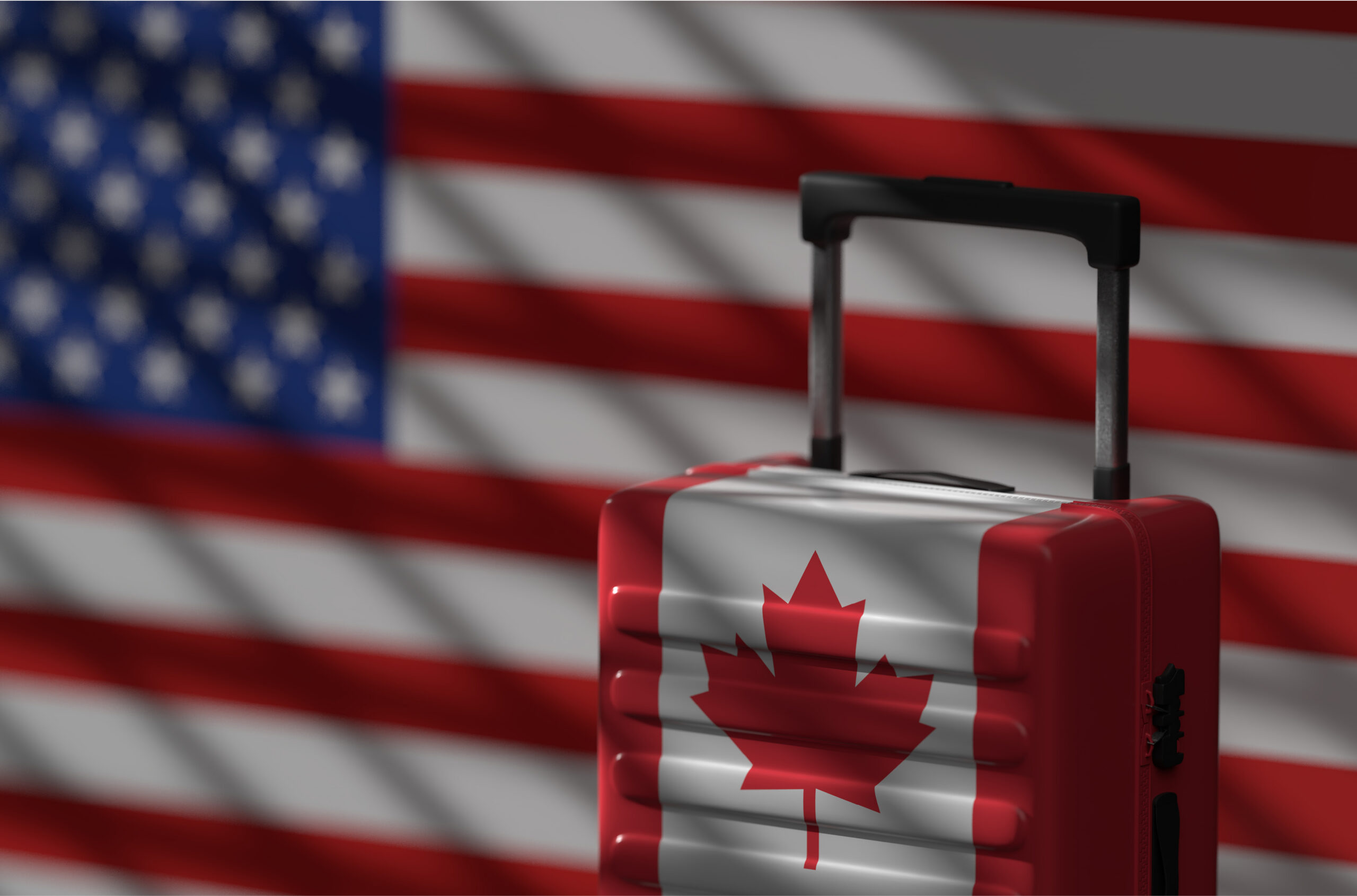
It’s time to boycott U.S. conferences
As trade hostilities continue, we shouldn’t use taxpayers’ dollars to travel stateside.
-
Rebuilding Jewish students’ trust in universities
As students return to campus, discussions of the Middle East conflict deserve a scholarly, responsible and robust treatment that recognizes antisemitism in all its forms.
-
Institutional neutrality: the case against
Jennifer S. Simpson argues that universities must eschew neutrality to advance democracy, ethics and the public good.
More from In My Opinion
-

Science in French? Bien sûr!
As English dominates the publication landscape, support for French-language research is a strategic investment in the quality, equity and the future of knowledge.
-

Gen Z meets genAI
We are the first generation to learn alongside AI. What do we owe the next?
-

Canada’s sovereignty is being tested
As Canada faces mounting pressure from the United States, an Indigenous-led exhibition at the Gwangju Biennale offers a timely way to think about conflict, responsibility and the choices ahead.
-

When misconduct moves on
Universities need a fair way to share serious misconduct findings across institutions.

Post a comment
University Affairs moderates all comments according to the following guidelines. If approved, comments generally appear within one business day. We may republish particularly insightful remarks in our print edition or elsewhere.
5 Comments
Excellent reminder that choosing to show up Trumps staying home when it comes to speaking out and supporting those who can’t. I will maintain my no vacay in US stance. I won’t buy U.S. products as long as Trump’s administration is in office—but I would show up to participate in conferences
I think it depends on one’s field whether Canadians should or should not boycott academic travel to the U.S. The author seems justified in engaging with U.S. academia as she is from the U.S. and her work is centered around Black and feminist issues, clearly topics that would antagonize the Trump regime. It’s harder to justify for, say. a chemistry or geology prof. I am a critical urban geographer with a focus on Asia (non-democratic contexts) and I refuse to cross the U.S. border as it is not safe for my Arab graduate students to do so. In solidarity with them, I am turning down invitations from American institutions indefinitely. The U.S. is in a state of emergency, so from my field it seems dilettante-ish to carry on as usual. I published on this topic during Trump’s first presidency (open access: https://acme-journal.org/index.php/acme/article/view/1572) and my article complements this piece nicely. There are many reasons for and against academic travel to the U.S. right now and we each need to think it through. Thanks for writing a thoughtful article and for all the good work you do.
Thank you for this insightful article. I am an Afro-Caribbean American woman working in Canada and have always had relations on both sides of the border. As an academic I have close colleagues and collaborators who have lost grants, been sued, have had syllabi scrutinized, and lose jobs (Black women) all because of this white supremacist regime that I definitely did not vote for (92%).
I continue to collaborate and do my work on equity in STEMM on both sides of the border because I believe it is important to keep showing up, asserting my presence and mentoring those who are following so those who are against us will see that, like it or not, Blackademics (and other marginalized groups) are here to stay.
Part 1: Thanks for the article Caroline and thanks for the work you do – especially now, across the border. One point bears mentioning here though and that is that our risks are not all the same at the border, eg. not having a US passport, being Muslim, etc. For some of us, we have experienced this risk first hand already. For example, shortly after 9/11, I was suddenly detained and isolated from fellow travellers as I sat at the gate before boarding to fly back to Canada from a conference in Portland because my name was “one some list”. This was all the information I could get at that gate from the myriad security personnel that suddenly showed up to interrogate me and search my belongings. Luckily a student I had just met at the conference who was on my flight, steadfastly refused to leave without me although they were physically pushing her out the gate as other passengers averted their eyes and duly filed out onto the plane without me (some of them later to become my future colleagues).
Part 2: When I finally got back to Canada, I contacted External Affairs who told me clearly that if I was detained in this way, there was little the Canadian government could do to protect their citizens abroad beyond phone Washington and see if they could find me but there were no guarantees. This taught me that that we can all too easily be disappeared and that we cannot always rely on the intervention of a good Samaritan (I got v. lucky). So we all need to make the call to cross the US border based on our own risk tolerance and vulnerability under the current regime and their policies. All these current bordering practices (including ICE kidnappings, incarcerations and deportations as well as the passing of security directives such as NSPM-7, etc) were developed and refined in the aftermath of the 9/11 – we are just seeing the broadening and intensification of these practices now – with the violence always, of course, asymmetrically distributed. I just wanted to add this perspective to this important larger discussion. Thanks