Science in French? Bien sûr!
As English dominates the publication landscape, support for French-language research is a strategic investment in the quality, equity and the future of knowledge.


Science has been a multilingual pursuit for centuries. With the emergence of the first academic journals in late 17th-century Europe, Latin was gradually supplanted by vernacular languages such as French, Italian, German and English. This multilingual landscape endured through the 18th and 19th centuries as journals proliferated and the scientific community ballooned. In the 20th century, groundbreaking discoveries by Marie Curie and Albert Einstein were disseminated in French and German with no regard for journal impact factors.
But multilingualism floundered in response to several developments in the second half of the 20th century: the internationalization of research; the fall of the Iron Curtain; the consolidation of academic publishing; and the rise of metrics-driven research evaluation tools. By 2023, 85.5 per cent of scientific articles worldwide were published in English, as were more than 99 per cent of the articles indexed in bibliometric databases such as Web of Science.
Scientific monolingualism has a number of well-documented consequences, especially for non-English-speaking communities, including difficulty publishing, disparities in information access, and an outsized emphasis on globally rather than locally relevant research topics. In Canada, this situation further destabilizes an already fragile linguistic balance. Current research evaluation tools systematically favour English, making language an invisible barrier affecting careers, research visibility and the training of the next generation. Basing scientific merit mainly on the number of articles published and indexed in English perpetuates structural inequality.
To address this situation, the External Advisory Panel on the Creation and Dissemination of Scientific Information in French—which I co-chaired with Linda Cardinal—submitted its final report to the Department of Canadian Heritage this past spring.
The panel’s proposals address the three main challenges identified by the communities whose input we received: normative, financial and organizational. Among other measures, the creation of a Secretariat for the Coordination of Research in French (SCRF) is essential: without a body guided by a strategic vision, initiatives will remain disorganized and their impact limited. A “Francophone lens” would help ensure that real equality is integrated systematically instead of on a case-by-case basis.
Establishing a Research in French Support and Promotion Fund (RFSPF) of at least $40 million annually — accounting for one per cent of external federal research funding — would help support emerging researchers, new research chairs and open access platforms. Together, these measures would enhance the visibility and reach of French-language scholarship. Tri-agency leadership is imperative. Requiring mandatory bilingual abstracts for government-funded research and implementing progress-tracking and accountability measures are essential for sustainable change.
Science thrives on a multiplicity of approaches and perspectives. Entire disciplines, from the humanities to public health, depend on knowledge being published in the languages of the communities they study. Supporting French-language research helps create relevant public policy, improves access to educational resources, and enhances Canada’s ability to implement solutions tailored to our realities. It also strengthens Canada’s soft power, expands our nation’s international influence, and reinforces its political legitimacy with concrete policy. Recognizing and addressing the linguistic imbalance in science is not a symbolic gesture toward a minority — it’s a smart investment in the quality, diversity and resilience of Canadian knowledge. Is French-language science important? Bien sûr!


Featured Jobs
- Director, Human Research Ethics & Strategic AdvisorUniversity of Manitoba
- Canada Impact+ Emerging Leader in Quantitative and AI-enabled Electron Microscopy for Quantum and Advanced MaterialsMcMaster University
- Global Inequalities and Trade - Faculty PositionUniversité Laval
- Movember Institute Discovery Research Program FellowshipsThe University of British Columbia
- Theatre and Film - Assistant Professor Without Review (Performance Practice)The University of British Columbia
More from Opinion
-

An accessible campus is only part of a university’s responsibility
Universities must embed disability knowledge into core professional learning.
-

Faculty well-being in the age of GenAI
When every student has an AI assistant, the writing teacher's job becomes both harder and more essential.
-

Committee’s EDI recommendations are based on flawed logic
Excellence must be sufficiently rigorous and inclusive to identify talent wherever it exists.
-
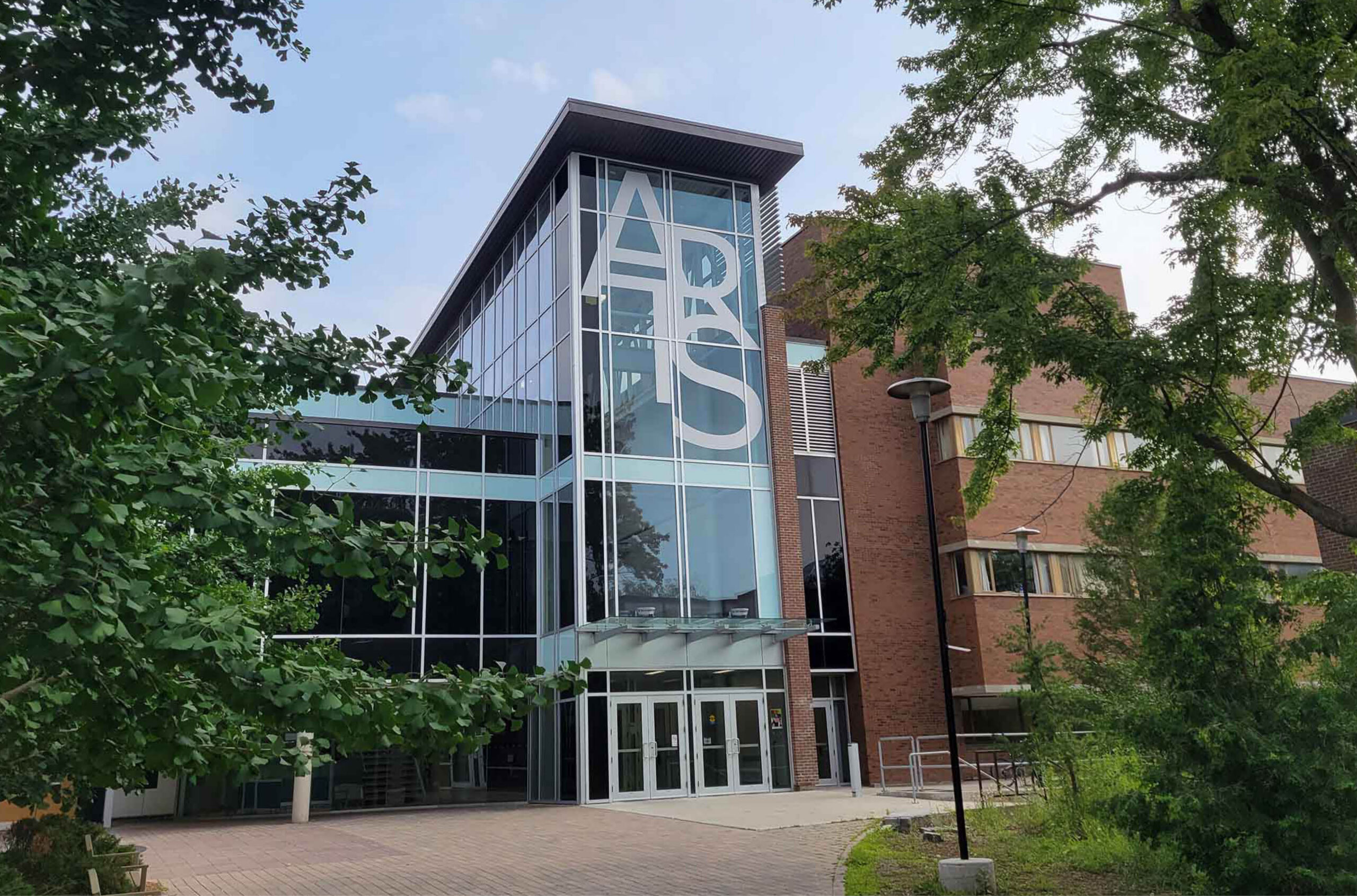
Building resilience in Arts through interdisciplinary collaborations
In a technology-enabled future, Arts faculties have an opportunity to demonstrate their relevance by making collaboration across disciplines easier and more visible.
More from Research
-

Canada ‘muddling through’ without national research infrastructure strategy, panel finds
Expert report says fragmented governance and funding threaten Canada's research competitiveness and scientific sovereignty.
-

The Nuisance Variable
Two-thirds of Alzheimer’s patients in Canada are women. Why does research still treat them as an afterthought?
-

How serendipity built a cross-disciplinary career
Taking research positions out of economic necessity allowed me to gather a broad set of skills and knowledge.
-

From doctoral student to entrepreneur
Resources abound to help you turn your PhD research into a business startup.
More from In My Opinion
-

Why Canadian academics shouldn’t boycott U.S. conferences
Show up in person and do good trouble instead.
-

Gen Z meets genAI
We are the first generation to learn alongside AI. What do we owe the next?
-

Canada’s sovereignty is being tested
As Canada faces mounting pressure from the United States, an Indigenous-led exhibition at the Gwangju Biennale offers a timely way to think about conflict, responsibility and the choices ahead.
-

It’s time to boycott U.S. conferences
As trade hostilities continue, we shouldn’t use taxpayers’ dollars to travel stateside.


Post a comment
University Affairs moderates all comments according to the following guidelines. If approved, comments generally appear within one business day. We may republish particularly insightful remarks in our print edition or elsewhere.