Rebuilding Jewish students’ trust in universities
As students return to campus, discussions of the Middle East conflict deserve a scholarly, responsible and robust treatment that recognizes antisemitism in all its forms.


On August 5, 2026, the Government of Canada, Department of Heritage released the first of two reports about campus antisemitism and student experiences (CASE). This landmark report described the experiences of Jewish students at Canadian universities and showed that almost all have experienced antisemitism on campus.
The survey results were staggering, revealing a pervasive pattern of discrimination against Jews in student residences, student organizations, campus events, in off-campus spaces, and in classrooms with nearly 96% of the sample reporting having experienced or witnessed at least one incident of antisemitism in the year preceding the survey. 70% reported that their university does not take antisemitism seriously, and 68% reported that their campus is not a safe and inclusive place for Jewish students.
Despite the efforts of Canadian universities to create more inclusive campuses, EDI policies ignore and, in many cases, fail Jewish students who report experiencing a campus climate hostile to their identity. This is because EDI policies that primarily adopt an anti-oppression framework often mischaracterize Jew as “White,” which ignores the history and ongoing injustices faced by Jews. The framework treats Judaism as a religion rather than reflecting the rich complexity of Jewish identity as spanning religion, ethnicity, race, secular self-identification and peoplehood.
The failure of EDI to recognize Jewish identity and antisemitism in all its forms may also explain the reluctance of Jewish students surveyed to report incidents of antisemitism. If the systems meant to protect students from intolerance and discrimination are blind to the ways in which Jews are targeted and in which antisemitism manifests, it is not surprising that 52% of Jewish respondents said reporting is futile. One student stated, “After reporting the screening on campus of a documentary glorifying Hamas [a recognized terror entity by the Canadian government], the university brought in diversity and inclusion and did absolutely nothing. So why report another incident?”
The CASE results make it clear that Jewish students have lost confidence in their institutions to address antisemitism because there are rarely consequences to discriminatory conduct. In many cases, Jewish students are told that their reports are unfounded or protected by academic freedom, judgments that would never be levelled at students from other minoritized groups who report discrimination. Their lived experiences are ignored. As a result, many Jewish students are experiencing a two-fold harm. The first are the incidents themselves and the second the invalidation from authorities that these experiences are not antisemitic.
One of the most concerning findings of the CASE report were student reports of undue political pressure and ideological conformity in the classroom. Nearly half of Jewish students reported that they felt pressured to share their opinions about Israel with other students, more than a third felt pressured to conform to a professor’s views on Israel, and one in five felt pressured to join an anti-Israel protest. Moreover, one in three encountered course content or classroom discussions they experienced as antisemitic or biased. One student reported: “I was told by a professor, in class in the middle of the lecture, that Jews belong in Poland and need to go back.” Another stated: “We were evaluated on the situation in Gaza and Israel even though our course syllabus had absolutely nothing to do with it.” And another wrote: “A professor of women’s and gender studies gave me 0% on an assignment because I had discussed sexual assault on October 7, 2023. He suggested that I instead focus on the role of Israeli police in sexual assaults.”
Universities are meant to foster open exchange of ideas even, and perhaps, especially, about challenging topics. The Middle East conflict is one of these subjects, and it deserves a scholarly, responsible, and robust treatment. Given the complexity and importance of the conflict it should be debated from all sides grounded in evidence and facts. Only through dialogue can understanding be fostered.
A common misunderstanding, for example, is that the Government of Canada’s adopted definition of antisemitism, the International Holocaust Remembrance Alliance’s (IHRA) working definition equates criticism of Israel with antisemitism. IHRA actually explicitly states that criticism of Israel is not antisemitic. Debate should include scrutiny of its actions from diverse viewpoints.
What the CASE data, however revealed, is that what is happening in the classroom is not mere criticism of Israel. Rather, academic freedom is being used to shield the imposition of ideological positions on the Middle East conflict that insist on a single unimpeachable viewpoint casting a single one actor, Israel, as irredeemably evil, a characterization that echoes antisemitic rhetoric that frames Jews as inherently malevolent. Academic freedom must be accompanied by academic responsibility.
Vanderbilt University Chancellor Daniel Diermeier articulated three pillars that the academy’s success rests on: academic freedom, institutional neutrality, and civil discourse. The results of the CASE study suggest that each of these pillars is being undermined on Canadian campuses when it comes to the experience of Jewish students.
Much of the harassment extends to the broader campus environment and online spaces that students inhabit. For example, 34% of students experienced online harassment and 33% experienced it through student groups.
What concrete steps can be taken to rebuild Jewish students’ trust in universities?
NECA offers a roadmap. Included among the ten recommendations, NECA calls on university and colleges to: 1) enforce existing policies and procedures to protect Jewish students from being bullied, harassed and targeted, 2) adopt and implement institutional neutrality policies that differentiate the institution that protects the place where vigorous open debate happens from those engaging in those debates, 3) reexamine how academic freedom is defined and practiced and recognize that it must be accompanied by academic responsibility and integrity, and 4) task Equity, Diversity, and Inclusion and Human Rights Offices to create clear and explicit policies on antisemitism in all its forms and to facilitate learning and dialogue on campuses.
As former UBC President Martha Piper stated at the CASE press conference, “The time for decisive action is now. Universities must publicly commit to addressing the ongoing prevalence of antisemitism on their campuses.”



Featured Jobs
- Director, Human Research Ethics & Strategic AdvisorUniversity of Manitoba
- Psychology - Assistant Professor (Clinical Psychology)Western University
- Toldo Chair in Christian StudiesAssumption University
- Global Inequalities and Trade - Faculty PositionUniversité Laval
- Movember Institute Discovery Research Program FellowshipsThe University of British Columbia
More from Opinion
-

Faculty well-being in the age of GenAI
When every student has an AI assistant, the writing teacher's job becomes both harder and more essential.
-
Committee’s EDI recommendations are based on flawed logic
Excellence must be sufficiently rigorous and inclusive to identify talent wherever it exists.
-
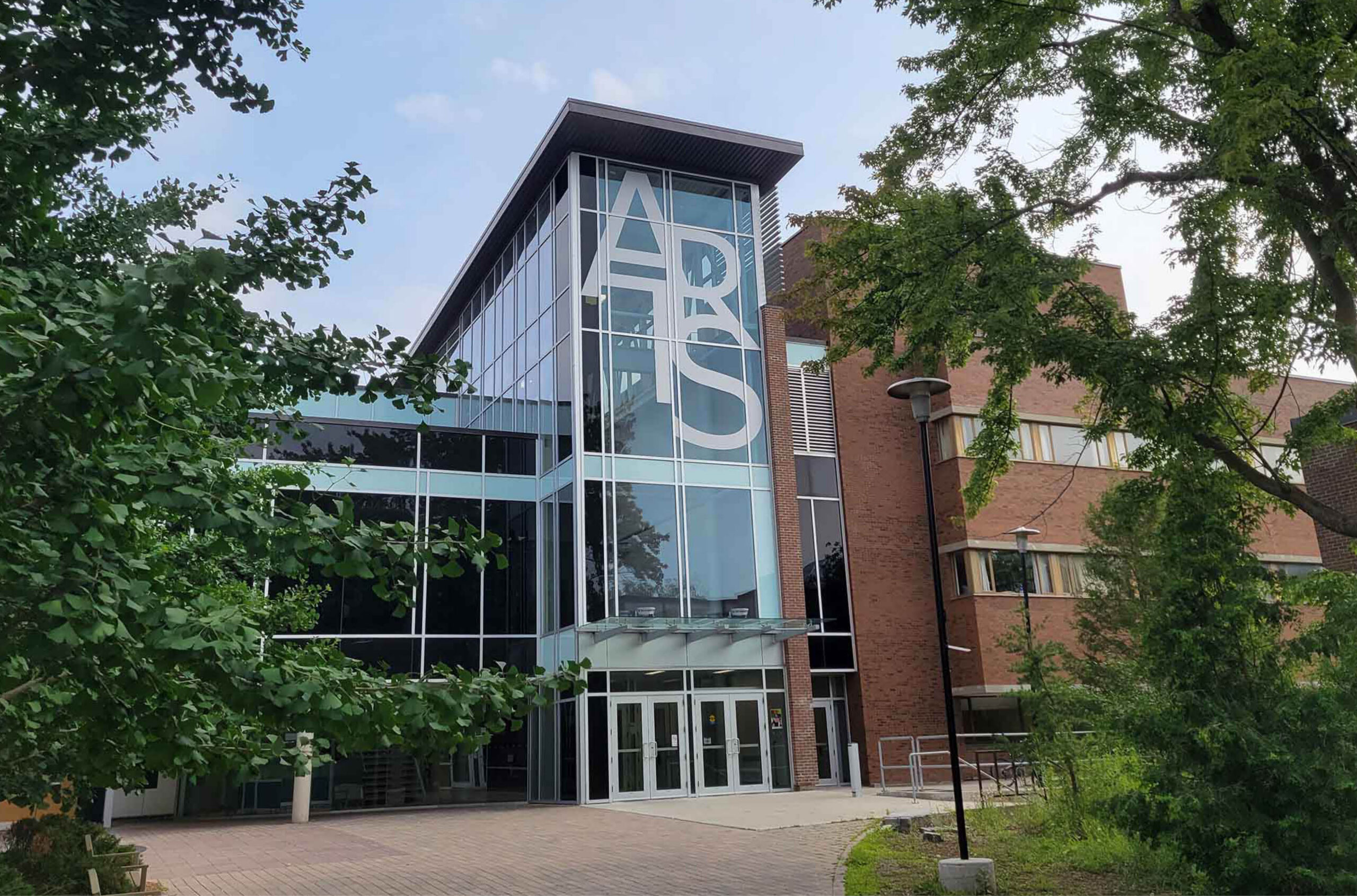
Building resilience in Arts through interdisciplinary collaborations
In a technology-enabled future, Arts faculties have an opportunity to demonstrate their relevance by making collaboration across disciplines easier and more visible.
-

Science in French? Bien sûr!
As English dominates the publication landscape, support for French-language research is a strategic investment in the quality, equity and the future of knowledge.
More from Academic freedom
-

Why Canadian academics shouldn’t boycott U.S. conferences
Show up in person and do good trouble instead.
-
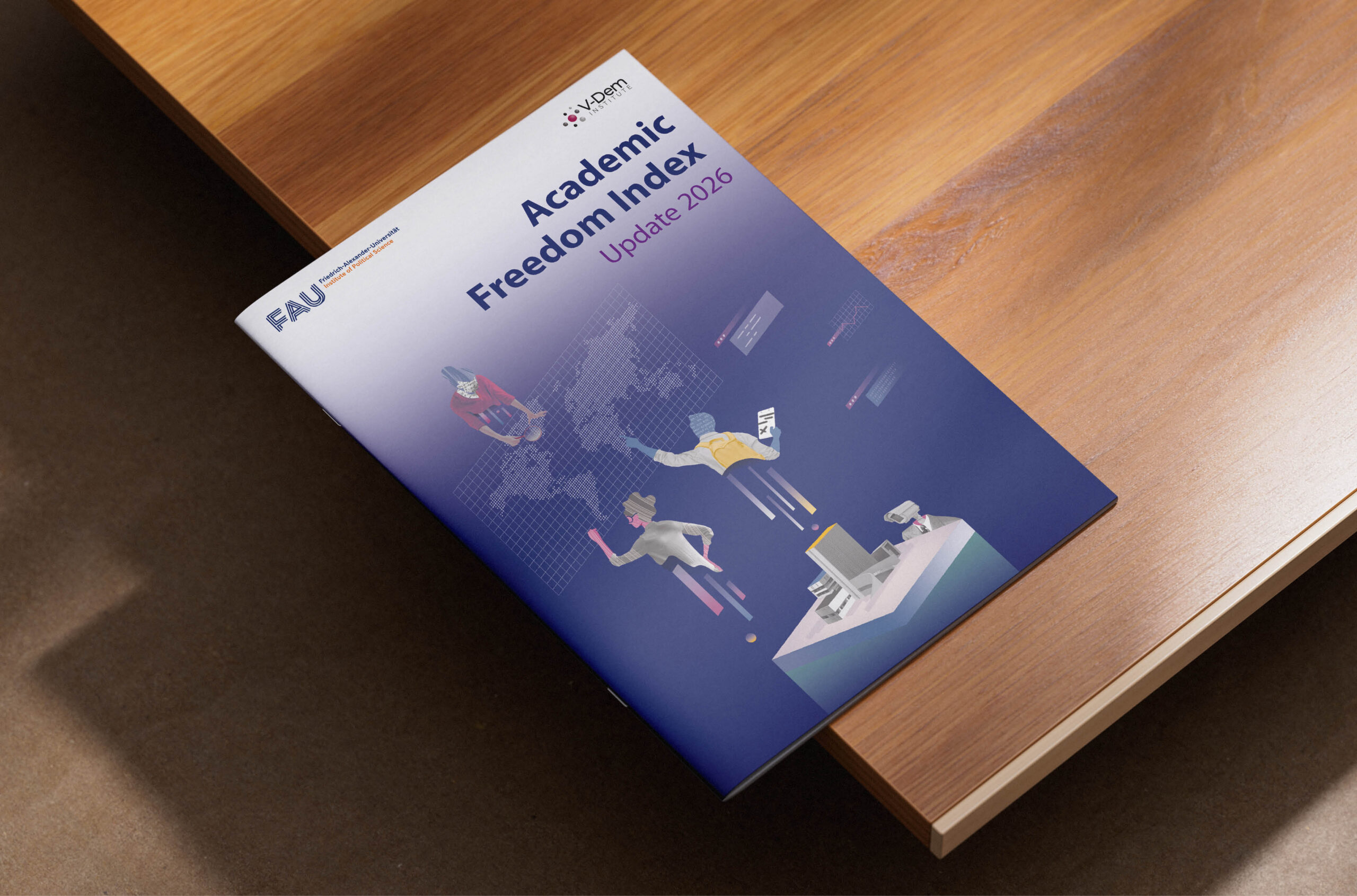
Attacks on higher education spread globally, including in liberal democracies, Scholars at Risk report finds
Canada urged to defend values amid erosion of institutional autonomy in the U.S.
-

It’s time to boycott U.S. conferences
As trade hostilities continue, we shouldn’t use taxpayers’ dollars to travel stateside.
-

Institutional neutrality: the case against
Jennifer S. Simpson argues that universities must eschew neutrality to advance democracy, ethics and the public good.
More from In My Opinion
-

Gen Z meets genAI
We are the first generation to learn alongside AI. What do we owe the next?
-

Canada’s sovereignty is being tested
As Canada faces mounting pressure from the United States, an Indigenous-led exhibition at the Gwangju Biennale offers a timely way to think about conflict, responsibility and the choices ahead.
-

When misconduct moves on
Universities need a fair way to share serious misconduct findings across institutions.
-

When misconduct disappears into university bureaucracy
Universities have procedures for misconduct, but too often lack the governance structures needed to see the patterns that emerge across sectors.

Post a comment
University Affairs moderates all comments according to the following guidelines. If approved, comments generally appear within one business day. We may republish particularly insightful remarks in our print edition or elsewhere.
5 Comments
The CASE report is flawed because it conflates antisemitism with criticism of Israel and the genocide that it’s committing. And the same is true for the IHRA definition.
This article fails to disclose widespread criticism of the motivation and methodology of the study that it is based on. The study, which purports to demonstrate that Jewish students are concerned about being mistreated on campus because of being Jewish, was conducted by Zionist organizations and did not attempt to include a broadly representative sample of Jewish students. The respondents to the survey were heavily biased. Consequently, Jewish students who support the liberation of Palestine and Jewish students who simply are not involved with support for Israel were not included. A well-informed, thoughtful critique of the study is available at: https://www.ijvcanada.org/press-release-federal-campus-antisemitism-report-fails-to-represent-jewish-student-diversity/
I find no meaningful discussion regarding the distinction between anti Zionism and antisemitism in this article.
Additionally, a more nuanced discussion regarding parameters where students and staff who are protesting the actions of Israeli regime in defense of folks in occupied Palestine can do so without compromising feelings of threat (both real and more subjective) from our dear Jewish students and colleagues would be required.
This piece makes incredible generalizations that cannot be supported by the weak methodology in the CASE report. It is honestly shocking that UA decided to publish this piece. We wrote a rigorous methodological rebuttal to this article here: https://canadiandimension.com/articles/view/campus-antisemitism-report-is-based-on-fundamentally-flawed-methodology
The CASE report and this article rely on a scandalously flawed methodology to advance a political argument under the veneer of scholarly objectivity.
Please find our full critique of the methodology here: https://canadiandimension.com/articles/view/campus-antisemitism-report-is-based-on-fundamentally-flawed-methodology