Budget pressures put satellite campuses under threat
Universities wrestle with educational mission, financial realities.
About 300 kilometres northwest of its main campus in Kamloops, B.C., Thompson Rivers University (TRU) operates a satellite location in the small city of Williams Lake. The school’s president says the site loses $14,000 every single day.
Many universities in Canada are facing a financial crunch, and must determine whether to retain secondary campuses, which are often small and inefficient. These locations may serve a limited number of students and offer only a few programs.
At Memorial University, based in St. John’s, NL, leaders made a tough decision in January — to close the satellite Signal Hill campus to help balance the budget. Other schools have been more circumspect. Algoma University, located in Sault Ste. Marie, Ont., says it plans to keep its branch campus open in the Toronto suburb of Brampton, although enrolment there has plunged since the flood of international students coming to Canada has turned into a trickle.
TRU regional students display “brave ambition”
TRU President and Vice-Chancellor Dr. Airini, who goes by one name, told University Affairs that the school is committed to the Williams Lake campus. The site has just over 400 academic and trades students. An additional 650 are enrolled in non-credit continuing education courses. About 39 percent of the students are members of local Indigenous communities.
“However, it’s striking to see the lack of appreciation of what it takes to run programs at regional campuses,” she said. “The recruitment efforts are heroic and the passion for regional programs is genuine. Most students are first in family to come to university and they represent a brave ambition for strong futures for their families and for jobs. But that takes considerable effort and investment in student supports.”
Dr. Airini lamented the lack of dedicated funding to produce regional programming. Before the imposition by the federal government of a study permit cap on international students in 2024, TRU counted on international student tuition to subsidize the Williams Lake site.
“Now that flexibility has been reduced and we have to live within our means while still providing education and training for Williams Lake and surrounding region. We know it’s on us to find the solution,” she said.
Memorial divests of ‘non-core assets’
Facing a $25-million budget deficit, Memorial announced in January that it would be closing its Signal Hill campus as of April 2027. It is also shuttering its site in Harlow, England.
“We are taking a disciplined, intentional approach to financial stewardship so Memorial’s resources are directed where they have the greatest impact,” said Justin Ladha, chair of the board of regents.
At the time, MUN said in a statement: “By reducing investment in non-core assets, we can further protect academic delivery, better maintain our infrastructure and ensure we remain well-positioned to support Memorial’s current and future learners.”
READ MORE: Navigating change at Memorial University – University Affairs
Loss of international students strains Algoma’s Brampton campus
Algoma University’s satellite campus in Brampton, Ont., was established in 2010, but its enrolment soared during the international student boom a decade later. By 2023, more than 5,000 students studied there, the vast majority from India.
That all collapsed in the wake of the international student cap. Currently, the campus serves just 1,325 students, said Algoma University spokesperson Mohamed El Kahlout. As a result of the huge loss of international student revenues, the university is wrestling with a $16.5 million deficit.
Nevertheless, Mr. Kahlout says the university plans to continue operating the Brampton facility. “The campus is essential to Algoma University and a key contributor to its financial sustainability, and it will remain so for generations to come,” he told University Affairs.
In 2019, Brampton city council approved $7.3 million in grant funding to Algoma over three years to support expansion of the site. That brings the total invested to $7.9 million. Now, Algoma University is trying to sublet some of that space to reduce its expenses.
“The City of Brampton’s partnership with Algoma University expands access to post-secondary education, supports downtown revitalization and contributes to Brampton’s growing Innovation District,” says Kennisha Petgrave, spokesperson for the city. “A highly skilled workforce is one of Brampton’s strongest assets, attracting businesses to invest, build and grow in the city. The partnership supports continued talent development to meet the needs of Brampton’s evolving economy.”
READ MORE: International student visa permits: What to know – University Affairs
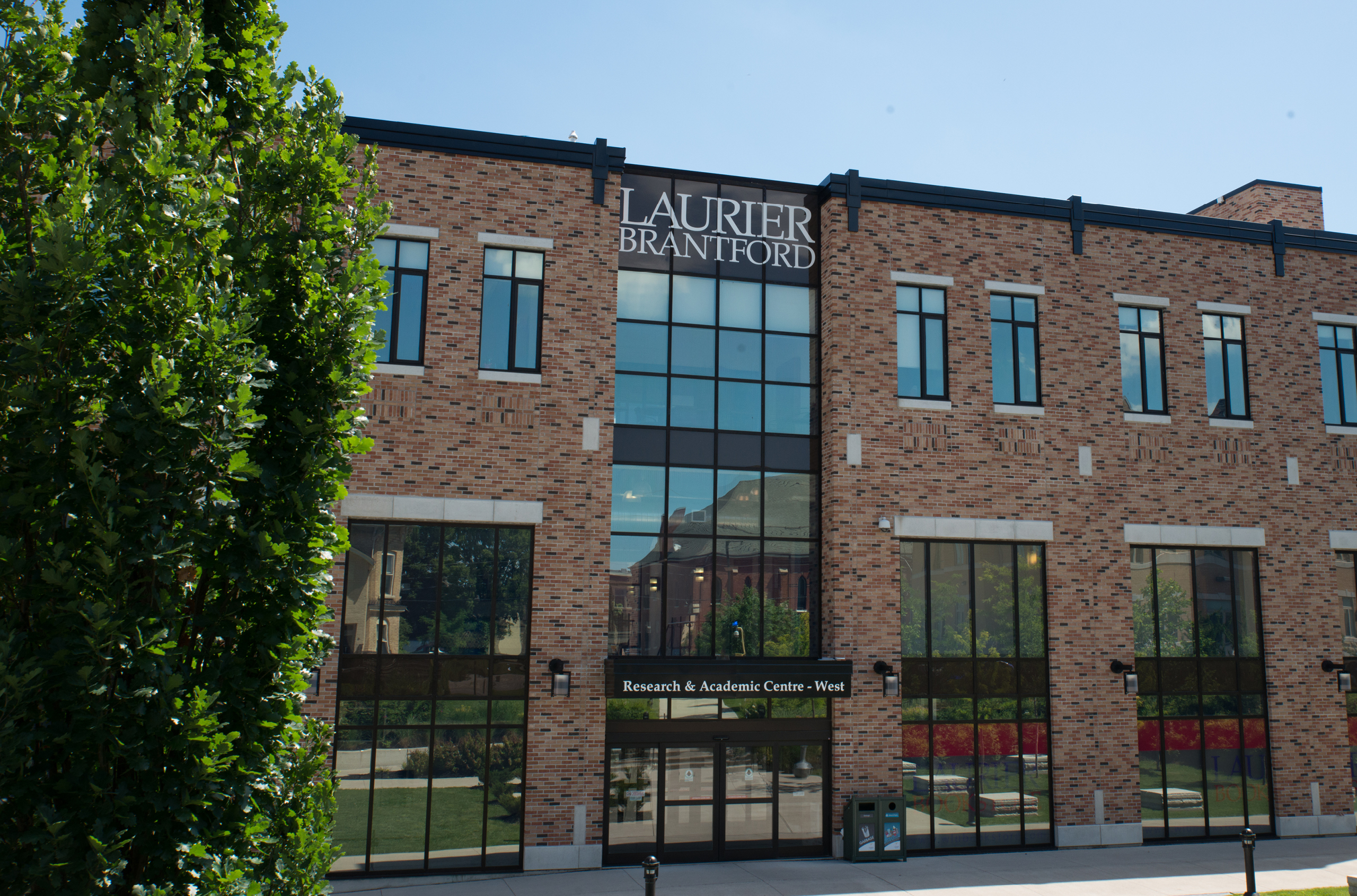
Laurier branch campus revitalizes downtown Brantford
Unlike some of its counterparts, Wilfrid Laurier University, based in Waterloo, Ont., does not have a deficit. In fact, its board is projecting a $21-million surplus for this academic year. That puts its Brantford satellite campus on a more secure footing.
The site was established in 1999 in response to a community group that wanted to bring a university campus to Brantford; now, it has 2,600 students. Officials at the campus work closely with the municipality.
“Laurier has been a leader in downtown revitalization and thoughtful repurposing of existing structures in downtown Brantford,” said Beth Gurney, spokesperson for the Brantford location.
The future of the secondary campus is secure, she said. “Laurier remains committed to strategic growth and investment in Brantford.”



Featured Jobs
- Movember Institute Discovery Research Program FellowshipsThe University of British Columbia
- Global Inequalities and Trade - Faculty PositionUniversité Laval
- International Studies - Faculty Position (Arctic Defence and Security)Université Laval
- Theatre and Film - Assistant Professor Without Review (Performance Practice)The University of British Columbia
- Psychology - Assistant Professor (Clinical Psychology)Western University
More from News
-

NSERC laureates help save people — and the planet
Researchers at McMaster, Western and the University of Guelph honoured for work in human health and environmental protection.
-

Universities in Guelph, Toronto, Alberta and Trois-Rivières win Synergy Awards
From cell biology to sustainable packaging, the NSERC prizes recognize innovative research partnerships.
-

NSERC announces Arthur B. McDonald Fellowship winners
Research council kicks off a week of prizes with grants for early-stage academics.
-

Feds announce $880 million for research
Funding will support both established health scientists and emerging cross-disciplinary researchers.
More from Policy
-

B.C. higher education: tweak or reform?
In the coming provincial election, parties offer different proposals for a system under strain.
-

Quebec universities: 60 years of change
From the Quiet Revolution to the present day, universities have profoundly transformed Quebec society. As a provincial election rapidly approaches, we reflect on their changing mission over six decades of often tense history.
-

Universities participating in Canadian militarization: the case against
Henry A. Giroux argues that the militarization of Canadian universities threatens to transform institutions devoted to critical inquiry and democratic life into extensions of the warfare state.
-

Canadian universities and the new defence imperative: the case in favour
Martin Maltais argues that Canadian universities must play a greater role in strengthening the country’s defence capacity while preserving academic freedom and scientific independence.
More from Articles
-

OCAD University celebrates 150 years of shaping Canadian culture
Art and design university launches $6-million campaign for 150 scholarships to mark 150th anniversary.
-

Canada ‘muddling through’ without national research infrastructure strategy, panel finds
Expert report says fragmented governance and funding threaten Canada's research competitiveness and scientific sovereignty.
-

Ottawa won’t restrict student visas from countries with high asylum-claim rates
India will help Canada ‘crack down’ on student program abuses, high commissioner says.
-

Students and seniors under the same roof
Intergenerational living helps with loneliness and the high cost of rent.

Post a comment
University Affairs moderates all comments according to the following guidelines. If approved, comments generally appear within one business day. We may republish particularly insightful remarks in our print edition or elsewhere.