Life lessons from the World Happiness Report
Happiness is a gift for elders to pass on to the younger generation.


Over the past half-century, researchers have learned to measure something that once seemed beyond measurement: how life is going. The method is disarmingly simple. Ask people to rate their lives on a scale from zero to ten, and the answers turn out to be remarkably informative. They can be compared across countries, cities, and generations, can be explained by circumstances, beliefs and values, and used to compare the likely effects of different habits, behaviours, and policies.
The most consistent lesson from this evidence is that the quality of our lives depends far less on the quantity of income and other material supports than on the quality of our social fabric — on how we connect, trust, and help one another at home, at work, and in our communities. And within that lesson sits a surprising and hopeful discovery: we are, almost all of us, too pessimistic about one another.
Consider a simple experiment, repeated in cities around the world. Researchers deliberately “lose” wallets and record how often they are returned. Beforehand, they ask people how often they expect wallets to come back. The gap is striking. Wallets are returned roughly twice as often as people predict. People everywhere consistently underestimate the kindness of strangers.
This is not a harmless error. In large international surveys, simply believing that a lost wallet would be returned — by a stranger, a neighbour, or a police officer — is associated with higher satisfaction with life by more than being spared the risks of unemployment, violent crime, or serious illness. It dwarfs the effect of a higher income. To feel that you live among trustworthy, well-meaning people is among the best things that can happen to a life.
Why does the gloomy expectation persist, if it is so mistaken and so costly? A large part of the answer is a deep-seated negativity bias: we are wired to notice and remember bad things more readily than good ones. The media we consume run on the same principle — “if it bleeds, it leads” — so that even coverage meant to be balanced tilts our sense of the world toward the alarming. Bad news is simply louder than good, in the headlines and in our own memories.
The positivity effect
Here is where the story turns encouraging, especially for those no longer in the first half of life. The negativity bias is not fixed. It fades. In many countries, people become happier as they move past middle age — a real puzzle, since health and the size of one’s social network typically decline over the same years. The leading explanation is what psychologists call a positivity effect: as we grow older, we get better at attending to what is going well and letting go of what is not. Age, quietly, corrects the built-in bias that makes us wary of one another.
Alongside that comes a rise in trust. Across dozens of countries, generalized trust — in friends, neighbours, and strangers — tends to increase with age. Because trust is one of the strongest companions of happiness, this is good news. It also invites a worry: does growing trust simply make older people easier to deceive? The most recent experimental evidence says no. Older adults are less likely to fall for a scam, not more. The trust that grows with age is not gullibility; it is a more accurate reading of how trustworthy other people actually are — closer to the truth the wallets reveal.
A sharp counterpoint to this hopeful picture is posed by declining youth happiness in much of the English-speaking world, as first noted in Chapter 2 of World Happiness Report 2024. While the happiness of those under 25 has risen significantly in most countries over the past fifteen years, it has fallen significantly in all of the English-speaking countries, and especially in Canada where the decline has been larger than in all but Malawi, Lebanon and Afghanistan among the 136 countries compared. (See Figure 21 in the Statistical Appendix to Chapter 2 of World Happiness Report 2026.) The causes are still being untangled, with worries about jobs and housing being important, set within a U.S.-dominated information and social media landscape that creates and fuels anxieties rather than opportunities (World Happiness Report 2026). Where older minds may have learned to discount the reflexive negativity of “if it bleeds, it leads,” younger ones see that bias delivered continuously and algorithmically. Helping to fashion a more positive and enabling information landscape may be the most valuable contribution Canadian academics can make to enable happier lives for current and future young Canadians.
Becoming a ‘felicitator’
The deepest and most reliable sources of well-being are social. People are happier when they act with generosity, and happier still when they live where generosity is the norm. Benevolence is doubly rewarding: it lifts the well-being of the person helped and of the helper, and it lifts most of all those who might otherwise be least happy. Kindness, in other words, not only raises the average; it helps to create happiness for those who need it most, reducing inequality both within and among nations.
This suggests reframing what it means to flourish in later life. The point is not merely to consume happiness but to produce it: to be a “felicitator,” one of the people, places, and institutions that create well-being for others. Producing happiness is not the preserve of the young or the employed. The evidence suggests that older people arrive at this stage unusually well equipped for it — more inclined to think well of others, more accurate in doing so, and often with the time, perspective, and accumulated knowledge to act on it.
That is an argument for staying active in making and sharing human connections. The habits that sustain well-being are active ones: reaching out rather than withdrawing; extending trust rather than bracing for disappointment; and continuing to share what one knows. For scholars, that last habit has a particular form. A lifetime’s work does not lose its value the moment classroom teaching stops; ideas, mentorship, and hard-won judgment are among the most durable gifts anyone can give — and, not least, a steadying counterweight to an information landscape that is teaching the young to fear one another. The social fabric that the science identifies as the true foundation of a good life is woven, in the end, from exactly these threads: connection, trust, generosity, and the willingness to keep offering oneself to others.
The research is there to encourage. It tells us that Canadians and people all over the world are more trustworthy than our fears suggest, that we grow more able to see this as we age, and that the surest route to our own well-being runs through the well-being of others. Canadians, and especially younger ones, deserve to know more about each other, and more about their shared history, culture, values, aspirations, and opportunities to create and share better lives. Canadian academics at every age and stage can and should help them. Help them to see strangers as friends they have not met yet. Help them also to see their own problems, and those of their country, as opportunities to work with others to build happier and more sustainable futures for each other.
This commentary is based on his chapter for a forthcoming German text in positive psychology: “Societal Happiness: Building Happier Societies Through Positive Social Connections,” J. Mangelsdorf (ed.), Positive Psychology, Vol. 1 (Beltz, 2027). An English language version of my chapter, including references to the research described above, may be found here.



Featured Jobs
- Psychology - Assistant Professor (Clinical Psychology)Western University
- Movember Institute Discovery Research Program FellowshipsThe University of British Columbia
- International Studies - Faculty Position (Arctic Defence and Security)Université Laval
- Director, Human Research Ethics & Strategic AdvisorUniversity of Manitoba
- Toldo Chair in Christian StudiesAssumption University
More from Career Advice
-

How serendipity built a cross-disciplinary career
Taking research positions out of economic necessity allowed me to gather a broad set of skills and knowledge.
-

From doctoral student to entrepreneur
Resources abound to help you turn your PhD research into a business startup.
-

Internationalizing Truth And Reconciliation through multilingual storytelling
Faculty share stories in their home and heart languages in the University of the Fraser Valley’s Leq'áleq’el Video Series.
-

Show it clearly: illustrating a report for your community partners
Part II: How to design figures that tell your story.
More from Mental Health
-
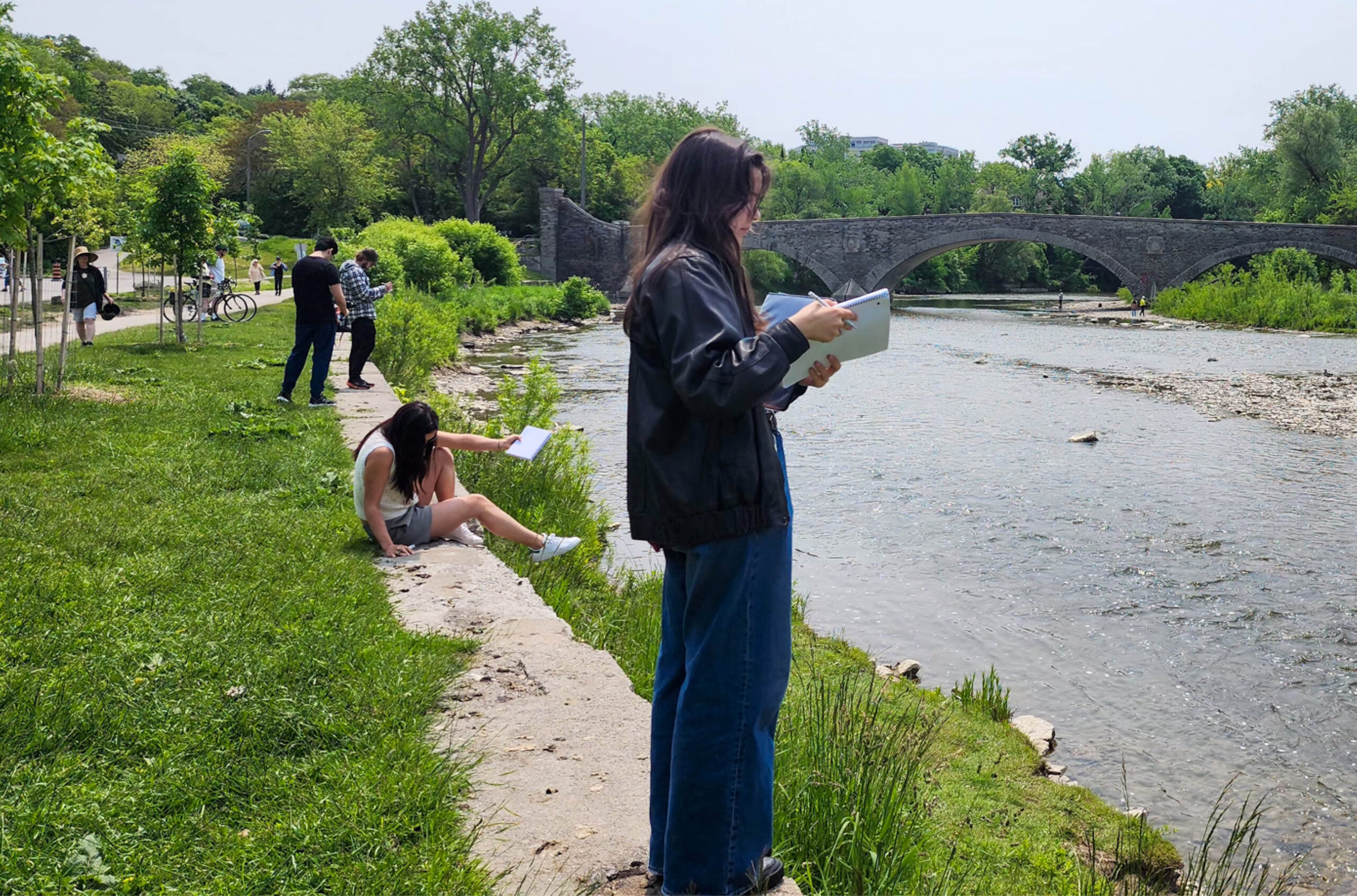
Teaching in the great outdoors
A unique creative writing class at the University of Toronto connects students to nature.
-
When misconduct moves on
Universities need a fair way to share serious misconduct findings across institutions.
-

When misconduct disappears into university bureaucracy
Universities have procedures for misconduct, but too often lack the governance structures needed to see the patterns that emerge across sectors.
-

When collegiality breeds contempt
As academics compete for scarce resources, collective decision-making can lead to abuse — but that’s no reason to dismantle the system.
More from Academic for life
-
From scholar to loller
The joys of retiring early.
-

Staying active — and activist — in retirement
People often ask me: why are you still doing all those professional things? Haven’t you “retired”? The underlying and well-meaning message is: why aren’t you relaxing more, travelling to faraway places, and binge-watching your favourite television shows? I...
-

End your job, keep your friends
Retiree associations help you stay engaged and connected during the next chapter of life.
-

Share your expertise and write what you know
Writing a book in retirement can be a source of immense satisfaction.


Post a comment
University Affairs moderates all comments according to the following guidelines. If approved, comments generally appear within one business day. We may republish particularly insightful remarks in our print edition or elsewhere.