Nature and First Nations honoured at Trent University
New stewardship plan reconnects campus green space to Anishinaabe knowledge.
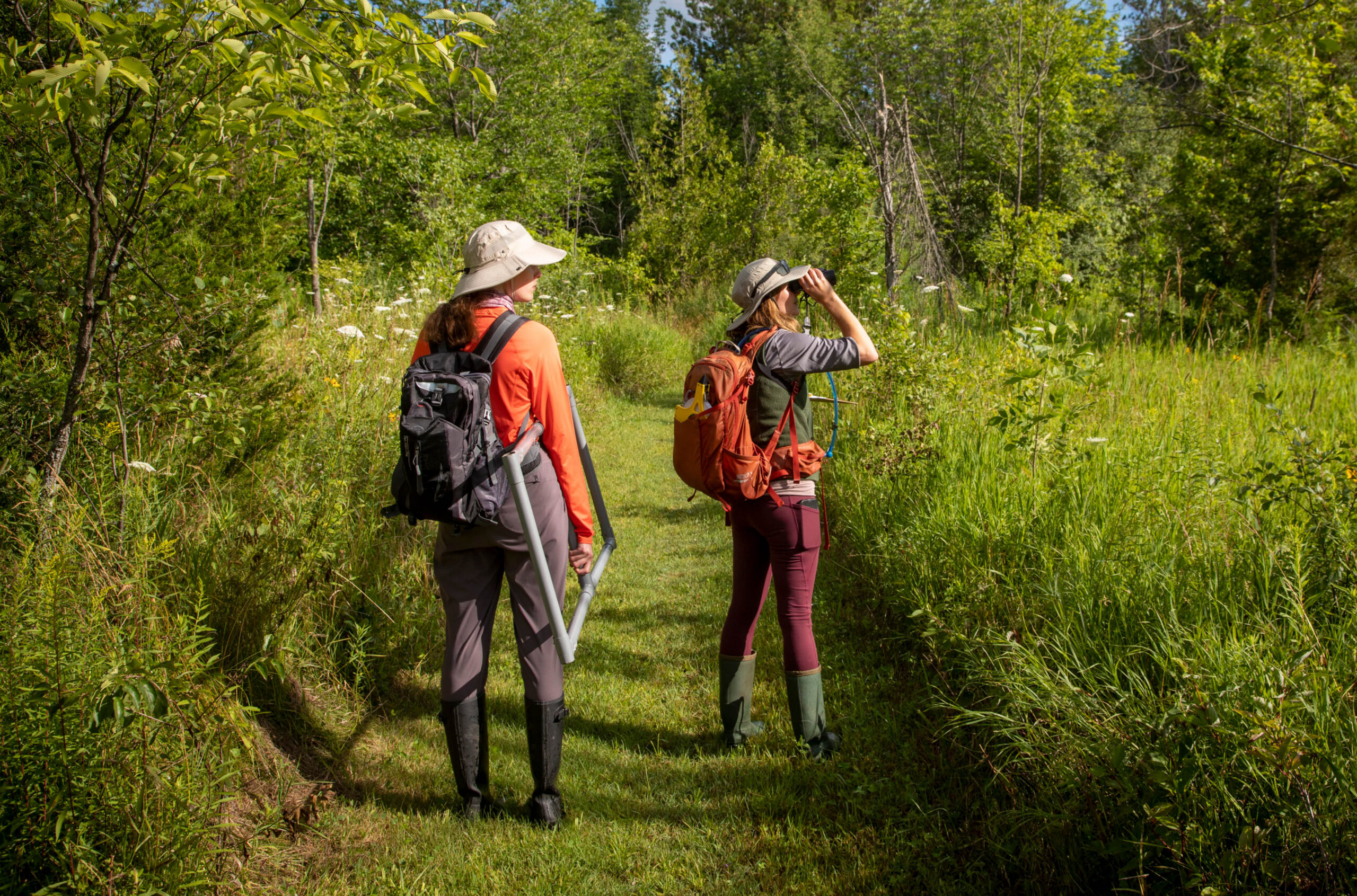
More than 360 hectares of green space on the campus of Trent University provide a habitat for plants and animals, as well as a living connection to Indigenous history.
Now, the university in the small town of Peterborough, Ont., is reshaping its Green Network into a connected community of ecological spaces. The Ggwepnandizamin Stewardship Plan, announced in late April, sets out a seven-year framework for how the land will be managed and protected, with a particular focus on the integration of Indigenous knowledge into environmental research, education, land-based learning and land management.
The plan, which has been developed in partnership with Michi Saagiig First Nations and local environmental organizations, will also involve ongoing collaboration with Trent Elders and the Knowledge Holder’s Council, as well as Michi Saagiig land consultation officers.
“When we’re looking at different things, especially around the park or around the school … there’s a lot of significant wetlands,” says Tom Cowie, consultation Indigenous Knowledge lead from Hiawatha First Nation. “Those are quite significant. They’re all medicine gardens.”
For Mr. Cowie, these spaces are not merely ecological reservoirs; they also form part of our broader understanding of the land — one which is living and connected to us. “We’ve always been taught that we look after the lands, to ensure that they are better for the generations to come,” he says. “We look at the land as a familial relationship, as opposed to being a commodity or a resource. We treat it as family.”
He added that this understanding reflects a cultural approach to knowledge-sharing within Indigenous communities: “We’re not keepers of knowledge, we’re sharers.”
As Canada prepares to celebrate National Indigenous Peoples Day on June 21, initiatives like the one at Trent recognize the cultures, histories and contributions of First Nations, Inuit and Métis peoples. The day invites Canadians to consider efforts which ensure Indigenous knowledge and voices are heard within institutions that have historically excluded them.
“When we listen and understand an Anishinaabe world view, and we understand familial relations and the spirit of all those species, we feel a higher calling to how we do the work,” says Julie Davis, Trent’s vice president of external relations & development.
She notes that fostering collaboration between Western and Indigenous knowledge systems requires intentional balance and ongoing discussion. “Maintaining what is called an ethical space, where that knowledge system and the Western system are equal, happens through talking and working together,” says Ms. Davis. “How arrogant would it be for us not to recognize, and acknowledge, and collaborate.”
Barbara Wall, an associate professor and dual-tradition scholar at Trent’s Chanie Wenjack School for Indigenous Studies, notes that “doing research for and with Indigenous communities will lead to increased environmental sustainability, increased environmental health, and thus increased human health on so many different levels.”
But as Dr. Wall points out, there are many barriers surrounding Indigenous-led research, particularly around issues of funding and capacity. Partnerships with academic institutions can help address some of these challenges by providing additional support and resources to communities, as long as spaces of collaboration are maintained as welcoming and respectful environments.
“There needs to be trusting, respectful relationships, and many times those have to be created before you can jump into any research,” says Dr. Wall.
Ultimately, Ggwepnandizamin Stewardship Plan involves many different dimensions, including a shift in how the environment and land are understood. It’s an opportunity to enhance understanding not only of the land and water, but also of the diverse ways of life they support. By enabling more connected ways of sharing knowledge, the stewardship plan offers a meaningful path toward a more inclusive and sustainable future.



Featured Jobs
- Toldo Chair in Christian StudiesAssumption University
- Global Inequalities and Trade - Faculty PositionUniversité Laval
- Theatre and Film - Assistant Professor Without Review (Performance Practice)The University of British Columbia
- International Studies - Faculty Position (Arctic Defence and Security)Université Laval
- Psychology - Assistant Professor (Clinical Psychology)Western University
More from News
-

Ottawa won’t restrict student visas from countries with high asylum-claim rates
India will help Canada ‘crack down’ on student program abuses, high commissioner says.
-

Students and seniors under the same roof
Intergenerational living helps with loneliness and the high cost of rent.
-

U Sports alum lace up for PWHL season
Canadian grads eager to show their mettle on women’s pro hockey teams.
-

The hidden problem of student homelessness
As high rents push more students into precarious housing, it's time to stop romanticizing the 'poor scholar'.
More from Indigenous
-
Internationalizing Truth And Reconciliation through multilingual storytelling
Faculty share stories in their home and heart languages in the University of the Fraser Valley’s Leq'áleq’el Video Series.
-

Canada’s sovereignty is being tested
As Canada faces mounting pressure from the United States, an Indigenous-led exhibition at the Gwangju Biennale offers a timely way to think about conflict, responsibility and the choices ahead.
-

Decolonization efforts entangle Franco-Albertan heritage
The University of Alberta’s Campus Saint-Jean is wrestling with the historical legacy of its founders, who represent French Canadian survival to some but colonial oppression to others.
-
U the North
Working together with Inuit, First Nations and Métis, university researchers are bolstering sovereignty and improving living conditions in the Arctic.
More from Articles
-

Parliamentary committee urges stronger support for research in French
Granting agencies should consider funding targets specifically for French-language projects, the Standing Committee on Science and Research recommends.
-

Remove EDI from research funding decisions, parliamentary committee says
The Standing Committee on Science and Research says ‘discriminatory’ EDI policies are ‘weakening the quality of Canadian research’.
-

Good medicine: new programs train country doctors
Université de Montreal follows Queen’s prescription to heal the shortage of family physicians in rural areas.
-

Universities struggle to be heard in Quebec election
In a campaign dominated by the U.S. trade war and the soaring cost of living, universities assert their continued importance.


Post a comment
University Affairs moderates all comments according to the following guidelines. If approved, comments generally appear within one business day. We may republish particularly insightful remarks in our print edition or elsewhere.