

As scholars, we are often taught by our teachers, colleagues, and disciplinary canons to believe that our field’s methods are best suited to answer our questions. But how can we truly be confident of this if we do not know, or dare to explore, what lies beyond our discipline’s methodological borders? Too often, our training limits our methodological imagination, narrowing not only how we study the world, but also what we come to see as legitimate and worthy objects of investigation. In reality, many researchers don’t know much about the methods of other disciplines, which may limit us from fully exploring dimensions of the phenomena we are trying to understand.
If, as researchers, we wish to prioritize our questions, we must dare to explore methods that might be foreign to us. We challenge the often-held positions that either qualitative or quantitative methods, or micro or macro perspectives, are superior to each other, or even mutually exclusive. We believe that all approaches can be powerful, but that all are also incomplete and, as such they should be viewed as complementary and deployed together more often than is currently customary. Such methodological curiosity, understood as a sustained openness to unfamiliar research methods, is a key to practice not only innovative, but also rigorous scholarship.
As a group consisting of an anthropologist of science and technology, an epidemiologist researching rare diseases and an ocean economist who met through an interdisciplinary leadership program, engaging in a sustained dialogue with each other has allowed us to realize that we have shared a challenge undoubtedly being faced by many more scholars: our disciplines’ epistemic systems and methodological rigidity have hindered our attempts to study and better understand the world we live in. Despite working in different empirical and institutional contexts, each of us has experienced situations in which disciplinary norms restricted what we could research or how we could research it.
In her role as an anthropologist of science and technology studying AI and other cognitive systems and entities from a cultural perspective for her PhD at McGill University, Ms. Mathieu is confronted with the tension between qualitative inquiry and computational epistemologies. She faces an important methodological challenge: how can a profoundly qualitative discipline such as contemporary sociocultural anthropology interrogate the cultural foundations of AI processes without altogether dismissing the value of these computational systems’ quantitative approach to the world?
Her training in the humanities and in qualitative social sciences positioned her to approach AI with a deep suspicion towards the technology’s inherently quantitative approach. Yet, she believes that AI’s significant role in contemporary societies and its real-world effects demand more than methodological critique alone. Realizing the complexity of this conundrum convinced her to conduct an ethnography of AI engineers; in other words, to study “methodological alterity” anthropologically and to attempt to build a relational bridge across the methodological divide she herself did not initially know how to cross. Through sustained engagement and methodological curiosity, her ethnographic work with AI engineers allows her to analyze how different scientific ways of representing and analyzing the world, including her own, are deeply culturally- and socially-situated.
A similar methodological tension confronts Ms. Stratton in a very different context. As part of her PhD in epidemiology at the University of Toronto, she is committed to strengthening rare disease patient registries. Epidemiology employs quantitative approaches to answer questions. Yet the realities of rare disease research revealed a deeper issue: the lack of coordinated data sources such as centralized registries not only limits which methods can be employed, but constrains the very questions that can be answered. How can more be learned about rare diseases when there is insufficient data? At the same time, how could she critique the limited availability of high-quality rare disease data but then use this underdeveloped data to answer a conventional epidemiological question? This tension lay at the core of her work: the traditional epidemiological toolkit, and the methods it prioritizes, were ill-suited to addressing these challenges. Paradoxically, to apply the principles of epidemiology meaningfully, she first had to broaden her methodological repertoire and be open to data sources that have not been traditional in her field. For her, this has meant using mixed-methods approaches such as interviewing rare disease registry holders.
Interdisciplinary collaborations have been critical to Dr. Sumaila’s career as an engineer, economist and more recently, Canada Research Chair (CRC) in Interdisciplinary Ocean and Fisheries Economics, and professor at Institute for the Oceans and Fisheries and the School of Public Policy and Global Affairs at the University of British Columbia. His appointment in this interdisciplinary setting, and commitment to engaging with wide ranging experts has led to novel frameworks and concepts such as intergenerational discounting; high seas as a fish bank; and Infinity Fish. Similarly, works on harmful fisheries subsidies, which has directly shaped international negotiations at the World Trade Organization and the modeling of the economic impacts of climate change on marine ecosystems and coastal livelihoods would not have been possible without interdisciplinary research. His career demonstrates how methodological curiosity can be institutionally cultivated and translated into policy-relevant knowledge.
Taken together, our experiences suggest that methodological openness should not be considered only as an abstract ideal but a prerequisite for scientific rigour. Whether confronting epistemic divides in AI research, infrastructural absences in epidemiology, or institutional boundaries in economics, each example illustrates how disciplinary canons can limit inquiry, and how openness can expand it. And in each case, curious and meaningful engagement with unfamiliar methods rendered new forms of knowledge possible.
The current moment can be particularly challenging, politically, financially, and structurally, for many academics and research institutions, and makes such openness especially urgent. In such a context, by allowing questions to guide methods rather than the reverse, researchers can resist containment, foster dialogue , and produce knowledge that is both intellectually rigorous and socially responsive.
As researchers, we should lead with curiosity: this is, after all, what ties academics together, across all fields of research and realms of inquiry.


Featured Jobs
- Theatre and Film - Assistant Professor Without Review (Performance Practice)The University of British Columbia
- Global Inequalities and Trade - Faculty PositionUniversité Laval
- Psychology - Assistant Professor (Clinical Psychology)Western University
- International Studies - Faculty Position (Arctic Defence and Security)Université Laval
- KAUST Global Fellowship Program - Postdoctoral Fellowship (Call 2027)King Abdullah University of Science and Technology
More from Opinion
-

Committee’s EDI recommendations are based on flawed logic
Excellence must be sufficiently rigorous and inclusive to identify talent wherever it exists.
-
Building resilience in Arts through interdisciplinary collaborations
In a technology-enabled future, Arts faculties have an opportunity to demonstrate their relevance by making collaboration across disciplines easier and more visible.
-

Science in French? Bien sûr!
As English dominates the publication landscape, support for French-language research is a strategic investment in the quality, equity and the future of knowledge.
-

Why Canadian academics shouldn’t boycott U.S. conferences
Show up in person and do good trouble instead.
More from Research
-

From doctoral student to entrepreneur
Resources abound to help you turn your PhD research into a business startup.
-
Ottawa announces 64 new research chairs in international talent attraction strategy
Top-tier researchers from 13 countries to join Canadian universities in first wave of appointments.
-
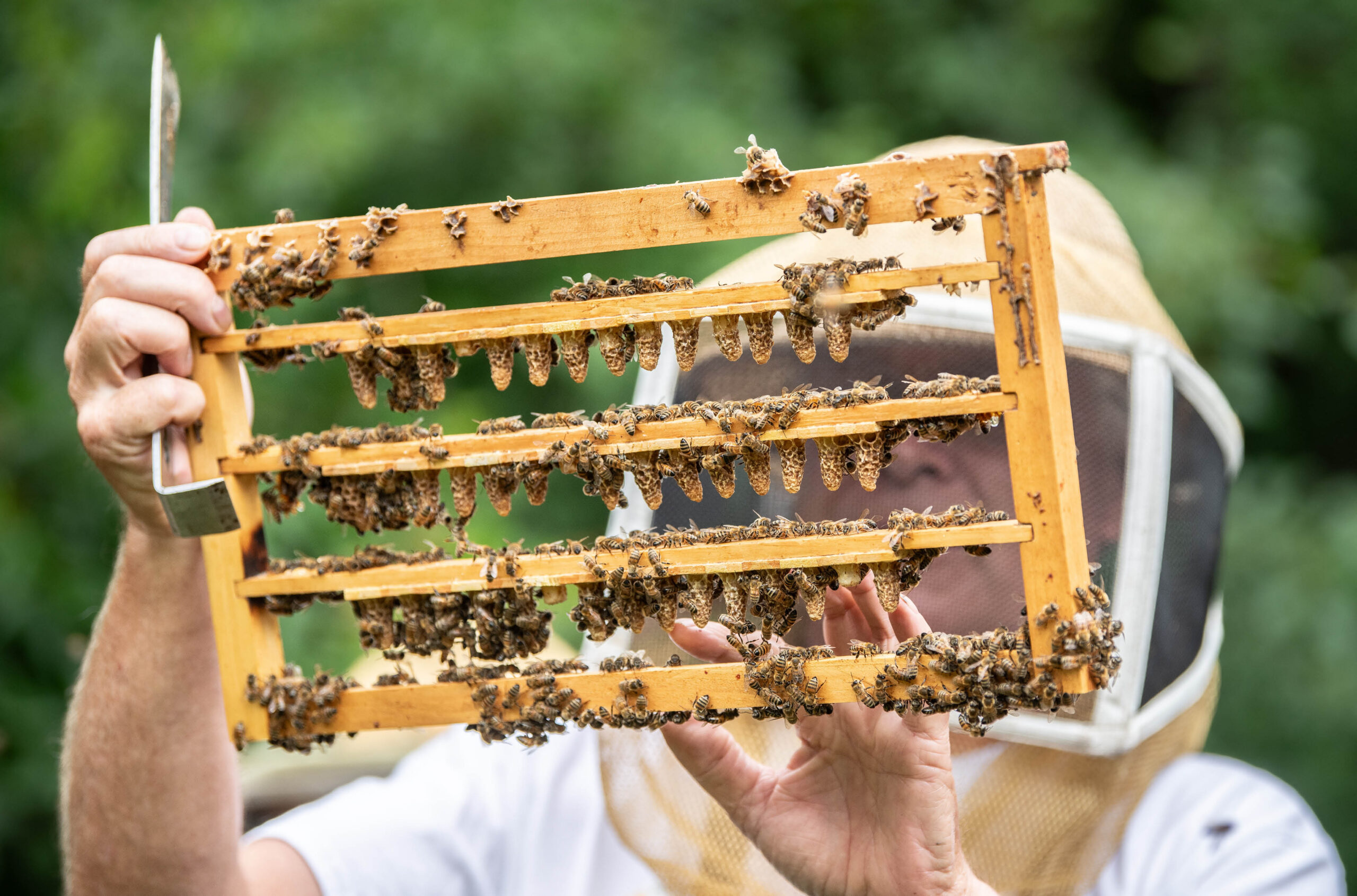
A look inside the hive: celebrating honey bee research at two Canadian universities
As MacEwan University marks 10 years of bees on campus, the University of Guelph kicked off the year by unveiling its newest centre for honey bee research.
-

Canada needs a national strategy to protect scholars at risk
Supporting displaced academics is a strategic investment in Canada's research and innovation ecosystem.
More from In My Opinion
-

Gen Z meets genAI
We are the first generation to learn alongside AI. What do we owe the next?
-

Canada’s sovereignty is being tested
As Canada faces mounting pressure from the United States, an Indigenous-led exhibition at the Gwangju Biennale offers a timely way to think about conflict, responsibility and the choices ahead.
-

It’s time to boycott U.S. conferences
As trade hostilities continue, we shouldn’t use taxpayers’ dollars to travel stateside.
-

Rebuilding Jewish students’ trust in universities
As students return to campus, discussions of the Middle East conflict deserve a scholarly, responsible and robust treatment that recognizes antisemitism in all its forms.

Post a comment
University Affairs moderates all comments according to the following guidelines. If approved, comments generally appear within one business day. We may republish particularly insightful remarks in our print edition or elsewhere.