What are universities really for and why does it matter now?
A review of Knowledge Under Siege: Charting a Future for Universities, University of Regina Press, 2026.


In my decade as a senior academic leader, I could not have chosen a more timely moment for the release of Knowledge Under Siege: Charting a Future for Universities, edited by Marc Spooner and James McNinch. In an era marked by intensified political scrutiny, budget cuts, lay-offs, public skepticism about the value of higher education and increasingly brazen efforts to legislate against curricular autonomy and academic freedom, this collection gathers an impressive group of scholars to address a deceptively simple question: what are universities for?
The book’s central claim is that universities are not merely under financial or reputational strain; they are confronting sustained political and epistemic challenges that strike at their core purposes. Across global contexts, contributors document efforts to curtail academic freedom, narrow curricular authority, weaken tenure protections and discipline critical scholarship. Crucially, these developments are situated within longer trajectories of neoliberal reform. Managerial governance structures, audit cultures, performance metrics and market logics have reshaped universities over decades, rendering them more vulnerable to overt political control and recasting them as instruments of economic productivity and ideological conformity. Through careful analyses of policy discourse, contributors show how appeals to accountability and efficiency redefine intellectual inquiry as measurable output rather than democratic practice, while selectively mobilized claims of free speech are deployed to undermine equity initiatives under the guise of neutrality.
What distinguishes this volume is that, rather than rehearsing familiar concerns about budgets or public relations, it asks leaders to clarify what, precisely, is being defended when the claim is made that the university is under siege. Rejecting narrow, market-driven conceptions that reduce universities to credentialing pipelines, the contributors advance a vision of the university as a public, democratic and ethical institution — one dedicated to cultivating critical inquiry, sustaining plural forms of knowledge, and enabling collective reflection amid social and political crises.
The volume foregrounds the political and ethical dimensions of higher education. Universities emerge as institutions that simultaneously enable critique and reproduce inequality — fostering democratic capacities while remainingentangled in colonial and racialized histories. This refusal of innocence is one of the book’s defining strengths. Rather than defending universities as they are, the contributors challenge readers to confront what they have been and what they continue to exclude or marginalize.
Several chapters engage directly with questions of epistemic authority and knowledge production. Western assumptions about knowledge, hierarchy and institutional purpose are unsettled by Indigenous models that center relationality, land, language, communal flourishing and collective self-determination. Contributors call for ethical spaces where Indigenous knowledge can flourish on its own terms, and for pedagogies grounded in relational accountability, trauma-informed practice and solidarity. In doing so, they shift the terrain of debate: the university is not only under external pressure but also implicated in longer histories of colonialism and exclusion. The task, therefore, is not merely to defend academic freedom, but to transform the epistemic hierarchies that determine whose knowledge counts.
The collection also addresses the tension between institutional neutrality and moral responsibility. In a polarized climate, universities are frequently urged to remain outside or above politics. Several contributors argue persuasively that neutrality can amount to acquiescence when commitments to academic freedom, equity, and democratic participation are under threat. The issue is not whether universities are political — they inevitably are — but how they might act responsibly and courageously in transparent ways consistent with their educational missions and governance processes. To retreat from this responsibility, or to drift further from education as a public good in deference to powerful minority interests, risks eroding any meaningful vision of a democratic and egalitarian future.
Despite the gravity of its analysis, Knowledge Under Siege is defiantly hopeful. Contributors point to concrete forms of resistance: faculty unions mobilizing against legislative overreach, student movements contesting austerity, Indigenous models of collective well-being, community partnerships reasserting public purpose and classrooms structured as sites of critical dialogue rather than passive consumption. These accounts do not present a single blueprint for reform; instead, they model diverse strategies of engagement — legal, pedagogical, ethical, relational, and structural — anchored in a readiness to confront institutional complicity and a commitment to foregrounding the non-monetary purposes that define higher education’s core mission. Universities are imagined as generative spaces where uncertainty, play, curiosity and creativity blur the boundary between academic and public life, creating critical shifts in perspective, altered lives and thus possibilities for more humane, joyful and decolonized futures.
The editors have curated a collection that is dialogical rather than doctrinaire. Tensions among the chapters — between reform and rupture, protection and transformation — are not smoothed over. This refusal of closure is a strength, inviting readers into an ongoing conversation about what kinds of universities democratic societies require and what risks we are willing to take in defending them.
A crucial point of Knowledge Under Siege is that we all must be concerned with the future of higher education. This exceptionally well-edited collection offers both diagnosis and provocation. It affirms that universities remain vital public institutions, even as it insists that their vitality cannot be taken for granted. At a moment when retreat into institutional defensiveness may feel safer, the book reminds us that universities, as homes and sponsors of critique, are meant to be unsettling. Democracy, the contributors make clear, depends upon our collective willingness to have universities sustain that role.



Featured Jobs
- Theatre and Film - Assistant Professor Without Review (Performance Practice)The University of British Columbia
- Global Inequalities and Trade - Faculty PositionUniversité Laval
- Director, Human Research Ethics & Strategic AdvisorUniversity of Manitoba
- International Studies - Faculty Position (Arctic Defence and Security)Université Laval
- Psychology - Assistant Professor (Clinical Psychology)Western University
More from Opinion
-

Faculty well-being in the age of GenAI
When every student has an AI assistant, the writing teacher's job becomes both harder and more essential.
-
Committee’s EDI recommendations are based on flawed logic
Excellence must be sufficiently rigorous and inclusive to identify talent wherever it exists.
-
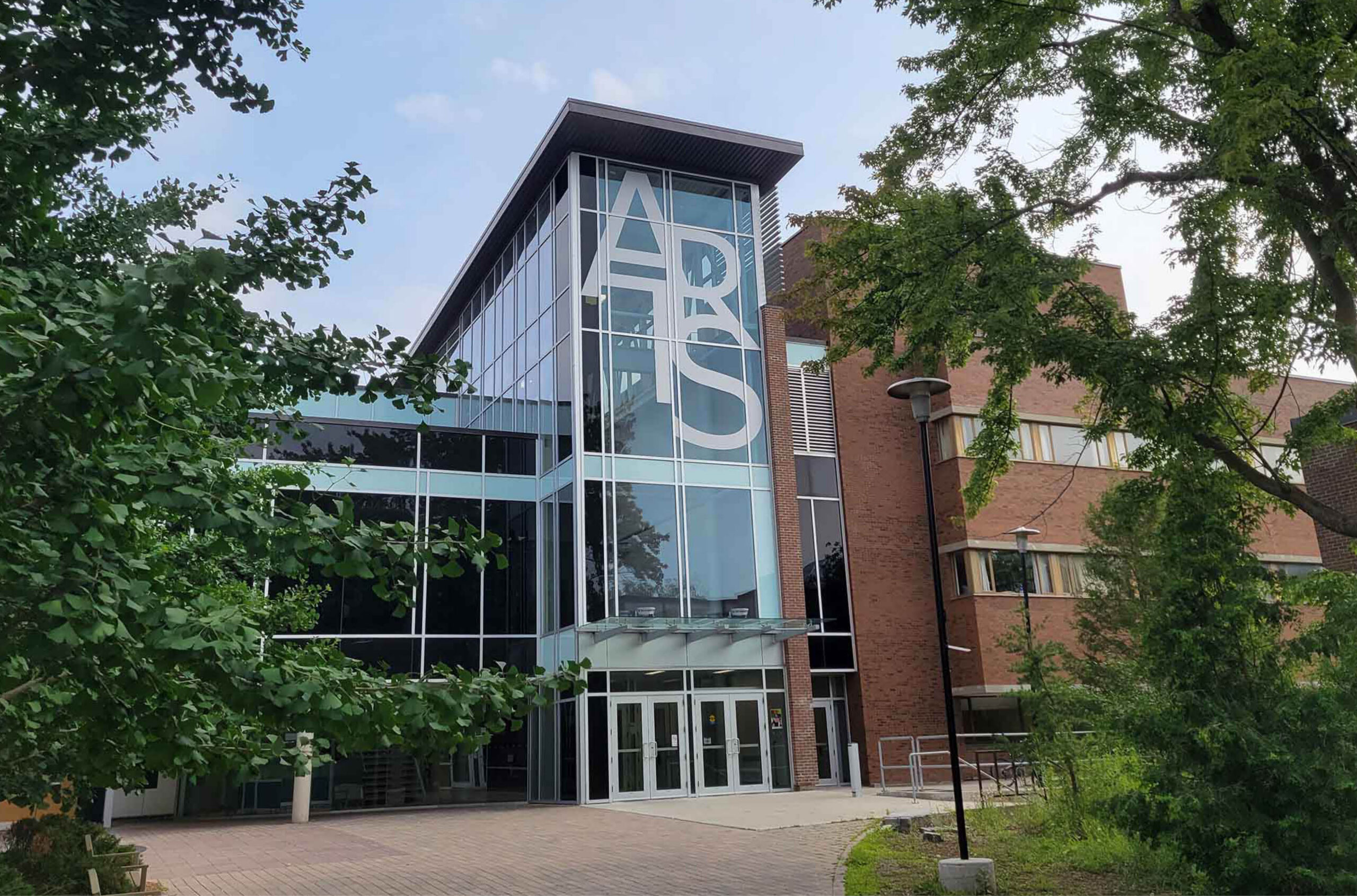
Building resilience in Arts through interdisciplinary collaborations
In a technology-enabled future, Arts faculties have an opportunity to demonstrate their relevance by making collaboration across disciplines easier and more visible.
-

Science in French? Bien sûr!
As English dominates the publication landscape, support for French-language research is a strategic investment in the quality, equity and the future of knowledge.
More from Teaching
-

Good medicine: new programs train country doctors
Université de Montreal follows Queen’s prescription to heal the shortage of family physicians in rural areas.
-

Level Up Learning
Amélie Vallières investigates how story-driven video games can support learning and build identity.
-

Aligning curricula with the workforce: the case against
Mazen Guirguis argues that the university should return to its Socratic roots.
-

Aligning curricula with the workforce: the case in favour
Matthew McKean and Valerie Walker argue that students aren't choosing between learning and work, so why should universities?
More from In My Opinion
-

Why Canadian academics shouldn’t boycott U.S. conferences
Show up in person and do good trouble instead.
-

Gen Z meets genAI
We are the first generation to learn alongside AI. What do we owe the next?
-

Canada’s sovereignty is being tested
As Canada faces mounting pressure from the United States, an Indigenous-led exhibition at the Gwangju Biennale offers a timely way to think about conflict, responsibility and the choices ahead.
-

It’s time to boycott U.S. conferences
As trade hostilities continue, we shouldn’t use taxpayers’ dollars to travel stateside.

Post a comment
University Affairs moderates all comments according to the following guidelines. If approved, comments generally appear within one business day. We may republish particularly insightful remarks in our print edition or elsewhere.