Addressing academia’s pretendian problem
Two Indigenous professors create a reference guide to stop scholars who falsely claim Indigenous heritage.

Near the end of a semester, Carleton University political science professor Gabriel Maracle decided to test his students’ understanding by posing an uncomfortable question: “What would you think of your experience in this class if, two weeks after it ended, you found out that I was not Indigenous, but actually Italian-American?”
Dr. Maracle, an expert on Indigenous governance in Canada, raised the question to assess his students’ understanding of Indigenous knowledge production, and to broach the thorny question of “pretendians” — a term coined to designate those who falsely claim Indigenous heritage. His goal is to prepare students to tackle major challenges at the intersection of scientific integrity and Indigenization.
READ MORE: What does Indigenization mean?
Dozens of cases have come to light in recent years including, last November, the revelation that Thomas King — an author whose work exploring Indigenous themes is widely taught in universities — is not of Cherokee descent, as he had previously claimed. Dr. Maracle, a member of the Mohawks of the Bay of Quinte, says it remains a painful subject.
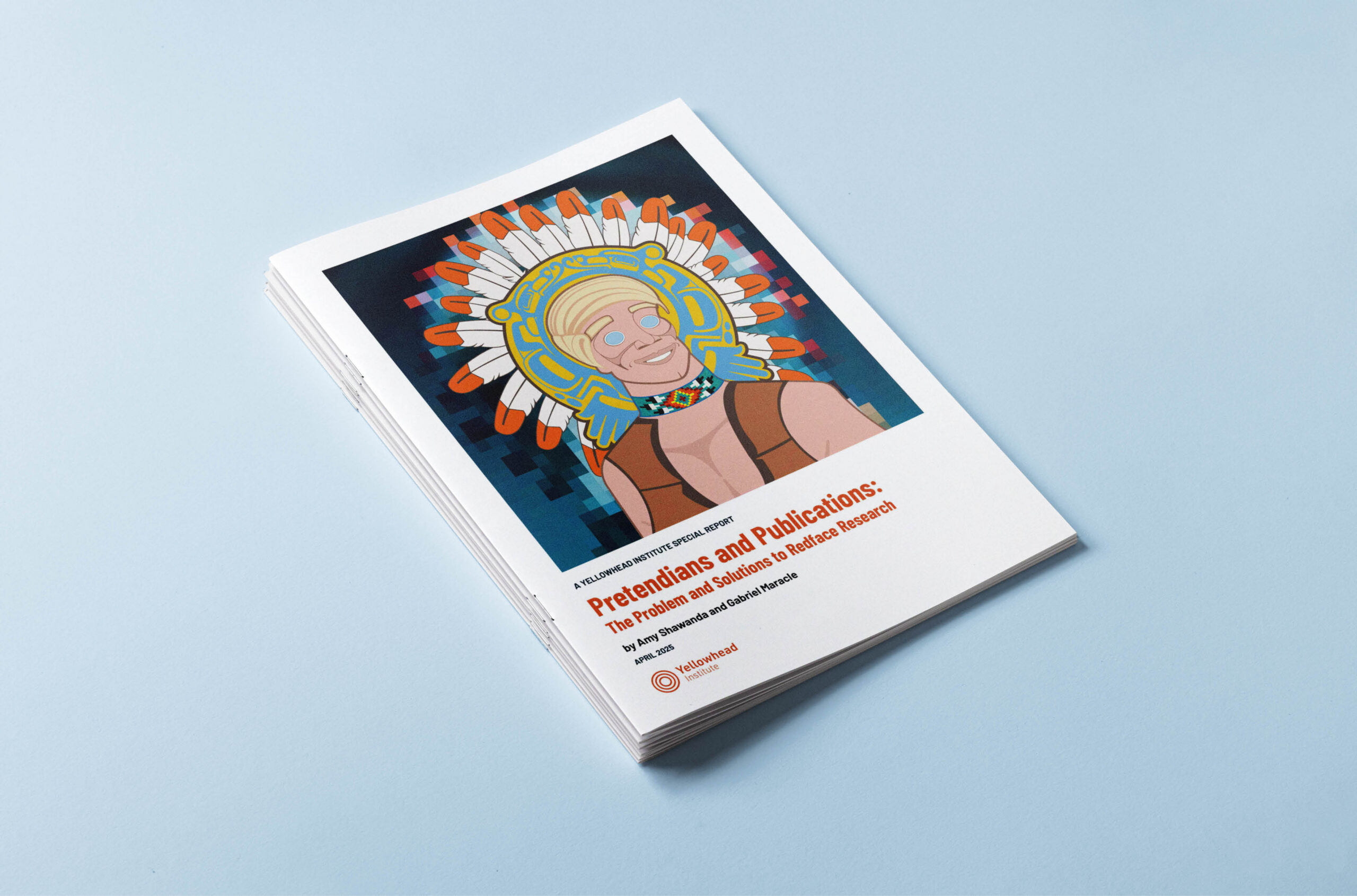
The repeated discovery of people fraudulently claiming Indigenous ancestry points to the need for better vetting processes. Recognizing that it’s a big ask to require university bodies to understand the various complex ways First Nations, Inuit, and Métis communities verify their members, Dr. Maracle has applied his knowledge in Indigenous sovereignty to write a reference guide along with his colleague Amy Shawanda at McGill University. Part report, part call to action, the 17-page “Pretendians and Publications: The Problem and Solutions to Redface Research” was published by the Yellowhead Institute, an Indigenous research and education lab at Toronto Metropolitan University.
While the authors don’t seek to launch malicious investigations against communities, nor to conduct pretendian witch-hunts, they do hope to help institutions better structure their Indigenization efforts. The guide notes that verifying Indigenous identities “is complex, requiring due diligence and cultural competency,” along with flexibility. Verification processes must also ensure that First Nations, Inuit, and Métis faculty — who remain underrepresented in academia — are not burdened with the responsibility of either unmasking pretendians or working uncomfortably alongside them.
Who is Indigenous?
The guide, which Dr. Maracle qualifies as “avant-garde,” lays out the negative impacts of knowledge fraud and makes nine recommendations for screening out pretendians whose “fraudulent identity claims compromise the integrity of Indigenous Data and Indigenous Data Sovereignty.” Any organization can apply the guide’s recommendations, and several measures have already been implemented on campuses across the country. The University of Waterloo, for example, has formed its own Indigenous Verification Advisory Committee.
In many establishments, recruitment campaigns for Indigenous students are well underway, but need to be updated and rebalanced. To enact real structural change, institutions must broach the delicate topic of Indigenous identity — a topic that is equally “deeply uncomfortable” for Indigenous communities, notes Dr. Maracle.
He vividly recalls the shock wave after Carrie Bourassa, a disgraced former professor of medicine at University of Saskatchewan, was outed as a pretendian. She had climbed the academic ladder by taking positions reserved for Indigenous people. She also claimed for years to be a fervent activist for Indigenous communities’ equal access to health care, a very sensitive issue replete with systemic racism, says Dr. Maracle. “It turns out the few people we thought we could trust weren’t even Indigenous.”
READ MORE: Going beyond self-identification in recruiting Indigenous faculty
Based on the 2021 census, 51,100 Indigenous people had attended university, 2,980 had graduated with a PhD and there were 1,190 Indigenous university instructors. Statistics Canada confirmed in writing that these people self-identified as Indigenous without meeting any evidentiary requirement — a lack of rigour that sheds doubt on the accuracy of the numbers, according to Drs. Maracle and Shawanda.
Pooling knowledge to tackle a shared problem
Drs. Maracle and Shawanda recommend that admission protocols be reformed, reviewed and managed on an ongoing basis by a committee of knowledge-keepers. “This kind of policy is very new,” says Dr. Maracle. “The question of identity is too complex to be delegated to universities.” Committee-led verification systems would engender a major transformation that would prevent imposters from “profiting from Indigenous identity,” such as by obtaining research or promotion grants meant for Indigenous scholars.
Dr. Maracle notes that cultural appropriation perpetuates Indigenous people’s suspicion toward institutions and impedes still-fragile truth and reconciliation efforts. Universities have to address “a long history of exploiting Indigenous people,” he says. By combining their practical and theoretical knowledge, Indigenous and non-Indigenous people can join forces to redress past wrongs and create administrative solutions to keep imposters out of the scientific community.
Cleansing the data
“All scientific research” led by Dr. Bourassa, alleged to have been carried out by and for Indigenous people, is now “contaminated” by her “questionable knowledge base,” says Dr. Maracle. Dr. Bourassa’s biased methodologies even affected her work in partnership with communities and health care services. Since the extent of the damage is not clear, “everything should be scrutinized,” he says.
To make sure this doesn’t happen again, Drs. Maracle and Shawanda recommend building stronger research policies from the outset, involving Indigenous people and knowledge in scientific work, and having scholars’ work peer reviewed. The federal tri-agencies recently established a new policy to verify people self-identifying as Indigenous, but it does not include measures to redress scientific output by scholars who falsely make that claim. As Dr. Maracle notes, “policies should be drafted and research conducted with communities’ input, but communities should also have a role in contextualizing the data and guiding the research process.”



Featured Jobs
- Canada Impact+ Research ChairInstitut national de la recherche scientifique (INRS)
- Health Sciences - Assistant ProfessorSimon Fraser University
- Vice President, Finance & AdministrationOCAD University
- Marketing - Faculty Position, Tenured or Tenure TrackUniversity of Alberta
More from News
-
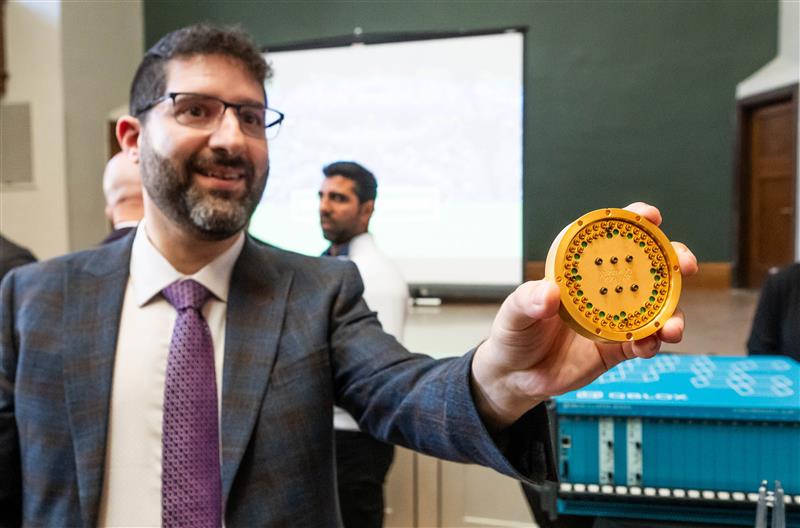
University of Saskatchewan acquires quantum computer to boost research capacity
Campus access to the technology will expand research possibilities.
-
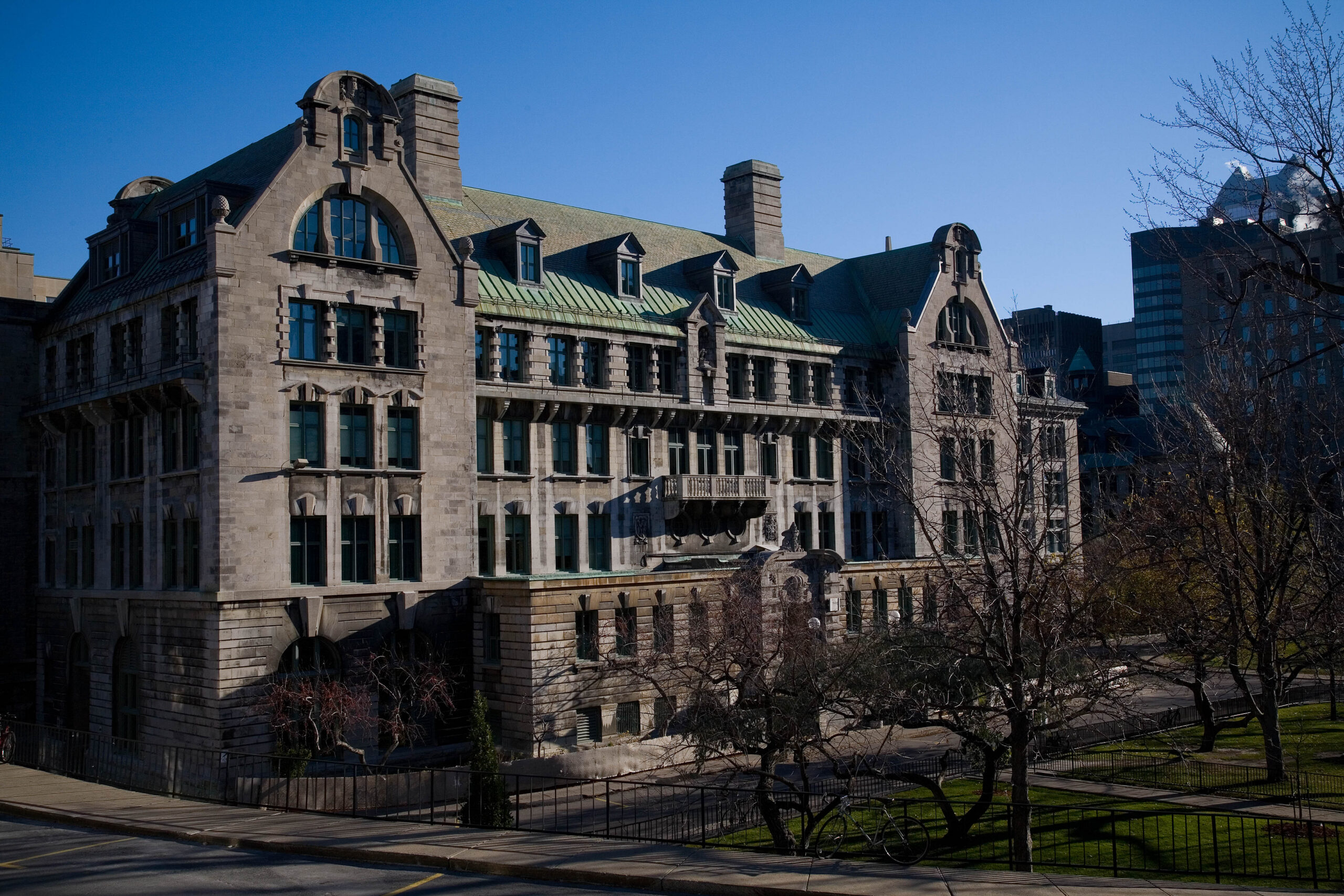
McGill appoints French emissary, makes peace with province
After dropping its legal battle over out-of-province tuition hikes, the university increases its efforts to promote French language and culture.
-
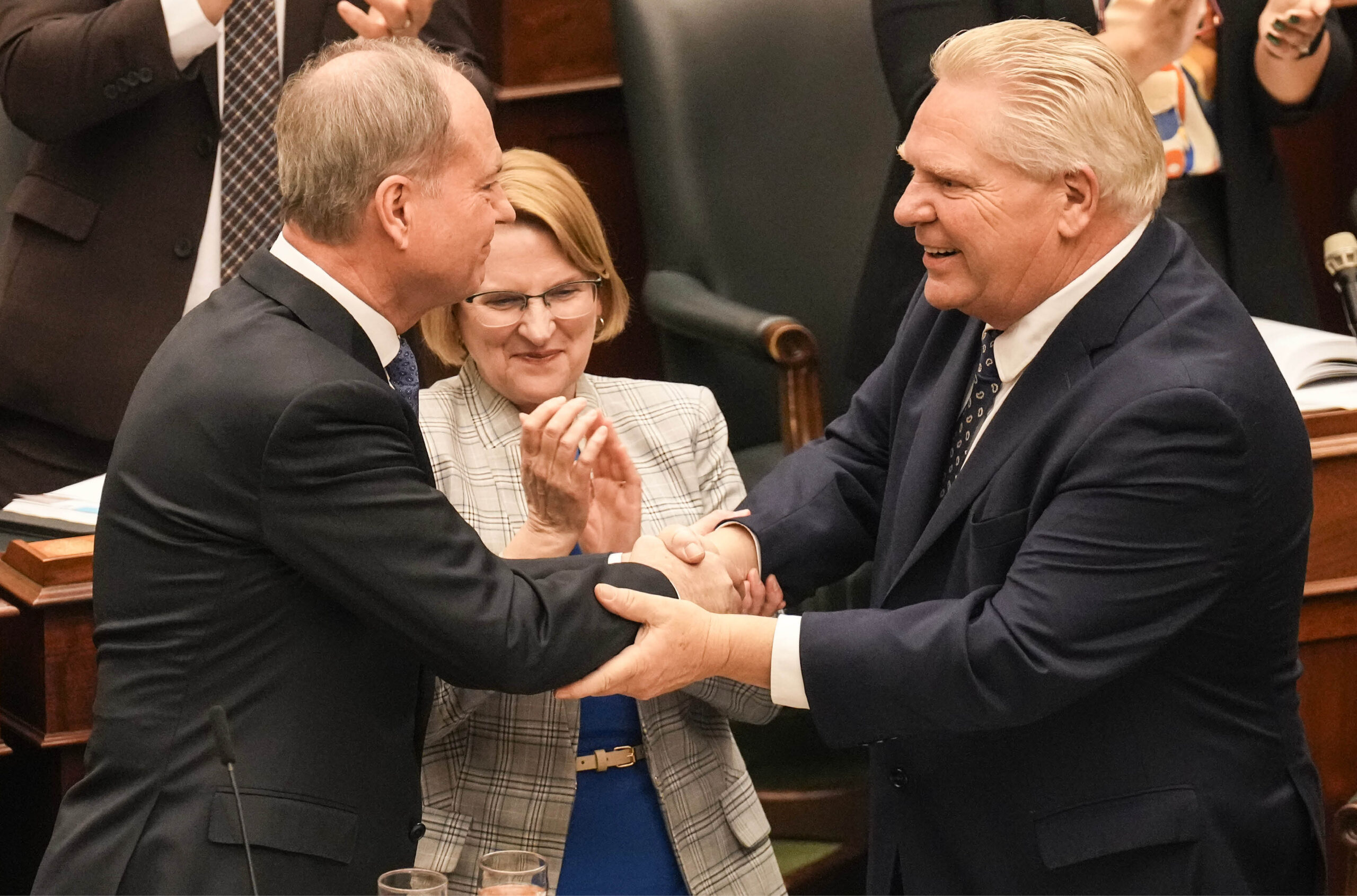
Ontario budget reaffirms $6.4 B post-secondary funding boost, adds money for infrastructure
Millions more allocated to research, clinical nursing training, and French-language education.
-
Manitoba increases investment in post-secondary education, announces new commission in 2026 budget
Post-secondary institutions will receive $882.6 million in operating funding.
More from Indigenous
-
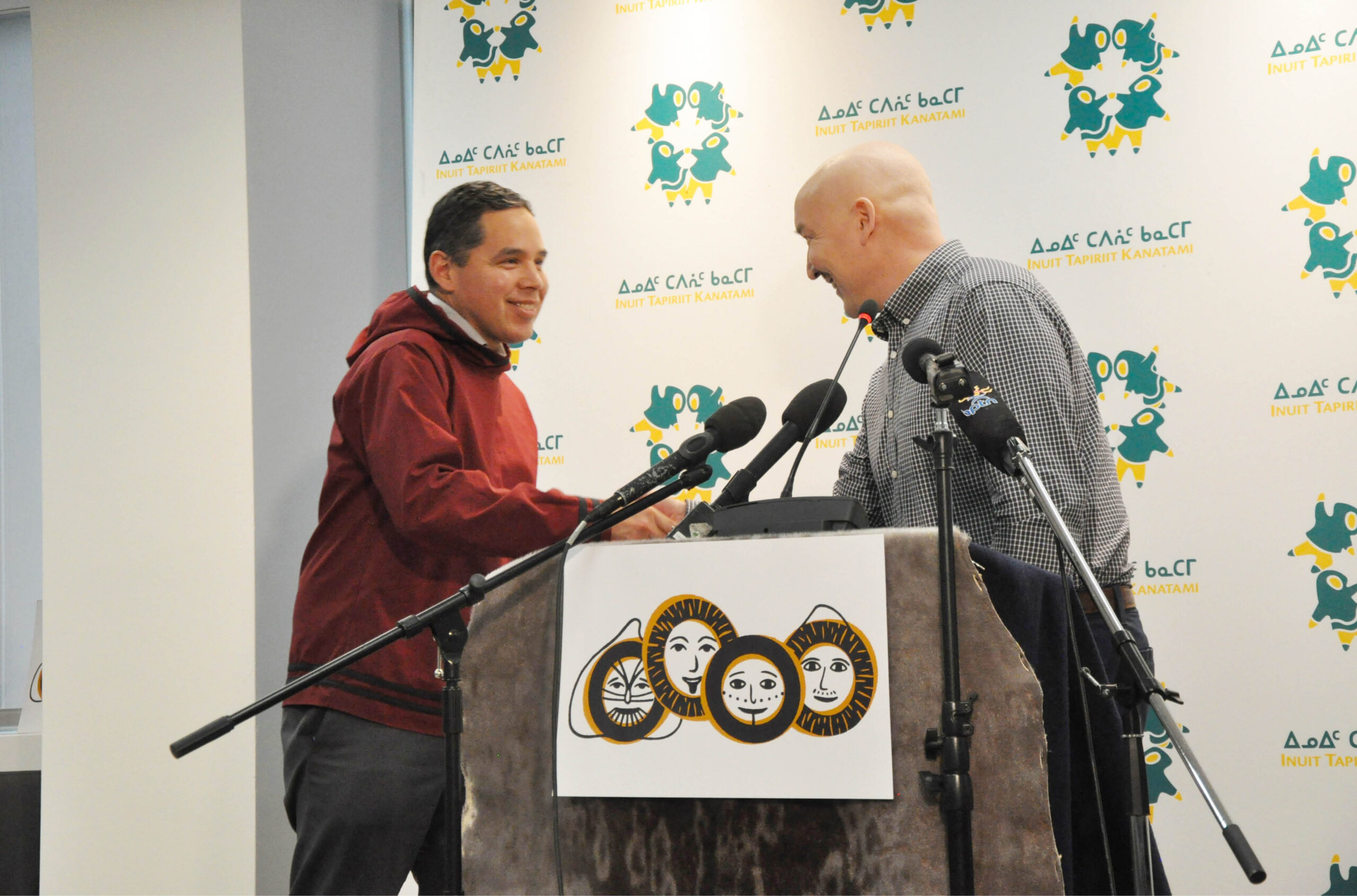
‘It’s what we need’: Nunavut senator praises Inuit Nunangat University announcement
With a location chosen in Arviat and a new $50 M pledge, the Inuit-led university pursues its plans to open in 2030.
-
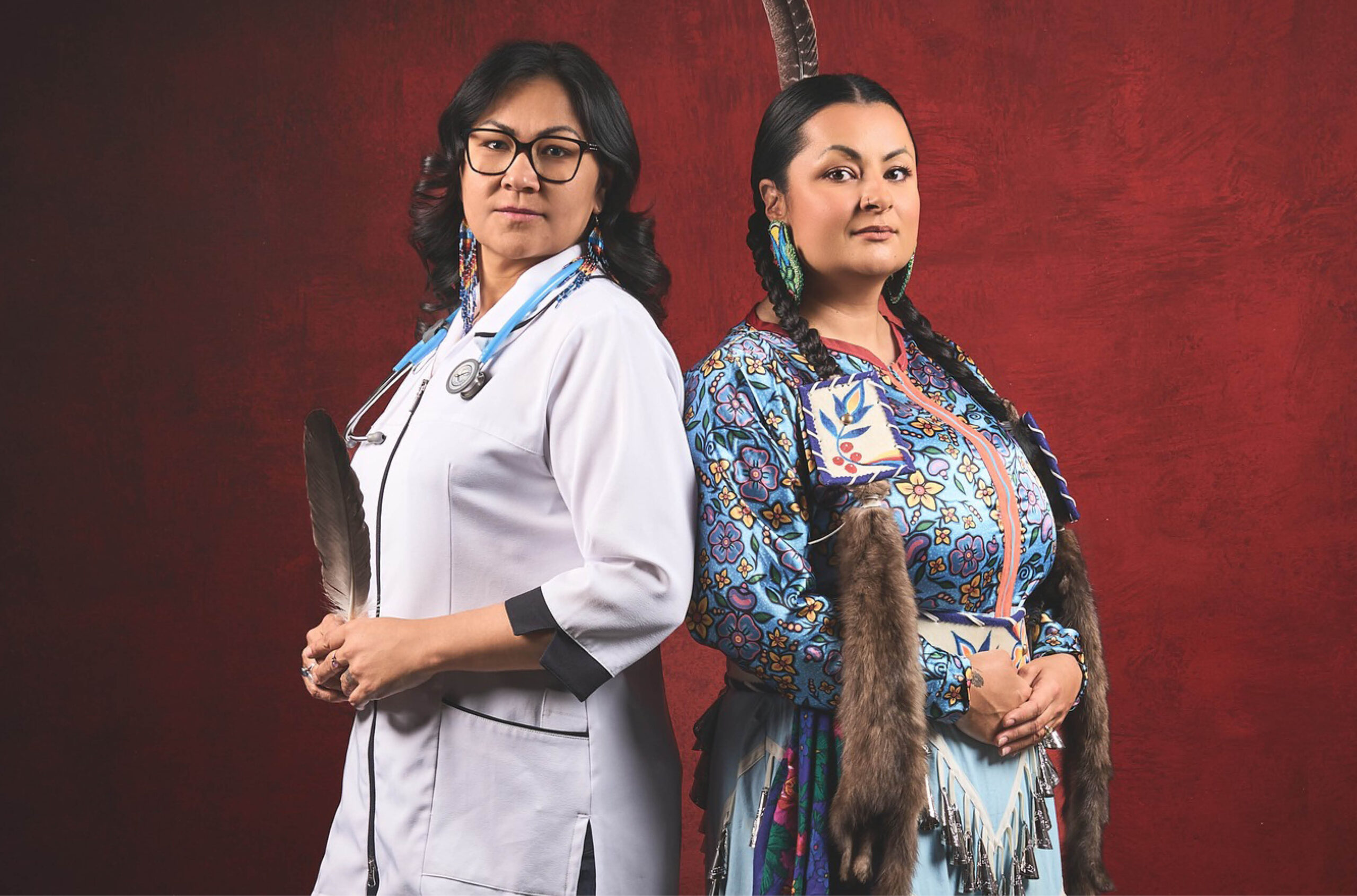
Mentorship helps emerging Indigenous physicians succeed
Programs help offset longstanding deficiencies in education, guidance and representation.
-
An historic undertaking for Indigenous education in Quebec
Quebec’s first university by and for Indigenous Peoples in partnership with the First Nations Education Council and Quebec universities.
-
Strengthening the circle: empowering success for Indigenous learners through community-based assessments and reciprocal relationships
Meeting learners within their Indigenous communities to promote higher education is a powerful demonstration of respect and support.
More from Articles
-
Program changes at Memorial raise concerns
Impact on faculty and students remains unclear amid decreased enrolment and financial challenges.
-

UBC leads the way on civil discourse
A successful debate series places universities at centre stage in ending polarization.
-
Quebec makes 5-year, $392M investment in universities to drive economic growth
With targeted investments in research and innovation, the provincial budget banks on universities to boost the economy — but fails to address structural underfunding.
-
Saskatchewan increases funding to universities, confirms multi-year agreement in 2026 budget
Universities will receive $33.6 million in operating funding in 2026-27.

Post a comment
University Affairs moderates all comments according to the following guidelines. If approved, comments generally appear within one business day. We may republish particularly insightful remarks in our print edition or elsewhere.