UBC leads the way on civil discourse
A successful debate series places universities at centre stage in ending polarization.
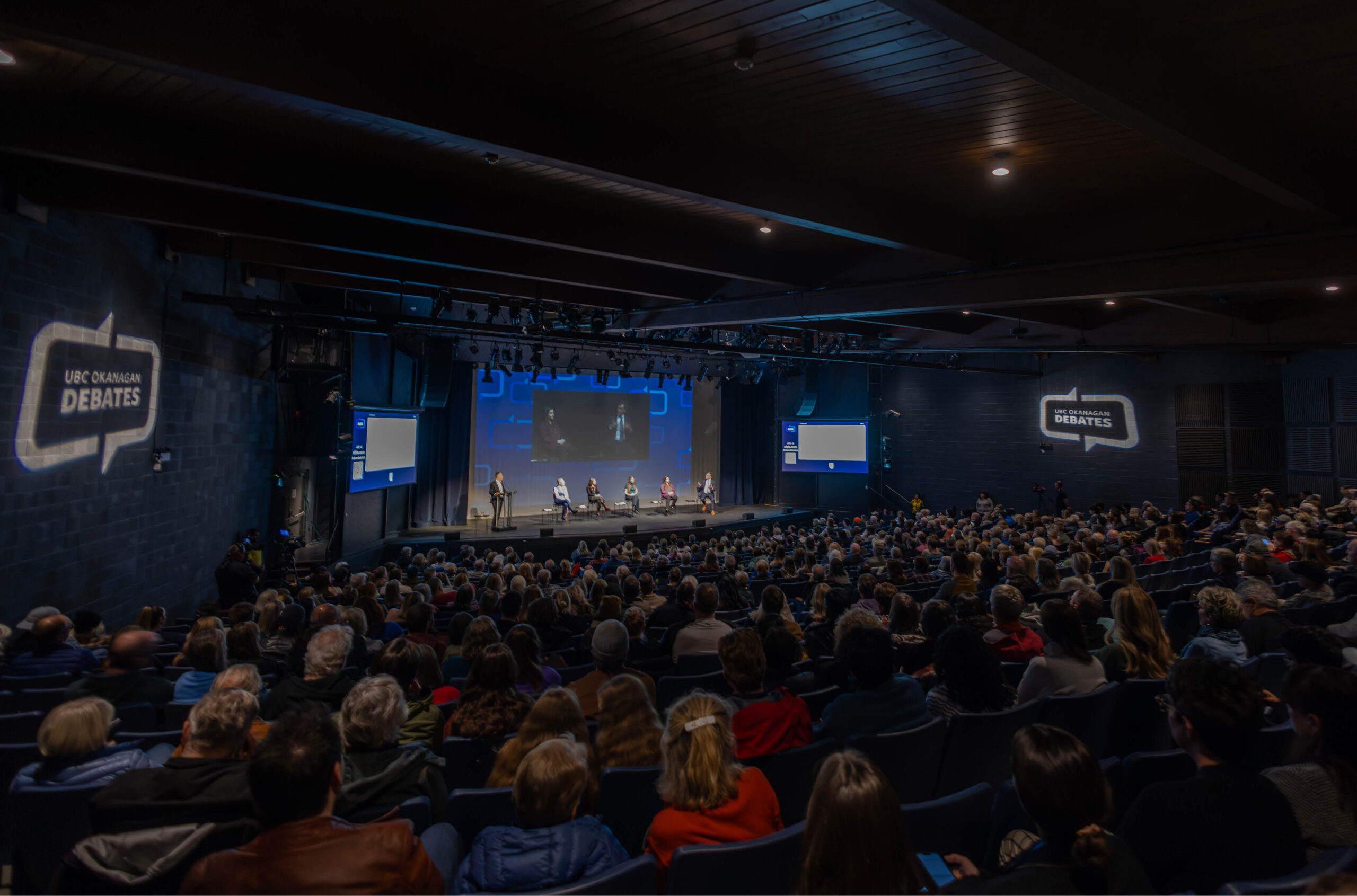
The University of British Columbia opened the doors to the public for a pilot debate earlier this year in downtown Vancouver. The in-person-only event filled the Robson Square theatre to its capacity with members of the public — workers and politicians, graduates and students, Canadian citizens and newcomers — for a two-on-two debate over an at-times contentious topic: Canada’s temporary foreign workers program.
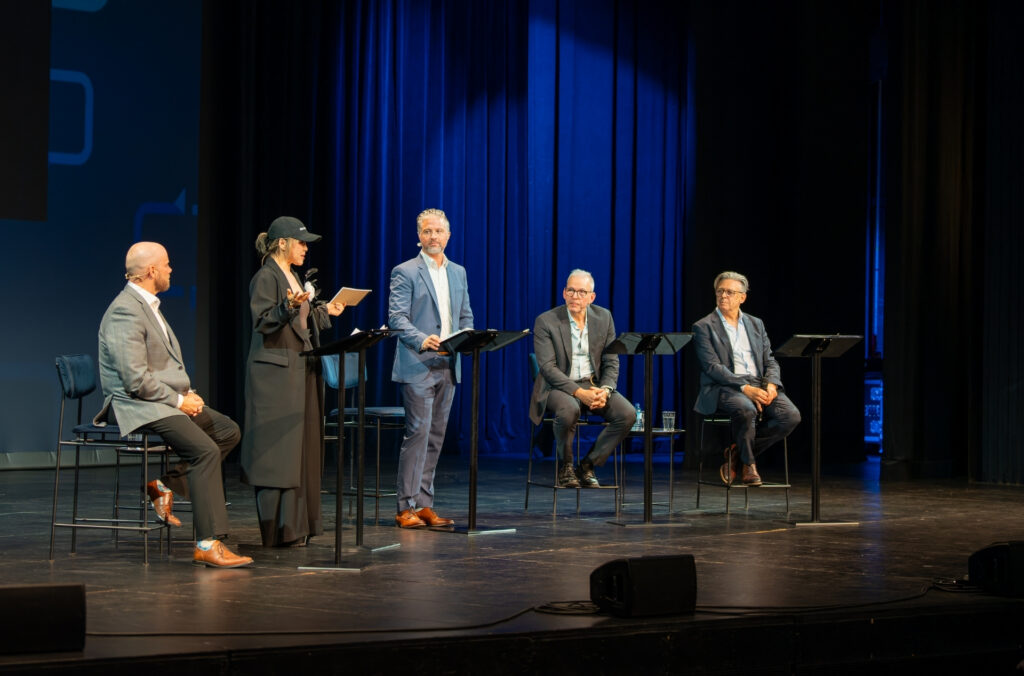
The debate featured experts for and against the question of whether Canada should overhaul its immigration system to avoid creating a permanent “service class” of foreign workers.
Dr. Catherine Dauvergne, former dean of the Peter A. Allard School of Law at UBC, who works in refugee, immigration and citizenship law, argued for the position that Canada is creating a permanent “service class” alongside former deputy minister and head of the public service for British Columbia, Don Wright.
“The biggest failure of temporary foreign work is that, in fact, it’s impossible to hire workers. You are only able to hire human beings — and human being grow old, they fall in love, they get sick, they change their plans,” said Dr. Dauvergne. “This is the real problem: when you design a program for workers but instead to get people, that’s the policy failure.”
On the other side, arguing that temporary workers are an essential part of the economy, was second generation farmer Stan Vander Waal and Robert Russo, a human rights and labour lawyer and instructor at the UBC School of Law.
“We should be scoring individuals for what skills they can offer, and we should look at the needs we have inside the country and trying to enhance our productivity,” said Mr. Vander Waal, “The employer has been given the ability to test whether they actually will be contributing people – and on top of that, they can then come and be part of contributing to Canadian society versus taking that money back home. That would be the most beautiful thing in terms of a successful integration strategy.”
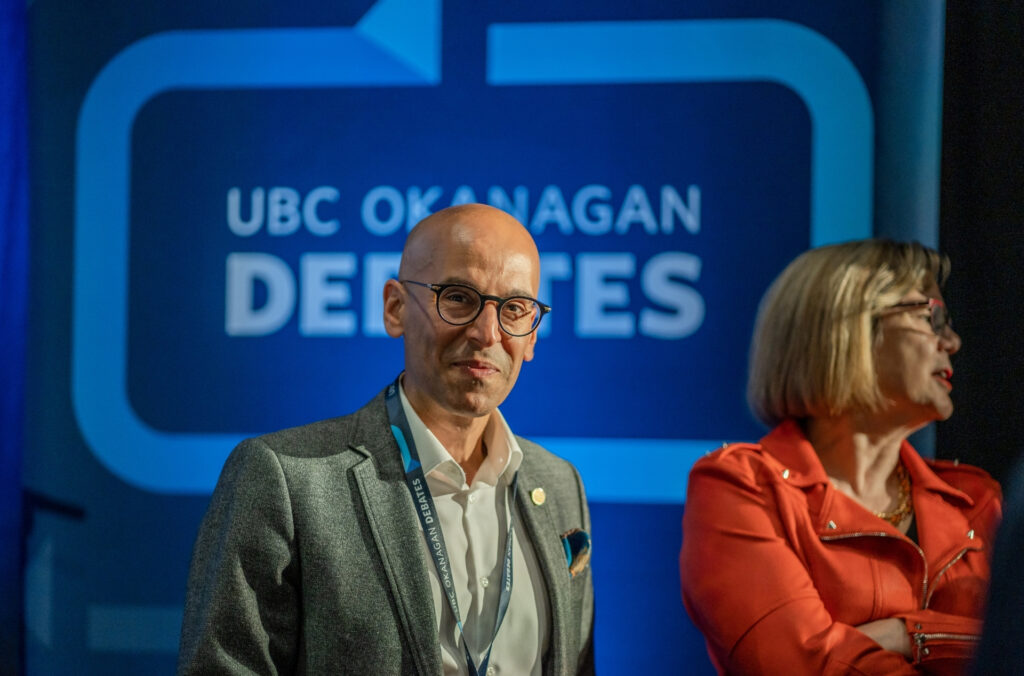
It was a spirited conversation that spanned Canadian immigration policies, migration rights, international students and young temporary foreign workers filling needed positions in agriculture and entry-level positions at Tim Horton’s. But organizers say that bringing the debate into downtown Vancouver’s Robson Square served a larger goal: to prove that universities are the place to model respectful disagreement in a world where discussion has given way to echo chambers and online attacks.
“Who else is going to model civil discourse, if not universities?” said UBC president Benoit Antoine-Bacon, who hosted the debate. “That’s our fundamental reason for being. To, on the basis of facts, history and deep thought, find in the best way possible the path forward for society.”
The event followed a model of a debate series launched more than four years ago by Marten Youssef, associate vice-president (university relations) at the institution’s branch campus in the Okanagan Valley.
A former journalist from Egypt, Mr. Youssef was inspired by increasing polarization in Canadian society coupled with the decline in universities’ reputations among the public.
“There was so much polarization [that] benefits businesses, politics, certainly algorithms – and now no one seems to gain from actually ending it,” he said.
At the same time, Mr. Yousef took issue with how controversial speakers were being cancelled at some institutions and attempts at civil discourse were reduced to perceived winners and losers in the media at the expense of empowering the audience to understand different perspectives.
“We thought maybe the model was broken,” he said. “And we thought universities are the best places to convene the contrast.”
Previous debate topics included if masculinity is in crisis, Canada’s relationship with the United States, and, most recently, whether AI will enhance or diminish human experience.
There have been moments of heated disagreement and unexpected common ground. In his closing statement, participant Johnathan Kay, editor of conservative online outlet The Quillette, conceded that the debate had changed his view on Canadian universities.
“… You’re breaking all kinds of stereotypes,” he said, admitting, “I talk trash about Canadian academia a lot on social media — I’m going to have to rethink that. This is real good stuff.”
UBC broader goal to return to neutrality
Melanie Stewart, associate vice-president (university relations) at the University of British Columbia said that the debate series aligns with UBC’s broader goals of repositioning the university as a neutral space.
She noted that in the past “there were a lot of really political statements that were put out there, and the question would have to come to mind: is this the role of a university? To be weighing in at the top of the institution on contentious political topics?
Dr. Bacon, however, has sought to bring the ship back to centre. This was made clear early in his tenure, when pro-Palestine activists across North America built encampments on university campuses, including at UBC. Writing to the UBC community in April 2024, Dr. Bacon affirmed:
“Any university position, even if supported by a majority, by definition undermines the right of holders of different views to express themselves and participate in the debate.” And, in a separate memo, he emphasized that “it is absolutely essential that the university remains a place of reasoned debate where conflicting views can peacefully co-exist. Our academic and social mission depend on it.”
Do universities need more civil discourse?
The University of British Columbia may be taking the lead on championing civil discourse but its importance extends far beyond Canada’s West Coast.
At the University of Toronto, a Working Group on Civil Discourse, chaired by professor Randy Boyagoda, issued a list of recommendations to address “growing challenges in sustaining productive and respectful dialogue within the university community,” in 2024.
The report recommends the university adopt and widely share a clear, evolving definition of civil discourse that would be reinforced through regular classroom opportunities to practice disagreement, training for students, faculty and staff on how to navigate contentious discussions, and other support for local “civil discourse champions.”
“People are struggling to think out loud with each other these days – in their personal lives, their professional lives, and our shared public life,” said Dr. Boyagoda.
And universities have a unique responsibility to address that, he added, “to prepare young people to enter their professions, to enter community life, to enter a shared public life, willing and able to think out loud together.”
Dr. Bacon says that he hopes the debate series at UBC will demonstrate to the university’s 75,000 students that respectful disagreement is possible – and to help them challenge their assumptions.
“I would like to say to young people: if you hold an idea strongly, really ask yourself if it’s your idea or if someone else put it there. Was it put there by your upbringing? Was it put there by the algorithms or the social media you listen to? Have you considered alternative positions? Can you defend the opposite position?” he says.
“If you can’t, that means you’re not thinking.”

Featured Jobs
- Toldo Chair in Christian StudiesAssumption University
- Canada Impact+ Emerging Leader in Quantitative and AI-enabled Electron Microscopy for Quantum and Advanced MaterialsMcMaster University
- Psychology - Assistant Professor (Clinical Psychology)Western University
- Director, Human Research Ethics & Strategic AdvisorUniversity of Manitoba
- Theatre and Film - Assistant Professor Without Review (Performance Practice)The University of British Columbia
More from News
-
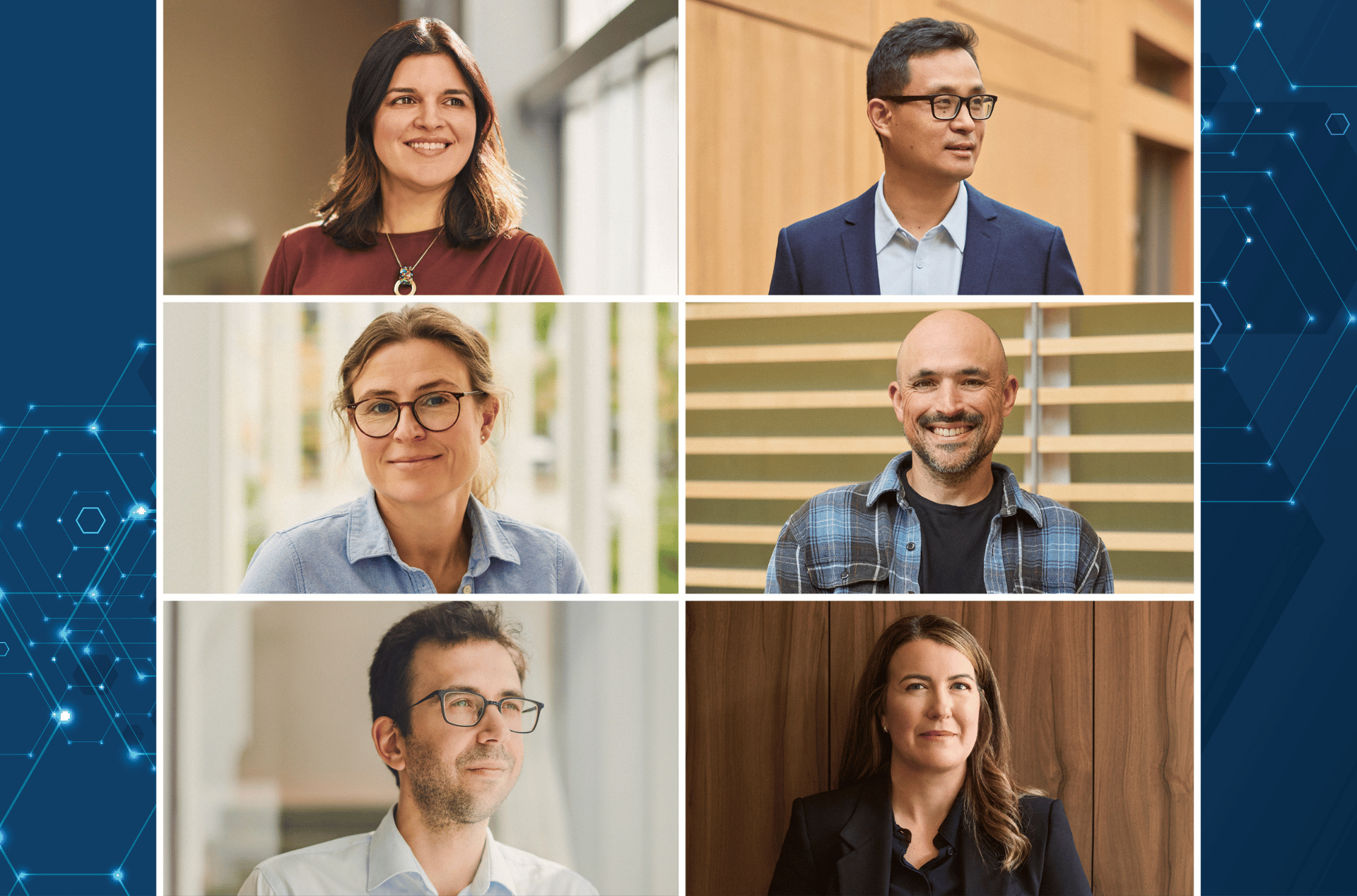
NSERC announces Arthur B. McDonald Fellowship winners
Research council kicks off a week of prizes with grants for early-stage academics.
-
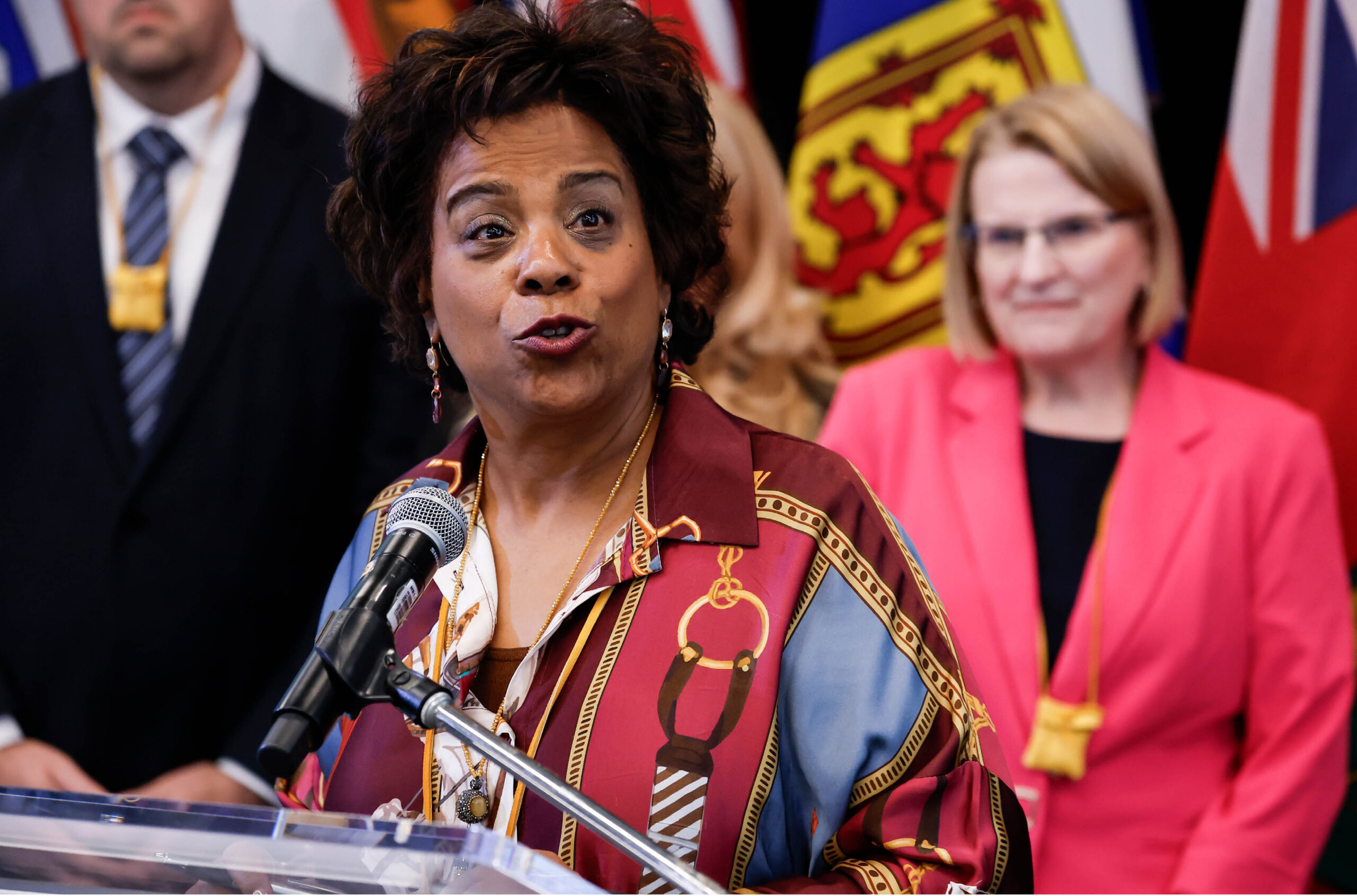
Feds announce $880 million for research
Funding will support both established health scientists and emerging cross-disciplinary researchers.
-
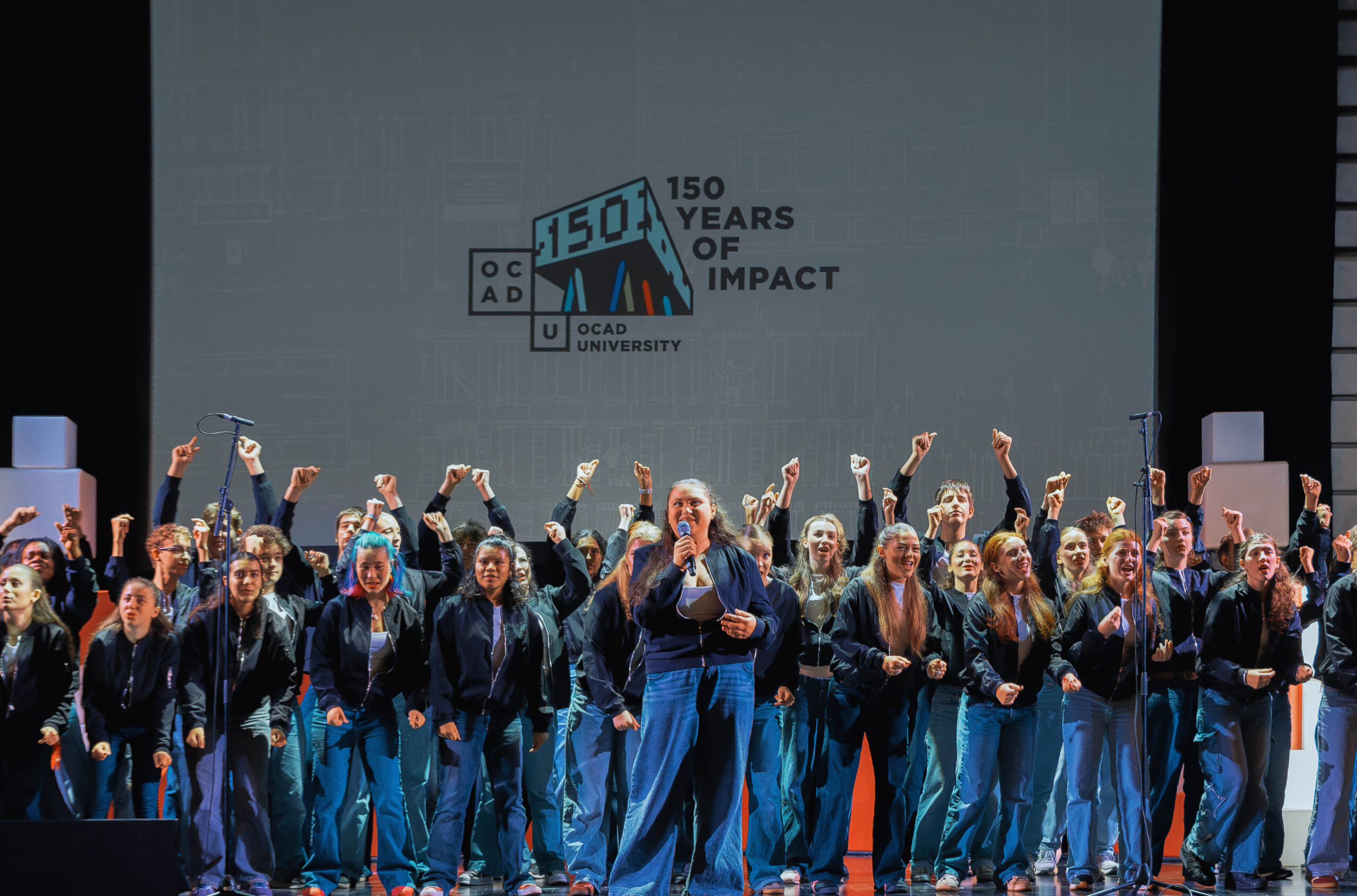
OCAD University celebrates 150 years of shaping Canadian culture
Art and design university launches $6-million campaign for 150 scholarships to mark 150th anniversary.
-

B.C. higher education: tweak or reform?
In the coming provincial election, parties offer different proposals for a system under strain.
More from Freedom of speech
-
Time To Disagree?
The Heterodox Academy wants to encourage uncomfortable debates on campus.
-

The Ford government is ignoring its own campus free speech policy
By calling on student groups to withdraw certain controversial statements, the minister of colleges and universities is demonstrating that the policy was and is a hollow gesture.
-

Campus free speech: Does it extend to what students say online?
Weighing unrestricted expression against fostering a tolerant public sphere will test the fundamental freedoms we cherish in our democratic society.
-

From pining to a saw-off: campus free speech news as we begin 2020
Surprise Alberta court decision released just days into the new year could have a huge impact on universities.
More from Articles
-

Canada ‘muddling through’ without national research infrastructure strategy, panel finds
Expert report says fragmented governance and funding threaten Canada's research competitiveness and scientific sovereignty.
-
Ottawa won’t restrict student visas from countries with high asylum-claim rates
India will help Canada ‘crack down’ on student program abuses, high commissioner says.
-

Students and seniors under the same roof
Intergenerational living helps with loneliness and the high cost of rent.
-
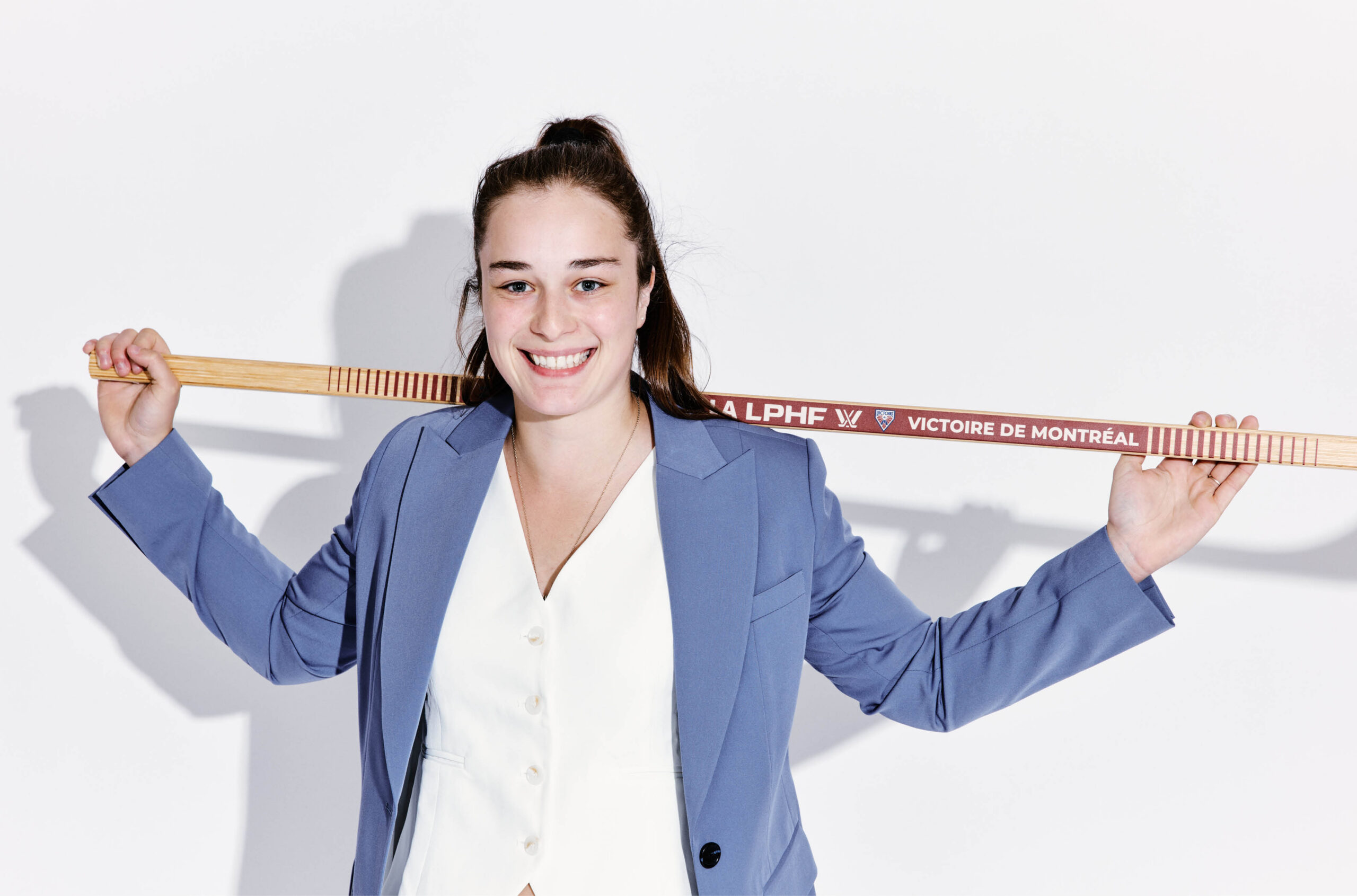
U Sports alum lace up for PWHL season
Canadian grads eager to show their mettle on women’s pro hockey teams.


Post a comment
University Affairs moderates all comments according to the following guidelines. If approved, comments generally appear within one business day. We may republish particularly insightful remarks in our print edition or elsewhere.