Canada is lagging in open access
Why is the free distribution of scientific literature such a contentious issue?


Kathleen Couillard, a science journalist and fact-checker for Agence Science-Presse, has a couple of options when she pulls up a paywalled journal article. Either she gives up on reading it, or she writes to a university professor to ask them to download it for her. This research is often publicly funded — yet taxpayers can’t access it themselves.
This is a common problem for journalists, community organizations and researchers not associated with an academic institution. Although Canada invests billions of public dollars in research — as do many nations globally — a significant portion of the subsequent findings are, paradoxically, hidden from the public behind a paywall.
Since 2016, the federal government has allocated nearly $16 billion to the Canadian Institutes of Health Research (CIHR), the Natural Sciences and Engineering Research Council (NSERC), and the Social Sciences and Humanities Research Council of Canada (SSHRC). This funding covers the article processing fees that certain publishers charge to authors. In exchange, authors are required, in theory, to make articles open access within one year of publication. In practice, there is no way to verify this. There are no concrete penalties for Canadian scholars who fail to comply.
A policy in flux
It’s different south of the border. According to Vincent Larivière, a full professor with the School of Information and Library Sciences at Université de Montréal (UdeM) and UNESCO Chair on Open Science, the United States is a leader in open access research because its granting agencies, such as the National Institutes of Health, closely monitor their researchers and cut their funding if they don’t follow the rules.
Last year, NSERC, CIHR and SSHRC announced a review of the Tri-Agency Open Access (OA) Policy on Publications, with the goal of requiring that any peer-reviewed journal publications arising from agency-supported research be freely available. Valérie Levert-Gagnon, a spokeswoman for NSERC, said that a “stronger and efficient approach” is expected to be rolled out in 2026.
But Dr. Larivière warns a new policy may not change anything, especially given the inadequate funding committed to open access efforts so far. He points out that Canada has been falling behind in open access since 2018, despite producing 3.6 per cent of the world’s research publications and ranking 9th globally for its research output. In addition, the latest federal budget reduces research funding to the CIHR, NSERC, and SSHRC by 2 per cent through 2030.
Readers slipping through the cracks
Ms. Couillard estimates that three-quarters of the journal article she needs are open access. When they’re paywalled, she asks her editor-in-chief, Pascal Lapointe, for help. As a lecturer at U de M, he has access to its library.
Alexis Marcoux Rouleau reports a similar experience of relying on the university to access and download paywalled, peer-reviewed articles for colleagues while interning with government and community organizations while completing a criminology degree.
Dr. Larivière suggests government oversight of journal distribution channels as a possible solution. Érudit, a bilingual distribution platform, has such a model in the humanities and social sciences: 99 per cent of its 300 journals are free to access. Dr. Larivière acknowledges that this organizational restructuring would require a major financial investment and a clear shift in political priorities, but it could ease the burdens of the 88 universities, libraries and research centres that spent $157 million in 2025 to acquire journal articles written largely through public funding.
For-profit academic journals
One major hurdle is that the big research publishers want to turn a profit. The most powerful —such as Wiley, Elsevier, and Springer Nature — form an oligopoly.
These publicly traded multinational companies have “appropriated the popular ideology of open access […] in order to control academic publishing” and convinced the scientific community they should pay to publish in open access, says Dr. Larivière.
To publish in a prestigious journal, scholars must pay publication fees sometimes in excess of USD $10,000. When they don’t, the fees get transferred to the reader in the form of a paywall. Either way, the publisher wins.
“The scientific community is its own greatest obstacle,” says Dr. Larivière. Academics continue to believe that publishing an article in a major journal is a mark of prestige. While it is true that “appearing in Nature can change your career,” create funding opportunities, and lead to recognition, he explains, this “conservative” mindset persists, hindering the implementation of open access, which remains the best way to distribute research and ensure it is cited by other scholars. “A great way to stay invisible is to publish behind a paywall,” says Dr. Larivière.
Toward an ecosystem of open science
Maxim Fortin, a political commentator at Institut de recherche et d’informations socioéconomiques, regularly encounters paywalls. He says it’s especially frustrating when the articles contain recent, trustworthy and relevant data related to the current news cycle.
“The commercialization [of science] not only impedes my, and our, work, it threatens the free circulation of information,” he laments.
“Scientists continue to publish in commercial journals thinking that the most prestigious ones are the most widely read. But we don’t know if that’s true,” says Dr. Larivière. On the contrary: the centralized distribution model of Éruditshows that public access provides clear results. “Articles in open access are consulted 3.2 times more in their first year of publication,” he remarks.
What’s more, commodification and “pay or perish” mentalities about scientific journals deprioritize institutions’ digital archiving efforts and free-to-publish journals. Given the essential contributions these initiatives make toward a truly open science ecosystem, that’s a loss for the entire community.



Featured Jobs
- Engineering - Assistant Professor, Teaching-Focused (Surface and Underground Mining)Queen's University
- Anthropology of Infrastructures - Faculty PositionUniversité Laval
- Director of the McGill University Division of Orthopedic Surgery and Director of the Division of Orthopedic Surgery, McGill University Health Centre (MUHC) McGill University
- Canada Impact+ Research ChairInstitut national de la recherche scientifique (INRS)
- Soil Physics - Assistant ProfessorUniversity of Saskatchewan
More from News
-

AI bots push beauty stereotypes
U of T study finds image generators perpetuate idealized body types, facial features.
-
Ontario lifts tuition freeze, injects $6.4B in post-secondary sector
New provincial strategy also overhauls student assistance program and promises to align university programs with labour market.
-
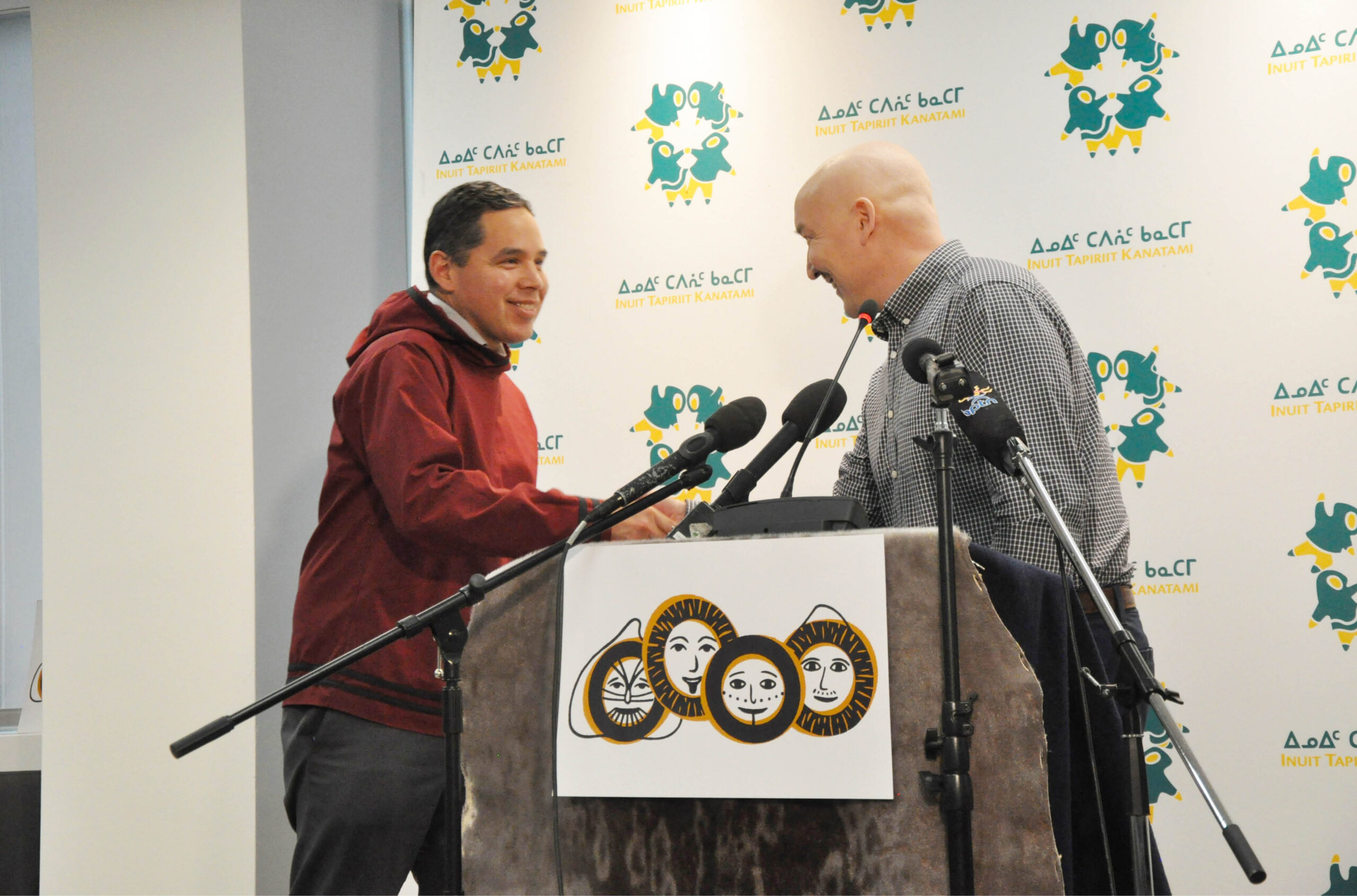
‘It’s what we need’: Nunavut senator praises Inuit Nunangat University announcement
With a location chosen in Arviat and a new $50 M pledge, the Inuit-led university pursues its plans to open in 2030.
-
Student athletes chase Olympic dreams
University students from across the country are skating, skiing and sliding their way into the history books at the 2026 Winter Games.
More from Research
-
Probing the perils of white ice
Researchers at York University work to crack the code on shifting lake ice quality.
-
Ukrainian scholars fight Russian disinformation
University of Manitoba joins global Ukrainian Studies coalition.
-
The unpredictable path
What a sharp turn into the biotech industry revealed about the importance of building fundamental skills.
-

NSERC moves to keep research IP in Canada
The granting agency is steering toward a new funding model to keep intellectual property rights, and the commercial technologies they spawn, in Canadian hands.
More from Articles
-

Mila aims to make chatbots safer
AI institute develops filters to protect psychologically distressed users.
-

Leading a university through turbulent times
Marie-Eve Sylvestre, University of Ottawa’s new president, discusses leadership, academic freedom and the future of universities.
-
Memorial University tackles financial shortfall
Restructuring and selling property among changes to reduce annual spending.
-
Faculty strike at Laurentian
Negotiations fail, picket lines rise at northern Ontario university.


Post a comment
University Affairs moderates all comments according to the following guidelines. If approved, comments generally appear within one business day. We may republish particularly insightful remarks in our print edition or elsewhere.
1 Comments
The citation economy needs to be considered. If I publish in Science or Nature it is seen as high impact (since on average these articles are well cited). The softer impact of “views” or “news” (social impact) is not as easy to assess within the academic economy of position, promotion, grants, and recruitment. Open access is clearly better in terms of aggregate impact, but you need the grant funding to support it. In the US (at least until recently) they had the money to be able to publicize (via open access) even high-impact publications — but in Canada not so much. Can I afford 1/4 of my grant funding to make one paper open access instead of behind a paywall? Can I afford to avoid high-impact paywall journals if I can get my science into them? Even if I personally disconnect from the rat-race, don’t I owe it to my students and collaborators to get them the best push possible? Preprints seem to be the way to go, as they are largely parallel to the paywall journals. Nevertheless I don’t see my university, or the media, publicizing preprints when they can push the latest Canadian Science or Nature publication…