Opposition MPs grill Minister on federal AI strategy
Evan Solomon points to billions invested in research chairs and computing infrastructure at House of Commons committee appearance.

As the world’s first country to launch a national strategy on artificial intelligence in 2017, Canada will get an update to the plan next year, Minister of Artificial Intelligence and Digital Innovation Evan Solomon told the House of Commons Standing Committee on Science and Research on Wednesday.
However, Conservative MP Kelly DeRidder, who represents the technology-rich Ontario riding of Kitchener Centre, said that expert witnesses have told the committee in its study on AI that “nothing has been implemented” from the original strategy, and she complained that the refresh will only come nine years later.
“What’s your strategy to commercialize and monetize Canadian innovation in Canada so it stays in Canada and is a positive net-return to the Canadian taxpayer?” she asked Mr. Solomon.
In reply, he referred to a recent report by Deloitte Canada, commissioned by the Vector Institute, which said that AI-related jobs contributed between $82 and $100 billion to Canada’s economy between 2019 and 2024.
Mr. Solomon pointed to some of the initiatives that flowed from the $2 billion allocated toward AI development in the 2024 federal budget, including up to $705 million in a new AI supercomputing system through the AI Sovereign Compute Infrastructure Program to support researchers and industry.
Late last month, the minister, who is also responsible for digital innovation, announced $42.5 million in federal funding to the University of Toronto’s AI infrastructure that builds on last year’s $52-million upgrade to the university’s SciNet supercomputer.
Mr. Solomon told the committee that through the Canada CIFAR AI Chairs program, over 125 researchers have been appointed, and they train about 250 graduate students and post-doctoral fellows every year.
“They go onto found companies that are transformative,” he said and noted the program’s international impact.
According to CIFAR (Canadian Institute for Advanced Research), which established Canada’s AI strategy in 2017, the AI Chairs are among the highest impact AI research groups globally, behind only Google and Stanford University for the number of highly-cited publications in the top 10 per cent.
“The Digital Research Alliance of Canada has invested close to $300 million in trying to increase Canada’s research compute capacity by 50 per cent,” said Mr. Solomon.
“In the new year, Canada will be building an AI supercomputer for our researchers, which will put us in the top of the G7.”
Concerns raised over privacy, transparency
Meanwhile, Bloc Québécois MP Maxime Blanchette-Joncas, the committee’s vice-chair, was unsuccessful in getting the minister to agree to reveal the identities behind the approximately 11,300 comments received through a recent public consultation.
“How can Canadians trust your AI strategy and have confidence in it if anonymous stakeholders, including potential foreign actors, can influence political decision-making?” wondered Mr. Blanchette-Joncas.
Mr. Solomon said that “summaries of feedback received” would be made public.
The MP, who represents the riding of Rimouski-La Matapédia, also asked the minister whether any federal AI-related legislation would include copyright protection.
Mr. Solomon said that his ministry is responsible for privacy legislation, while his cabinet colleague, newly installed Canadian Identity and Culture Minister Marc Miller’s department will handle the AI-related copyright file.
In terms of federal investments in AI, New Brunswick Liberal MP Guillaume Deschênes-Thériault wondered how they would “support the development of the research sector” and help researchers “overcome obstacles [they] currently face.”
The minister referred to a provision in this year’s federal budget, which earmarked $925.6 million over five years, starting in 2025-26, toward, as the budget document stated, “a large-scale sovereign public AI infrastructure that will boost AI compute availability and support access to sovereign AI compute capacity for public and private research.”
He said that would serve as a “magnet” to attract talent because “researchers will go to places that have access to that compute.”



Featured Jobs
- Engineering - Assistant Professor, Teaching-Focused (Surface and Underground Mining)Queen's University
- Canada Impact+ Research ChairInstitut national de la recherche scientifique (INRS)
- Anthropology of Infrastructures - Faculty PositionUniversité Laval
- Director of the McGill University Division of Orthopedic Surgery and Director of the Division of Orthopedic Surgery, McGill University Health Centre (MUHC) McGill University
- Soil Physics - Assistant ProfessorUniversity of Saskatchewan
More from News
-

Olympics bound
From Feb. 4 to 22, the eyes of the world will be on the Milano Cortina 2026 Winter Olympic Games. While the participants representing Canada are clearly exceptional young athletes, many also have ambitions for careers beyond their sport. Here are some of the student athletes...
-

Memorial University tackles financial shortfall
Restructuring and selling property among changes to reduce annual spending.
-

Canada is lagging in open access
Why is the free distribution of scientific literature such a contentious issue?
-

Probing the perils of white ice
Researchers at York University work to crack the code on shifting lake ice quality.
More from Artificial intelligence
-
Leaders from the creative industries urge Parliament to act on foreign AI companies
‘Nearly every song ever written by a Canadian songwriter has already been scraped,’ says music industry witness.
-

Let’s keep the “human” in the humanities
The case for technology-free learning spaces.
-

Former Facebook VP champions Canadian digital sovereignty
CIFAR AI Chair Joelle Pineau believes ethics and the common good must guide technological development.
-

AI is transforming university teaching, but are we ready for it?
University instructors, leaders, and staff should all be involved in the AI discussion
More from Articles
-
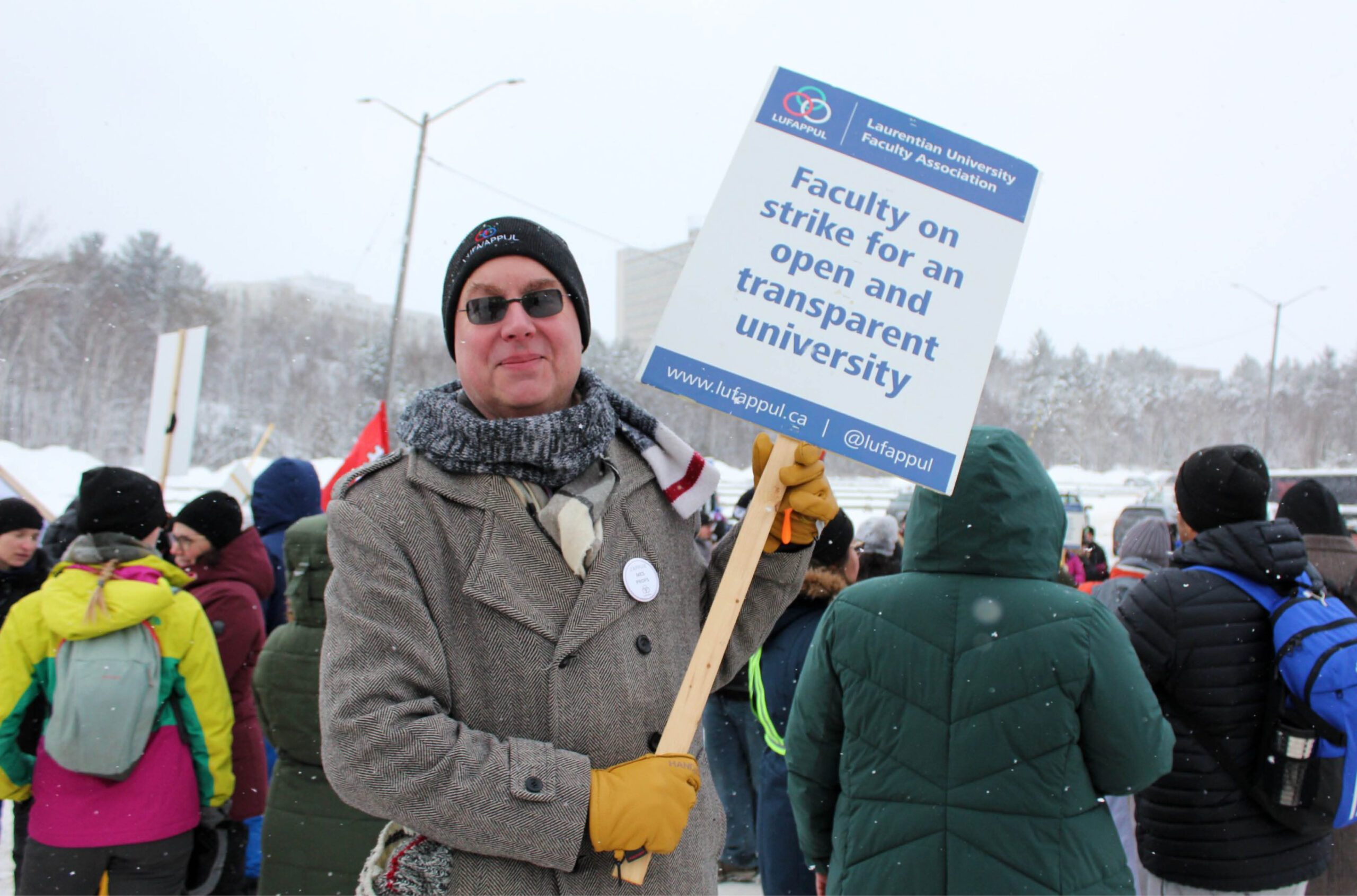
Faculty strike at Laurentian
Negotiations fail, picket lines rise at northern Ontario university.
-
Quebec’s proposed Constitution sparks universities’ opposition
The bill before the province’s national assembly would restrict universities’ ability to challenge legislation, but its future is in doubt with the resignation of Premier François Legault.
-
Ukrainian scholars fight Russian disinformation
University of Manitoba joins global Ukrainian Studies coalition.
-

The year ahead in higher ed
A province-by-province overview of the issues on the horizon for 2026.

Post a comment
University Affairs moderates all comments according to the following guidelines. If approved, comments generally appear within one business day. We may republish particularly insightful remarks in our print edition or elsewhere.