Reflecting the cultural temperature
A look back at some of Spring’s convocation speeches at Canadian universities.


Convocation speeches hit differently this spring. The words of wisdom traditionally imparted to graduates often felt more like battle cries. University leaders are keenly aware of the creep of south-of-the-border rhetoric in reaction to staggering cuts to research funding, dismantling of EDI, crackdowns on campus activism, systematic surveillance of students, and arbitrary visa cancellations and deportations. All this in a world rocked by conflict, political instability, trade barriers, climate change, and the onrush of AI.
We are in a time of “profound turbulence and uncertainty,” McGill University President Deep Saini told graduates. “Even the role of universities is being questioned.”
University Affairs is sharing abridged excerpts of a few of this season’s bracing, and galvanizing, speeches. We begin with Brock University Chancellor Hilary Pearson’s address, in which she quotes a speech given by her grandfather, Lester B. Pearson, 60 years ago.
Your education has opened your mind, and I hope that it has equipped you with an appetite for future learning. More than 60 years ago, my grandfather, Lester B. Pearson, also spoke to a graduating class, at what would become Concordia University. I want to quote from his words to the graduands at that time:
Education is, above all, and ever has been, the process of learning how to think honestly and straight; to distinguish between the true and false; to appreciate quality and beauty wherever it may be found; and to be able to participate and to desire to participate with intelligence and tolerance in that most important of all forms of free enterprise, the exchange of ideas on every subject under the sun, with a minimum of every restriction, personal, social or political. In a word, education means —
and this I think is the best definition of it that I have ever discovered — the “creation of finer human hungers.”
Pearson’s optimism is nearly quaint today. In 1961, the year of his address, the university landscape in Canada was on the cusp of significant transformation and expansion. Today, education must translate into leadership, as University of Saskatchewan President Peter Stoicheff emphasized in a speech addressing the university’s critical democratic function.
A university is a wonderful thing, not to be taken for granted. It’s crucial to democracy. Given the world that we’re in now, where it’s difficult to separate out what’s true and what’s not true, where our future depends critically on knowledge and correct use of it, where research at universities holds the key to our greatest challenges, where not only free speech, but informed free speech, [is] critical to our humanity, universities are needed more than they have ever been. It’s why we think here about not just what we want to be, but what the world needs us to be. We need you to be thoughtful, educated, and humane leaders, because our world now depends on having them. To solve global challenges and the ones right here in our communities requires great leadership – informed, educated, empathetic, visionary, collaborative, deliberate, more committed to democracy and to the public good.
McGill University President Deep Saini addressed the existential threat to the university, and reaching for hope, reframed the convocation ceremony as an affirmation, that graduates are ready to take on the urgencies of our times.
Graduates, you are leaving this university at a time when the world is facing profound turbulence and uncertainty. Increasingly, even the role of universities and the value of expertise, research and sound evidence are being questioned, and at times they are being deliberately undermined. These are undeniably challenging times, and yet despite all of this, there is a good reason to be hopeful today. I am hopeful, because what’s happening here today… is not merely a ceremony – it is a powerful affirmation. It affirms that a new generation, that is your generation, is poised and ready to meet this moment. Now, more than ever, the world needs talented, innovative, courageous and compassionate people – people who are driven to tackle the urgent challenges of our times with intelligence and purpose. Today, you are graduating into that very important role, and wherever life takes you, you will forever be ambassadors for the power of higher education, for the value of reason, scientific approach, and of civil dialogue to move our society forward.
Dr. Robert Summerby-Murray, President of Saint Mary’s University, started his address by quoting Dylan Thomas’s villanelle, “Do Not Go Gentle into That Good Night” which compels readers to “rage against the dying of the light.” He extended the metaphor to say the dying light today is “academic freedom, unfettered inquiry, and the enlightenment project itself.”
Graduates, despite a world of challenges, despite existential threats to the academy, threats to freedom of expression, of thought, of belief, and perhaps even to freedom itself, I am confident that you are well prepared. Together, we will “not go gently into that good night.” At Saint Mary’s, we have described these challenges as “limits”. Some of these limits are global, such as the environments that struggle against changing climates and the degradations that are caused by human interference. Some limits are societal – systemic and structural racisms, economic inequality, political upheaval, violence, war, and the denial of people’s essential humanity. Some limits lie in abstract concepts: models for energy flows in galaxies far away, mathematical and computational theories that drive the algorithms of artificial intelligence and business. And some limits, of course, are of our own making, as we attempt to understand our very existence and place in the world. As I look ahead, I am deeply concerned about the broader inward turn I perceive in civil society, and I am asking for your help to push back against it, and to encourage instead the outward enlightened views that are so necessary to our success as a healthy, civil, prosperous and inclusive community. There are many today whose focus is only inward, whose worldview is individualistic and narcissistic, and who are motivated by blatant self-interest, populism, and the denial of the collective good. There are all too many examples, from the attempts to describe equity, diversity, inclusion, and accessibility practices as “woke”, to political divisiveness used to lever those who are disenfranchised socially or economically, all the way through to the self-protectionism of nationalistic trade tariffs that foolishly deny globalized economies. But perhaps the most damaging result of this inward turn is the abandonment of agreed-upon rules of law, codes of conduct and human rights.
Royal Roads University President Philip Steenkamp attended to the need for continued, deep reading to address the urgencies of the day, and warned against the numbing seduction of reductive shortform media.
As we spend more and more time online, the media we consume there is getting chunked into shorter and shorter pieces. You barely have time to get through a 40-second clip before you get another notification that you have an email, a new comment, a DM, or a game update to check out. And that leaves less and less room for longform media. Less appetite and capacity for the deep dives. Longform is becoming a pretty tough sell. We’re at risk of losing something in the process. It’s not actually our attention spans – side note: there is no evidence for the oft-repeated notion that we’re losing them; no, we are at risk of losing our patience. Patience is a muscle. It needs to be exercised. We need to constantly learn and re-learn that there are rewards for it. Look: longform is work. And the really good stuff is often uncomfortable work. It challenges us. If shortform excels at re-affirming what we want to be true, longform can make us confront all the stuff we’ve been glossing over. Longform reveals that the world doesn’t boil down to simple answers. There are contradictions and paradoxes. It’s messy. And that can be awfully disconcerting. Because if the stories we are watching or hearing or reading, if those stories aren’t perfect, how can our own stories ever hope to be? But that’s exactly the point. And part of the beauty of longform. Graduates, your stories are never going to be perfect. Your lives will never not be messy. Nor should they. We are human beings in a complex world, and you in particular have taken on the job of effecting change in the face of big, complicated, thorny challenges.
OpenAI co-founder Ilya Sutskever, on receiving an honorary Doctor of Science degree, addressed graduates at his undergraduate alma mater, the University of Toronto. The UK Royal Society Fellow, mathematician, and global AI researcher left Elon Musk to start his own company, which has as its goal “safe superintelligence” – superintelligence being defined as a computer-based agent capable of surpassing human intelligence. He offered a stark assessment of our future with AI, and a little hope, or perhaps, private-interest gilding.
Slowly but surely – or maybe not so slowly – AI will keep getting better, and the day will come when AI will do all of our tasks. Not just some of them, but all of them – anything which I can learn, anything which any one of you can learn. So you can start asking yourselves: what’s going to happen when computers can do all of our jobs? Those are big questions, dramatic questions, and right now, you may feel like, whoa, that’s a little intense. But it’s only part of the intensity. Because what’s going to happen? What will we, the collective we, want to use AI for? To do more work? Grow the economy? Do R&D? Do AI research? Then the rate of progress will become really, extremely fast. For some time at least. These are such extreme things. These are such unimaginable things. I’m trying to pull you a little bit into this headspace of this really extreme and radical future that AI creates. It’s very, very difficult to imagine, and difficult to internalize and believe on an emotional level. Even I struggle with it. And yet the logic seems to dictate that this very likely will happen. So, what does one do in such a world? You know, there is a quote which goes like this: “You may not take interest in politics, but politics will take interest in you.” The same applies to AI many times over. A lot of the things you’re talking about now will become much more real. They will become less imaginary. At the end of the day, no amount of essays and explanations can compete with what we see with our own senses, with our own two eyes. The challenge that AI poses, in some sense, is the greatest challenge of humanity, ever. And overcoming it will also bring the greatest reward.




Featured Jobs
- Architecture - Assistant Professor (environmental humanities and design)McGill University
- Geography - Assistant Professor (Indigenous Geographies)University of Victoria
- Engineering - Assistant or Associate Professor (Robotics & AI)University of Alberta
- Law - Assistant or Associate Professor (International Economic Law)Queen's University
More from News
-
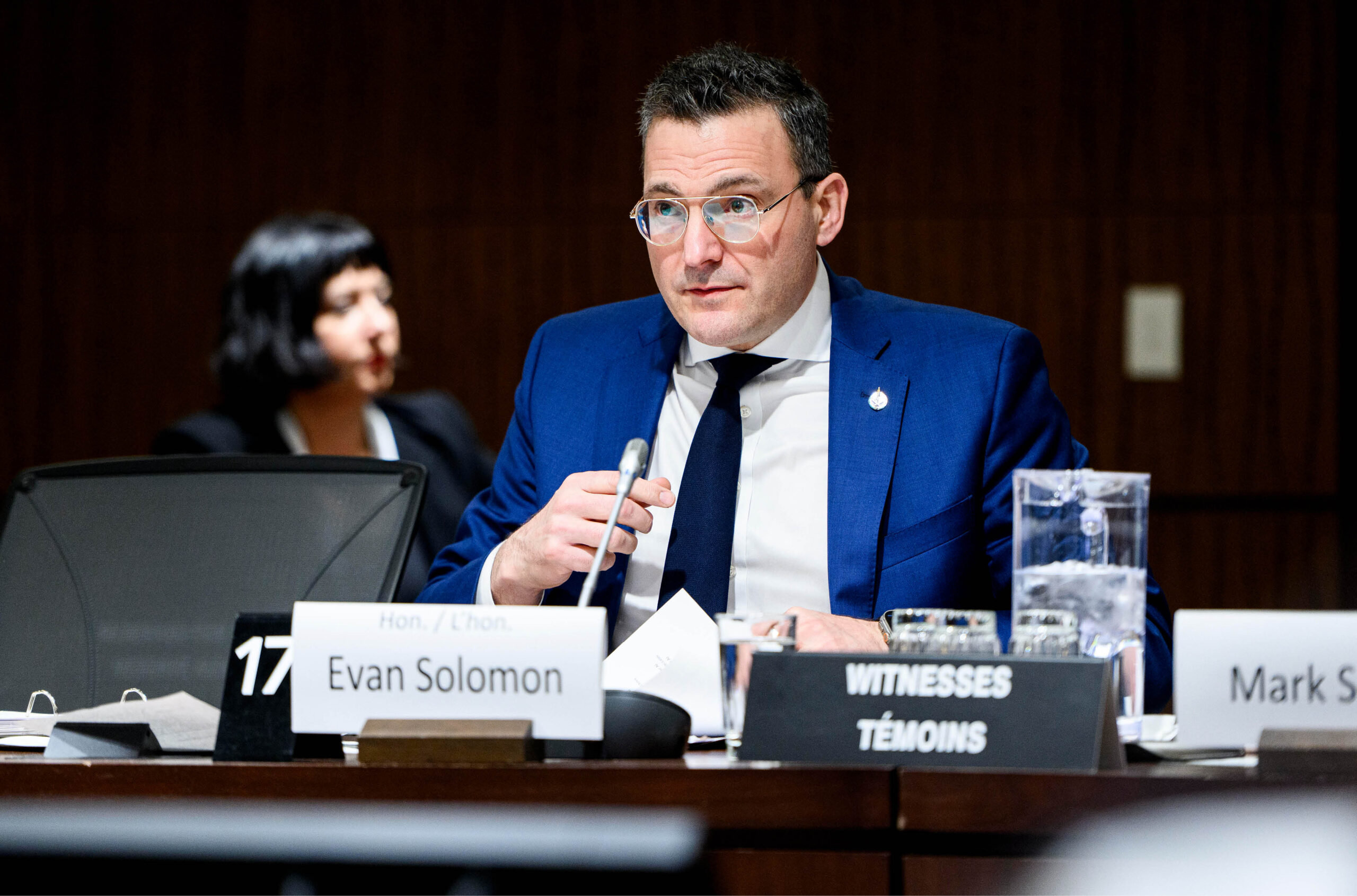
Opposition MPs grill Minister on federal AI strategy
Evan Solomon points to billions invested in research chairs and computing infrastructure at House of Commons committee appearance.
-
Critics mull challenge to Ontario’s Bill 33
Government regulation of student fees, admissions criteria, cause controversy around new provincial education law.
-

International student visa permits: What to know
IRCC announces 2026 international student targets.
-
Universities ‘absolutely vital’ to Canada’s AI strategy, minister says
Evan Solomon, Canada’s minister of artificial intelligence and digital innovation, in conversation with University Affairs’ Christopher Guly.
More from Campus news
-

Quebec universities weather an unprecedented storm
The province’s institutes of higher learning are navigating immigration restrictions, language policies, budget cuts and challenges to academic freedom.
-
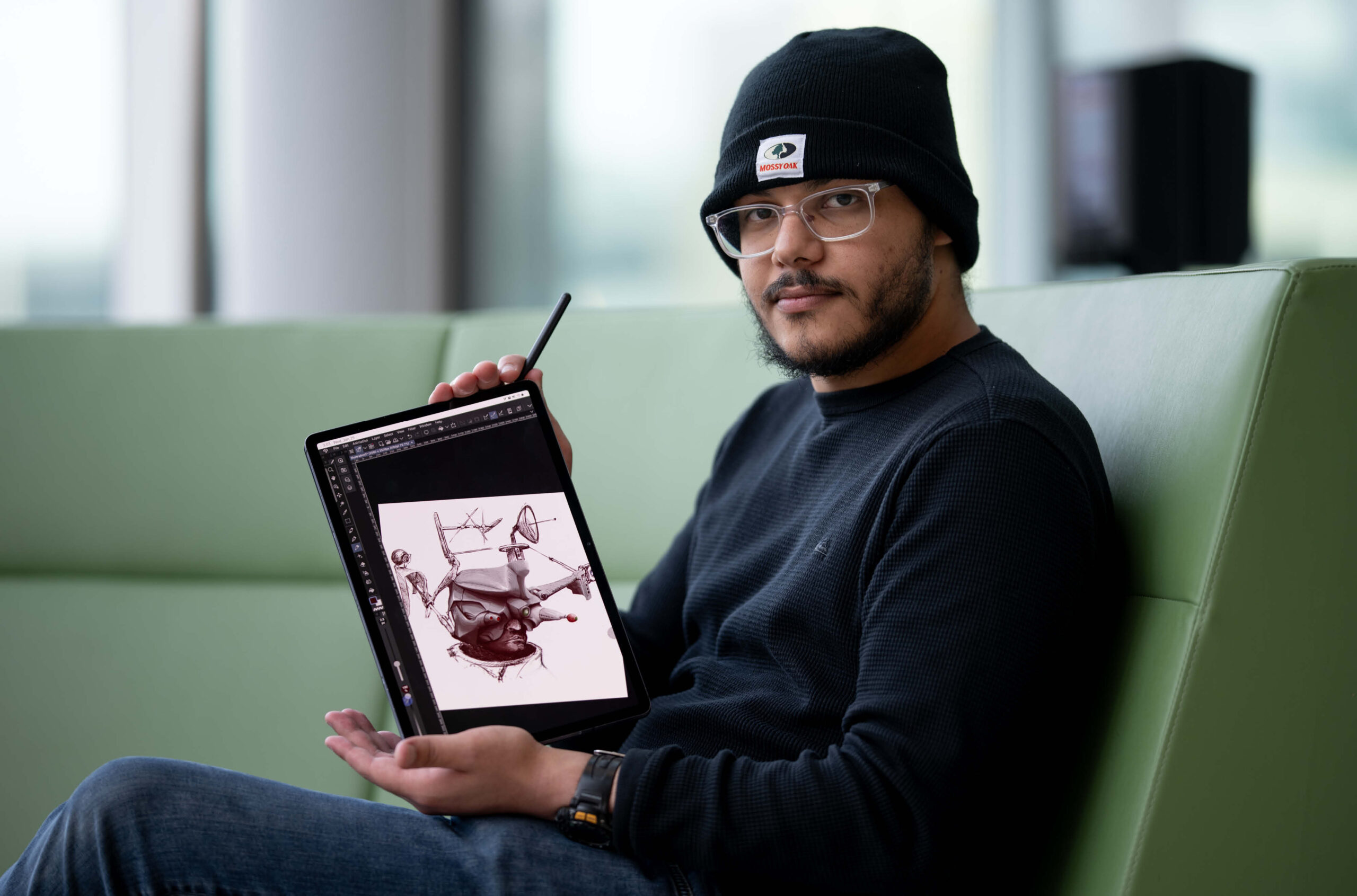
Memorial med student makes art to assist classmates’ study
What started as a hobby is now helpful for both his degree and his fellow classmates.
-

UNBC prof developing toolkit to help women feel safe online
‘Digital rights is a very important form of gender equality.’
-

Laurier student’s art featured on a bus for Black History Month
The artist says her work’s impact is like a ripple in water.
More from Articles
-
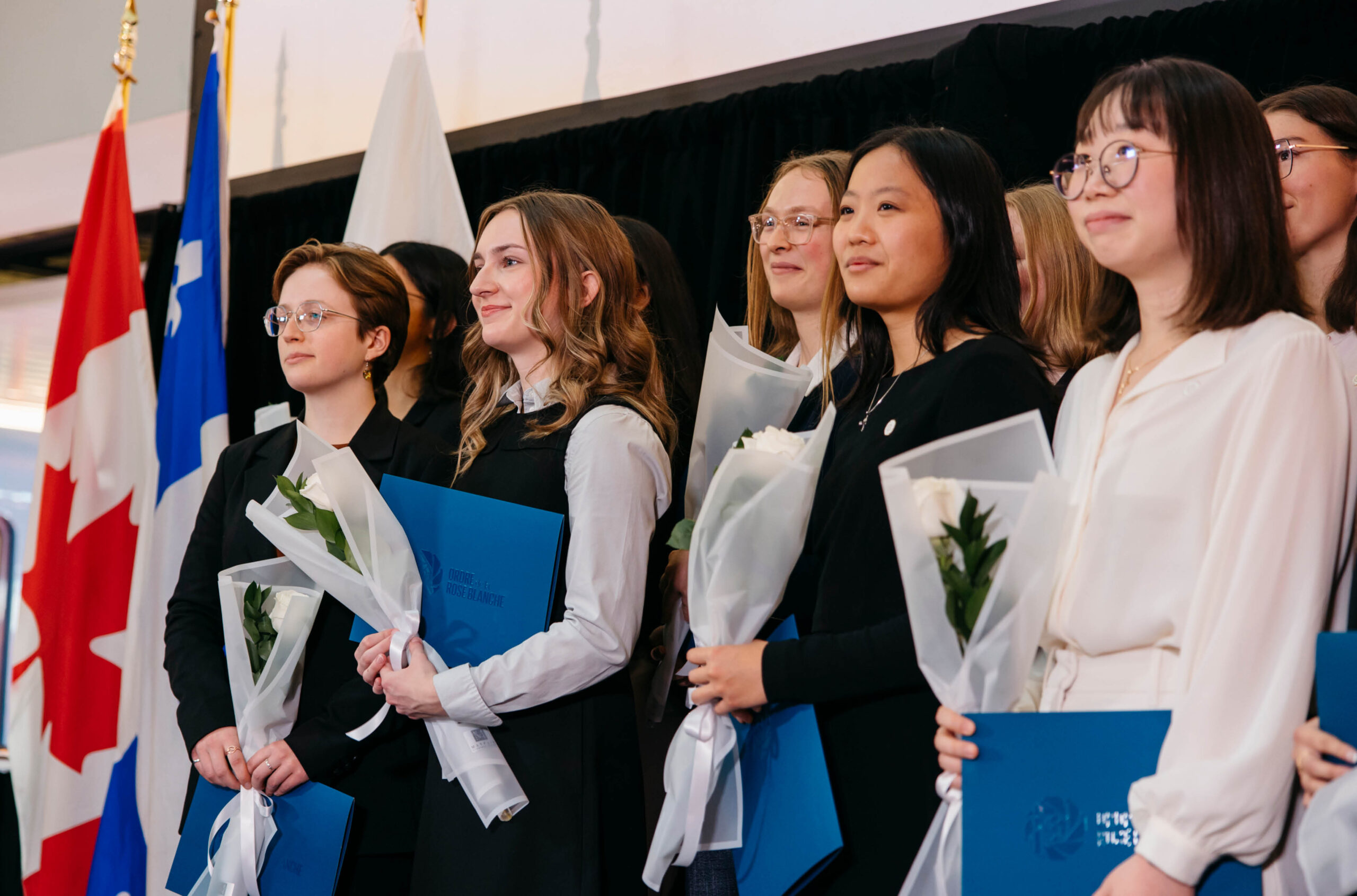
Fourteen women receive engineering scholarships in commemoration of 1989 Montreal massacre
Initiated by Polytechnique Montréal in 2014, the scholarship program has vastly expanded its support for female engineering students.
-

Brock U opens a treasure-chest of wines
The Canadian Wine Library welcomes tasters, educators and researchers to its 19,000-bottle collection.
-
Canada falling behind in R&D, report warns
Universities provide one of the few bright spots, according to the Council of Canadian Academies.
-
Universities eligible for $51B infrastructure fund
The Build Communities Strong Fund, announced in this month’s budget, is the first long-term federal infrastructure program open to post-secondary institutions.

Post a comment
University Affairs moderates all comments according to the following guidelines. If approved, comments generally appear within one business day. We may republish particularly insightful remarks in our print edition or elsewhere.
1 Comments
My daughter graduated from University of Victoria this year and I loved the speech from President and Vice-Chancellor Kevin Hall. His main message was ‘be powerful without being terrible.”