Bob Rae urges universities to remain climate-change leaders
In a volatile world, universities form bulwarks of scientific integrity and technological development, says former U.N. ambassador.

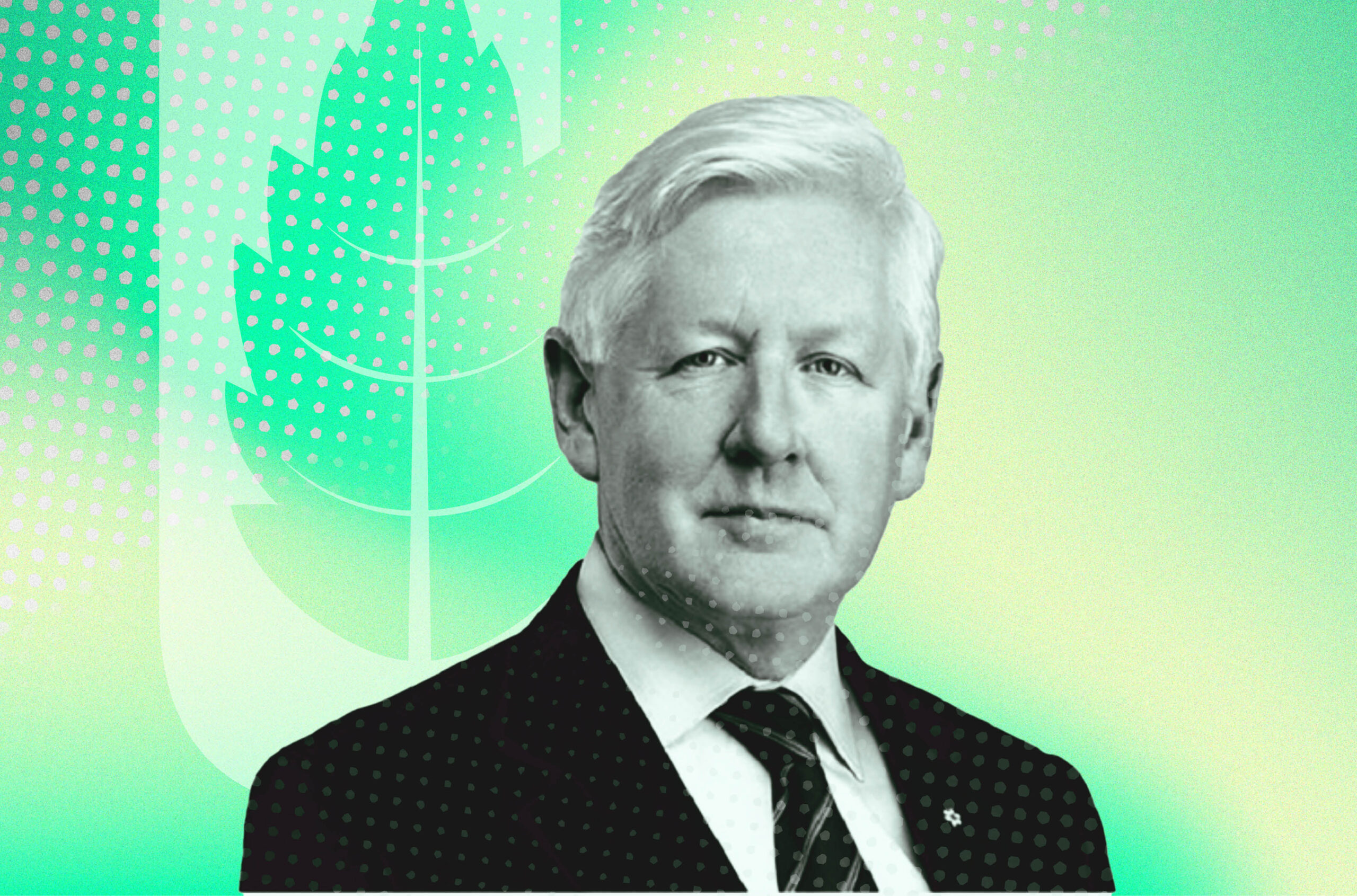
Between the rapid proliferation of AI, devastating war and civil conflicts, the fragmentation of international partnerships, the surge of disinformation and the debilitating affordability crisis, our global landscape has become a tempest of instability. Naturally, our collective attention has shifted to immediate survival, shifting other priorities down the list. Yet amidst this turbulence, one unrelenting truth remains fixed: the climate crisis, compounded by environmental degradation, is accelerating.
In a recent conversation with The Campus Green, Canada’s former ambassador to the United Nations Bob Rae provided his thoughts on the contemporary climate landscape against this backdrop of volatility.
He noted that climate action is being marginalized not only by geopolitical and economic tensions, but also due to climate change denial, which is being propagated by certain media and political actors on the international stage.
“Right now, I’d say we’re in a choppy period — a lot of headwinds and a lot of opposition,” Mr. Rae observed. He noted that some people are becoming more skeptical about the science due to an onslaught of disinformation and propaganda campaigns.
Canada is not insulated from this global turmoil. While Prime Minister Mark Carney is well-versed in the magnitude of the climate crises, his government must also address a variety of international and domestic pressures complicated by a neighbour who disregards established norms and boundaries. “I think the Prime Minister is facing some tremendous challenges. And I think we all recognize that it’s not easy,” Mr. Rae said.
Fortunately, Mr. Rae added, at the UN itself, “nobody is losing commitment and support for the science. Nobody is losing interest in trying to make progress.” He remains optimistic, noting that scientific evidence is increasingly irrefutable as climate impacts manifest globally.
Universities as anchors for the green transition
As global headwinds gather, Mr. Rae emphasized that universities serve as a vital anchor by providing the credible information necessary to stay the course on the transition to sustainability. He believes it is exceptionally important for institutions to be leaders and confront challenges to scientific authority by remaining steadfast in the pursuit of science and empirical truth.
According to Mr. Rae, the dual mandate of universities, encompassing both basic and applied research, is essential for pivoting both Canada and the global community toward a sustainable future. Universities must continue developing scientific solutions and technologies that substantially reduce emissions, such as alternative energy sources. Their role includes providing a rigorous counter-narrative to industry skepticism, demonstrating with credible evidence that decarbonization is not only possible, but necessary.
Ultimately, establishing institutional partnerships with industry is a matter of national competitiveness. While other nations rapidly translate scientific findings into immediate commercial applications, Canada cannot afford to remain a passive spectator. Mr. Rae insists that we must be active participants in the full innovation lifecycle to ensure Canada remains globally relevant and economically resilient in the emerging green economy.
However, he was quick to agree that this leadership is difficult when universities face acute fiscal pressures. To resolve the funding gap, he believes industry must step up. It is in the strategic interest of firms on the vanguard of the green economy to engage with academic research, while governments should facilitate tax incentives to ensure these collaborations remain competitive.
Driven by a deep belief in the sector’s transformative potential, Mr. Rae hopes to find ways to champion and support higher education in his post-diplomatic capacity.
A message of hope and resilience
As the conversation shifted toward the next generation, Rae reflected on the long, uneven road of environmentalism. Noting that “progress is never linear,” he observed that while youth are increasingly impatient with the sluggish pace of systemic change, history shows that environmentalism has always followed a fluctuating path rather than a steady upward trajectory. He explained that advancements are frequently stalled by “moments of pushback,” where economic volatility and the sheer logistical complexity of the green transition create friction against meaningful reform.
This impatience is justified: young people are the primary stakeholders in the “tragedy of the horizons,” destined to bear the consequences of today’s inaction, as society continues to resist meaningful change.
To counter this, Rae advocates for a radical enhancement of youth participation in governance — ensuring those with the longest-term perspective finally have a seat at the table. This is no mere idealistic hope; it aligns with the Pact for the Future, a landmark UN framework adopted in September 2024 that formalizes the integration of youth into global decision-making.
As the interview concluded, Rae reflected on how he maintains his own resolve in such a turbulent era. While individual efforts like recycling can feel futile against a backdrop of global crises, Rae views the rejection of defeatism as a universal necessity. Addressing the pervasive climate anxiety of today, he remains resolute: “Despair is an intellectual luxury that we don’t have.” He characterizes capitulation as “self-indulgent”— a sentiment he applies to every stakeholder, regardless of generation.
For Rae, this rejection of despair is not just a personal philosophy, but a call to collective agency. He emphasized that climate action requires a unified commitment within a comprehensive global project, insisting that “everybody has to worry about sustainability.” He left behind an ultimate, resonant reminder: “Climate change is a global issue, but it starts with each one of us and each country, to make the decisions that help us get there.”



Featured Jobs
- Anthropology of Infrastructures - Faculty PositionUniversité Laval
- Engineering - Assistant Professor, Teaching-Focused (Surface and Underground Mining)Queen's University
- Director of the McGill University Division of Orthopedic Surgery and Director of the Division of Orthopedic Surgery, McGill University Health Centre (MUHC) McGill University
- Soil Physics - Assistant ProfessorUniversity of Saskatchewan
- Canada Impact+ Research ChairInstitut national de la recherche scientifique (INRS)
More from Opinion
-
Recalibrating Canadian universities to meet the Mark (Carney)
How university leadership can better support Canadian innovation and economic growth.
-
The Campus Green
University Affairs launches new sustainability column.
-

Defending the Academy
Current challenges offer opportunity to reassert our public purpose.
-

Diversity strengthens discovery
What Nobel Laureates reveal about diversity, discovery and societal impact.
More from Policy
-
Quebec’s proposed Constitution sparks universities’ opposition
The bill before the province’s national assembly would restrict universities’ ability to challenge legislation, but its future is in doubt with the resignation of Premier François Legault.
-

The year ahead in higher ed
A province-by-province overview of the issues on the horizon for 2026.
-

Responding to the global displacement crisis
A role for Canadian universities?
-
No funding promises for Memorial University in NL election campaign
Parties float private-college partnerships, tuition rollbacks, and job-focussed education as voters in Newfoundland and Labrador head to the polls.


Post a comment
University Affairs moderates all comments according to the following guidelines. If approved, comments generally appear within one business day. We may republish particularly insightful remarks in our print edition or elsewhere.
3 Comments
This shows how different Canada and USA are Most American professors are only encouraged to get research funding and write results up for journal articles. Most will not be motivated by what is in the public interest. I had an Extension appointment. We are mainly rewarded for how well we are able to help people.
I am so glad you wrote this and people are still talking about it. I heard in an interview with Mark Carney (while he is full scale pushing so much develoment, mining, pipelines etc) Carney said “Climate change isn’t as much of an issue anymore” and then he quickly said ” at least not in the polls”. (making people get into their heads an idea that it doesn’t matter these days)
We need real climate and environmental leadership- people who have integrity and will fight for the environment whether or not the general population cares about it as an issue— just because the polling doesn’t show it as an issue doesn’t mean the problem has gone away, but that is what you would think has happened if you listen to this new Liberal government and mainstream media right now.
Good article.
Sounds like green sustainability directives have hit a backburner and it’s a risky time to curb the attention of it. Would be great to see business minds in government to apply a measure of savviness supporting an applicable and sensible green model. Perhaps work for the next generation …