No funding promises for Memorial University in NL election campaign
Parties float private-college partnerships, tuition rollbacks, and job-focussed education as voters in Newfoundland and Labrador head to the polls.

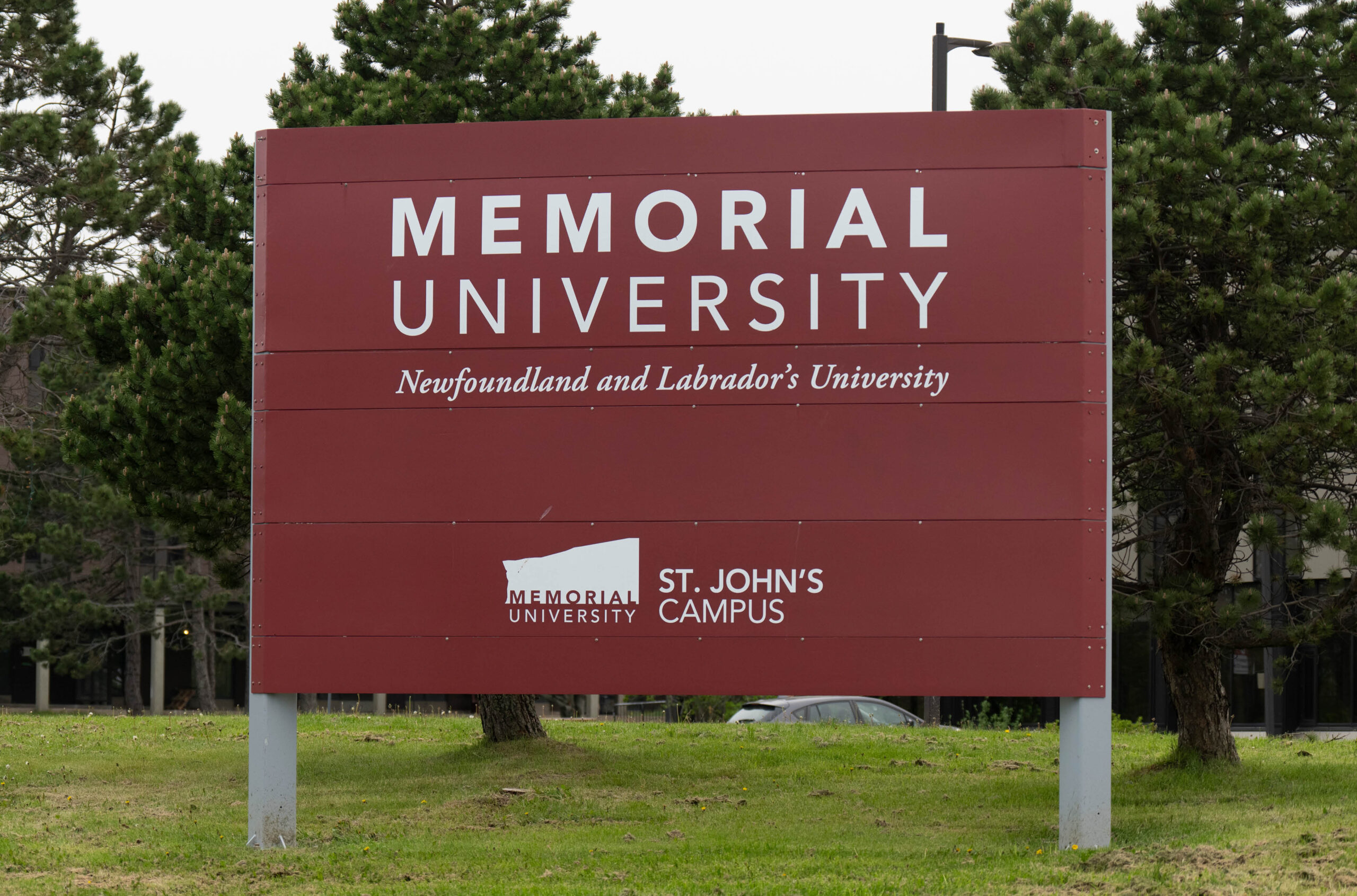
As voters in Newfoundland and Labrador prepare to head to the polls next Tuesday, Oct. 14, the Liberals, Progressive Conservatives, and NDP are offering competing — yet overall sparse — pledges on post-secondary education.
Notably, none of the parties’ platforms promises to increase government funding for the province’s only university, Memorial University of Newfoundland, which has endured a decade of budget cuts and is struggling this year with a $6.7 million operating deficit. In July, University President Jennifer Lokash announced $20 million in spending cuts for 2025-26, along with the layoffs of 20 permanent and contract staff.
Memorial University Manager of Communications and Media Relations Chad Pelley said in an email that the university administration is remaining silent on political matters until the election ends, at which time its leaders will meet one-on-one with the new premier. “We look forward to working with the next provincial government to maintain a vibrant and viable Memorial University for benefit of all Newfoundlanders and Labradorians,” the email stated.
Neither the Liberal nor Tory campaigns responded to requests for interviews from University Affairs.
In a platform released on October 8, less than a week before the vote, the opposition Progressive Conservatives under leader Tony Wakeham pledge to temporarily freeze tuition fees and new building construction at Memorial, pending a review of the school’s administrative and infrastructure maintenance costs. The Tories further promise to refund the tuition of graduates who stay and work in the province, and to offer paid work terms to students in health, social, and education services.
More broadly, the Tories pledge to align post-secondary education with the needs of the labour market: “We will forecast future labour shortages and adjust class sizes in advance of these shortages to respond more expeditiously to changing labour market needs,” the platform states.
Meanwhile the governing Liberals are promising a new one-time means-tested moving allowance of $500 for university students moving from a rural region to St. John’s. The Liberal platform emphasizes the financial aid already available to university students. But it does not mention the cutbacks to university funding that have taken place under successive Liberal governments, which have held provincial power since 2015. According to Memorial’s consolidated financial statements, government funding for the university has declined from $444 million in 2014 to $426 million in 2025, despite significant inflation in the cost of living over that decade.
For their part, the New Democrats, who held only one seat in the provincial legislature at the time of dissolution, promise to roll back tuition to its 1999 level — a response to a massive tuition hike that took place at Memorial in 2022, after the governing Liberals announced they would be phasing out the province’s $68 million tuition offset grant to Memorial over five years. This prompted the university to end its 22-year tuition freeze, spiking the per-course cost for new undergraduate students from $255 to $600 while raising the per-course cost for new international students from $1146 to $2000.
The only dedicated discussion that post-secondary issues received during the campaign was at a “Leaders’ Election Town Hall” hosted by the Coalition of Labour & Student Unions on Sept. 24 at Memorial’s St. John’s campus. No leaders were in attendance, but panelists included Education Minister Bernard Davis (Liberal) and candidates Darrell Hynes (PC) and Laurabel Mba (NDP), both from the district of Mount Scio, where the St. John’s campus is located.
Mr. Davis, whose party is leading in the polls, floated the idea of partnerships between the university and private colleges to synergize program offerings, and defended his government’s accomplishments within the constraints of Memorial’s autonomy over spending decisions.
Mr. Hynes argued the university’s Board of Regents should be reformed to mandate faculty and student representation. He lamented the “foolishness” uncovered by the provincial Auditor General who, in a report released in October 2023, found that “Memorial did not effectively monitor its financial information, (…) compensation, or expenses in a meaningful way” and that it routinely paid higher salaries and benefits than equivalent administrative positions in the provincial public service. A second report, released in January, found that the university had accumulated $481 million in deferred maintenance liabilities for its crumbling mid-century infrastructure despite continually increasing its real estate footprint — including a new $347 million Core Science Facility, opened in 2021.
Ms. Mba championed accessible public education and said Memorial should be funded “at whatever cost necessary” to achieve this.



Featured Jobs
- Theatre and Film - Assistant Professor Without Review (Performance Practice)The University of British Columbia
- Psychology - Assistant Professor (Clinical Psychology)Western University
- International Studies - Faculty Position (Arctic Defence and Security)Université Laval
- Global Inequalities and Trade - Faculty PositionUniversité Laval
- Director, Human Research Ethics & Strategic AdvisorUniversity of Manitoba
More from News
-

U Sports alum lace up for PWHL season
Canadian grads eager to show their mettle on women’s pro hockey teams.
-

The hidden problem of student homelessness
As high rents push more students into precarious housing, it's time to stop romanticizing the 'poor scholar'.
-

Parliamentary committee urges stronger support for research in French
Granting agencies should consider funding targets specifically for French-language projects, the Standing Committee on Science and Research recommends.
-
Remove EDI from research funding decisions, parliamentary committee says
The Standing Committee on Science and Research says ‘discriminatory’ EDI policies are ‘weakening the quality of Canadian research’.
More from Policy
-

Quebec universities: 60 years of change
From the Quiet Revolution to the present day, universities have profoundly transformed Quebec society. As a provincial election rapidly approaches, we reflect on their changing mission over six decades of often tense history.
-

Universities participating in Canadian militarization: the case against
Henry A. Giroux argues that the militarization of Canadian universities threatens to transform institutions devoted to critical inquiry and democratic life into extensions of the warfare state.
-

Canadian universities and the new defence imperative: the case in favour
Martin Maltais argues that Canadian universities must play a greater role in strengthening the country’s defence capacity while preserving academic freedom and scientific independence.
-

Science must become a pillar of Canadian foreign policy
With technological developments reshaping global governance, science cannot remain isolated from international relations.
More from Articles
-

Good medicine: new programs train country doctors
Université de Montreal follows Queen’s prescription to heal the shortage of family physicians in rural areas.
-

Universities struggle to be heard in Quebec election
In a campaign dominated by the U.S. trade war and the soaring cost of living, universities assert their continued importance.
-
Quebec’s English-language universities embrace new French requirements as fall cohort begins
McGill, Concordia and Bishop’s universities roll out new initiatives to encourage students to learn French on and off campus.
-
Attacks on higher education spread globally, including in liberal democracies, Scholars at Risk report finds
Canada urged to defend values amid erosion of institutional autonomy in the U.S.

Post a comment
University Affairs moderates all comments according to the following guidelines. If approved, comments generally appear within one business day. We may republish particularly insightful remarks in our print edition or elsewhere.