Diversity strengthens discovery
What Nobel Laureates reveal about diversity, discovery and societal impact.

If intellectual breakthroughs depend on anything, it is the collision – rather than convergence – of distinct ways of thinking. Critics of diversity often frame inclusion as antithetical to excellence, implying it compromises standards. This view misinterprets how knowledge is produced, debated and applied. Evidence from Nobel Laureates across disciplines show that diversity is not just symbolic; it is constitutive of high-quality research, teaching and innovation.
In universities, diversity is complex. Cognitive, disciplinary, methodological, cultural, geographic, experiential as well as demographic diversity underpin breakthroughs in science, peacebuilding, literature and the social sciences. Cognitive diversity, as theorized by American social scientist Scott E. Page, expands the repertoire of heuristics and problem-solving strategies. Collaborative problem-solving is central to scientific innovation. As Nobel Laureate Mary E. Brunkow (Medicine 2025) observes: “It takes a bunch of different brains, all working on it together, for sure!” This cognitive heterogeneity, shaped by geography, training, and lived experience enables teams to identify overlooked patterns, challenge entrenched assumptions and ask questions that more homogeneous groups rarely consider. Elizabeth Blackburn (Medicine 2009) similarly notes that her research advanced through “a lot of meetings of minds,” underscoring how cognitive and disciplinary diversity fuel discovery.
Some questions simply cannot be addressed without drawing on multiple fields. Disciplinary diversity – chemistry with physics, economics with sociology, neurobiology with computation –provides the conceptual complementarity needed to tackle such problems. Katalin Karikó (Medicine 2023) highlights this in her work on mRNA vaccines, noting that “people have different views, different thinking…somebody’s a physician or there is a basic scientist and they are thinking differently.” She adds that “if they work together and respect each other, then a new invention can be done.” Karikó’s reminder that “we educated each other,” captures how interdisciplinary collaboration and mutual respect transform laboratory insights into real-world vaccines. Carolyn Bertozzi (Chemistry 2022) underscores that intentionally building a “diverse lab of coworkers right from the outset,” with gender balance and the inclusion of underrepresented groups, sparks creativity, minimizes blind spots, and strengthens rigour.
Methodological diversity likewise advances research by bringing different analytical approaches, experimental designs and interpretive frameworks into dialogue. Breakthroughs such as Edward I. Mosers’ (Medicine 2014) grid-cell discoveries were possible because neurobiology, computation, psychologyand physics were combined to interrogate the same question. At DeepMind, Demis Hassabis (Chemistry 2024) observed that AI innovations were catalyzed by methodologically divergent perspectives from engineering, biology, philosophy. Such integration uncovers overlooked problems, strengthens reliability of results and reduces vulnerability to error.
Geographic and cultural diversity amplify the epistemic reach of research. When ideas move across intellectual and geographic borders, they acquire new meanings, unsettle old assumptions and expand the horizons of inquiry. Peter Agre (Chemistry 2023) recalls that his laboratory was “a very international place… scientists bring their own cultures and their own ways of thinking, and that enriches the laboratory.” David Baker (Chemistry 2024) similarly notes that discovery was fuelled by the fact that “people came from all around the world. It is so important that there is a free movement and free exchange of peoples.” Lester B. Pearson (Peace 1957) articulated the broader diplomatic principle: How can there be peace without people understanding each other, and how can this be if they don’t know each other?” Across fields, understanding emerges from encounter – diverse people learning with and from one another.
Lived experience, shaped by social position and identity, provides insight that technical training alone cannot generate. Didier Queloz (Physics 2019) warns: “If diversity is not represented in science, it means we’re losing capability… we’re losing people, we’re losing brains.” Malala Yousafzai (Peace 2014) affirms the same principle in education: “The diversity of experiences we bring to the table makes our movement stronger.” Across disciplines, demographic diversity is not a moral concession but an epistemic resource, expanding the relevance of research, broadening the questions asked, and deepening its social impact. Experiential diversity, different professional and life trajectories further enhance research relevance and impact, bringing practical knowledge necessary for designing solutions that work. Karikó’s translational vaccine teams combined immunologists, chemists, clinicians and engineers, ensuring laboratory insights translated into viable interventions. Abhijit Banerjee and Esther Duflo (Economics 2019) emphasize that development economics depends on collaboration with fieldworkers, local experts, statisticians and policymakers who understand institutional and cultural realities on the ground.
Read more: A scientific pipeline to the Nobel prize fueled by immigrants, The New York Times
Nobel Peace Laureates also highlight that inclusive processes generate more durable, legitimate, and sustainable outcomes. Kailash Satyarthi (Peace 2014) stresses that ending child exploitation requires collaboration across continents. Ellen Johnson Sirleaf, Leymah Gbowee and Tawakkol Karman (Peace 2011) underscore that women’s participation introduces priorities essential for long-term stability. Muhammad Yunus (Economics 2006) demonstrates how cognitive, institutional, and demographic diversity generated the microfinance innovations lifting millions out of poverty. In literature, Toni Morrison (1993), Bob Dylan (2016), and Kazuo Ishiguro (2017) show that artistic excellence emerges from listening to and engaging a plurality of voices, histories, and cultural lineages.
Together, these accounts confirm a central principle: diversity does not dilute excellence; it deepens it by widening the terrain from which insight can emerge. Disciplinary and cognitive heterogeneity refract problems through multiple lenses; geographic and demographic variation introduce new perspectives; methodological and experiential diversity build robustness, creativity and real-world relevance. Critics who frame inclusion as a threat to quality misread the engines of discovery and innovation.
Institutions that structure themselves to activate the full potential of diverse teams – through supportive leadership, psychological safety, inclusive communication and collaborative structures – are best positioned to strengthen discovery, foster innovation and deliver societal impact. Nobel Laureates across fields – from Blackburn’s globally diverse lab to Karikó’s translational teams, from Pearson’s diplomacy to Yousafzai’s education advocacy – all underscore a consistent lesson: when diverse minds, methods, and experiences intersect, insight and innovation are amplified. Donna Strickland (Physics 2018) stated this with characteristic clarity: “I think diversity is a good thing whether you are in science or in anything…the world works best if we all get our opportunities and we all do it.” Dr. Strickland’s words signal a future-oriented imperative: the next generation of breakthroughs will come from institutions that cultivate the full range of human talent rather than a homogeneous subset. In a world confronting complex scientific, technological, and societal challenges, ignoring diversity carries unacceptable opportunity costs.
Nobel Laureates themselves remind us that the future of knowledge depends on widening – not narrowing – the circle of contributors. The institutions that will lead in discovery and societal impact are those that understand diversity not as an add-on but as the strategic infrastructure of excellence itself. When universities draw on the full breadth of cognitive, disciplinary, demographic, cultural, geographic, methodological, and experiential perspectives, they expand the horizons of what is thinkable and possible.





Featured Jobs
- Engineering - Assistant Professor, Teaching-Focused (Surface and Underground Mining)Queen's University
- Director of the McGill University Division of Orthopedic Surgery and Director of the Division of Orthopedic Surgery, McGill University Health Centre (MUHC) McGill University
- Canada Impact+ Research ChairInstitut national de la recherche scientifique (INRS)
More from Opinion
-

The Human Algorithm
As artificial intelligence reshapes the workplace, the most valuable skills aren't technical — they're fundamentally human.
-

The tyranny of the average
Driven by statistics, AI homogenizes humanity and devalues outliers.
-

Adopting AI is a social contract
Integrating artificial intelligence into our societies and personal lives binds us to certain futures and forecloses the possibility of others. Are we ready to accept the consequences?
-
Research VPs empower discovery
An impressive list of women are leading research at universities across the country.
More from Research
-

Federal science cuts may have ripple effect on universities
Departmental belt-tightening in Budget 2025 adds to a long history of government reductions in scientific research.
-

How to craft a strategic research statement
Identifying themes in your work history can help you move from a laundry-list to a compelling story.
-
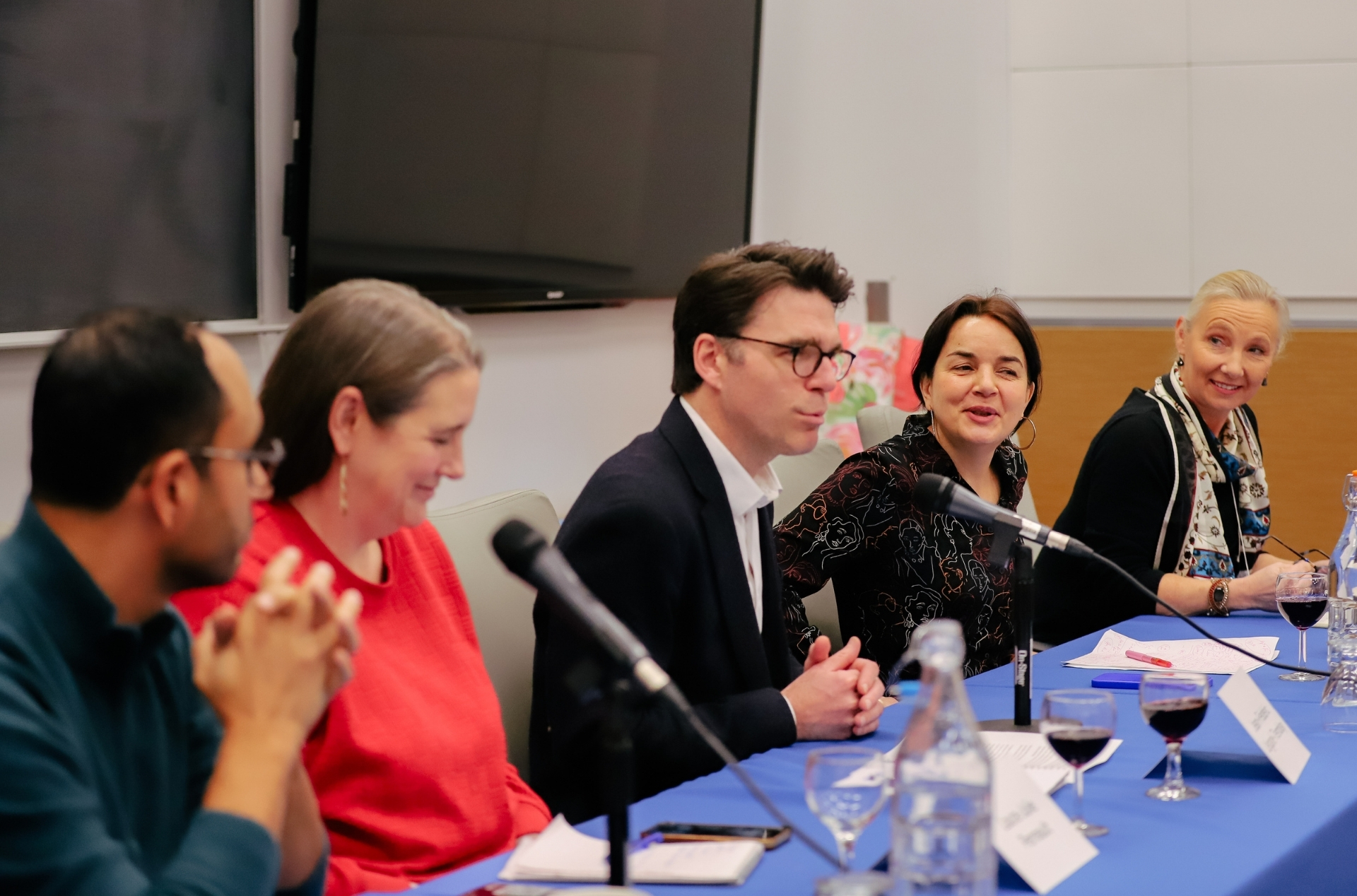
World events put academics and journalists under pressure
At a time when news is always breaking and disinformation is on the rise, a conference explores the precarious relationship between academia and the media.
-

AI bots push beauty stereotypes
U of T study finds image generators perpetuate idealized body types, facial features.
More from In My Opinion
-

GenAI is in — so why are we still burnt out?
Will generative artificial intelligence end up diminishing, or increasing, researchers' workloads?
-
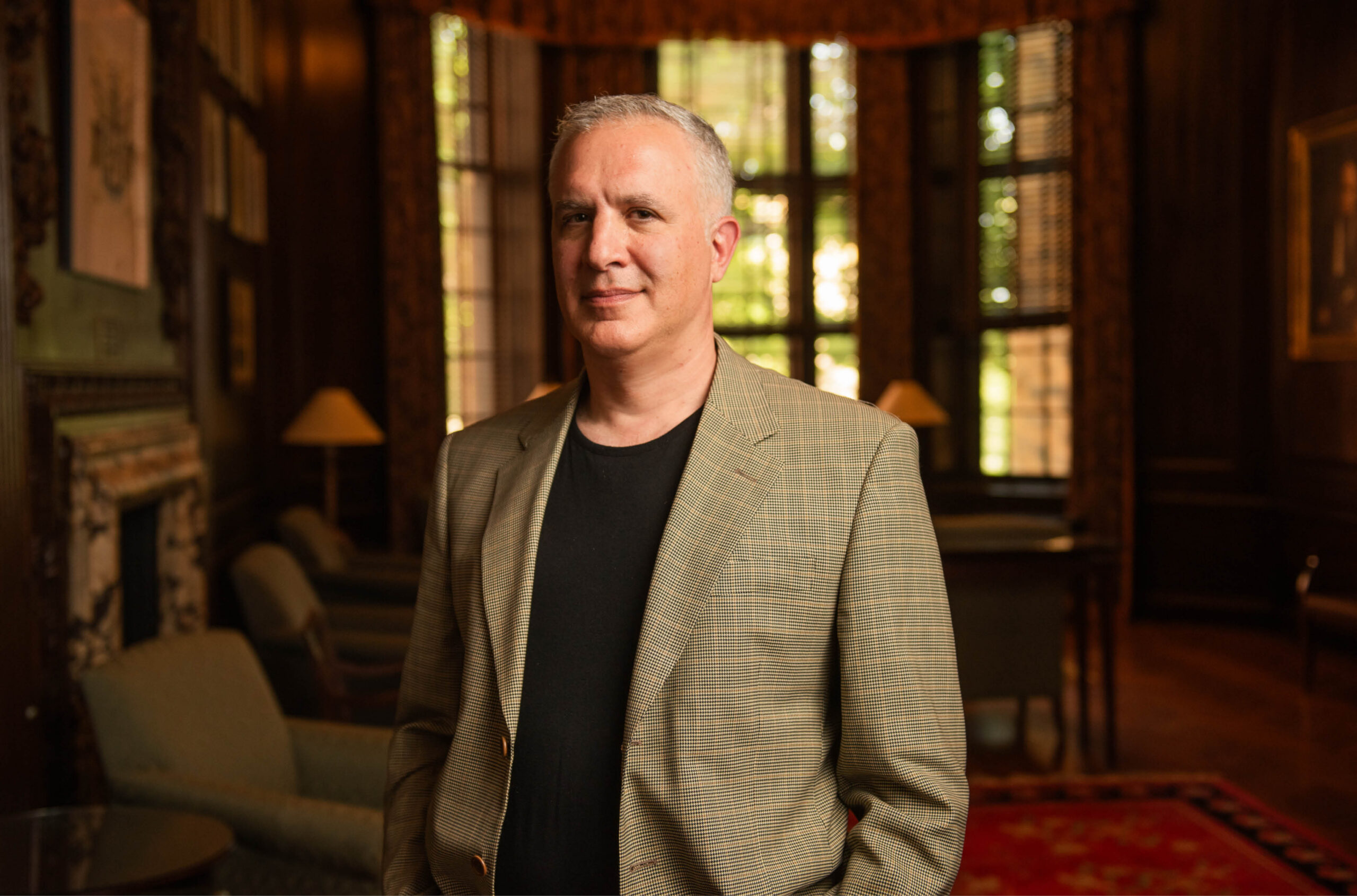
Recalibrating Canadian universities to meet the Mark (Carney)
How university leadership can better support Canadian innovation and economic growth.
-

Protecting online safe spaces
Reflections on a Zoom-bombing.
-

Funding the future
Investing in student research tackles youth unemployment while building Canada’s future economy.

Post a comment
University Affairs moderates all comments according to the following guidelines. If approved, comments generally appear within one business day. We may republish particularly insightful remarks in our print edition or elsewhere.
2 Comments
Bravo! Well said. And while I am in the Humanities and Social Sciences–and certainly no Nobel laureate (far far from it!)–I too have found that my best work comes from working with a diverse group of scholars on a common question. In fact, it works best when we assemble the group and then define the questions, theoretical frameworks, and methods together!
Let’s rename all of our Offices of Equity, Diversity, and Inclusion and start calling them “Offices of Meritocracy and Excellence,” founded on the principle that the most important barriers to meritocratic justice and scholarly excellence are the irrational hierarchies created by sexism, racism, ethnic and religious chauvinism, anti-LGBTQ prejudice, anti-immigrant animus, class bias, ideological blindness, and other enemies of human progress.
Interdisciplinary approaches have been a focus of mine for decades. Your brief compilation of examples with eminent people is a strong contribution to at least motivate –if not convert– researchers, planners and basically most international development professionals. Cheers, IVAN.