Help scientists ousted by America’s attack on knowledge
An open letter to leaders of higher education in Canada.

Dear Leaders of Higher Education in Canada,
I write this letter with a plea for action to welcome endangered academics from the United States to Canada.
I am a naturalized Canadian who has just returned to Canada from the front line of the illogical and inhumane dismantlement of public service and knowledge by the Trump administration. After working at Dalhousie University almost for 20 years, in October 2022 I was recruited by the National Institutes of Health (NIH) Clinical Center in the United States, the world’s largest research hospital, to expand my research on health inequalities and ethics as an “in-house” scholar (called the intramural research program). Since January this year it became, logistically and intellectually, painfully difficult to do my work, which, with its focus on equity, fairness and justice, is the diametrical opposite to what the Trump administration promotes.
To list a few: Academic freedom has been infringed. There is a list of banned words (e.g. gender; diversity, equity and inclusion) and a list of words pressured to be erased. Extreme uncertainty has been intentionally and consistently created. On one day in March, I lost half-a-million dollars in funding, without notice. On one day in April, the chief of my department was removed from NIH without reason. On June 30, I resigned from NIH and returned to Canada.
I was fortunate enough to be offered new employment in Canada at McMaster University starting April 1, 2026. Many of my colleagues in the United States, especially junior colleagues, are not as lucky. There are many Canadian scholars in the United States who are considering coming back to Canada or may soon be forced to do so. There are many non-Canadian academics whose options may soon be either abandoning an academic career or leaving the country. Many of my American colleagues are struggling to do their work on health equity or any topics that the current administration deems inappropriate (e.g. climate change, vaccine research) because of a fear of retribution, pressure from their institutions, and, simply, lack of funding. There is an added uncertainty of immigration status among those whose origins are elsewhere but who made their academic careers in the United States.
What is happening right now is an attack against science, knowledge and the public good. As non-Americans, we may not be able to save academic institutions in the United States. But we must not let the United States destroy what we value as citizens — science, knowledge, and the public good — which are the foundation for human flourishing and economic prosperity in Canada and elsewhere in the world. Furthermore, at this critical historic juncture, Canada should have a vision and strive to explore a new social order, systems and function. For such exploration, we need creative people. As Canada welcomed me and allowed me to grow, now, as a Canadian, I would like to welcome others to create a better Canada.
This letter is ambitious but not naïve. I am aware of the difficult economic situation Canada is in and will be for the coming years. I am aware of the challenging times Canadian universities are facing. Still, I beg you to take a long-term and broad perspective because it is critical to set priorities right at this difficult time. I beg you to find a solution collectively with other leaders of higher education to welcome endangered academics from the United States to Canada.
If you are willing, I would be thrilled to discuss further my experience and thoughts. Please reach out to me at [email protected].
Yours sincerely,
Yukiko Asada, Ph.D.



Featured Jobs
- Canada Impact+ Research ChairInstitut national de la recherche scientifique (INRS)
- Director of the McGill University Division of Orthopedic Surgery and Director of the Division of Orthopedic Surgery, McGill University Health Centre (MUHC) McGill University
- Engineering - Assistant Professor, Teaching-Focused (Surface and Underground Mining)Queen's University
- Anthropology of Infrastructures - Faculty PositionUniversité Laval
- Soil Physics - Assistant ProfessorUniversity of Saskatchewan
More from Opinion
-

GenAI is in — so why are we still burnt out?
Will generative artificial intelligence end up diminishing, or increasing, researchers' workloads?
-

Rethinking the role of higher education in an AI-integrated world
Mark Daley, Chief Artificial Intelligence Officer at Western University, reflects on the role of universities in a world where intelligence is abundant.
-
Recalibrating Canadian universities to meet the Mark (Carney)
How university leadership can better support Canadian innovation and economic growth.
-
Bob Rae urges universities to remain climate-change leaders
In a volatile world, universities form bulwarks of scientific integrity and technological development, says former U.N. ambassador.
More from Policy
-
Ontario lifts tuition freeze, injects $6.4B in post-secondary sector
New provincial strategy also overhauls student assistance program and promises to align university programs with labour market.
-
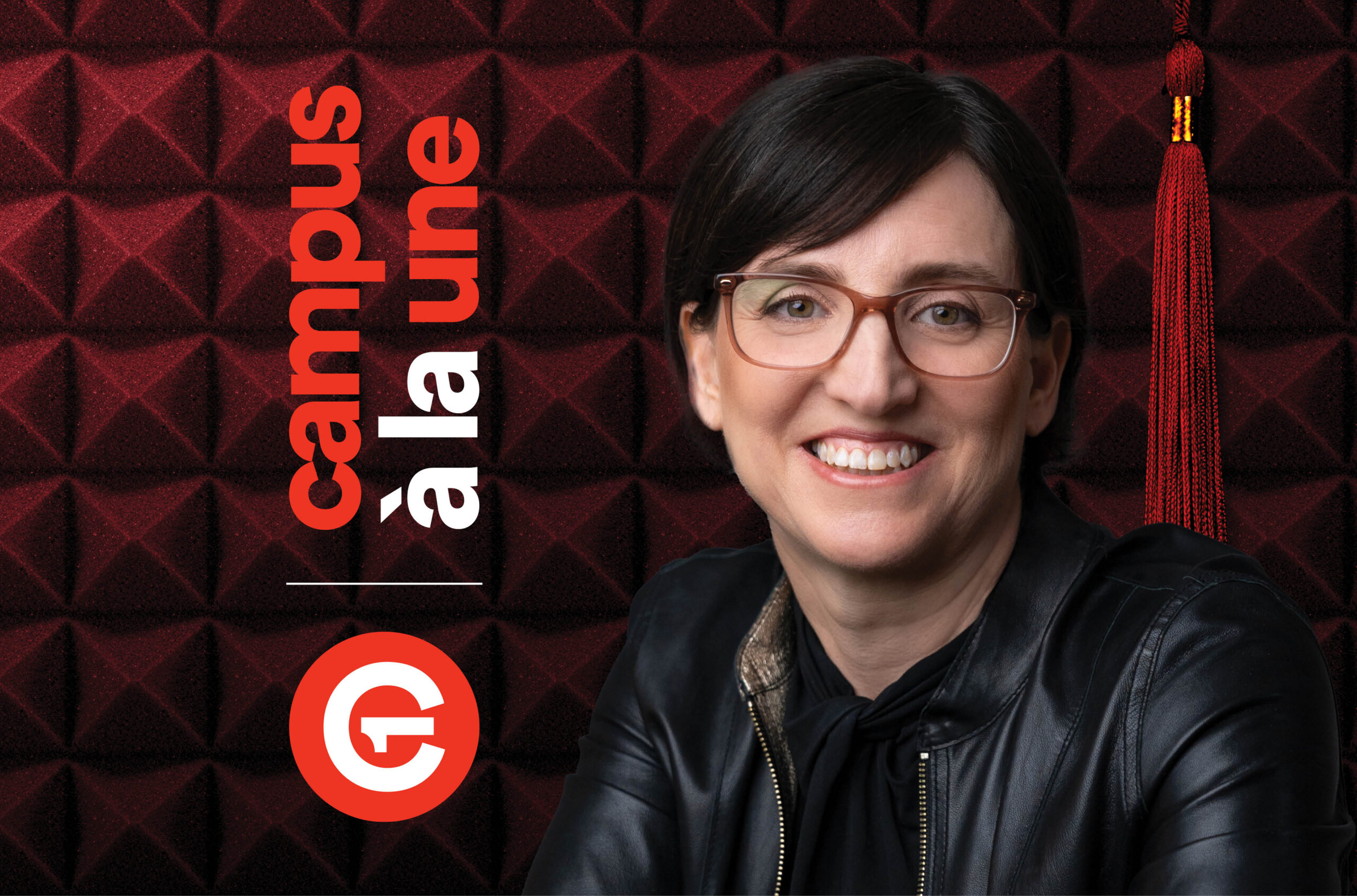
Leading a university through turbulent times
Marie-Eve Sylvestre, University of Ottawa’s new president, discusses leadership, academic freedom and the future of universities.
-
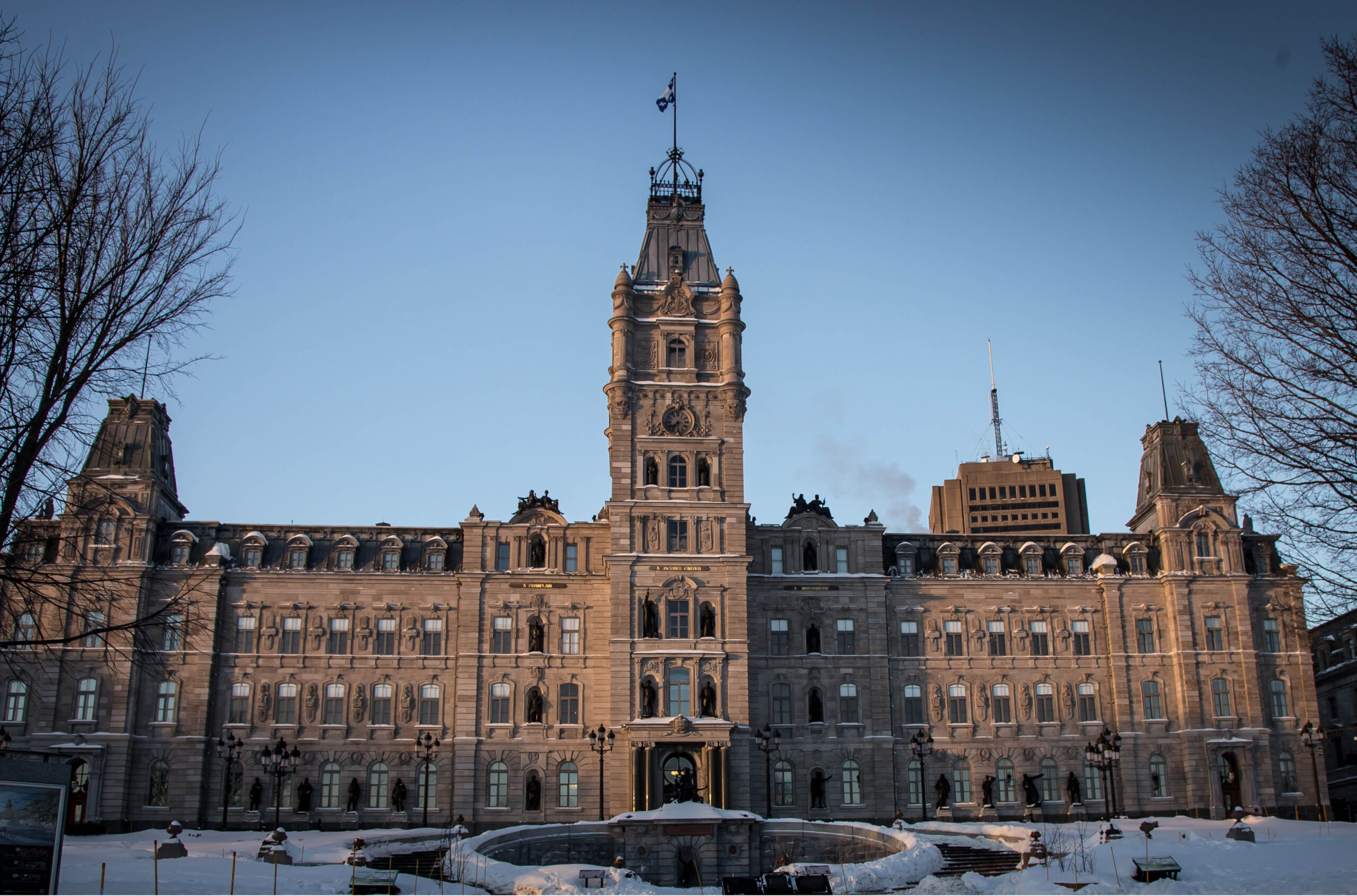
Quebec’s proposed Constitution sparks universities’ opposition
The bill before the province’s national assembly would restrict universities’ ability to challenge legislation, but its future is in doubt with the resignation of Premier François Legault.
-
The year ahead in higher ed
A province-by-province overview of the issues on the horizon for 2026.
More from Policy and Practice
-

Prescribing connection
A new approach to improving student mental health on campuses.
-

A ‘precrime’ has been prevented – or has it?
A recent decision to deny a Chinese student’s visa to complete his PhD in Canada is raising questions about presuming motivations.
-

The Ford government is ignoring its own campus free speech policy
By calling on student groups to withdraw certain controversial statements, the minister of colleges and universities is demonstrating that the policy was and is a hollow gesture.
-

When ‘self-correction’ meets power in the quest to uphold scientific integrity
Questions around Stanford U president Marc Tessier-Lavigne’s research represent a case in point.


Post a comment
University Affairs moderates all comments according to the following guidelines. If approved, comments generally appear within one business day. We may republish particularly insightful remarks in our print edition or elsewhere.
4 Comments
The Engineering Institute of Canada (EIC) in a brief to the 2025 Pre-Budget Consultation suggested that Canada through, NSERC, ISED, or other agencies, provide funding to attract to Canada scholars, scientists and engineers currently being displaced from U.S. governmental Agencies and prominent universities.
While I’m sympathetic, Canada has been hiring American academics over domestic talent for decades. Canadian PhDs are chronically underemployed and hired less often then Americans with American PhDs.
Americans often treat Canada as a waystation, a place to work for a few years to pad their CVs before returni my to the US. Asada is Canadian, but most of these academics fleeing cushy jobs in the US to compete with unemployed Canadians are going right back to the US when a Democrat is in office. We don’t need them.
This consideration overlaps with contrasting views in two May 22 UA/AU articles. As Ari Gandsman suggested, encouraging recruitment of American scholars could contribute to the ‘Americanization’ of Canadian academia, and at a time when we have many excellent junior Canadian candidates who are unemployed or underemployed.
The discussion is somewhat moot since most Canadian schools are financially stressed, which is limiting new hirings.
No. Let’s support CANADIAN academics first. We’re already putting TFWs and others ahead of young Canadians why exacerbate the problem by favouring Americans?