Preparing for flexible career paths in academia and beyond
A new open education resource helps train grad students for professional life outside the academy.


Many graduate students feel constrained by narrow expectations that doctoral training is supposed to lead to an academic career. In reality, successful careers follow many different paths and adaptability is key.
Careers that build forward from graduate degrees have always been far more diverse than the narrow road leading to the professoriate. Lateral moves from one career to another are increasingly common. Yet, graduate programs train students to go deeply into a topic, not to learn flexibility in an increasingly non-linear suite of career pathways.
Fostering innovation and scientific discovery in today’s fast-changing world requires exceptionally well-trained graduate students and other highly qualified personnel (HQP). But are students receiving the training required to navigate these challenges? Research environments, which already pose steep learning curves, are often plagued by inequities and a competitive work culture. Simultaneously, many skills are expected but rarely explicitly taught.
Strong professional and psychological skills are essential for healthy and successful careers — including strategic, dynamic learning; mentorship (as mentors and mentees); navigating difficult conversations in complex contexts; academic resilience; and project management. Yet graduate training programs continue to emphasize technical and discipline-specific expertise. That approach either neglects opportunities to develop the professional skills critical to a non-academic career or expects students to develop these skills simply by experiencing them.
Moreover, students in graduate programs face enormous mental health challenges. Many students leave academiabecause of the cumulative impacts of burnout, isolation and self-doubt. These challenges take a heavy toll. As Madelyn Joan Swackhamer wrote in a blog post while studying for her M.Sc. in biology at Memorial University of Newfoundland: “I felt like a first grader, proudly clutching a Bachelor’s degree in hand…. I wondered how I managed to fake it this far, and how much farther I could go.” Others similarly describe anxiety about career development and more.
Bridging the training gap
To address these gaps, our interdisciplinary and multi-institutional team has come together to equip students with the skills they need to thrive, while considering their mental health needs.
As our first initiative, we developed LEAD: Lifelong Education and Development. This course and open education resource (OER) is designed to help graduate students build essential professional skills for academic and non-academic careers alike. LEAD focuses on six key areas, each with a dedicated module:
- Strategic learning: Becoming a more strategic, adaptable, and effective learner
- Project management: Organizing and managing research projects
- Academic resilience: Building mental and emotional skills to navigate challenges
- Mentorship: Engaging in meaningful mentor-mentee relationships
- Navigating difficult conversations: Connecting effectively in challenging situations
- Generative AI: Becoming strategic and proficient with GenAI, while working ethically and responsibly
LEAD is designed for learners from any discipline, including graduate students, postdoctoral researchers and other HQP who work in advanced research and academic environments. The course is also valuable for early career professionals in any sector (e.g., industry, government, academic). Each module is designed to support skill development, while providing authentic activities, projects, and assessments tailored to each learner’s context and discipline. The tangible outcomes include specific strategies, plans, and skills that learners can immediately apply.
LEAD has been offered in multiple formats to meet students where they are, including as a for-credit graduate course; a summer institute with a certificate; and a series of workshops. The modules are also available to learners as a stand-alone, self-paced online course. LEAD includes community-building activities, both in-person and online, with examples provided in our facilitator/educator guide. LEAD also serves as a research platform to better understand and address the challenges faced by early career professionals in advanced environments. As an OER, LEAD modules can be adapted by others to suit their specific contexts.
A step toward systemic change
So far, more than fifty people from five Canadian universities have participated in LEAD. The learners have come from diverse programs of study, genders, and ethnicities. Participant feedback has been overwhelmingly positive: “The summer institute was an amazing experience. I’m already implementing a lot of what I learned,” said one 2024 LEAD participant. “It was an extremely informative experience and a really stimulating and collaborative space,” another participant commented.
More than a course, LEAD is part of a transformative approach to support HQP in developing skills that contribute to more inclusive, equitable and productive research environments. Each module threads concepts of equity and healthy work/study approaches which students, supervisors, employees, and employees can use to improve their learning/working environments.
As a 2018 article on Science.org notes, “students who are not currently struggling with mental health can be proactive and put themselves in a good position for when the going gets rough.” By incorporating LEAD or programs like it into graduate training programs, supervisors and universities can help to drive a cultural shift toward a healthier and more supportive, inclusive, and productive academic ecosystem. Rather than aiming to merely survive grad school, HQP will be better able to thrive in graduate studies and their careers.
We invite readers to explore, share, and adopt LEAD at their institutions and to share their own approaches, questions, and suggestions.
The authors gratefully thank the students who piloted/participated in early and ongoing versions of this course and gave vital suggestions and acknowledge funding by eCampusOntario, Virtual Learning Strategy (OTTA-53), which allowed LEAD to be developed as an OER and used at scale.




Featured Jobs
- Soil Physics - Assistant ProfessorUniversity of Saskatchewan
- Canada Impact+ Research ChairInstitut national de la recherche scientifique (INRS)
- Engineering - Assistant Professor, Teaching-Focused (Surface and Underground Mining)Queen's University
- Director of the McGill University Division of Orthopedic Surgery and Director of the Division of Orthopedic Surgery, McGill University Health Centre (MUHC) McGill University
- Anthropology of Infrastructures - Faculty PositionUniversité Laval
More from Career Advice
-

Four top skills for job seekers
University of Manitoba study reveals some keys to a successful career.
-

Do our university programs have value to students? (Are we sure?)
Ensuring value for students requires thoughtful attention to program design and delivery.
-

Studying in French as an anglophone? Mais oui!
Pursuing graduate studies in a second language is daunting but, ultimately, rewarding.
-

Public engagement: duty or detriment?
Should speaking on topics of public concern be part and parcel of academic life?
More from Students
-

Student athletes chase Olympic dreams
University students from across the country are skating, skiing and sliding their way into the history books at the 2026 Winter Games.
-

International conferences: A springboard into the future
A few days in Greece or China give you more than just a line on your resumé — they’re an experience.
-

Going hungry on campus
Quebec universities are launching food assistance initiatives to support students amid a housing crisis and rising inflation. But is it enough?
-
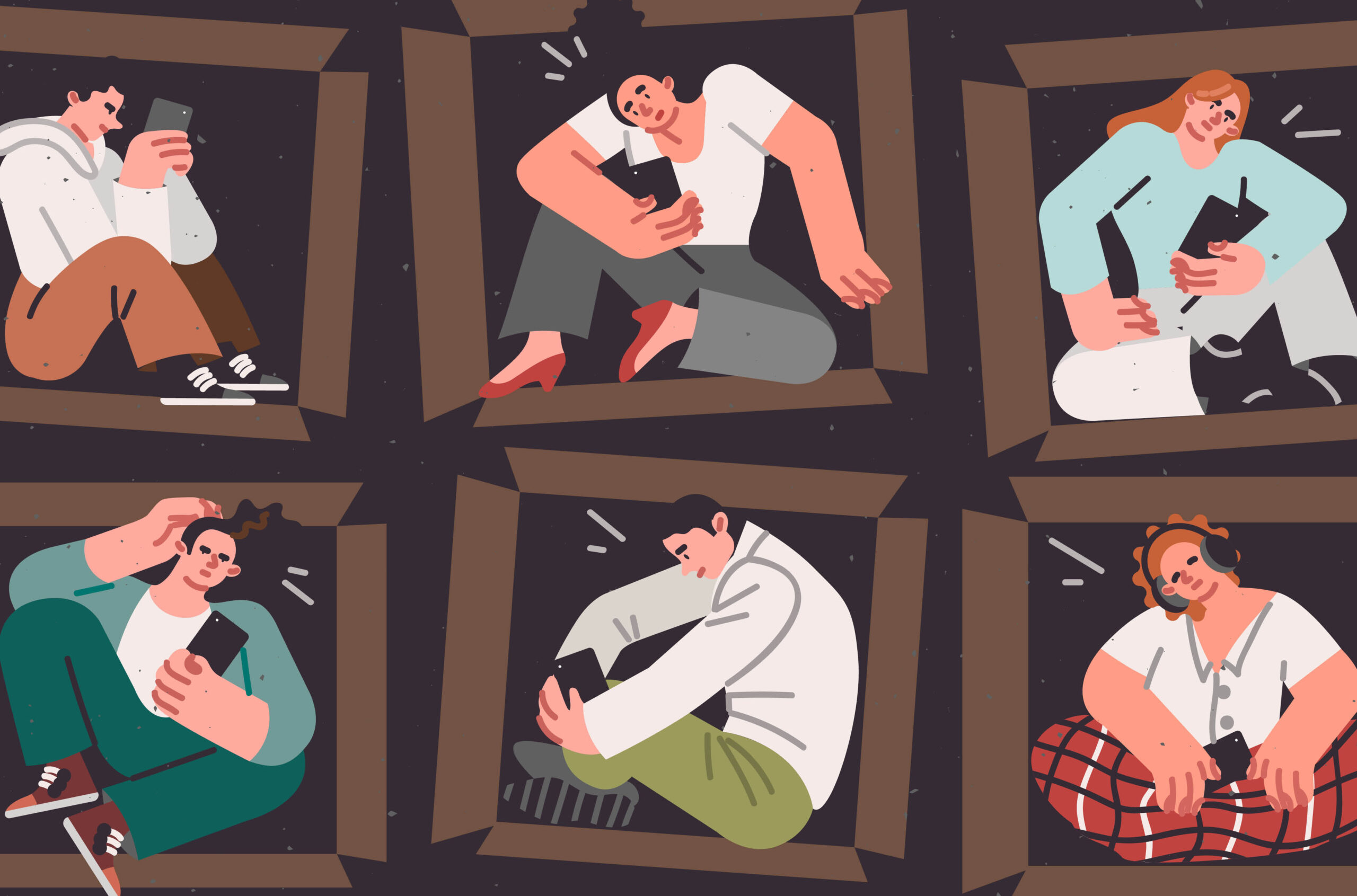
Creating student connection and belonging
Attention to student wellbeing includes fostering relationship-rich campus cultures.
More from Career Advice Articles
-

Collegiality: the joys and pitfalls of a non-hierarchical workplace
Grounded in shared governance, collegiality is a demanding ideal that balances power, equity and collective learning.
-

Supporting students through better communication
Three practical strategies to enhance student success.
-

Narrative CVs put researchers front and centre
New format is a vast improvement over the old Canadian Common CV.
-

Let’s talk about workload
If the judgement of our peers drives overwork, can conversations among peers alleviate it?

Post a comment
University Affairs moderates all comments according to the following guidelines. If approved, comments generally appear within one business day. We may republish particularly insightful remarks in our print edition or elsewhere.