
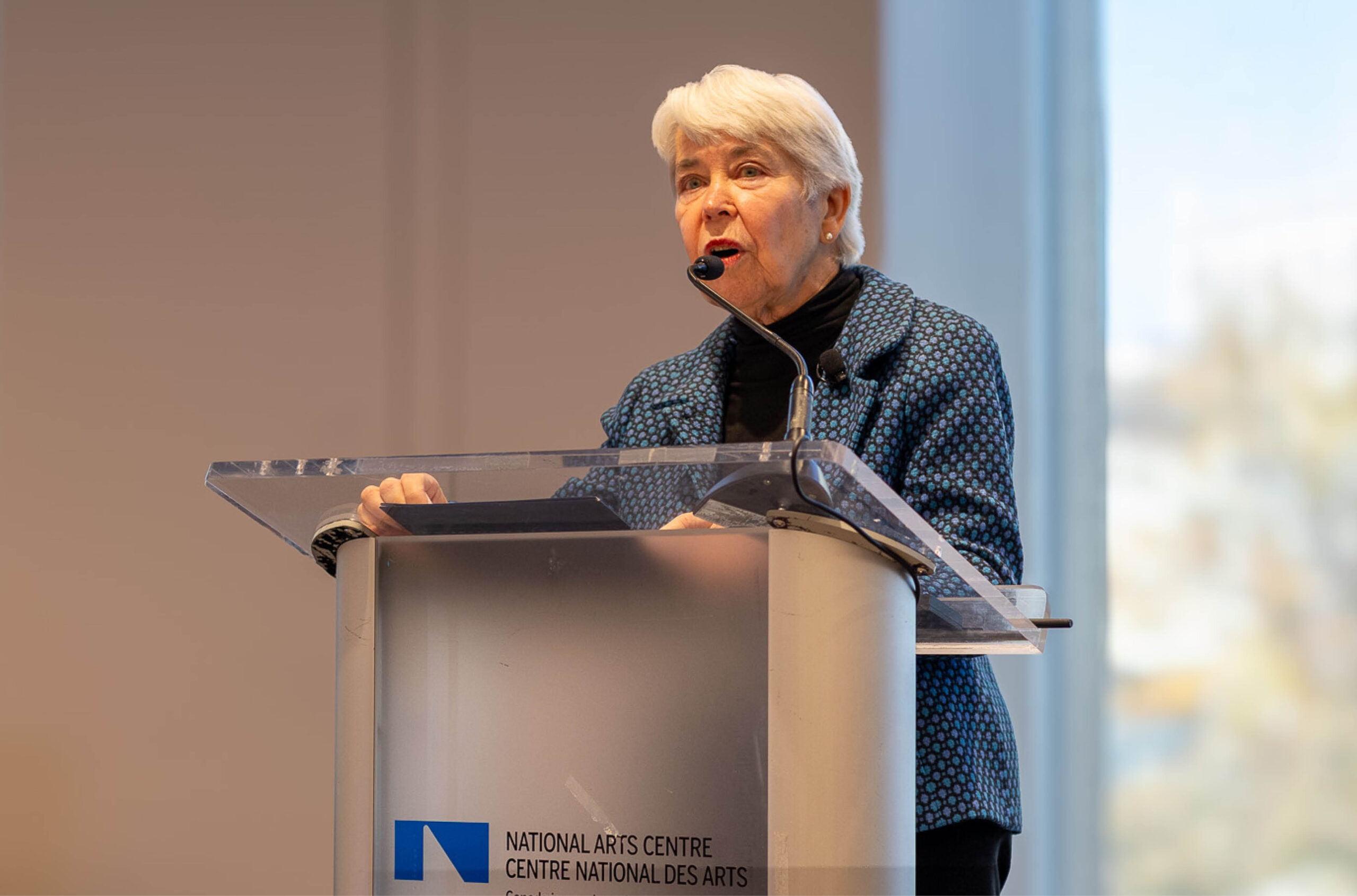
Carol Christ served as the 11th Chancellor of the University of California, Berkeley from July 2017 until her retirement as Chancellor Emerita in June 2024. Dr. Christ is a celebrated scholar of Victorian literature and a well-known advocate for quality, accessible public higher education, women’s issues and diversity on college campuses. She spent more than three decades as a professor and administrator at UC Berkeley before serving as President of Smith College in Massachusetts from 2002-2013. She received her B.A. from Douglass College and her PhD from Yale University. University Affairs sat down with Dr. Christ during her recent visit to Ottawa where she delivered a keynote address at Universities Canada’s Fall Membership meeting.
UA: Universities and colleges throughout the United States are facing an atmosphere of open hostility from the current administration of President Donald Trump. How concerned are you about their ability to weather the impact of this unprecedented assault on higher education?
CC: I’m very concerned about the damage we are seeing in the U.S. in multiple ways. It’s just this whiplash, where every day when you open the paper, there’s something new. Of course, there’s the harm that the uncertainty of funding does to research. It’s very, very hard for our scientists when they’re not sure of where the money is coming to continue their research projects. However, I think what’s even more worrying is the way in which the Trump attack on higher education has reinforced a kind of lack of credibility and lack of respect for the sector among some portions of the American public.
UA: How will those major funding cuts and restrictions on research affect the ability of the United States to be competitive globally?
CC: I can imagine no policy more foolish if you really want America first as Mr. Trump keeps saying. The research and higher education accomplishments in the United States are really considerable, and I worry a great deal that we’re going to lose our leadership to other countries with this erosion of both monetary support for science, but also erosion of respect for scientific truth.
UA: With regard to the lack of respect for the sector you mentioned, how can universities reaffirm their role in the public sphere?
CC: It is so critical for U.S. universities to be able to communicate to the public at large – not just to families who are going to send their kids to university – what the value of a university really is. In other words, how their individual lives are better for example because of research discoveries that happen at universities. And while it’s easy to rail against the Trump administration, it’s really important to look at the underlying factors. Why is it that the university has become an easy target? What are the issues that particularly elite universities raise for the general public that are making it so easy for conservative politicians to attack universities?
It seems to me a lot of the problems come down to unequal access to opportunity and unequal distribution of wealth. I like to borrow a metaphor from a sociologist named Arlie Hochschild who taught at Berkeley, which is who gets to be first in line? I think that that’s what people are upset about. They feel as though I’ve done everything right, and yet my life isn’t turning out in the way I had hoped it would turn out.
UA: To what extent has the current political climate also led to an erosion of intellectual freedom?
CC: I do agree with that, but I think that it is different in different areas of the country. In the areas that are very conservatively governed, the impact has been tremendous on policies in universities in say Florida and Texas. The impact is also most pronounced in the social sciences and the humanities. The very nature of those fields of study involve thinking about what is the impact of differences in social identity, in social status and in people’s lives? How do we understand class, groups and gender? And all of those are now prohibited topics.
UA: When you first were appointed Chancellor of Berkeley in 2017 you entered into a heated debate on campus about free speech. Since then your institution has been spared becoming a target, despite ongoing debates over the Israel-Palestine conflict. How have you successfully managed that?
CC: The free speech crisis when I entered in 2017 was really about the ability of conservative speakers to have an audience at Berkeley without being disrupted. I felt that was extraordinarily important for Berkeley’s reputation. So I was determined to use whatever police presence was necessary to ensure that speakers with unpopular views got heard, and I succeeded in that.
The kinds of free speech issues in 2023-24 were entirely different and really split the community. It was faculty member against faculty member, student against student, staff member against staff member and it threw the whole community into conflict. What I’ve learned from long years at Berkeley is that when you bring in the police in those situations, you make it worse. So I worked very hard to avoid bringing in the police, and that’s how I navigated that crisis by really trying to be very restrained, and keeping up conversations with both sides of the dispute. As a result, there weren’t the kinds of disruptions at Berkeley that you saw on other campuses like Columbia University.
UA: What other lessons have you learned when it comes to navigating Israel-Palestine tensions on campus?
CC: One of the things that my predecessor Nicholas Dirks did was he set up a Chancellor’s advisory committee on Jewish student life. It was a combination of faculty, students, staff, donors and friends of the university. He met with them maybe twice a semester. That created a constant communication with the Jewish leadership on campus at various levels.
What I did before the latest Israel-Palestine conflict broke out, was create an equivalent Palestinian and Muslim student life advisory committee. It was always a bit of a rockier road, but it meant that I was regularly in touch with the various leaders. I think that was really important as was really using as many channels of communication as possible to make sure that you are in touch with faculty leaders and students on each side of the debate. There’s no substitute for lots of conversation and making sure that you’re creating those networks of communication before a crisis happens.
UA: Going back to the first free speech crisis you encountered at Berkeley in 2017, the political climate in the U.S. has since become even more polarized. What advice might you have for university administrators in Canada when it comes to navigating debates over academic freedom?
CC: That’s a really important and interesting question. I did something at Smith College that proved to be quite successful. I thought it was important and made sure that our faculty modelled conversations across differences. If you can encourage faculty who are willing, to debate each other about contentious issues, that has an enormous impact on the student body.
Especially in this time where there’s so much name-calling and dismissal of opponents’ views, it’s so important to model debate for students.
UA: Is that instinct and ability to foster open debate and encourage critical inquiry diminishing?
CC: Every head of a college or university that I know is thinking about how to model this. I think it’s so important to reaffirm, as you know because the student population changes every four years, so you can’t just say, “I already talked to you about that”. You have to constantly educate new generations of students because it will never be an issue that you can say is solved.
This interview has been edited for length and clarity.



Featured Jobs
- Marketing - Faculty Position, Tenured or Tenure TrackUniversity of Alberta
- Canada Impact+ Research ChairInstitut national de la recherche scientifique (INRS)
- Vice President, Finance & AdministrationOCAD University
- Director of the McGill University Division of Orthopedic Surgery and Director of the Division of Orthopedic Surgery, McGill University Health Centre (MUHC) McGill University
- Health Sciences - Assistant ProfessorSimon Fraser University
More from Features
-

Degrees of Change
British Columbia’s funding pressures, shifting enrolment and policy reforms signal sweeping changes ahead for colleges and universities across the province.
-

Flight of the Valkyrie
Waterloo engineering students compete for glory with an AI-enhanced urban firefighting drone.
-
Behind the curve
Learning to embed AI in the medical curriculum.
-

The grey area of artificial intelligence
As AI transforms university practices, legal and ethical challenges are multiplying.
More from Q&A
-
Stéphane Dion: “The university will always be a forum for debate”
Université de Montréal’s new diplomat-in-residence talks about the enduring role of universities in a world marked by uncertainty, international tension and technological change.
-
Are universities ready for cyberattacks?
Canadian universities stand in the crosshairs of cybercriminals: Q&A with Benoît Dupont, Canada Research Chair in Cyber-resilience.
-
Meeting the moment together
Universities Canada’s new chair of the board of directors Joy Johnson on the path forward for higher education.
-
‘I shaped this role as I went along.’
Quebec’s first chief scientist, Rémi Quirion, looks back on his career and the challenges awaiting his successor.
More from Feature articles
-

The King and AI
A team of international scholars tackles a historical work of epic proportions.
-
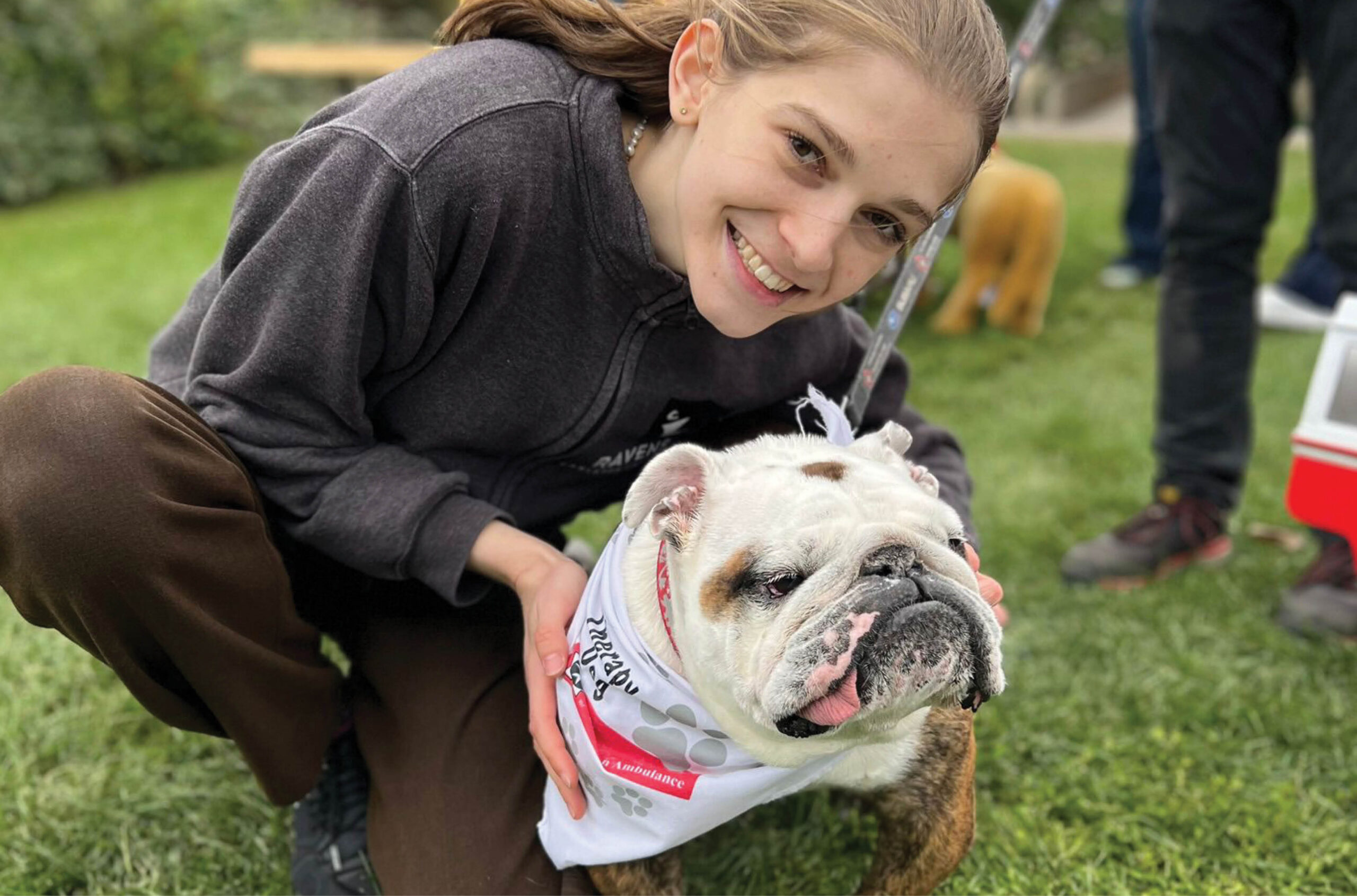
Wags over worries
A look at how campuses across Canada use pet therapy programs to support students’ mental health.
-

Top 10 movies about university life
In honour of Academy Awards season, here’s our list of the best films about professors, students and out-of-control frat boys.
-

Going hungry on campus
Quebec universities are launching food assistance initiatives to support students amid a housing crisis and rising inflation. But is it enough?


Post a comment
University Affairs moderates all comments according to the following guidelines. If approved, comments generally appear within one business day. We may republish particularly insightful remarks in our print edition or elsewhere.