Border security act brings visa uncertainty
Universities and international students risk becoming collateral damage of Bill C-12.

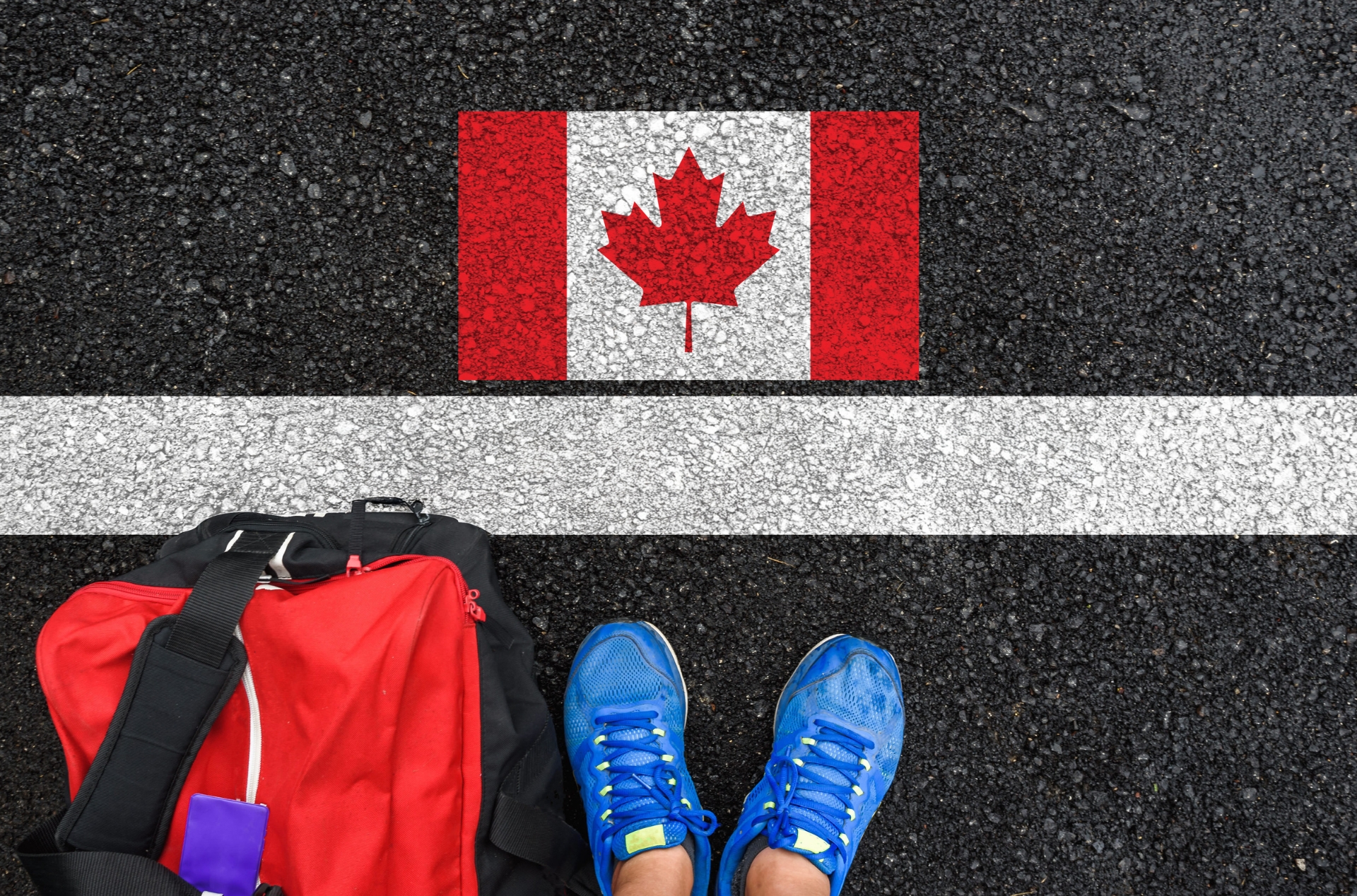
In late 2025, the federal government introduced Bill C12 – the Strengthening Canada’s Immigration System and Borders Act – with a clear aim: to bolster border security; combat fraud and organized crime; and shore up the integrity of the immigration system. Yet while the bill’s stated aims may resonate with the broad and undefined objective of safeguarding national interests, its implications for international students and the institutions that rely on them warrant urgent attention from post-secondary educators and administrators.
Among its most consequential provisions, Bill C-12 grants the Minister of Immigration, Refugees and Citizenship (IRCC) and the Minister of Public Safety and Emergency Preparedness the power in the “public interest” to suspend, cancel or refuse entire classes of temporary resident documents, including study permits; broadens information-sharing across federal departments and with provinces and territories; and allows for the suspension of new applications or programs in response to system-wide risks. Critically for higher-education institutions, the bill’s scope means that even students already in Canada, or enrolled in good standing, could find their status suddenly vulnerable if the government deems a broader category risky.
For Canadian post-secondary institutions, international students represent not only cultural diversity and talent, but also a significant revenue stream and a marker of global competitiveness. The possibility that study permits might be subject to mass cancellation or suspension steers what was once a relatively predictable regime into less stable terrain. One of the major impacts could be that international students who have already paid tuition could suddenly lose their status through no fault of their own.
Administrators should reflect not merely on the risk to individual students, but on the broader institutional ecosystem: recruitment strategy, student services, housing and integration planning, and international partnerships. If it becomes law, Bill C-12 presents a risk to the international reputation of Canadian universities, as they could find themselves in a situation where the international students they admitted in good faith suddenly have their visas revoked en masse by the federal government. If an institution played some part in the circumstances that led to the revocation — for example, by systematically failing to vet students’ credentials or their ongoing enrolment status — the reputational damage and operational fallout could be even worse.
Proponents of Bill C-12 argue the new powers are necessary. There have been well-documented issues of fraud, misrepresentation, and institutions or intermediaries that operate without sufficient oversight. And in a time when IRCC’s capacity for adjudicating applications, processing permits and overseeing programs is stretched to its limits, the federal government contends it must act decisively.
Yet the flip side is also clear: the risk of “collateral damage” is significant. If a government finds itself justified in cancelling broad classes of study permits, the resulting uncertainty could deter genuine students, depress enrolments, and shake institutional confidence in international recruitment. Educators and administrators must ask: what measures should my institution take now to safeguard students and partnerships in a shifting policy environment?
Recommendations for institutional leadership
There are several steps university leaders can take to mitigate the risks as Bill C-12 passes through Parliament, and if it later becomes law.
- Review risk-management processes: Understand how your institution monitors admissions, verifies credentials and ensures compliance with provincial and federal rules. Strong internal controls matter more than ever.
- Communicate with current and potential international students: Transparent messaging about policy changes can help mitigate anxiety and maintain trust.
- Engage with sector associations and government: Institutions should actively participate in policy consultations, ensuring that the voice of international-education stakeholders is heard as Bill C-12 proceeds through Parliament.
- Scenario planning: Develop contingency plans: What happens if a cohort is impacted? How will the institution respond if permits are suspended or student status is jeopardized?
- Prioritize student support services: More than ever, international students will look to their host institution for stability, advice and advocacy – a role institutions should be ready to embrace.
While the objective of strengthening immigration-system integrity is legitimate, the timing and breadth of Bill C-12’s powers create real concern for Canada’s international-student enterprise and the post-secondary institutions that host them. For educators and administrators, the question is not whether to pay attention, but how to actively manage the risk and protect both students and institutional mission. If Canada hopes to remain a destination of choice for global talent, clarity, predictability and partnership must remain front and centre, even as the government pursues its security agenda.




Featured Jobs
- Director of the McGill University Division of Orthopedic Surgery and Director of the Division of Orthopedic Surgery, McGill University Health Centre (MUHC) McGill University
- Canada Impact+ Research ChairInstitut national de la recherche scientifique (INRS)
- Human Rights - Assistant Professor (Expertise in Peace & Conflict Studies, Socioeconomic Rights and/or Indigenous Rights)University of Winnipeg
- Human Rights - Assistant Professor (Expertise in Human Rights related to Artificial Intelligence and Digital Security)University of Winnipeg
- Anthropology of Infrastructures - Faculty PositionUniversité Laval
More from Opinion
-

GenAI is in — so why are we still burnt out?
Will generative artificial intelligence end up diminishing, or increasing, researchers' workloads?
-

Rethinking the role of higher education in an AI-integrated world
Mark Daley, Chief Artificial Intelligence Officer at Western University, reflects on the role of universities in a world where intelligence is abundant.
-
Recalibrating Canadian universities to meet the Mark (Carney)
How university leadership can better support Canadian innovation and economic growth.
-

Bob Rae urges universities to remain climate-change leaders
In a volatile world, universities form bulwarks of scientific integrity and technological development, says former U.N. ambassador.
More from International students
-

International student visa permits: What to know
IRCC announces 2026 international student targets.
-

Fostering inclusion on a multi-cultural campus
With an increasingly diverse student body, Canadian universities seek to make students feel at home.
-

Organized criminals target international students
Canadian study permits are being misappropriated by crime rings on a massive scale, threatening the integrity of post-secondary institutions and the aspirations of international students.
-

Reclaiming Internationalization
Keeping minds open as borders close.
More from In My Opinion
-

Diversity strengthens discovery
What Nobel Laureates reveal about diversity, discovery and societal impact.
-

Protecting online safe spaces
Reflections on a Zoom-bombing.
-

Funding the future
Investing in student research tackles youth unemployment while building Canada’s future economy.
-
Unprestigious academia
How I unlearned academic elitism.

Post a comment
University Affairs moderates all comments according to the following guidelines. If approved, comments generally appear within one business day. We may republish particularly insightful remarks in our print edition or elsewhere.
1 Comments
Well said Mme Kang. As the VP International at Colleges and Institutes Canada (CICan) for a decade before retiring in 2017, I saw how the governments of Canada (under PM Trudeau who had bought into the Century Initiative objective of 100 million citizens in Canada) and Ontario especially ( lowest core grants to colleges by far in the country and freezing Cdn student fees) were at the core of allowing and encouranging institutions to go overboard in terms of numbers (a few institutional CEOs also deserve criticism). As you say big errors on our side do NOT justify such radical measures upon powerless international students now. Instead of going from one extreme to another, one needs to balance the reaction, remember students and correct gradually.