The Slow Professor ages well
The recently published 10th anniversary edition adds new material to this classic text.

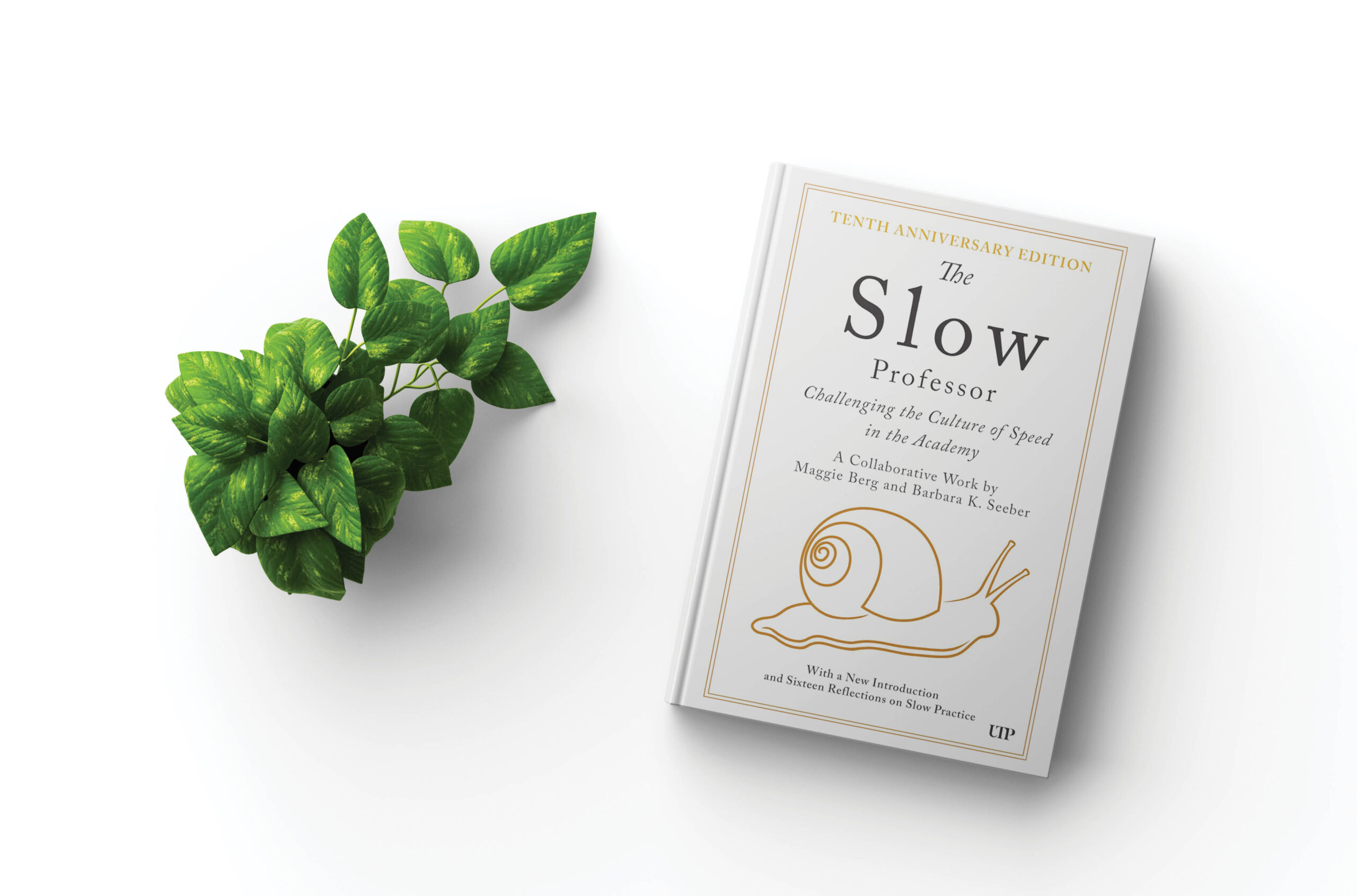
When The Slow Professor was first published in 2016 as a deliberate intervention into the academy, Maggie Berg and Barbara K. Seeber’s work was much discussed. I recall the conversations that my colleagues and I held at the time, parsing the arguments for thinking about the slow movement’s applicability to the post-secondary world. Drs. Berg and Seeber put it very clearly, arguing as follows:
“We believe that adopting the principles of Slow into our professional practice is an effective way to alleviate work stress, preserve humanistic education, and resist the corporate university.”
How, my colleagues and I wondered, could we incorporate the slowness advocated by Carl Honoré, often referred to as the “godfather” of the Slow Movement, and, in turn, Drs. Berg and Seeber, into our practices? What affordances could we find within an academy that seemed hell-bent on ongoing increases in speed and, in neoliberal parlance, “efficiency”? Who could access the possibilities of slow thinking, slow acting, and slow doing? And, perhaps morepoignantly, would it be possible for any of us to slow down long enough actually to read Drs. Berg and Seeber’s deliberately slim volume?
At the time, I had recently gained promotion and was burnt out from the sprint toward my tenure review. As one friend said, academic life is a marathon, not a sprint, but too often academics try to sprint for as long as can be — and then suffer the consequences, as The Slow Professor is also at pains to note.
I took inspiration from The Slow Professor, going so far as to send the authors an email to say so, although we had never met (and still have not). But I also had my hesitations. The prime hesitation was that slowness, it seemed, was only available to those who could afford to be slow. That appeared to mean that tenured faculty were the main constituency for whom this more even pace could be accessible.
Although the applicability of their arguments risked feeling limited as a result, I digested the original volume keenly and I’ve endeavoured to take inspiration from it wherever possible. Focusing on time management, the classroom, the culture of research, and issues of collegiality and service, this book detailed the possibility of a different sort of academy than the one in which I was living — and it was one that I eagerly wished to inhabit.
It is in this context that the 10th anniversary edition of The Slow Professor crosses my desk. Reflecting on the intervening years, the academy doesn’t seem to be moving any more slowly. Governments and administrations have been dismantling tenure systems and job protections; tenure-track or permanent job prospects remain slim at best; and, well, the world is on fire.
I turn to the new edition with these circumstances in mind. It includes a fresh introduction by the authors, alongside a series of 16 reflections by a range of contributors who consider the possibilities of incorporating slow practicesinto their work. Drs. Berg and Seeber’s introduction notes their surprise at the reception of the original book, as well as their newfound sense of connection with colleagues the world over. Rather than accepting the argument that the original book’s aspirations for slowness are only available to the academic elite, this new edition expands the terrain, and argues that the new additions “give the lie to the criticism that Slow principles are only for work-averse and highly privileged individuals.” Returning to and expanding this argument seems key to the sense of community that Berg and Seeber have sought to foster in this new edition.
It’s in this spirit of connection and community that the 16 reflections add to the original text. The original is included in toto as Part I of the new edition. Part II offers these new reflections, which come from contributors across the globe, from different sectors of the academy, and from a range of positionalities. The contribution from Emma Farrell and Shane D. Bergin, based in Ireland, sums up reactions to the first edition well:
“For the ‘ordinary’ academic, moving from one class to another, one paper to the next, one grant to its successor, and one short-term employment contract to the next, the vision for a humanistic and emancipatory university, as laid out by Berg and Seeber, can seem all but fleeting amid the realities of an often crushing, competitive, academic everyday. And yet, among those of us who thumbed the pages of that well-worn first edition, there have been moments of resilience, indeed resistance, to this crush.’
It is this sense of resistance that emerges in the reflections, from changed pedagogies in Hong Kong (discussed by Lynn Yau) to practices of slow citation (detailed by Nancy L. Chick) to an argument for the necessity of slow and quiet libraries (by Laurie Morrison). People have put the principles laid out by Drs. Berg and Seeber into practice in many contexts.
Perhaps the key elements to hold onto are the moments of optimism and hope shared by these practitioners of slowness. Libuše Heczková and Josef Šebek— based in the Czech Republic and speaking through the complex histories of central European universities— note that while post-secondary institutions increasingly value measurable outputs that foster speed and “productivity,” “scholarly thinking is an end in and of itself; by means of its autonomy, scholarly thinking serves the whole of society as an agent of scholarly critique.” For Heczková and Šebek, these reasons are why the book remains “all the more urgent,” just as it is for final contributor Jill Grose, who argues that “[d]espite the systemic challenges, we can resist the culture of speed – one slow step at a time.”
For this weary academic, these are words to heed. The university is and always has been a site of contestation; it is up to academics, construed in the broadest of terms, to make it be the place that we wish it to be. I remain committed to reflecting on and incorporating the practices offered by The Slow Professor wherever possible. I heartily recommend this new volume as a practical, provocative offering of renewal and hope.
Maggie Berg and Barbara K. Seeber’s The Slow Professor: Challenging the Culture of Speed in the Academy, 10th anniversary edition, is published by the University of Toronto Press.




Featured Jobs
- Engineering - Assistant Professor, Teaching-Focused (Surface and Underground Mining)Queen's University
- Canada Impact+ Research ChairInstitut national de la recherche scientifique (INRS)
- Human Rights - Assistant Professor (Expertise in Human Rights related to Artificial Intelligence and Digital Security)University of Winnipeg
- Anthropology of Infrastructures - Faculty PositionUniversité Laval
- Soil Physics - Assistant ProfessorUniversity of Saskatchewan
More from Opinion
-

GenAI is in — so why are we still burnt out?
Will generative artificial intelligence end up diminishing, or increasing, researchers' workloads?
-

Rethinking the role of higher education in an AI-integrated world
Mark Daley, Chief Artificial Intelligence Officer at Western University, reflects on the role of universities in a world where intelligence is abundant.
-
Recalibrating Canadian universities to meet the Mark (Carney)
How university leadership can better support Canadian innovation and economic growth.
-
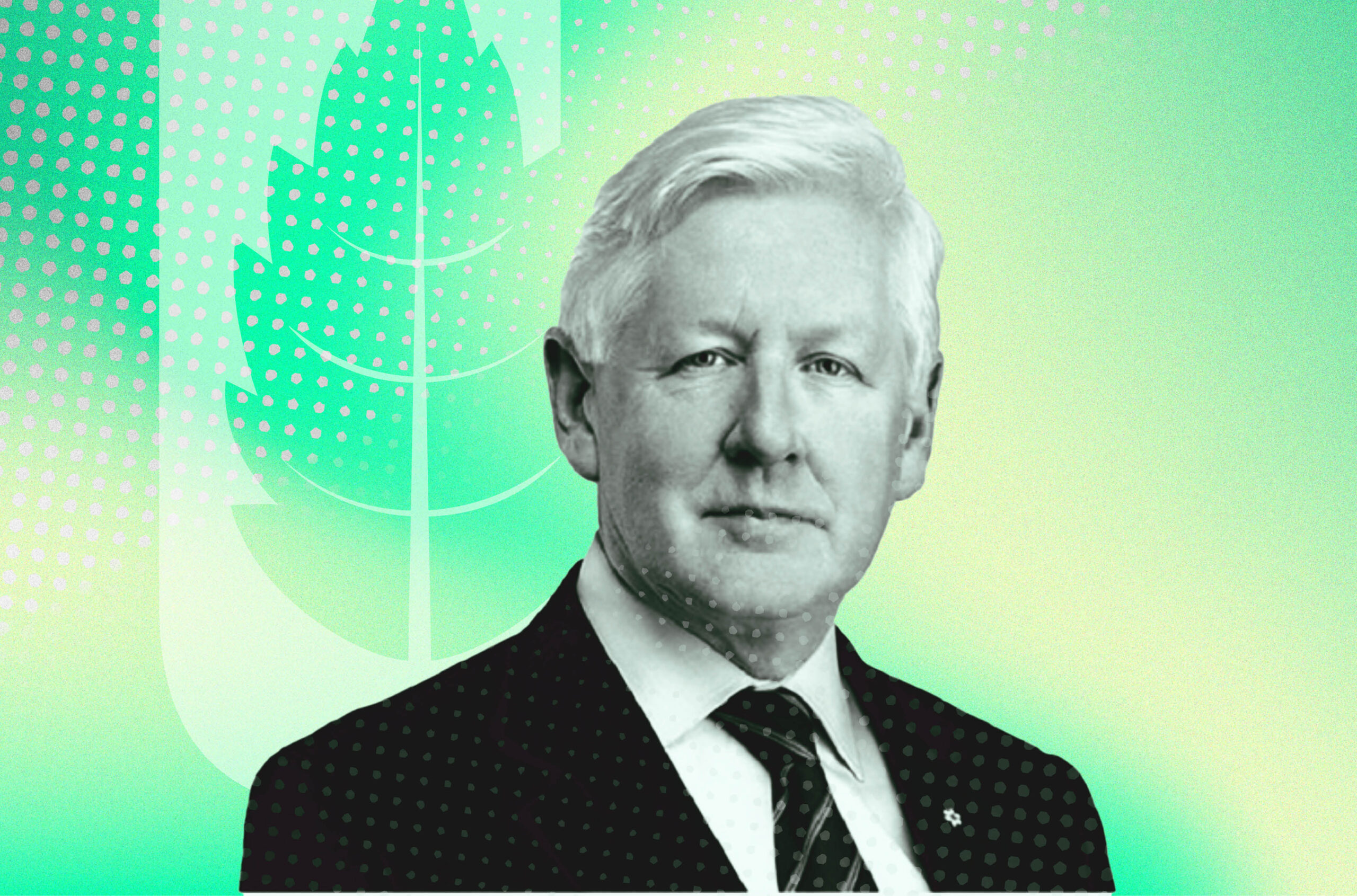
Bob Rae urges universities to remain climate-change leaders
In a volatile world, universities form bulwarks of scientific integrity and technological development, says former U.N. ambassador.
More from Teaching
-

Reflection on five years of The Skills Agenda
Faculty innovation is key to advancing student career preparation in the years ahead.
-

Teaching physicians, med students battle Quebec’s Bill 2 with strikes and lawsuits
Students strive to make up for lost time after fall labour disruptions.
-

Teaching experience in the academic job market
“Evidence of teaching effectiveness” adds to the ever-growing demands on graduate students.
-

Clinical teaching stoppage delays Quebec med students’ graduation
Legault government passes special legislation changing doctors’ pay structure and ordering clinical educators back to work.
More from In My Opinion
-

Diversity strengthens discovery
What Nobel Laureates reveal about diversity, discovery and societal impact.
-

Protecting online safe spaces
Reflections on a Zoom-bombing.
-

Funding the future
Investing in student research tackles youth unemployment while building Canada’s future economy.
-

Unprestigious academia
How I unlearned academic elitism.

Post a comment
University Affairs moderates all comments according to the following guidelines. If approved, comments generally appear within one business day. We may republish particularly insightful remarks in our print edition or elsewhere.
1 Comments
One could argue neoliberal forces have made the university more competitive, but of course, nowhere close to the pressures of the private sector, where 40-60 hour work weeks not uncommon, and delivering quarterly profits are relentless pressures. There is a common joke about how inefficient the university is compared with just about any private business, if you want to get something done quickly. We could slow down even further, but then we would really be vacationing for our salaries more than we already are.