Thriving after your PhD
Evidence and advice from postdocs about finding your footing in the working world.


After years spent expanding your knowledge, learning how to think critically, and defending your research to a committee of experts, it all abruptly comes to an end with an expensive piece of paper proclaiming your doctorate. But where do we go from here? Are we truly prepared for entering the post-PhD world?
At its annual meeting last fall, the Canadian Association of Postdoctoral Scholars (CAPS) presented the results of the fifth National Postdoctoral Survey, which analyzed data collected in 2024. This survey reveals important data on career concerns expressed by current and previous postdocs.
In this article, we mobilize evidence from the National Survey and supplement it with advice from previous postdocs and career advisors who participated in CAPS’s Postdoc Appreciation Week (PAW) 2025. The aim is to give late-stage graduate students and current postdocs a sense of early career needs and how to address them.
Networking is key
In 2024, the most common careers among previous postdocs were in research associate/staff scientist positions (30 per cent) and the public service (20 per cent), with only 15 per cent in tenure-track roles. This means that most doctoral graduates do not follow the so-called traditional academic career trajectory. So, are our institutions equipping us with the professional development needed to secure these early career positions?
Our data reveals that previous postdocs received training in career development (25 per cent) and research ethics (22 per cent), but less so in networking (14 per cent in 2024, versus 25 per cent in 2020). Yet 26 per cent of postdocs said that networking is an area of training of special interest to them.
Our PAW speakers offered practical advice on what constitutes networking, summed up by the imperative “get yourself out there.” Their advice includes organizing symposia and conferences (not just attending them) and taking advantage of commercial networking sites such as LinkedIn. This requires understanding that, contrary to conventional career advice, social media is where employers find you. Employment visibility emergesby creating opportunities early in one’s graduate and postdoc tenure, and it should be done alongside interviewing potential employers to assess their needs. Indeed, several panelists recommended recasting networking less as a job search and more as a case of “filling a gap” for a potential employer.
Equally important is developing mutual support practices with your research team by sharing examples of job materials, grant proposals and experiences of job talks for supportive feedback. Much networking is understood as calculated reconnaissance in the pursuit of employment, but many of our panelists explained that it’s more helpful to practice it as an organic process based on mutual reciprocity, honest criticism, empathetic support and occasional commiseration. Colleagues, supervisors and potential employers, among others, should be seen as allies and not a means to an end.
Finally, panelists advised that current graduate students and postdocs would benefit from immersing themselves in cross-sectoral work and cultivating supportive, trust-based relationships.
Preparation lacking for non-academic careers
Nearly half of current (49 per cent) and previous (46 per cent) postdocs reported that their postdoc experience did not prepare them for non-academic career opportunities, a sentiment often echoed by graduate students. PAW panelists offered some important advice and concepts to this end, such as taking the time and resources offered by your position to acquire IT, administrative and financial literacy skills.
The world of university research has quite different dynamics from what is found in government, industry and the not-for-profit sector. It is thus worthwhile to learn how to navigate different disciplinary norms and ways of accomplishing tasks — from conforming to office etiquette to negotiating different personality types. One speaker at a PAW workshop suggested that you should articulate the potential value you offer as a colleagueas opposed to an employee. Are you engaging and reliable? Do you lift people up? Your personality may be as much of a consideration to your employer as your professional skillset.
Are we ready?
Are we truly prepared to enter the post-PhD world? We are well-trained in research and have a multitude of skillsets at our fingertips, yet we often feel as though we are struggling to successfully leverage this to take the next career step. Our advice to recent PhDs is to practice professional development as collective empowerment, and to understand career advocacy as mutual support at the collegial, institutional and national level. Rethinking and reframing our potential through collaborative and commiserative solidarity with other grad students and postdocs recasts the path to employability as an empowering end in itself.





Featured Jobs
- Human Rights - Assistant Professor (Expertise in Human Rights related to Artificial Intelligence and Digital Security)University of Winnipeg
- Director of the McGill University Division of Orthopedic Surgery and Director of the Division of Orthopedic Surgery, McGill University Health Centre (MUHC) McGill University
- Engineering - Assistant Professor, Teaching-Focused (Surface and Underground Mining)Queen's University
- Canada Impact+ Research ChairInstitut national de la recherche scientifique (INRS)
- Human Rights - Assistant Professor (Expertise in Peace & Conflict Studies, Socioeconomic Rights and/or Indigenous Rights)University of Winnipeg
More from Career Advice
-

How to write an effective service statement for your promotion and tenure dossier
Go beyond “bum-in-seat” accounting to emphasize your expertise and accomplishments.
-

Teaching in the age of AI shortcuts
Students will use AI. Here’s what it takes to ensure it strengthens their thinking instead of replacing it.
-

Administration calls. Should you answer?
The pros and cons of taking on admin roles in different stages of your career
-

How to craft a strategic research statement
Identifying themes in your work history can help you move from a laundry-list to a compelling story.
More from Students
-

Conservative MP wraps up campus tour aiming to “Restore the North”
Modelled on the late American conservative firebrand Charlie Kirk, Jamil Jivani’s tour brought discussion of economics, immigration and identity to universities across Canada.
-

Students protest cuts to OSAP grants
Changes may push some to opt for shorter college programs instead of university.
-
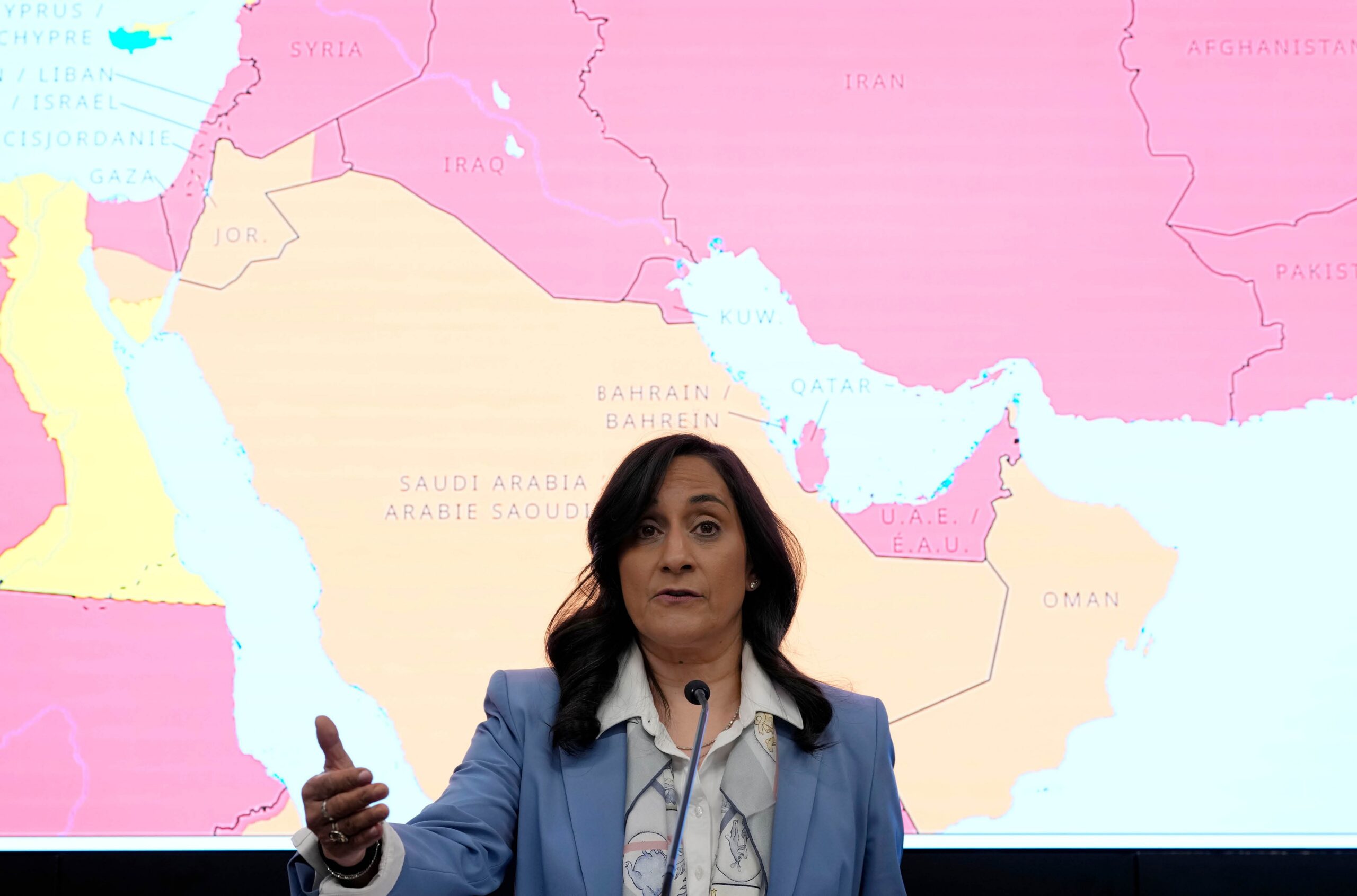
Canadian university campuses in the Middle East caught in a war zone
Royal Roads campus in UAE temporarily closed as Ottawa issues shelter-in-place advisory.
-

Student Olympians bring home medals and memories
Speed skaters dominate the medal count as the 2026 Winter Games wrap up.
More from Graduate Matters
-

Studying in French as an anglophone? Mais oui!
Pursuing graduate studies in a second language is daunting but, ultimately, rewarding.
-

The unpredictable path
What a sharp turn into the biotech industry revealed about the importance of building fundamental skills.
-

International conferences: A springboard into the future
A few days in Greece or China give you more than just a line on your resumé — they’re an experience.
-
More than a doctoral degree
My journey of research, volunteering and advocacy.


Post a comment
University Affairs moderates all comments according to the following guidelines. If approved, comments generally appear within one business day. We may republish particularly insightful remarks in our print edition or elsewhere.
3 Comments
Just 15% of former post-docs securing tenure-track roles is a bleak statistic. Instead of focusing again and again on how PhD graduates and post-docs can deal individually with this situation, we need to develop strategies to stop allowing higher education (and by extension, tenure-track and tenured professors) from relying on temporary and exploitable academic labour. At UBC, located in one of the highest cost-of-living cities, the mean self-reported postdoctoral fellow income was $56,222 ± 11,338 (median: $55,000), with a range from $20,000 to $92,000 in 2022: https://www.postdocs.ubc.ca/sites/default/files/article/Final_Postdoc_Minimum_Stipends_Report_May%202025.pdf. Post-docs take these temporary jobs with limited benefits because they still believe (and continue to be told) that they are stepping-stones to a tenure-track job. But clearly, it is not for the vast majority. To be frank, it is an extremely painful realization that tenure-track and tenured professors who supervise post-docs can never understand. We need more advocates and allies.
A post-doctoral training period is a stepping stone to careers in academia and beyond. So, use this valuable time to build your professional network and to seek out mentors to guide you on the many pathways to success.
“Nearly half of current (49 per cent) and previous (46 per cent) postdocs reported that their postdoc experience did not prepare them for non-academic career opportunities, a sentiment often echoed by graduate students.”
Doctoral and post-doctoral work is still geared towards preparing students for an academic career when those careers are few and far between. It was just as true almost 30 years ago when I completed my Ph.D., and it is pathetic that doctoral programs have done so little over the last several decades to address this. Ironically, they don’t even prepare you to teach, as no school will hire you unless you have a B.Ed and professional certification as a teacher. These programs still seem to be selling students on an academic position when the likelihood of one is remote.
Perhaps doctoral programs in humanities/social sciences (the realm I know best) should develop streams: editing, teaching, applied research, entrepeneurship, journalism, etc. Perhaps they could provioe curricular links to other programs in the university so students graduate with a Ph.D. and some other certification. A good program would provide some co-op experience and employ professors who have experience working outside universities so they can guide students to opportunities outside of academia.