New Brunswick effectively freezes post-secondary funding in 2026 budget
Universities given reprieve after cuts proposed earlier this month.
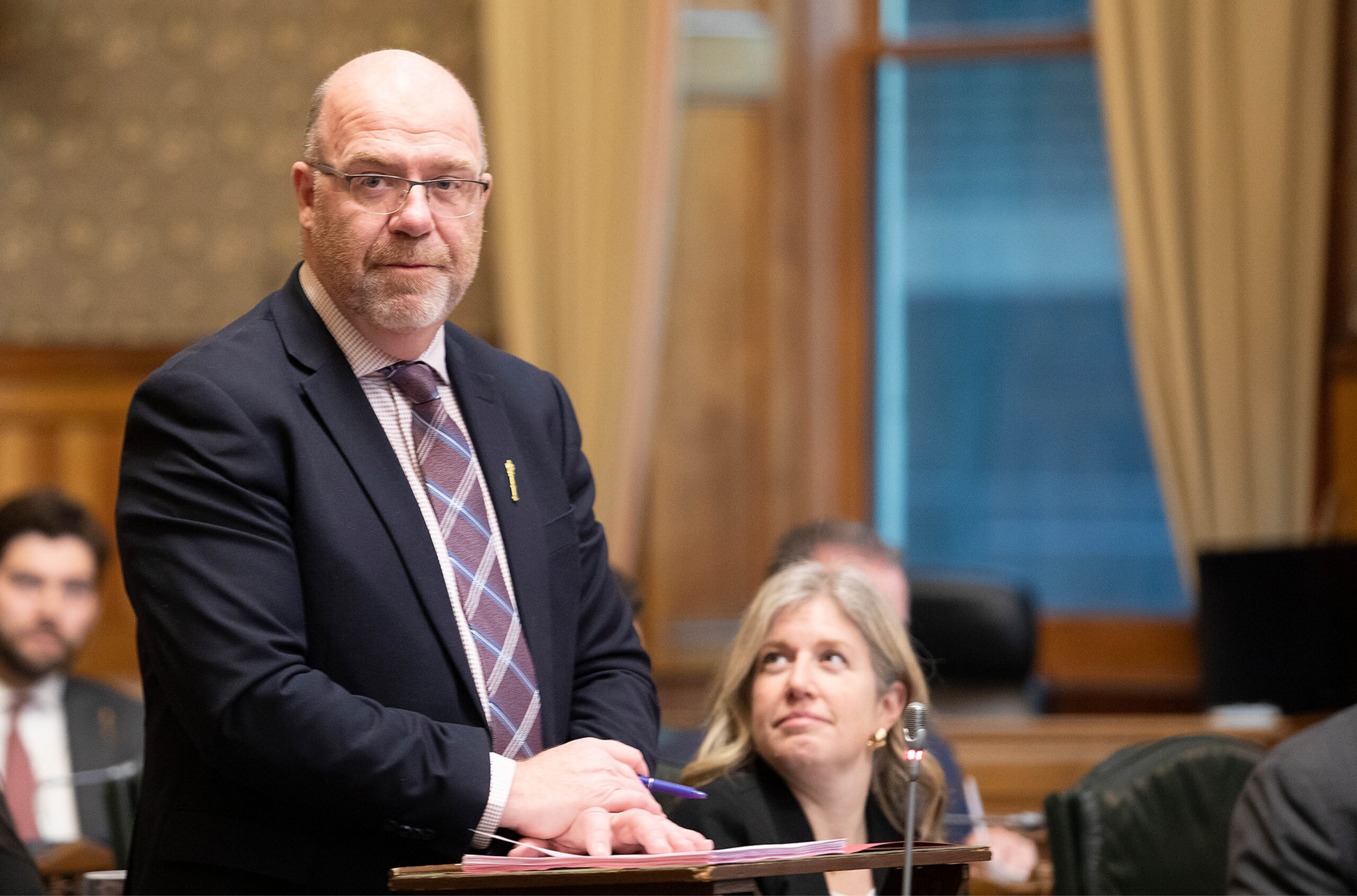
New Brunswick will freeze operating grants for its four publicly funded universities in the 2026-27 budget, after the government of Susan Holt earlier prompted widespread concern about potential cuts to the province’s higher education sector.
The Department of Post-Secondary Education, Training and Labour estimates it will spend $554 million on post-secondary education in 2026-27, a 1.6 per cent increase from 2025-26.
New Brunswick’s universities are expected to receive $307.8 million this fiscal year, up 1.7 per cent from 2025-26. The nominal increase in operating funding slightly trails the Bank of Canada’s 2 per cent target for inflation in 2026.
Minister of Post-Secondary Education and Training Jean-Claude D’Amours, in a written statement to University Affairs, said the government wants to ensure the post-secondary education system is “agile and poised to meet current and future labour market needs,” particularly in health, education and skilled trades.
“With more than 20 post-secondary campuses across the province, there are opportunities to explore systemic efficiencies as a collective,” said Mr. D’Amours. “I continue to work with each of our universities to better understand their needs.”
The province will make targeted investments in education in 2026-27, including $5.4 million to support medical education in different fields.
It has further earmarked $4.2 million to facilitate foreign credential recognition for workers in the health care, skilled trades, engineering and education sectors.
The provincial government will continue to invest in research with $1 million allocated for the New Brunswick Innovation Foundation and an additional $1 million to ResearchNB.
Earlier this year, the province had suggested there would be up to $50 million in funding cuts to higher education, according to a government document leaked to the press in late February.
Peter Halpin, executive director of the Association of Atlantic Universities, said that the grant freeze will have negative financial impacts on all institutions.
“New Brunswick’s public universities recognize the significant fiscal challenges facing the province and continue to stress the critical role of universities for the province’s prosperity,” he said.
The province’s universities have seen declining enrolment in part due to the loss of more than 550 international students following the imposition of the federal student visa cap in 2024. At the same time, the province has experienced rapid population growth, driven by an immigration and retention strategy launched in 2019.
Mr. Halpin emphasized that universities are key drivers of New Brunswick’s economic, talent attraction and population growth strategies in addition to “confirming the value and contribution of publicly funded post-secondary institutions to a successful New Brunswick.”
“It is important that the government recognize that New Brunswick public universities are an asset,” said Mr. Halpin.
Ana Lucía Pavón, president and CEO of the St. Thomas University Students’ Union, said that the status quo funding decision will negatively impact students who are continuing to struggle with affordability. However, the government’s walk back also demonstrates the value of student advocacy. Ms. Lucia, along with other student leaders, protested outside of the New Brunswick legislature as the budget was being tabled.
“We are really happy to drive the conversation from 10 per cent to 0 per cent. That’s a great win for today and a good direction for a greater win tomorrow,” said Ms. Pavón.
Provincial spending reductions will be felt across other departments, however, with the government planning to cut the civil service by 1,400 positions over three years.
The province is projecting a $1.4 billion deficit for 2026-27 with the most significant investments in health care. “Investing in New Brunswickers means making difficult decisions,” said Finance Minister René Legacy.



Featured Jobs
- Director, Human Research Ethics & Strategic AdvisorUniversity of Manitoba
- International Studies - Faculty Position (Arctic Defence and Security)Université Laval
- Theatre and Film - Assistant Professor Without Review (Performance Practice)The University of British Columbia
- Movember Institute Discovery Research Program FellowshipsThe University of British Columbia
- Global Inequalities and Trade - Faculty PositionUniversité Laval
More from News
-

Students and seniors under the same roof
Intergenerational living helps with loneliness and the high cost of rent.
-

U Sports alum lace up for PWHL season
Canadian grads eager to show their mettle on women’s pro hockey teams.
-

The hidden problem of student homelessness
As high rents push more students into precarious housing, it's time to stop romanticizing the 'poor scholar'.
-

Parliamentary committee urges stronger support for research in French
Granting agencies should consider funding targets specifically for French-language projects, the Standing Committee on Science and Research recommends.
More from Budget
-
Ontario unis avoid fiscal abyss, still anticipate cuts
Universities relish a multi-billion-dollar provincial infusion, but budgeting remains frugal for 2026-27.
-
NL increases funding for post-secondary, confirms tuition freeze
Memorial University still faces “hard decisions” for upcoming operating budget.
-
Universities Canada, CAUBO warn federal action is needed as Canada’s universities face worsening financial outlook
A coordinated immigration policy, tax relief and fiscal crisis safeguards are recommended to sustain sector.
-
$21 M allocation gives USudbury ‘a solid foundation to build on’
Provincial funding allows the northern Ontario university to continue operating after its breakup with Laurentian.
More from Articles
-

Remove EDI from research funding decisions, parliamentary committee says
The Standing Committee on Science and Research says ‘discriminatory’ EDI policies are ‘weakening the quality of Canadian research’.
-

Good medicine: new programs train country doctors
Université de Montreal follows Queen’s prescription to heal the shortage of family physicians in rural areas.
-

Universities struggle to be heard in Quebec election
In a campaign dominated by the U.S. trade war and the soaring cost of living, universities assert their continued importance.
-
Quebec’s English-language universities embrace new French requirements as fall cohort begins
McGill, Concordia and Bishop’s universities roll out new initiatives to encourage students to learn French on and off campus.


Post a comment
University Affairs moderates all comments according to the following guidelines. If approved, comments generally appear within one business day. We may republish particularly insightful remarks in our print edition or elsewhere.