Budget proposes more than $1B for student and youth employment
Funds also promised for TMU med school, Inuit Nunangat University.

Prime Minister Mark Carney’s government proposes some investments in youth and students in its 2025 budget, which projects a $78 billion deficit for fiscal year 2025-26.
Amid the billions in proposed spending, the government has set aside more than $1.5 billion over the next three years for student and youth training and employment. The allocations proposed in the budget are:
- $594.7 million over two years, beginning in 2026-27, for the Canada Summer Jobs program to support 100,000 jobs for youth.
- $635.2 million over three years, starting in 2026-27, for the Student Work Placement Program to support around 55,000 work-integrated learning opportunities for post-secondary students.
- $307.9 million over two years for the Youth Employment and Skills Strategy that provides hands-on experience and training to youth.
- $40 million over two years will go to the launch of a Youth Climate Corps program, which will provide paid training to youth to quickly respond to climate emergencies, increase innovation and support adaptation and mitigation projects.
- $1.2 million on Canada Student Grants and Loans in 2025-26. The government plans to limit access to the Canada Student Grant to domestic and international students attending public and not-for-profit private universities. Institutions will be evaluated on a case-by-case basis. This measure, the budget reads, will result in savings of $1 billion over four years beginning in 2026-27.The government also plans to propose “legislative and regulatory amendments” to address integrity issues at private post-secondary institutions.
The budget also offers infrastructure support to two specific post-secondary institutions:
- Toronto Metropolitan University’s Brampton campus and primary care teaching clinics in the surrounding communities will receive $25 million to support TMU’s new medical school.
- Budget 2025 also announced support for Inuit Nunangat University, an institution that would be the first Inuit-owned and governed university in Canada’s Arctic but is not yet built. The project falls under the Build Communities Strong Fund, but it is unclear how much the government will allocate to it.
Budget 2025 includes the announcement that the government will slash international student permits by 49 per cent in 2026 from the 2025 targets. You can read more about the study permit announcement here.
Besides the measures for student and youth employment, the government has proposed a one-time initiative to attract international researchers. The budget includes the following investments to support that effort:
- $1.7 billion over 13 years to attract 1000 highly qualified international researchers. That funding includes:
- About $1 billion for the granting agencies to launch a new Chair program for exceptional international researchers.
- $400 million over seven years to the Canada Foundation for Innovation to provide new research infrastructure and equipment to help Chairs conduct research in Canada
- $133.6 million over three years, beginning in 2026-27, to assist international doctoral students and post-doctoral fellows with coming to Canada
With files from Georgia Looman


Featured Jobs
- Music - (4) Assistant Teaching Professors (String Quartet)University of Victoria
- Medicine - Assistant Professor (Clinical Epidemiology) (L001645)McGill University
- Public Law - Assistant or Associate ProfessorUniversity of Ottawa
- Architecture - Assistant Professor (Digital Fabrication, Design Computation, and Design/Build)Laurentian University
- KAUST Global Fellowship Program - Postdoctoral Fellowship (Call 2027)King Abdullah University of Science and Technology
More from News
-

Level Up Learning
Amélie Vallières investigates how story-driven video games can support learning and build identity.
-
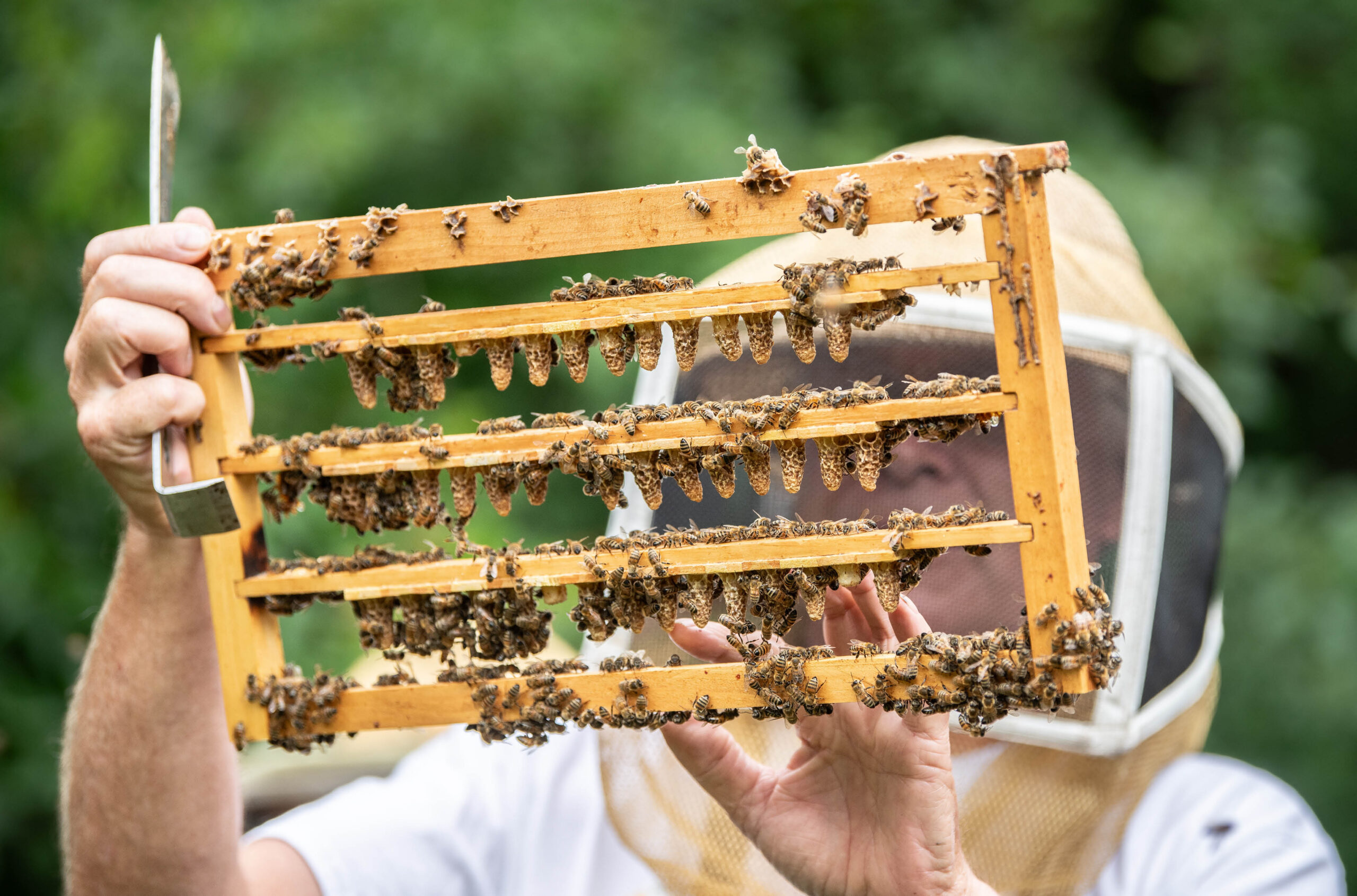
A look inside the hive: celebrating honey bee research at two Canadian universities
As MacEwan University marks 10 years of bees on campus, the University of Guelph kicked off the year by unveiling its newest centre for honey bee research.
-

Proposed Alto rail route slashes through Queen’s field biology station
Federal government praises the wilderness station as ‘globally unique,’ considers cleaving it with high-speed train.
-

Decolonization efforts entangle Franco-Albertan heritage
The University of Alberta’s Campus Saint-Jean is wrestling with the historical legacy of its founders, who represent French Canadian survival to some but colonial oppression to others.
More from Students
-

Fostering Black brilliance
At two Atlantic Canadian universities, small teams are thinking big to promote the scientific potential of students of African descent.
-

Quebec’s Anglo universities prepare to meet French language targets
Fall 2026 cohort will be the first required to hit 60 per cent proficiency — and falling short means financial penalties.
-

Graduates urged to lead with compassion
Highlights from this year’s inspiring spring convocation speeches across Canada.
-

Red Alert!
Students tackle underground rescue scenarios as Laurentian University hosts the Intercollegiate Mine Emergency Response Competition.
More from Articles
-

High-stakes research
At the Alberta Gambling Research Institute, experts are uncovering the trends behind the bets.
-

Research that gives back
A one-day event brought scholarship winners together to discuss how their work can benefit communities.
-

Navigating change at Memorial University
President Janet Morrison on her first year at the helm.
-

Nature and First Nations honoured at Trent University
New stewardship plan reconnects campus green space to Anishinaabe knowledge.

Post a comment
University Affairs moderates all comments according to the following guidelines. If approved, comments generally appear within one business day. We may republish particularly insightful remarks in our print edition or elsewhere.
1 Comments
Perhaps a dissenting view…..the allocation of money solely for foreign researchers is both an insult to Canadian researchers and damaging to the research ecosystem. To the first point, it assumes that Canadians cannot compete internationally if funded at the same level as the “stars”. This is demonstrably incorrect. Second, new programs divert funds from the 10s of 1000s of researchers already in Canada and whom have not seen meaningful increases (> Cost of Living) in basic research funding in decades. Similarly, the focus on PhD and PDF funds solely for foreign personnel, despite the frankly terrible state of scholarship for these groups in Canada (including last years budget), does little to help those who perform the *vast majority* of research in Canada. While I certainly see that there is an opportunity to attract researchers from specific locations (e.g., USA), I don’t think it should be at the expense of researchers already in Canada.