Budget cuts international student permit targets by 49 per cent in 2026
Carney government also proposes $1.7 billion to recruit international researchers.
Prime Minister Mark Carney’s government has slashed international study permit targets by 49 per cent for 2026 in its first federal budget, announced today.
The plan announced in the budget reduces the number of allocations for new international study permits from the 2025 target of 305,900 to 155,000 in 2026 and 150,000 in each of 2027 and 2028.
U15 Canada, which represents Canada’s 15 research-intensive universities, issued a press release praising the government for exempting graduate students from the new international study permit cap.
“U15 Canada welcomes the reintroduction of an exemption for international graduate students from study permit caps, announced as part of the 2026-28 Immigration Levels Plan. This sends a clear signal to the world’s best and brightest: you are welcome to study and advance your research ideas here in Canada,” the press release stated.
The reduced targets are likely to have devastating financial consequences for Canadian universities, many of which have been facing financial crises in recent years. Universities have long relied on the higher tuition paid by international students as an indispensable source of revenue, in many provinces to offset provincial funding that hasn’t kept pace with inflation and provincially mandated domestic tuition freezes.
Prime Minister Carney’s new targets are part of the government’s Immigration Levels Plan, announced in Budget 2025.
The international study permit cuts are part of an overall strategy to reduce the number of temporary residents in Canada (which includes both workers and students) from 673,650 in 2025 to 385,000 in 2026 and 370,000 in 2027 and 2028.
Minister of Finance and National Revenue François-Philippe Champagne, speaking at a press conference, said that the caps are designed to make the immigration system more sustainable. “Canadians understand that we have reached our capacity, or even exceeded our capacity, to welcome people to the country,” he said. The government is prioritizing attracting “the best and brightest” to Canada’s research centres to “build technologies of the future,” said Minister Champagne.
The budget document states that temporary residents have placed pressure on housing supply, the healthcare system and schools, calling growth over recent years “unsustainable.”
The budget states that the government also aims to stabilize permanent resident admission targets at 380,000 per year for three years, down from 395,000 in 2025, while increasing the share of immigrants selected based on business investments and labour market needs from 59 per cent to 64 per cent.
According to the budget, the government aims to “restore control, clarity and consistency to the immigration system, while maintaining compassion in our choices and driving competitiveness in our economy.”
Additional details on the Immigration Levels Plan will be provided when the Minister of Immigration, Refugees and Citizenship Lena Diab tables the 2025 Annual Report to Parliament on Immigration.
Recruiting international researchers
Prime Minister Carney’s government proposes $1.7 billion over 13 years, beginning with $879 million over the next five years, for a suite of recruitment measures to attract more than 1,000 highly qualified international researchers.
This includes $1 billion, starting in 2025-26, to the federal Tri-agency to launch an accelerated research Chairs initiative to recruit exceptional international researchers to Canadian universities. The Tri-agency is comprised of three federal granting agencies: the Canadian Institutes of Health Research, the Natural Sciences and Engineering Research Council of Canada, and the Social Sciences and Humanities Research Council of Canada.
The budget also proposes $400 million over seven years to the Canada Foundation for Innovation to facilitate new research infrastructure and equipment to help new Chairs conduct their research in Canada.
In addition, the budget proposes to provide the Tri-agency with $133.6 million over three years, beginning in 2026-27, to assist international doctoral students and post-doctoral fellows to relocate to Canada, and additional funding to recruit international assistant professors if necessary.
According to the budget document, the new strategy will drive innovation and growth in strategic industries “while respecting immigration targets to ensure a sustainable immigration rate.” It states that immigration will help “fill critical labour gaps in priority industries where there is not enough domestic talent.”
Foreign credential recognition
Budget 2025 proposes to provide $97 million over five years, starting in 2026-27, to Employment and Social Development Canada to establish the Foreign Credential Recognition Action Fund. The budget notes that over half of immigrants with a bachelors degree or higher are overqualified for their jobs, which is costing Canada’s economy billions of dollars every year. Improvements to foreign credential recognition are essential, the budget document states, to address labour shortages in healthcare.
With files from Georgia Looman.
Correction: A previous version of this article stated that the 2026 study permit cap of 155,000 represented a 65 per cent cut from the 2025 cap of 437,000. The 437,000 figure was taken from a January, 2025 study cap announcement by the IRCC, while the more accurate comparison would have been to the 305,900 figure announced in the IRCC’s 2025-2027 Immigration Levels Plan, resulting in a 49 per cent reduction. University Affairs regrets the error.



Featured Jobs
- Director, Human Research Ethics & Strategic AdvisorUniversity of Manitoba
- Psychology - Assistant Professor (Clinical Psychology)Western University
- Theatre and Film - Assistant Professor Without Review (Performance Practice)The University of British Columbia
- KAUST Global Fellowship Program - Postdoctoral Fellowship (Call 2027)King Abdullah University of Science and Technology
- Global Inequalities and Trade - Faculty PositionUniversité Laval
More from News
-

Parliamentary committee urges stronger support for research in French
Granting agencies should consider funding targets specifically for French-language projects, the Standing Committee on Science and Research recommends.
-

Remove EDI from research funding decisions, parliamentary committee says
The Standing Committee on Science and Research says ‘discriminatory’ EDI policies are ‘weakening the quality of Canadian research’.
-

Good medicine: new programs train country doctors
Université de Montreal follows Queen’s prescription to heal the shortage of family physicians in rural areas.
-
Quebec’s English-language universities embrace new French requirements as fall cohort begins
McGill, Concordia and Bishop’s universities roll out new initiatives to encourage students to learn French on and off campus.
More from Budget
-
Ontario unis avoid fiscal abyss, still anticipate cuts
Universities relish a multi-billion-dollar provincial infusion, but budgeting remains frugal for 2026-27.
-
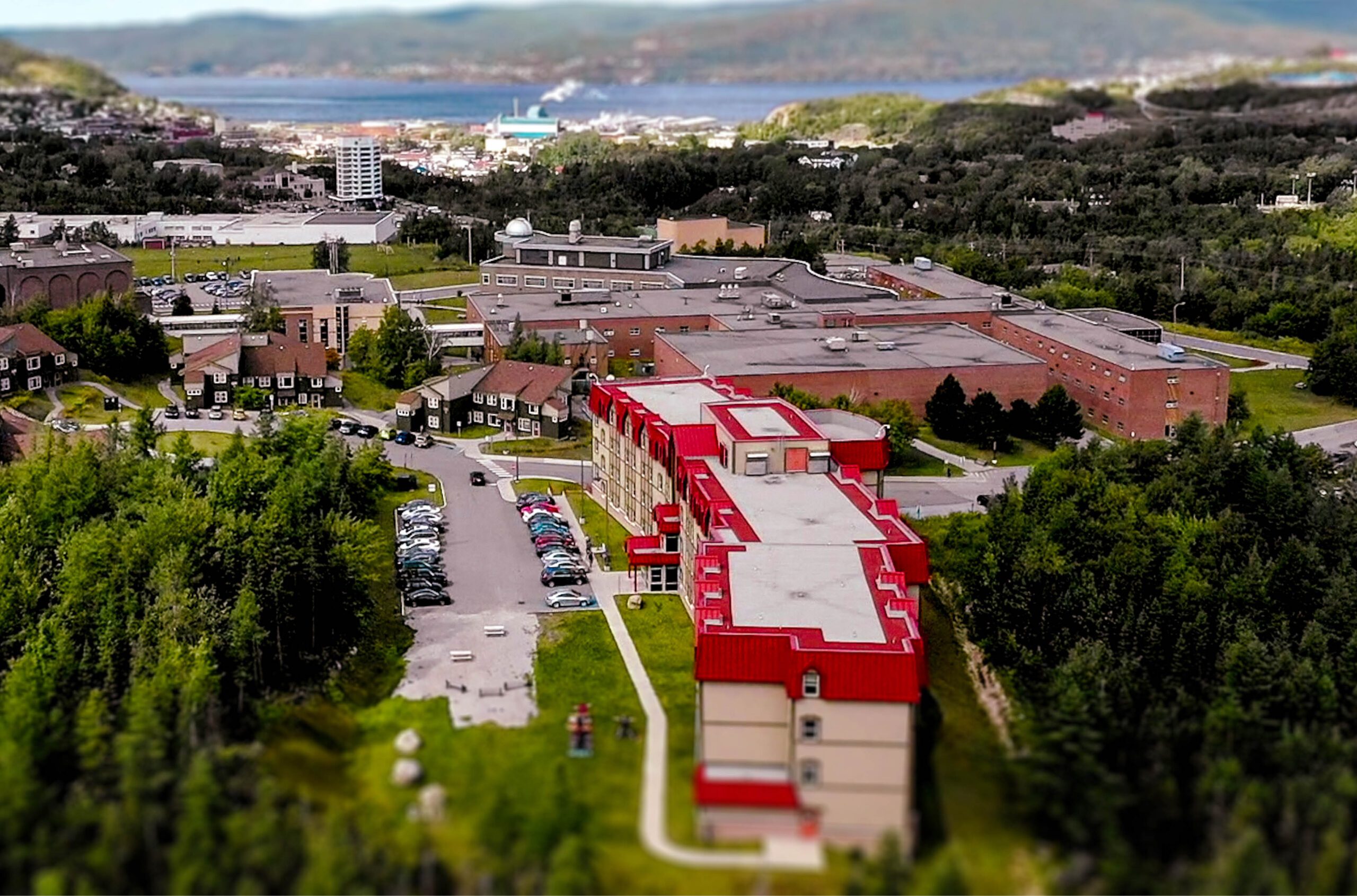
NL increases funding for post-secondary, confirms tuition freeze
Memorial University still faces “hard decisions” for upcoming operating budget.
-
Universities Canada, CAUBO warn federal action is needed as Canada’s universities face worsening financial outlook
A coordinated immigration policy, tax relief and fiscal crisis safeguards are recommended to sustain sector.
-
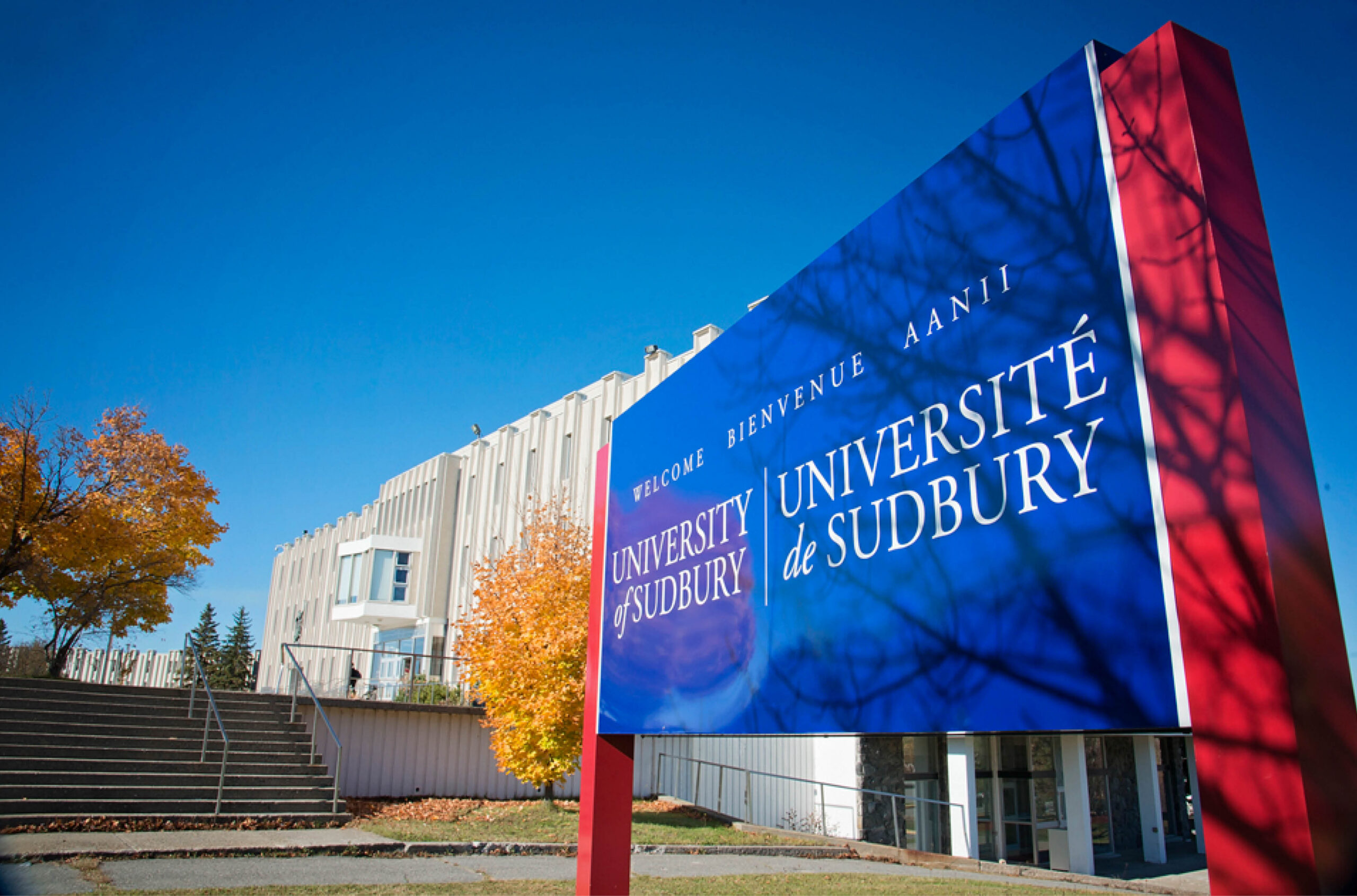
$21 M allocation gives USudbury ‘a solid foundation to build on’
Provincial funding allows the northern Ontario university to continue operating after its breakup with Laurentian.
More from Articles
-

Universities struggle to be heard in Quebec election
In a campaign dominated by the U.S. trade war and the soaring cost of living, universities assert their continued importance.
-
Attacks on higher education spread globally, including in liberal democracies, Scholars at Risk report finds
Canada urged to defend values amid erosion of institutional autonomy in the U.S.
-

Grad student visas double since 2025
Policy changes drive sharp rise in permits for international master’s and PhD candidates.
-

Where do Quebec’s political parties stand on higher education?
With the provincial election less than a month away, we provide a roundup of platforms and promises.


Post a comment
University Affairs moderates all comments according to the following guidelines. If approved, comments generally appear within one business day. We may republish particularly insightful remarks in our print edition or elsewhere.
2 Comments
If International Students are going to be permanently rejected by Canada as part of its new stance in the field of post-secondary education, then there is something very wrong in the Provincial approach to the funding of that Post secondary education. In Ontario, where College funding has been frozen since 2019, very soon there will be deficits and infrastructure losses beyond repair. Canadians cannot lose a key pillar of its infrastructure to the improvised whims of Provincial politicians who do not have a measure of the titanic loss that a failed education sector will mean for future generations.
It is unclear why “the reduced targets are likely to have devastating financial consequences for Canadian universities.”
While the 2026 target is roughly half of the 2025 target, from January to August 2025, only 89,430 new international students arrived, according to IRCC’s data here: https://www.canada.ca/en/immigration-refugees-citizenship/corporate/reports-statistics/statistics-open-data/immigration-stats/students-workers.html. Compare this to 221,940 new students during the same period in 2024.
In other words, Canada is unlikely to meet even the reduced 2026 target this year (2025). Attributing significant blame to the 2026-2028 Immigration Levels Plan is missing the forest for the trees.