Modest operating increase for Alberta universities in $9.4 billion-deficit budget
Province invests an additional $148 million to add 4,000 new seats to high-demand programs.
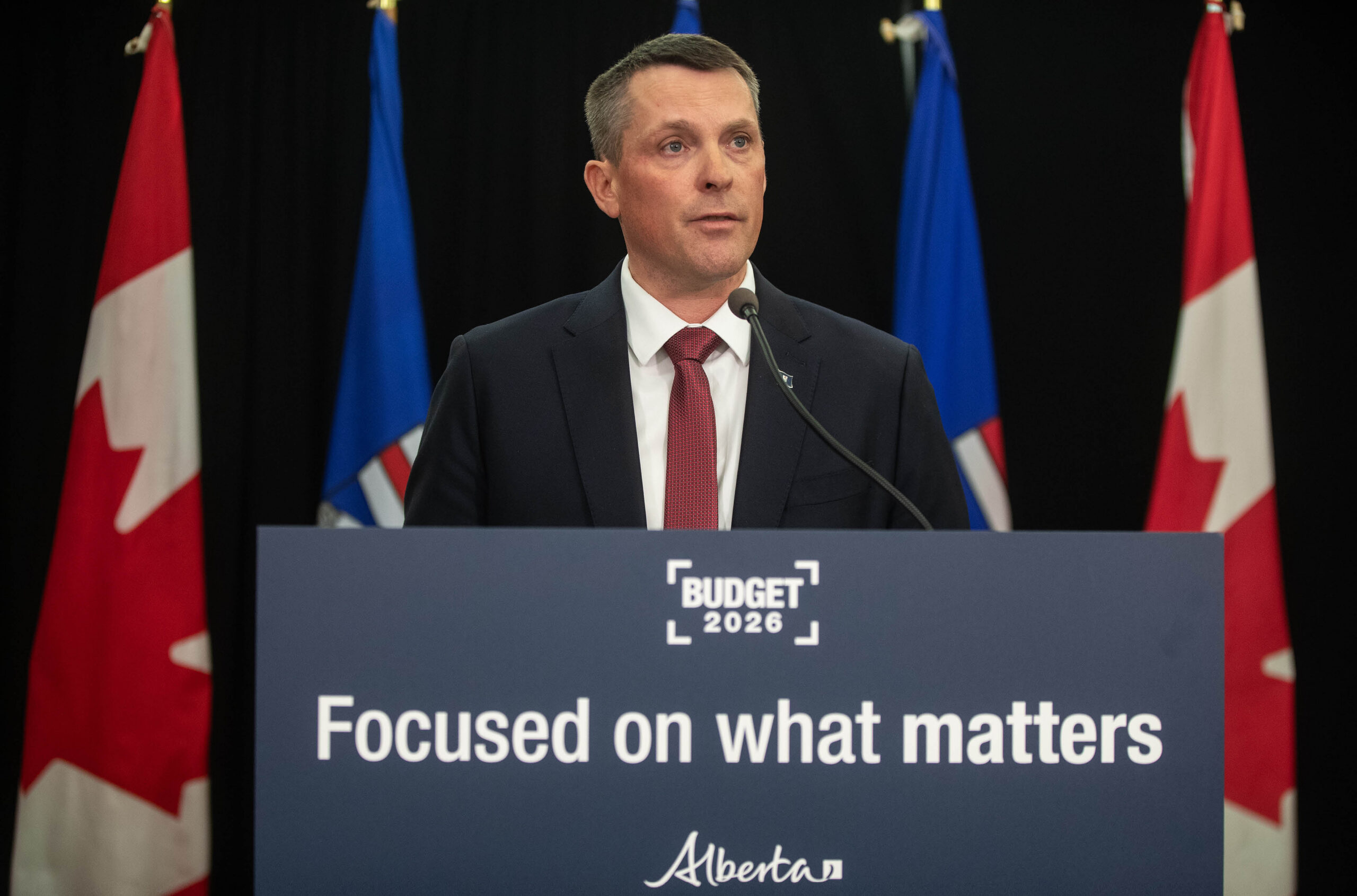
Alberta’s post-secondary institutions will see a slight increase in funding in 2026-27, despite the province delivering a $9.4 billion deficit in its budget tabled Thursday.
The Ministry of Advanced Education — which is responsible for private and publicly funded colleges and universities as well as community adult learning providers and workplace apprenticeship programs — lists expenses of $7.7 billion in 2026-27, a 0.8 per cent increase from 2025-26.
The lion’s share of that money — $6.46 billion — consists in operating expenses for publicly-funded post-secondary institutions. That’s slightly up from $6.37 billion in 2025-26, or a 1.39 per cent increase year-over-year.
Of that amount, $2.7 billion will be provided in grants, while the remaining $3.8 billion (about 60 per cent) will be funded by institutions’ own-source revenue such as tuition, fees and federal transfers. That split is slightly higher than the 58 per cent post-secondary institutions were footing last year.
The government writes in the budget document that the increase to operating grants is due to “compensation pressures from collective bargaining.”
The province is making targeted investments to increase enrolment in high-demand programs and skilled trades. The Ministry of Advanced Education will invest $148 million over three years to create 4,000 new seats in graduate and undergraduate engineering, healthcare and education programs to meet labour needs. The budget commits a further $96 million for apprenticeships.
The University of Calgary (UCalgary) will receive an $83 million investment over three years to double enrolment in its faculty of veterinary medicine program by 2028-29.
Although ongoing investments in capital projects at universities were announced, there was no new capital funding in the budget for post-secondary institutions.
Student financial aid took a hit, with loans dropping from $453 million in 2025-26 to $393 million this year, a 13 per cent decrease.
In his budget address, Finance Minister Nate Horner said the province, which is projecting deficits for the next three years, will be facing “challenges ahead” and will need to make “difficult choices.”
“We are steadfast in our resolve to protect Alberta’s future,” said the minister. “With Budget 2026, we’re choosing to focus on health care, classrooms, and our economy.”
The province announced its largest ever investment in K-12 education – providing $10.8 billion to improve infrastructure, hire staff and deal with growing classroom sizes.
Mixed reviews from post-secondary leaders
John Alho, executive director of the Alberta Post-Secondary Network (APSN), which represents the presidents of the province’s 25 post-secondary institutions, said the small increase in operating grants is a “step in the right direction” and that the enrolment expansion is “welcome news.”
“These investments support learner success and help meet the labour force needs of our province,” said Mr. Alho.
However, Lee Easton, president of the Confederation of Alberta Faculty Associations, which represents faculty at four of the province’s universities, took a less optimistic view on the budget. He pointed to institutions having to rely more on their own revenue, and to increasing financial challenges faced by students.
“One wonders when Alberta will mature to more stable base funding for post-secondary education that also considers programs which instill critical thinking and communication skills valued by every employer —across all sectors,” wrote Dr. Easton in a statement to University Affairs.
UCalgary will receive an increase to its operating grant of 2.8 per cent, up to $384.8 million in 2026, or $10.4 million in new funding. UCalgary’s operating grant had been frozen at $374.2 million since 2022.
“We appreciate the province’s enhanced investment in our operating grant, which will support our efforts to address inflationary budget pressures,” said Ed McCauley, UCalgary’s president and vice-chancellor in a press release.
Annette Trimbee, president and vice-chancellor of MacEwan University, said that the modest increase to its base operating grant will help the school meet the commitments made in its most recent round of collective bargaining.
“This will protect our core teaching capacity for more than 21,000 learners and affirms the importance of Alberta’s post-secondary system to our province’s future,” said Dr. Trimbee.
“We will keep up our efforts to find efficiencies, further our partnerships, lean into fundraising and strategically use our resources to ensure we deliver results,” she added, in a written statement to University Affairs.
While investments in K-12 are welcomed by Kristine Smitka, vice-president of the Association of Academic Staff of the University of Alberta, she said post-secondary institutions face the same challenges.
“It’s unfortunate that the government has not acknowledged that similar pressures, like classroom complexity and aging infrastructure, are also pressing concerns in the post-secondary system,” she said.
She added that the targeted enrolment investment strategy “doesn’t reflect the reality of how students receive education in the university setting.”
“We need funding for the university as a whole to preserve our ability to continue delivering world-class education and research,” she said.
Limited funding despite enrolment growth
Alberta’s universities are facing immediate fiscal challenges from years of significantly reduced and then frozen operating grants, a tuition cap and rising labour costs.
Provincial funding cuts to post-secondary education totalled more than half a billion dollars between 2019 and 2023. Since then, operating grants have remained stagnant.
The operating grant for the University of Alberta (U of A), for example, was reduced by $222 million between fiscal years 2019-20 and 2022-23. It then remained flat through to 2025-26. “Had the grant kept pace with inflation, it would be $61.9 million higher today. In total, this represents an effective reduction of nearly $284 million, or about 42 per cent of the original grant before the cuts,” U of A president and vice-chancellor Bill Flanagan wrote in October 2025.
The province also implemented a two per cent cap on domestic tuition increases beginning in 2024 — the same year the federal government restricted international student visa permits, leading to declining enrolment for a crucial revenue source.
At the same time, Alberta is preparing for an exponential increase in student enrolment. Population growth and higher participation rates are already putting pressure on the post-secondary sector, and student demand is expected to increase by 21 per cent, or 43,000 full-time students, by 2033-34.
The majority of that growth is projected to come from domestic student enrolment to institutions in Edmonton and Calgary.
New funding model expected
In September 2025, an expert panel commissioned by the Alberta government, chaired by economist Jack Mintz, issued a series of recommendations for transforming the province’s post-secondary sector. The 2026 budget did not incorporate these recommendations, which the government said are “under review.”
“The Expert Panel on Post-Secondary Institution Funding and Alberta’s Competitiveness has made recommendations on funding, tuition and student aid, international students, governance, institutional autonomy, red tape, institutional neutrality and diversity, equity and inclusion initiatives,” the budget document states.
“The most significant recommendation from the panel is the development of a new funding model, intended to target resources where there is labour market need.”
The new framework would replace the two per cent tuition cap to allow institutions to adjust tuition annually for incoming students, among other recommendations. The new framework is meant to be implemented over five years.
Mr. Alho says that the Mintz report was met with wide support in the post-secondary sector and that he expects some measures to be in place in budget year 2026-27.
“This is important, we are committed to it, and we’re eager to work with [the government] to advance the new funding model called for in Mintz,” he said. “We’ll be working very closely with the Minister of Advanced Education over the coming months to make that all happen.”
Ongoing investments in capital projects
A number of infrastructure projects already underway at post-secondary institutions have received ongoing support in budget 2026.
These include:
- $45 million in both 2026-27 and 2027-28 to complete MacEwan University’s business school in Edmonton
- $52 million in 2026-27, $130 million in 2027-28 and $203 million in 2028-29 for the NAIT Advanced Skills Centre in Edmonton
- $25 million in funding to Olds College in 2026-27 for its W.J. Elliot expansion and renovation
- $5 million in 2026-27 to expand Red Deer Polytechnic’s east campus
- $53 million in 2026-27 and $17 million in 2027-28 for the University of Alberta’s Biological Sciences Centre
- $2 million in 2026-27 for the U of A’s Campus Saint-Jean upgrade
- $40 million in 2026-27, $70 million in 2027-28 and $50 million in 2028-29 for the University of Calgary’s Multidisciplinary Hub
- $17 million in each 2026-27 and 2027-28 for the University of Lethbridge’s rural medical teaching school

More from News
-
Quebec makes 5-year, $392M investment in universities to drive economic growth
With targeted investments in research and innovation, the provincial budget banks on universities to boost the economy — but fails to address structural underfunding.
-

Universities are living beacons of knowledge lighting Canada’s path to a sustainable future
Steven Guilbeault reflects on Canada’s environmental pressures and the role higher education plays in shaping sustainable solutions.
-
Saskatchewan increases funding to universities, confirms multi-year agreement in 2026 budget
Universities will receive $33.6 million in operating funding in 2026-27.
-
New Brunswick effectively freezes post-secondary funding in 2026 budget
Universities given reprieve after cuts proposed earlier this month.
More from Budget
-
University funding remains unclear after Nova Scotia budget
Government announces a 2% increase, but bilateral agreements mean the devil is in the details.
-
B.C. budget announces little help for universities
Post-secondary sector receives small funding increase amid widespread public sector cuts.
-
Budget cuts international student permit targets by 49 per cent in 2026
Carney government also proposes $1.7 billion to recruit international researchers.
More from Articles
-
Conservative MP wraps up campus tour aiming to “Restore the North”
Modelled on the late American conservative firebrand Charlie Kirk, Jamil Jivani’s tour brought discussion of economics, immigration and identity to universities across Canada.
-

International students in limbo as Quebec cancels immigration pathway
Axing the Quebec Experience Program may discourage global talent from settling in the province.
-

Federal science cuts may have ripple effect on universities
Departmental belt-tightening in Budget 2025 adds to a long history of government reductions in scientific research.
-
Students protest cuts to OSAP grants
Changes may push some to opt for shorter college programs instead of university.


Post a comment
University Affairs moderates all comments according to the following guidelines. If approved, comments generally appear within one business day. We may republish particularly insightful remarks in our print edition or elsewhere.