Quebec makes 5-year, $392M investment in universities to drive economic growth
With targeted investments in research and innovation, the provincial budget banks on universities to boost the economy — but fails to address structural underfunding.

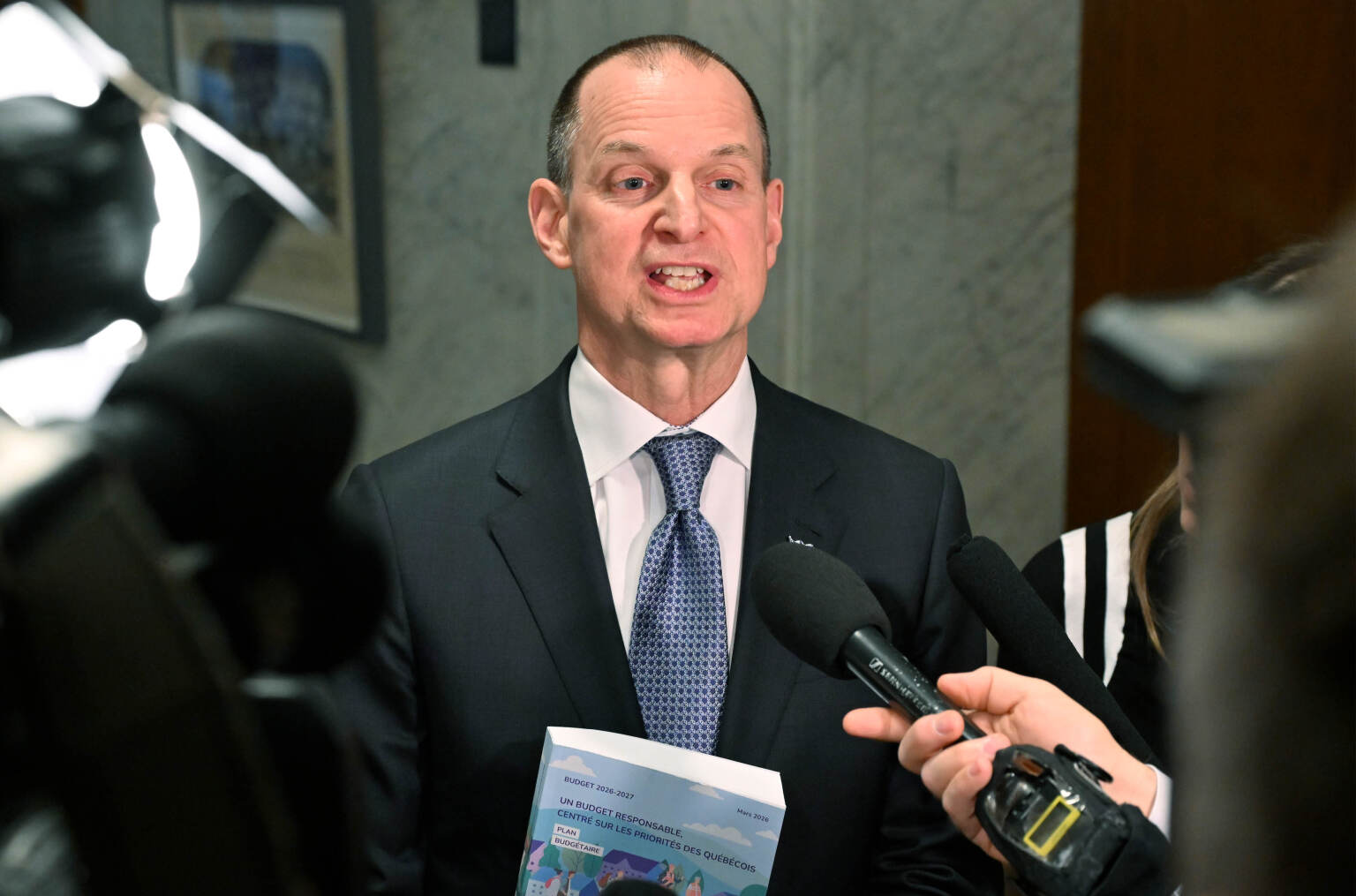
With a provincial election looming this year, the government of Quebec Premier Franҫois Legault tabled a budget Thursday that highlights its economic priorities while maintaining a measure of fiscal prudence. The budget commits $391.9 million over five years to higher education and research, positioning universities as strategic players in innovation and development in key sectors.
“This budget is good news for Quebec universities, notably because it foresees an increase in the institutions’ core funding, which is essential,” said Christian Blanchette, chair of the Bureau de coopération interuniversitaire (BCI), which represents Quebec universities. He also acknowledged the work by Martine Biron, the minister for higher education, and her team, in “consolidating the funding of the [university] network.”
In a press release, the BCI stated that these investments are a step in the right direction, but emphasized the necessity of continued investment to address structural needs and to fully support universities’ contributions to the development of Quebec.
The budget earmarked an additional $560 million for university infrastructure. “This won’t completely cover our built-up needs, but it gives universities a bit of breathing room to manage renovations and maintenance,” says Dr. Blanchette.
Quebec universities remain underfunded compared to other provinces, to the tune of about a billion dollars. Dr. Blanchette said the new budget helps to close, but does not entirely eliminate, this gap.
READ MORE: Quebec’s tuition fee model: not able to see the forest for the trees
The budget also commits $54.8 million to public research and to the commercialization of discoveries resulting from this research. Part of this funding will go to the Fonds de recherche du Québec (Quebec Research Fund—FRQ). Another portion will be invested in improving access to research data, as well as protecting and commercializing intellectual property through the support of Axelys, the agency mandated with handling the IP from publicly funded research discoveries. A further $42.4 million has been set aside to strengthen Quebec’s digital sovereignty, mainly by developing shared, secure platforms for the public sector.
“I was pleasantly surprised to see the investments in the FRQ, with approximately $10 million of additional funds per year,” said Yves Gingras, a science historian at Université du Québec à Montréal and the scientific director of the Observatoire des sciences et des technologies.
“It’s an improvement, but we don’t really know what programs will benefit,” commented Vincent Larivière, a professor in the school of information and library sciences at Université de Montréal (UdeM) and the UNESCO Chair on Open Science.
“The budget allocates $20 million over two years to support the FRQ’s mission. That’s a one-time measure, not an increase in the base budget. So it’s not huge, but it’s a positive step.”
READ MORE: Quebec universities weather an unprecedented storm
Money has also been allocated to Quebec’s statistical agency, Institut de la statistique du Quebec, to improve access to data — a key priority for researchers. “An allocation of $17.8 million to the Institut de la statistique is good news, since the institute had suffered from cuts that made some of its data inaccessible to scientists,” said Dr. Larivière. “This increase means that researchers will now have renewed access to this data.”
Over five years, $100 million in additional funds will be split between the FRQ, the Institut de la statistique, and direct investments in targeted organizations and initiatives.
“Some money is being directed to strategic sectors, such as artificial intelligence, photonics and quantum technologies,” said Dr. Larivière. “This funding is not passing through the usual peer-reviewed channels. Rather, it’s being distributed directly to certain organizations deemed useful to the economy. The focus is more on economic development than fundamental research.”
“The problem with these targeted investments is that they favour places that are already well-resourced,” said Dr. Gingras. “Universities as a whole are still running at a deficit. Funding a professor’s salary, without guaranteeing the [associated] infrastructure, creates a deficit situation.”
“We’re also seeing additional investments in innovation, notably in quantum optics and artificial intelligence, like the $24 million over three years for innovation centres in Sherbrooke, or the $600,000 per year going toward a joint research unit in quantum photonics.”
He said the 2026-27 budget is encouraging for research and for certain strategic sectors, but it doesn’t address the structural fiscal imbalances universities face. To Dr. Larivière, these investments reflect the vision of the current government, which sees research as, above all, a driver of economic growth, to the detriment of structural support for fundamental research.
Budget 2026-27 by the numbers
Overview
$391.9 million
→ Higher education and research (distributed over 5 years)
$167 billion
→ Quebec Infrastructure Plan (includes universities)
Research and data access
$20 million
→ Fonds de recherche du Québec (FRQ)
$17.8 million
→ Institut de la statistique du Québec
Targeted investments
$17 million
→ To commercially leverage research and intellectual property
$45.8 million over four years
→ Innovation zones (strategic sectors)



Featured Jobs
- Health Sciences - Assistant ProfessorSimon Fraser University
- Marketing - Faculty Position, Tenured or Tenure TrackUniversity of Alberta
- Occupational Therapy - Assistant or Associate ProfessorDalhousie University
- Canada Impact+ Research ChairInstitut national de la recherche scientifique (INRS)
- Vice President, Finance & AdministrationOCAD University
More from News
-

The human face of Arctic research
Q&A with Jackie Dawson, Canada Research Chair in the Human and Policy Dimensions of Climate Change.
-

Jeremy Hansen: From physics to the moon
Behind the first Canadian to circle the moon lies a rigorous academic journey and close ties to university research.
-

Addressing academia’s pretendian problem
Two Indigenous professors create a reference guide to stop scholars who falsely claim Indigenous heritage.
-
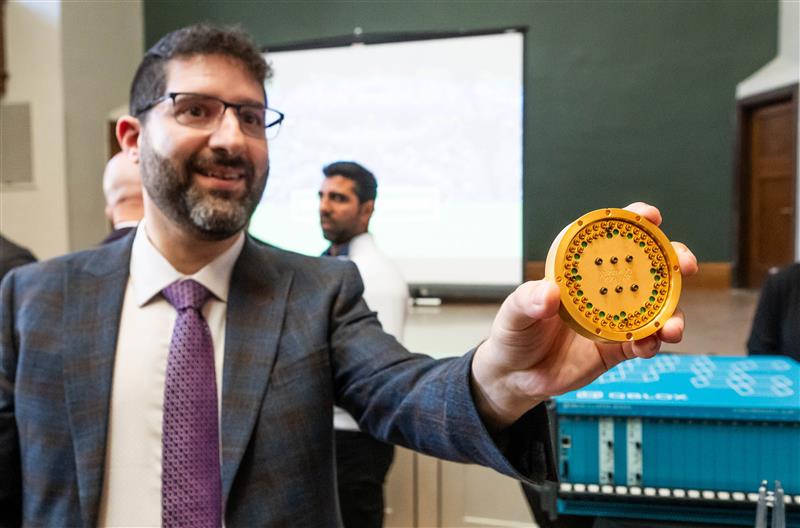
University of Saskatchewan acquires quantum computer to boost research capacity
Campus access to the technology will expand research possibilities.
More from Budget
-

Ontario budget reaffirms $6.4 B post-secondary funding boost, adds money for infrastructure
Millions more allocated to research, clinical nursing training, and French-language education.
-

Manitoba increases investment in post-secondary education, announces new commission in 2026 budget
Post-secondary institutions will receive $882.6 million in operating funding.
-
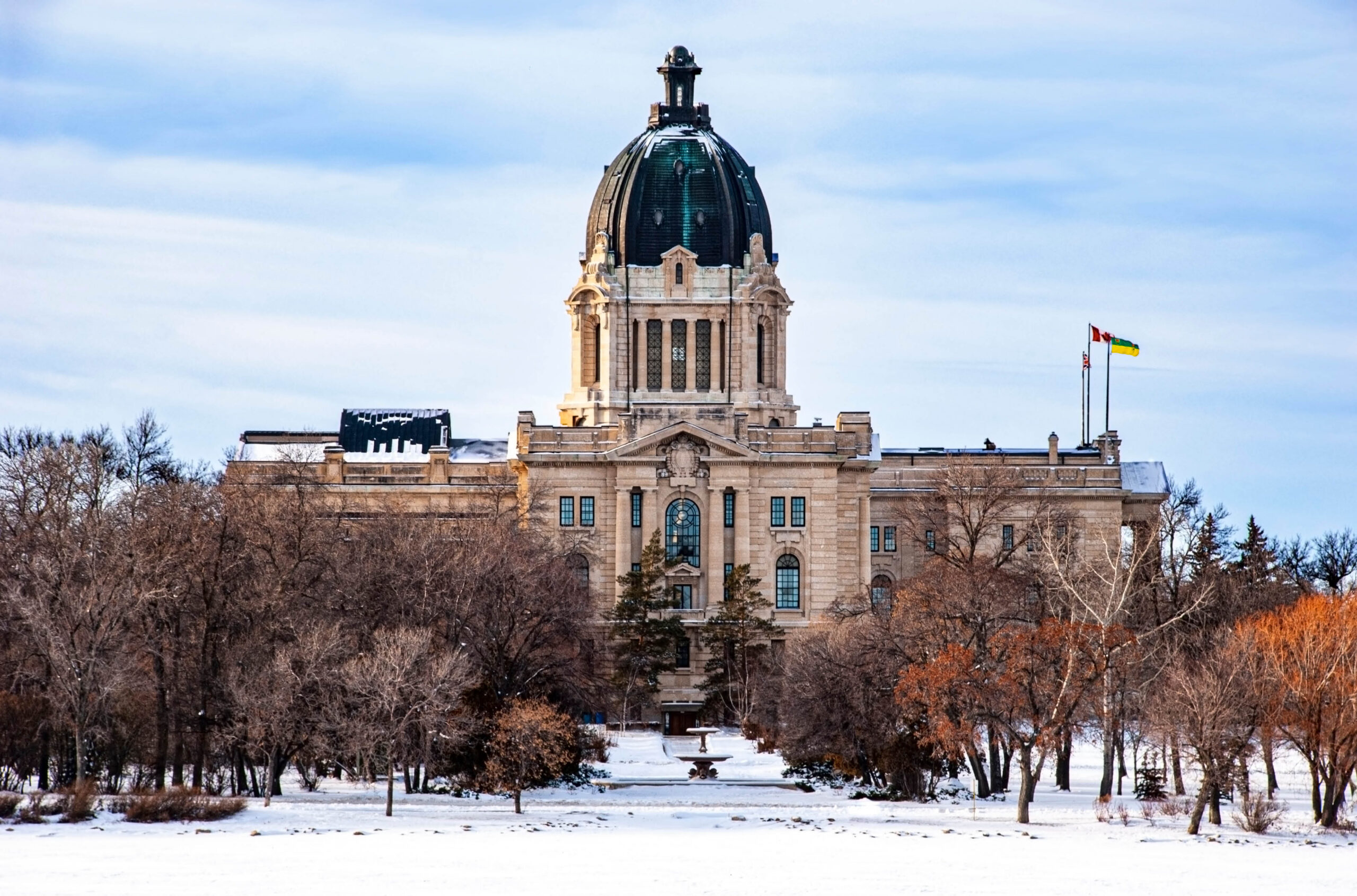
Saskatchewan increases funding to universities, confirms multi-year agreement in 2026 budget
Universities will receive $33.6 million in operating funding in 2026-27.
-
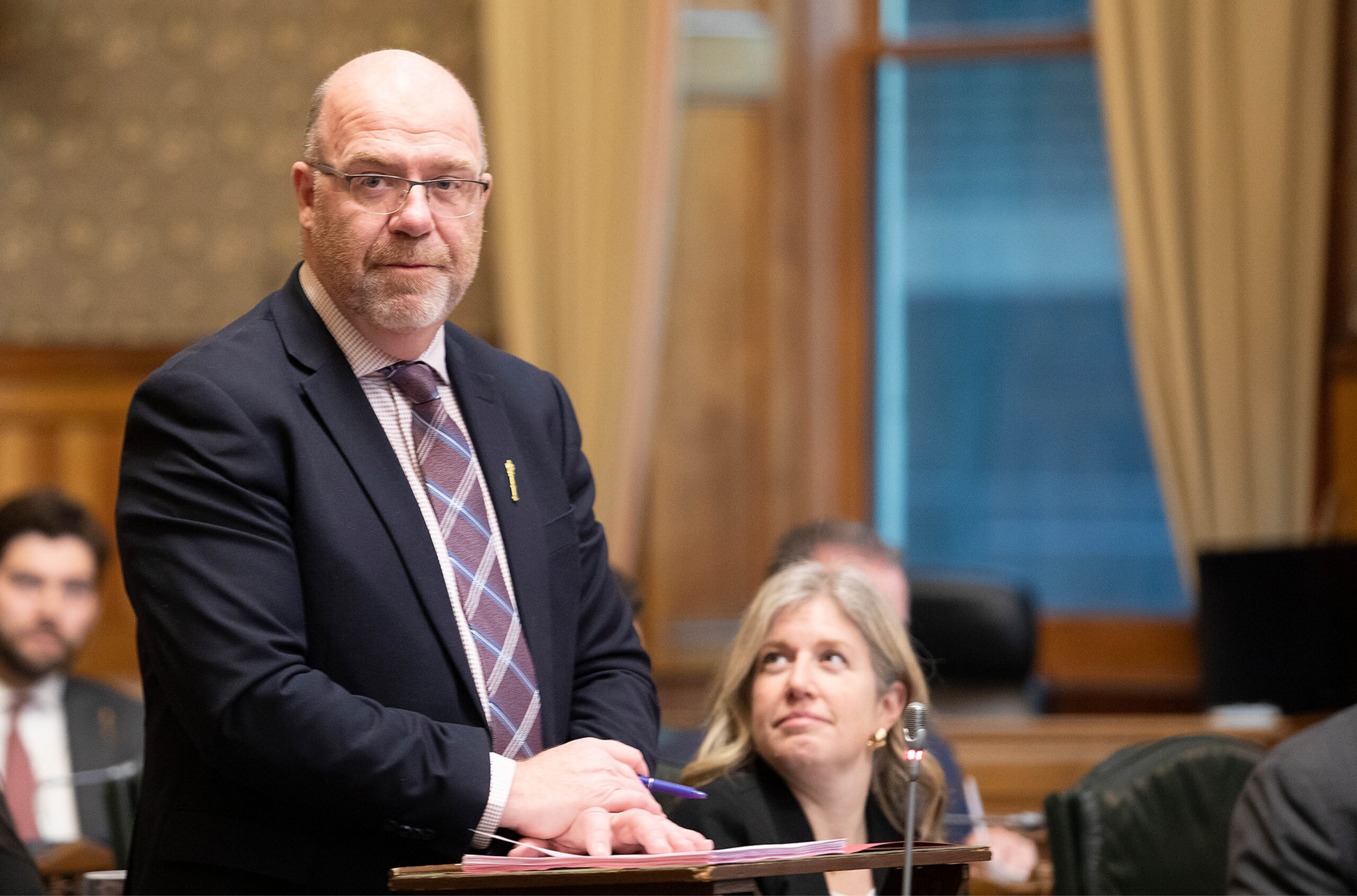
New Brunswick effectively freezes post-secondary funding in 2026 budget
Universities given reprieve after cuts proposed earlier this month.
More from Articles
-
McGill appoints French emissary, makes peace with province
After dropping its legal battle over out-of-province tuition hikes, the university increases its efforts to promote French language and culture.
-
Program changes at Memorial raise concerns
Impact on faculty and students remains unclear amid decreased enrolment and financial challenges.
-

UBC leads the way on civil discourse
A successful debate series places universities at centre stage in ending polarization.
-
Conservative MP wraps up campus tour aiming to “Restore the North”
Modelled on the late American conservative firebrand Charlie Kirk, Jamil Jivani’s tour brought discussion of economics, immigration and identity to universities across Canada.

Post a comment
University Affairs moderates all comments according to the following guidelines. If approved, comments generally appear within one business day. We may republish particularly insightful remarks in our print edition or elsewhere.