Quebec’s proposed Constitution sparks universities’ opposition
The bill before the province’s national assembly would restrict universities’ ability to challenge legislation, but its future is in doubt with the resignation of Premier François Legault.
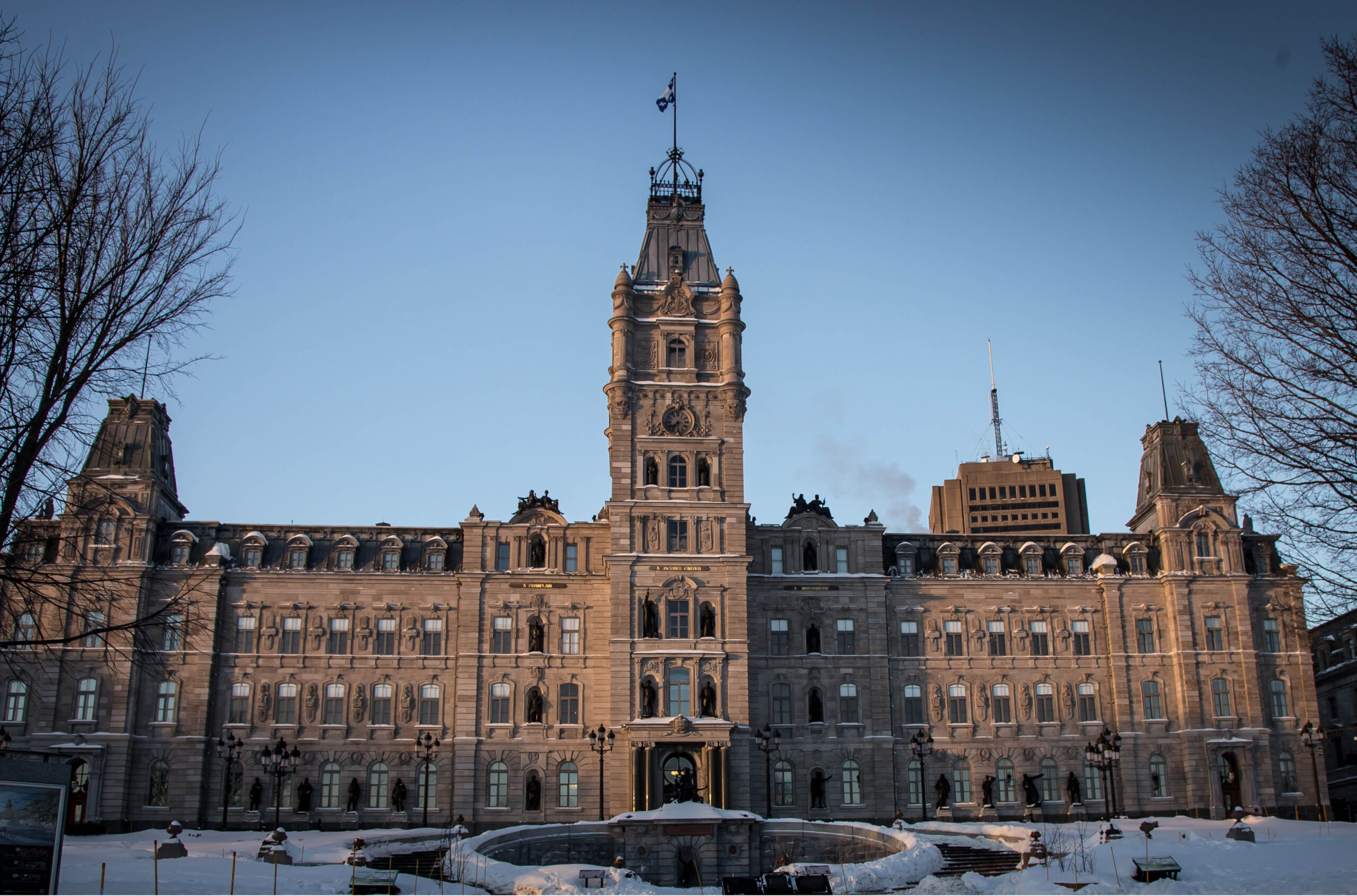
As a bill to codify a new Quebec Constitution moves through the province’s National Assembly, universities have become a focal point of resistance. At issue is section 5 of the Act respecting the constitutional autonomy of Québec, which bars government-funded organizations — including universities — from using operating funds to legally challenge legislation that the government deems to be in Quebec’s interest.
According to this provision, even if a law jeopardizes a university’s mission, or is potentially unconstitutional, universities would be stripped of their primary legal means of contesting it, unless they could obtain external or private funding — an unrealistic scenario for most institutions.
The bill has not yet passed into law, and its future is uncertain after the abrupt resignation of Quebec Premier François Legault on Wednesday. Legault said that he will remain in place as premier until his governing Coalition Avenir Quebec (CAQ) elects a new leader. Even before Mr. Legault’s resignation, the bill faced a tight political calendar, since a provincial election must be held by October 5 of this year. The uncertainty adds political pressure to the debates in the legislature, where the stakes are high for democracy in the province.
In an open letter published in December, the heads of the Université du Québec network urged lawmakers to exempt universities from section 5 and to enshrine academic freedom and university autonomy in the constitution. This collective position signals a broader concern about eroding checks and balances in Quebec.
For Louis-Philippe Lampron, who teaches law at Université Laval, the problem goes far beyond universities, bringing into question the very logic underlying the government’s proposed constitution.
In his view, the process took place without any real public debate and then closed in upon itself. “This was all developed behind closed doors for several years, and now it’s being presented as a fait accompli,” he explains. In the new balance of power, he notes, “the only winners are the lawmakers.”
A legal restriction with chilling effects
This concentration of power can be seen very clearly in section 5. The government insists it is not limiting access to justice, only prohibiting the use of public funds to contest legislation adopted by the National Assembly. But Dr. Lampron argues that this reasoning is flawed.
“It doesn’t make sense, because litigation costs money. So, the ban effectively denies government-funded organizations the right to contest legislation.” Beyond the formal restriction, he warns of a more insidious effect. The mere threat of financial sanctions or political backlash will be enough to deter chronically underfunded institutions from mounting a court challenge. “When in doubt, they’ll play it safe,” he explains, describing a chilling effect well known in constitutional law.
This erosion of countervailing powers is alarming to Alexandre Cloutier, president of Université du Québec and former chair of the Commission scientifique et technique indépendante sur la reconnaissance de la liberté académique dans le milieu universitaire (Independent scientific and technical commission for the recognition of academic freedom in the university sector). Universities, he argues, should not be subject to the same constraints as other government-funded organizations.
Their mission depends on institutional autonomy; without it, academic freedom becomes an empty catchphrase. Quebec’s 2022 academic freedom law acknowledges this principle, but only in the preamble and without any binding legal effect.
In his view, granting explicit constitutional protection to academic freedom and university autonomy would give those principles greater legal weight and durability. “University autonomy and freedom are never fully secure; they can be eroded,” he points out, referring to the setbacks seen elsewhere in the world.
Beyond universities: Expanding state control
This concern is shared on a broader basis by Jean-François Gaudreault-DesBiens, a professor of law at Université de Montréal and an expert in constitutional law and legal theory. In his opinion, the Act respecting the constitutional autonomy of Québec is not a mere codification of existing law, but part of a sweeping reconfiguration of Quebec’s legal order.
“If it were just codification, we would not be seeing so many segments of civil society up in arms,” he notes. He sees section 5 as a major break from the rule of law, in that it creates a “state of exception” controlled by legislators.
But his concern doesn’t stop there. He also points to sections 14, 15 and 16 of the act, which considerably broaden the provincial government’s control over agreements between universities and the federal government.
These provisions bring to mind Bill M-30, adopted more than forty years ago by the government of separatist premier René Lévesque. At that time, Dr. Gaudreault-DesBiens explains, the aim was to protect Quebec’s jurisdiction against federal encroachment through funding, while granting special status to universities, which were largely exempted from the constraints.
He says the current bill takes this logic to an extreme. It would enable the Quebec government to block or impose conditions on agreements involving research chairs, federal grant agencies or other programs by citing broad, sometimes vague criteria tied to protection of the Quebec nation or its fundamental characteristics. “This opens the door to indirect control of university policy and research,” he warns.
The approach has certain parallels with the United States, where the federal administration cut funding to influence university programs, though the Quebec model centralizes power at the provincial level. Dr. Gaudreault-DesBiens gives examples of the danger: “Some agreements or directives could impose strict control over content. Imagine a situation where a study could question the integration model enshrined in the Quebec constitution, or where equity, diversity and inclusion programs are deemed problematic. This ability to control content makes me think of situations we’ve seen elsewhere, particularly in the U.S. under Donald Trump or in Hungary under Viktor Orbán during the conflict with Central European University.”
In addition to the increased concentration of power, there is another problem. Despite its title, the proposed Constitution of Québec could be amended by a simple majority vote in the National Assembly, with no safeguard or supermajority requirement. “It’s called a constitution, but it looks like an ordinary law,” says Dr. Gaudreault-DesBiens.
According to Dr. Lampron, even the explicit mention of academic freedom cannot offset the legal architecture tilted in favour of the government. “You can state principles and then strip them completely of their substance by preventing the institutions concerned from taking tangible action,” he says.
Universities stand at the heart of a debate that goes far beyond them. As bastions of knowledge, debate and reasoned dissent, they are a litmus test for the importance of checks and balances in modern Quebec. If their autonomy is compromised, Quebec’s entire democratic ecosystem could suffer.



Featured Jobs
- Human Rights - Assistant Professor (Expertise in Human Rights related to Artificial Intelligence and Digital Security)University of Winnipeg
- Human Rights - Assistant Professor (Expertise in Peace & Conflict Studies, Socioeconomic Rights and/or Indigenous Rights)University of Winnipeg
- Engineering - Assistant Professor, Teaching-Focused (Surface and Underground Mining)Queen's University
- Soil Physics - Assistant ProfessorUniversity of Saskatchewan
- Director of the McGill University Division of Orthopedic Surgery and Director of the Division of Orthopedic Surgery, McGill University Health Centre (MUHC) McGill University
More from News
-
Stéphane Dion: “The university will always be a forum for debate”
Université de Montréal’s new diplomat-in-residence at talks about the enduring role of universities in a world marked by uncertainty, international tension and technological change.
-
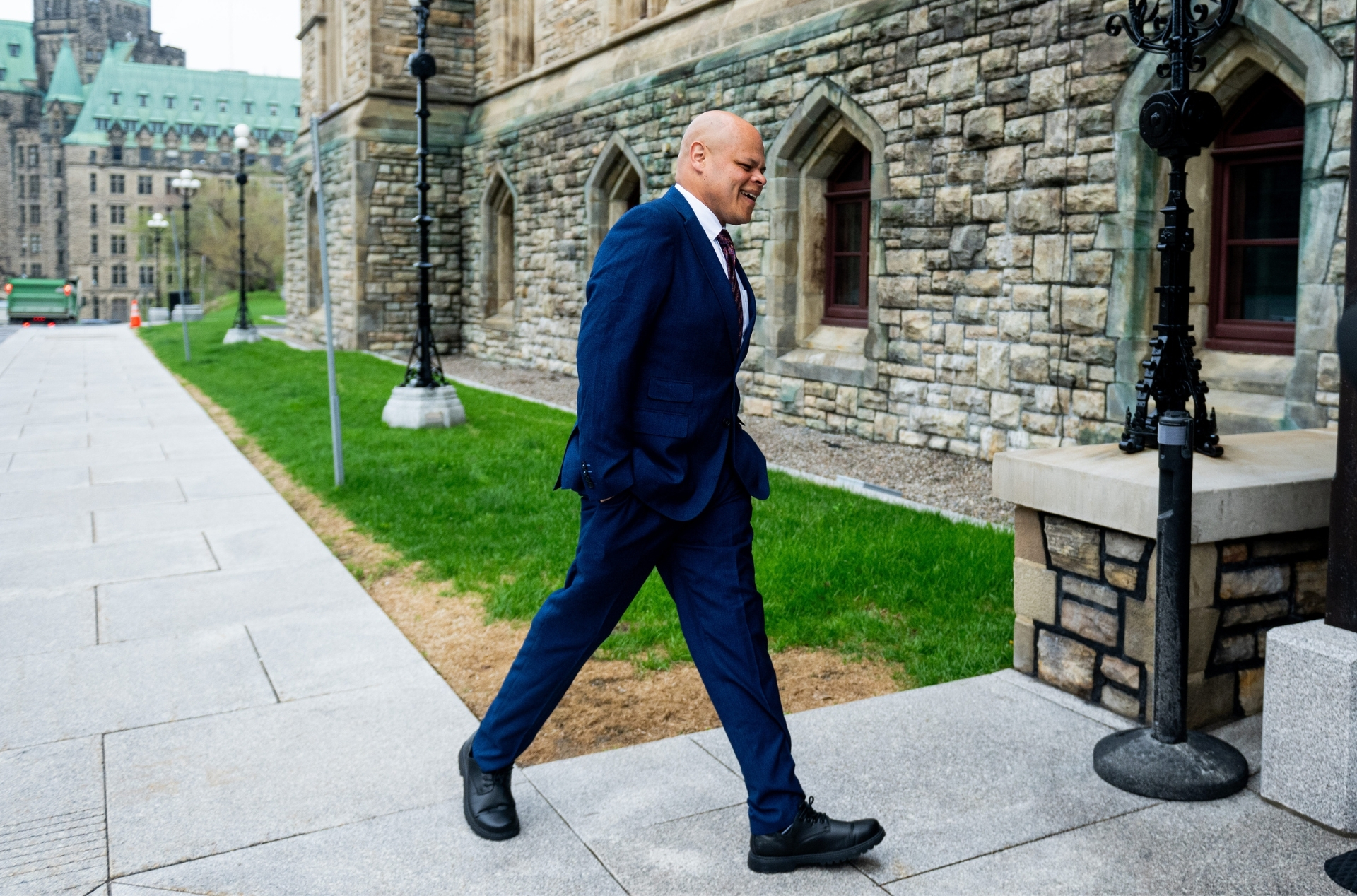
Conservative MP wraps up campus tour aiming to “Restore the North”
Modelled on the late American conservative firebrand Charlie Kirk, Jamil Jivani’s tour brought discussion of economics, immigration and identity to universities across Canada.
-

Federal science cuts may have ripple effect on universities
Departmental belt-tightening in Budget 2025 adds to a long history of government reductions in scientific research.
-
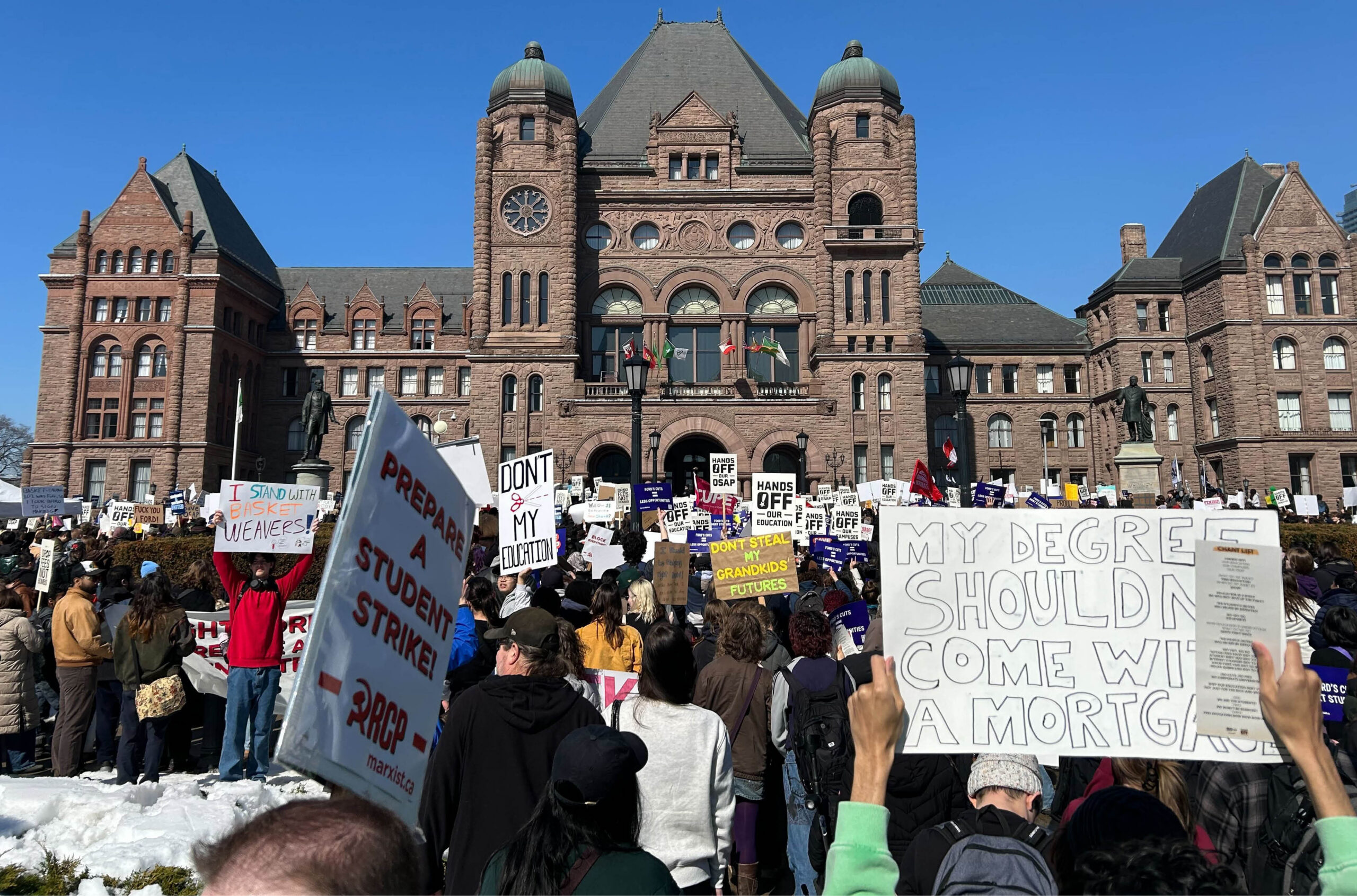
Students protest cuts to OSAP grants
Changes may push some to opt for shorter college programs instead of university.
More from Policy
-
Profs decry ‘catastrophic’ cuts proposed by NB government
'There are 20+ campuses in NB for 860,000 people. Do we need them all?' Read all 16 government suggestions.
-
Universities have a critical role to play in the fight against “forever chemicals”
As PFAS contamination spreads, universities must champion interdisciplinary learning, ethical reform and community partnerships, says Robert Bilott, the attorney at the center of Dark Waters.
-
Ontario lifts tuition freeze, injects $6.4B in post-secondary sector
New provincial strategy also overhauls student assistance program and promises to align university programs with labour market.
-

Leading a university through turbulent times
Marie-Eve Sylvestre, University of Ottawa’s new president, discusses leadership, academic freedom and the future of universities.
More from Articles
-

International students in limbo as Quebec cancels immigration pathway
Axing the Quebec Experience Program may discourage global talent from settling in the province.
-
Canadian university campuses in the Middle East caught in a war zone
Royal Roads campus in UAE temporarily closed as Ottawa issues shelter-in-place advisory.
-

Q&A with Canada’s former special representative on combating Islamophobia
Amira Elghawaby champions religious accommodations on campus.
-
Modest operating increase for Alberta universities in $9.4 billion-deficit budget
Province invests an additional $148 million to add 4,000 new seats to high-demand programs.


Post a comment
University Affairs moderates all comments according to the following guidelines. If approved, comments generally appear within one business day. We may republish particularly insightful remarks in our print edition or elsewhere.