Students protest cuts to OSAP grants
Changes may push some to opt for shorter college programs instead of university.
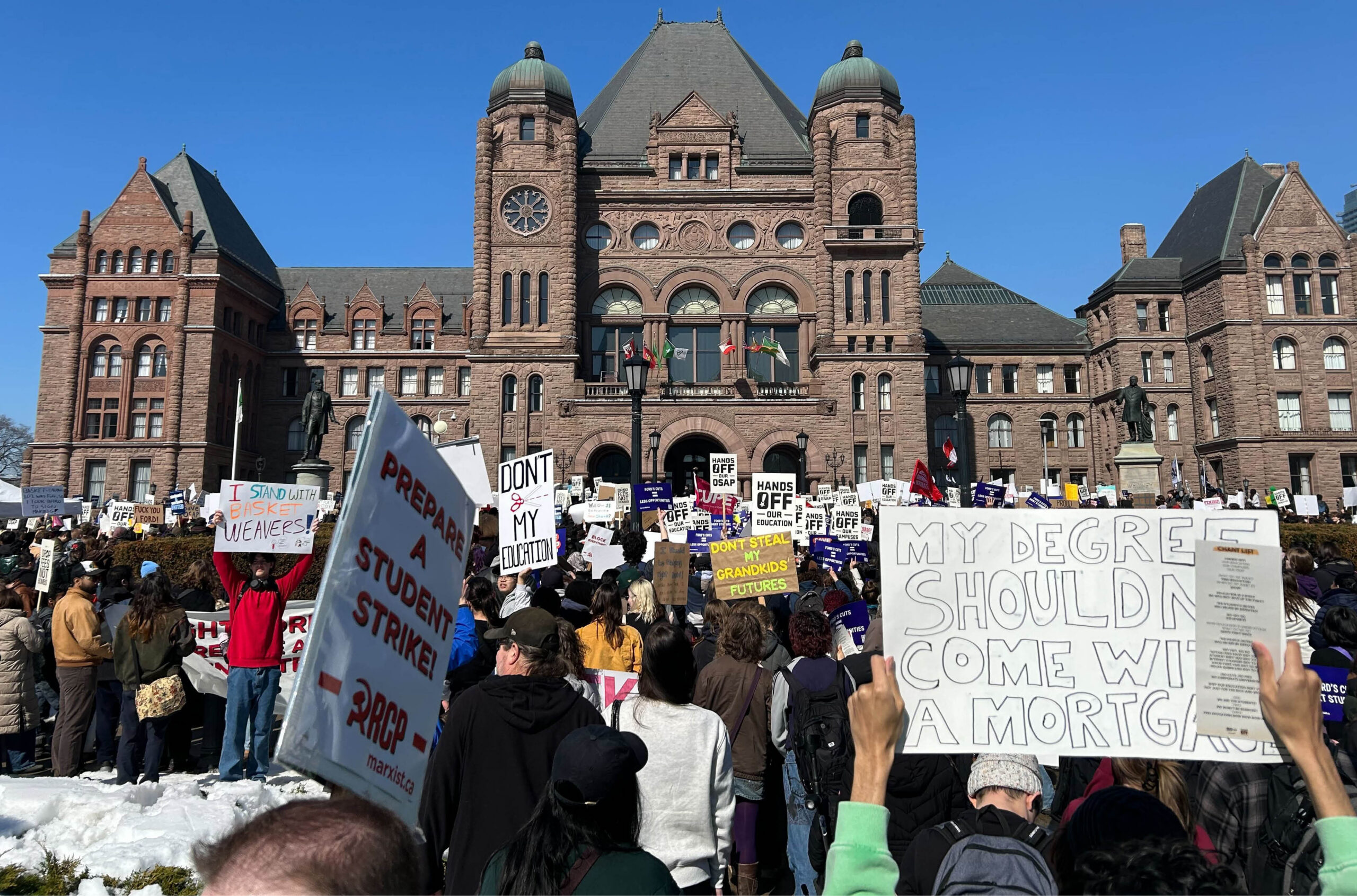
Ontario students pushed back this week against the provincial government’s plan to change their financial aid and tuition, walking out of classes and converging on the Ontario legislature in a large protest Wednesday afternoon.
“We know students have power and we are here in numbers to show the power we have,” Cyrielle Ngeleka, chairperson of the Canadian Federation of Students-Ontario, which organized the rally, told hundreds of enthusiastic students gathered on rapidly melting snow in front of Queen’s Park.
Already dealing with a cost-of-living crisis, “the last thing students need is for the cost of education to rise,” said Ms. Ngeleka who, along with CFS-Ontario executive member Omar Mousa, rallied the placard-waving crowd to demand free education from Ontario’s Conservative government, led by Premier Doug Ford. “Funding of education is the responsibility of the government. It is not our burden to carry.”
Students rallied elsewhere the same day too: About 1,000 students held a walkout at the University of Waterloo; Brock University students staged a demonstration; and high school students in the Niagara Region gathered outside a local MPP’s office to show their concern about the changes. Earlier in the week, high school students in Durham region, immediately east of Toronto, also protested by walking out of class.
The actions are in response to the Ontario government’s Feb. 12 announcement that, along with a widely praised $6.4 billion funding boost to colleges and universities over the next four years, its Ontario Student Assistance Program (OSAP) would cut non-repayable grants from its current 85 per cent maximum down to a limit of 25 per cent, with the rest of a student’s aid package covered by loans.
‘I go to the food bank. I need OSAP.’
At Queen’s Park, Grade 12 student Radhika Cappelletti stood toward the back of the crowd with friends, holding a small hand-made sign that read, “I go to the food bank. I need OSAP grants for university.” While she’d like to study medicine, she said her rural Ontario family has fallen on hard times and doesn’t have the money. The province’s changes put her hopes further out of reach. “Education is the foundation of the country,” said Ms. Cappelletti, who travelled to the rally from Castleton, about an hour and a half’s drive east of Toronto. “Things won’t run if people don’t continue to be educated and they can’t even choose to be educated because they can’t afford it — and the government has the money for it.”
Adam Venter, a history major who came with two busloads of students from the University of Guelph (U of G), called OSAP “crucial for me” as a student with disabilities. He estimated he would be graduating tens of thousands of dollars in debt had his package not been made up mostly of grants. A member of U of G’s Central Student Association board, he was hopeful that “collective student action” would stop the province from going through with its plans.
Some protest participants wore small red fabric squares. The same symbol was used in Quebec’s “Maple Spring” student movement of 2012, which successfully fought against the provincial Liberal government’s plan to increase tuition fees.
Although the Queen’s Park protest was mostly peaceful, Toronto Police made two arrests for mischief and assault of a peace officer. Posting on its Instagram account, CFS-Ontario accused the police of being “heavy-handed” and said it would provide legal representation for the accused.
Representatives from labour unions and opposition political parties also attended, including Marit Stiles, leader of the Ontario NDP, which has launched its own campaign to save OSAP, with a planned March 12 townhall. Arguing that the Ford government’s direction on OSAP and tuition “bodes very badly for the future of Ontario,” Ms. Stiles said she planned to introduce a vote to reverse the changes once the legislature returns March 23.
Low-income students may opt for shorter college programs
Research from outside of Canada suggests a loans-heavy aid program may discourage low-income students from attending university versus a cheaper, shorter college program, or even from enrolling in higher education altogether, said Daniel Corral, an assistant professor of higher education at the University of Toronto’s Ontario Institute for Studies in Education.
For students who do enrol, “after taking on these greater loans, they may feel the need or the pinch to start working or start working more,” risking their chances for program success, said Dr. Corral. He said that while Ontario’s student aid system has been more generous than other provinces and sustainability is important, its OSAP policy change might have been easier on students and given them a chance to adjust if it had been rolled out more gradually, similar to Ontario’s tuition fee announcement.
Longer-term, the result of students emerging from higher education with more debt is “delayed adulthood,” said Mark Kalinowski, a financial educator with the Credit Counselling Society, a non-profit organization that counsels people about debt management.
Students “are going to graduate with so much more student loan debt that it puts off all the things they want to do to move forward, whether that’s buying a car, buying a house, moving across the country to get started in a new career someplace,” said Mr. Kalinowski. “It’s tough to do when you have a lot of debt.”
Province justifies changes
Calling OSAP’s structure “dramatically out of line with other jurisdictions,” the province said the change is necessary to ensure the program’s immediate and long-term sustainability. It said OSAP cost the province $2.7 billion in 2025-26, and the cost was expected to grow to $4.1 billion in 2028-29 if no changes were made.
The province also announced its intention on Feb. 12 to allow college and university tuition to rise a maximum of two per cent a year over the next three years, and the lower of two per cent or the three-year rate of inflation after that. It marks the first time tuition has increased since 2019. Students will continue to be eligible for a “student access guarantee,” intended to help qualifying students make up the difference between their student aid packages and academic expenses, said Bianca Giacoboni, press secretary to Nolan Quinn, minister of colleges, universities, research excellence and security.
While OSAP combines financial aid from both the provincial and federal governments, Ontario’s changes only impact the provincial contribution to the program. The provincial ministry did not provide information about how actual OSAP distributions have broken down between federal and provincial contributions, or between grants and loans. Many OSAP recipients do not receive the maximum 85 per cent grant, determined through complex calculations taking into account factors such as an applicant’s family size, income, assets, and number of siblings in post-secondary. Students may also be eligible for additional funding, such as those with disabilities, first in their family to attend post-secondary, and current and former crown wards.
Shaun Anderson, co-chair of the Ontario Association of Student Financial Aid Administrators said in a written statement that total financial assistance amounts are not expected to change but there were “a lot of details to come” and students should expect to be approved for more loan and less grant in future.
As for predicting how students might be impacted by the changes, Mr. Anderson said his association wanted to hear more from the Ontario government before commenting.





Featured Jobs
- Human Rights - Assistant Professor (Expertise in Human Rights related to Artificial Intelligence and Digital Security)University of Winnipeg
- Engineering - Assistant Professor, Teaching-Focused (Surface and Underground Mining)Queen's University
- Director of the McGill University Division of Orthopedic Surgery and Director of the Division of Orthopedic Surgery, McGill University Health Centre (MUHC) McGill University
- Human Rights - Assistant Professor (Expertise in Peace & Conflict Studies, Socioeconomic Rights and/or Indigenous Rights)University of Winnipeg
- Canada Impact+ Research ChairInstitut national de la recherche scientifique (INRS)
More from News
-

Manitoba increases investment in post-secondary education, announces new commission in 2026 budget
Post-secondary institutions will receive $882.6 million in operating funding.
-
Program changes at Memorial raise concerns
Impact on faculty and students remains unclear amid decreased enrolment and financial challenges.
-

UBC leads the way on civil discourse
A successful debate series places universities at centre stage in ending polarization.
-
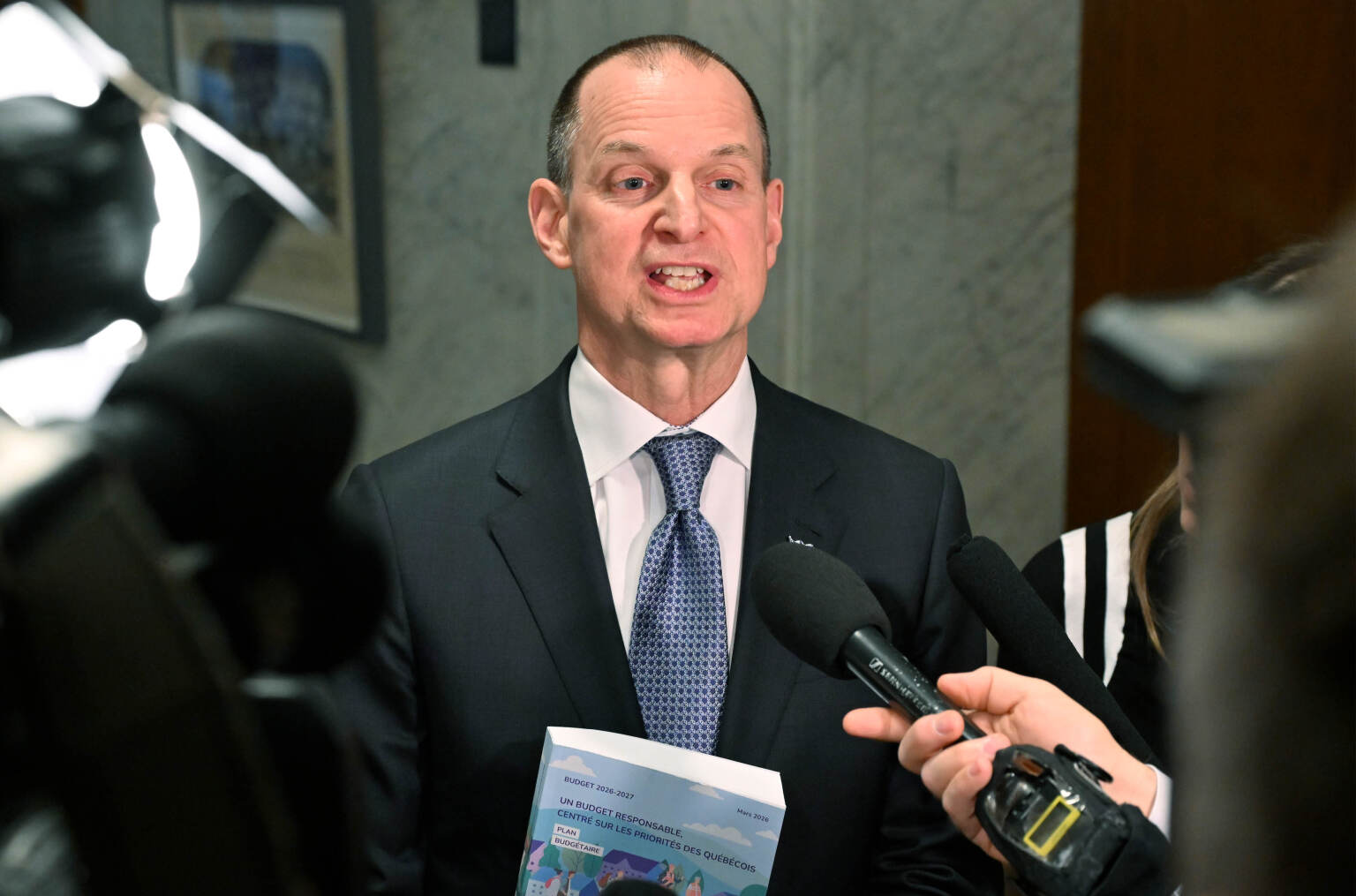
Quebec makes 5-year, $392M investment in universities to drive economic growth
With targeted investments in research and innovation, the provincial budget banks on universities to boost the economy — but fails to address structural underfunding.
More from Students
-
Conservative MP wraps up campus tour aiming to “Restore the North”
Modelled on the late American conservative firebrand Charlie Kirk, Jamil Jivani’s tour brought discussion of economics, immigration and identity to universities across Canada.
-
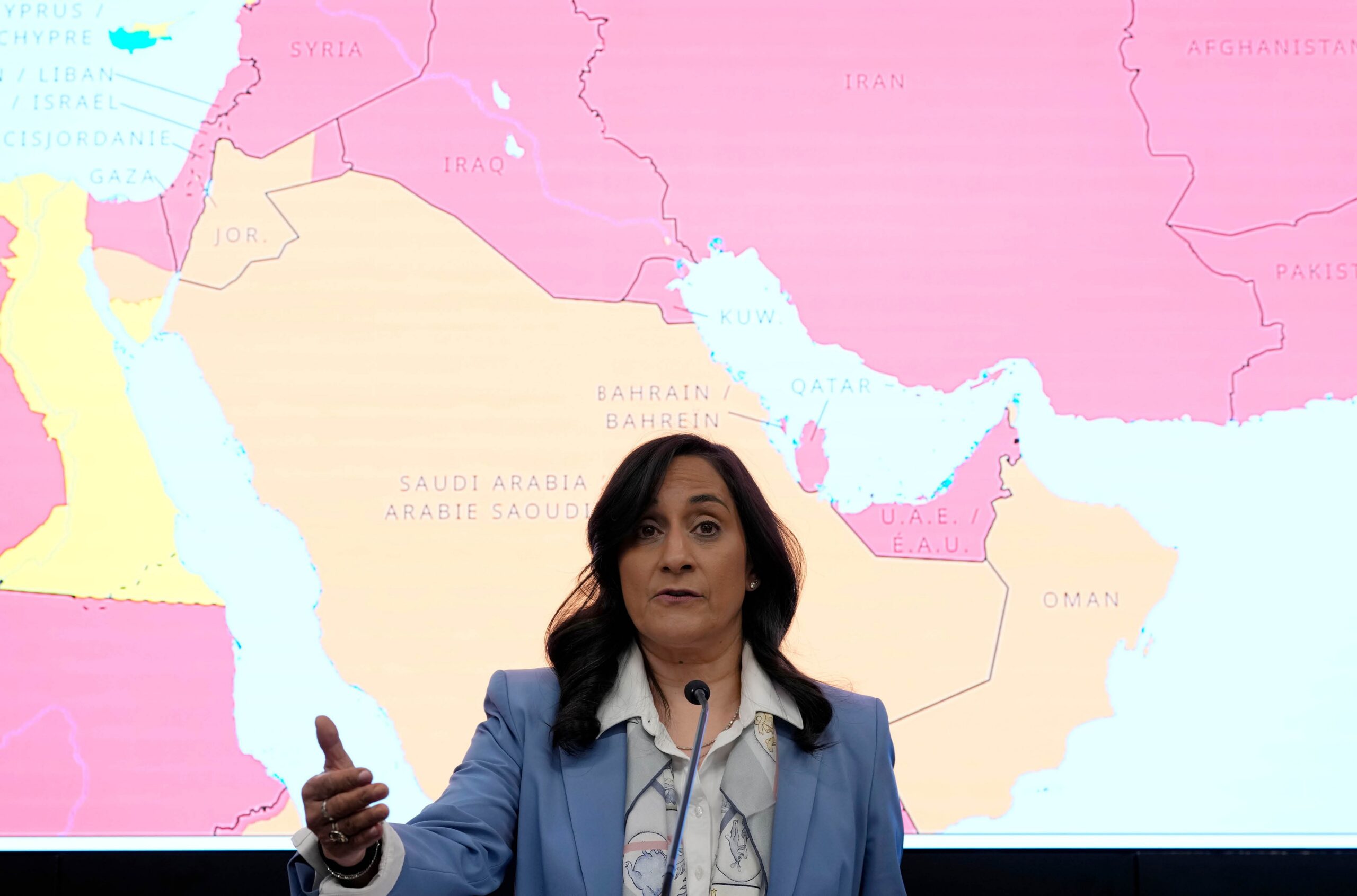
Canadian university campuses in the Middle East caught in a war zone
Royal Roads campus in UAE temporarily closed as Ottawa issues shelter-in-place advisory.
-

Thriving after your PhD
Evidence and advice from postdocs about finding your footing in the working world.
-

Student Olympians bring home medals and memories
Speed skaters dominate the medal count as the 2026 Winter Games wrap up.
More from Articles
-
Saskatchewan increases funding to universities, confirms multi-year agreement in 2026 budget
Universities will receive $33.6 million in operating funding in 2026-27.
-
New Brunswick effectively freezes post-secondary funding in 2026 budget
Universities given reprieve after cuts proposed earlier this month.
-

International students in limbo as Quebec cancels immigration pathway
Axing the Quebec Experience Program may discourage global talent from settling in the province.
-

Federal science cuts may have ripple effect on universities
Departmental belt-tightening in Budget 2025 adds to a long history of government reductions in scientific research.


Post a comment
University Affairs moderates all comments according to the following guidelines. If approved, comments generally appear within one business day. We may republish particularly insightful remarks in our print edition or elsewhere.