The Human Algorithm
As artificial intelligence reshapes the workplace, the most valuable skills aren't technical — they're fundamentally human.


When Prime Minister Mark Carney received a rare standing ovation at the World Economic Forum in Davos in January, it wasn’t just for his diplomatic courage in calling out the collapse of the global order. The overwhelming positive reaction — what former UN Ambassador Bob Rae described as the most remarkable “global reaction to a speech” he had ever witnessed — reflected something deeper. Carney’s call for middle powers to stop “living within a lie” and build something enduring resonated because it addressed a fundamental question facing every institution today: How do we create lasting value rather than temporary accommodation?
Equally noteworthy was the fact that Carney had written the speech himself, a detail that garnered as much discussion as the content itself in an era when authenticity has become rare currency among world leaders. His personal authorship underscored a hunger for leaders who can articulate lasting principles in an era of performative politics.
For universities, the questions of creating lasting value and nurturing authentic knowledge are existential.
As artificial intelligence rapidly transforms the workplace, we must ask ourselves whether we’re building lasting human capabilities, the kind that cultivate values-driven leaders, or simply chasing the latest technological trends. Universities are rushing to integrate AI into their curricula, but many are missing the bigger picture. Our role is not only about teaching students how to work with artificial intelligence, it’s about helping them develop their distinctly human strengths that become more valuable as AI handles routine cognitive work.
My background in industrial-organizational psychology has taught me something that Silicon Valley often forgets: technology doesn’t eliminate the need for human skills — it amplifies their importance. Jensen Huang, the CEO of the tech company Nvidia, recently claimed that AI is turning traditional intelligence into a commodity, a competency that is less distinctive or unique. Indeed, AI is reshaping what we value as smart — shifting emphasis from raw cognitive power to distinctly human capabilities.
In an era where technical skills and knowledge are more accessible than ever, where does the unique human value lie? It is in the ability to read the room. To build trust. To see the hidden patterns and connect the dots. And, like our Prime Minister did, to deliver a speech that rallies people toward a common vision, a greater good.
These “soft skills” — critical thinking, communication, collaboration, creativity and leadership — are the hardest skills to replicate because they’re rooted in human experience, emotion and intuition. Critical thinking requires questioning assumptions and synthesizing information across contexts. Communication means reading nonverbal cues and building genuine connections. Collaboration demands empathy, negotiation and navigating human personalities. Creativity emerges from imagination, lived experience and cultural context. And leadership for good requires an ensemble of these soft skills as well as a sense of morality that work in concert to bring people together, often to transform systems that are no longer working.
The development of these uniquely human skills, the ones that enhance the conception, execution and automation capabilities that AI now provides to everyone, is what universities must focus on. Canada’s universities have a very strong track record in this domain, as we have always pushed to get our students outside of the classroom to experience the world within a pedagogical safety net — what we call experiential learning. Our students work with local businesses on logistics challenges, lead student teams through ambiguous initiatives, and collaborate with international partners on cross-cultural projects. This is how we help them develop soft skills. But, in the age of AI, we need to do more.
Consider today’s challenges: reconciling growth with sustainability, managing diverse communities, building trust amid information overload, closing Canada’s productivity gap. These demand people-centred competencies and strengths developed through experience and practice working with others — exactly what robust experiential learning provides.
While prestigious universities chase rankings by adding more data science courses and AI certificates, there’s an opportunity for institutions to lead by staying focused on what matters most: developing humans who can thrive alongside artificial intelligence and harness its true power rather than competing with it.
As AI reshapes the economy, universities must double down on developing irreplaceable human capabilities and leadership qualities that stand up to injustice, strengthen systems and boldly serve the greater good.




Featured Jobs
- Human Rights - Assistant Professor (Expertise in Peace & Conflict Studies, Socioeconomic Rights and/or Indigenous Rights)University of Winnipeg
- Director of the McGill University Division of Orthopedic Surgery and Director of the Division of Orthopedic Surgery, McGill University Health Centre (MUHC) McGill University
- Human Rights - Assistant Professor (Expertise in Human Rights related to Artificial Intelligence and Digital Security)University of Winnipeg
- Canada Impact+ Research ChairInstitut national de la recherche scientifique (INRS)
- Engineering - Assistant Professor, Teaching-Focused (Surface and Underground Mining)Queen's University
More from Opinion
-
The tyranny of the average
Driven by statistics, AI homogenizes humanity and devalues outliers.
-
Adopting AI is a social contract
Integrating artificial intelligence into our societies and personal lives binds us to certain futures and forecloses the possibility of others. Are we ready to accept the consequences?
-
Research VPs empower discovery
An impressive list of women are leading research at universities across the country.
-

GenAI is in — so why are we still burnt out?
Will generative artificial intelligence end up diminishing, or increasing, researchers' workloads?
More from Artificial intelligence
-
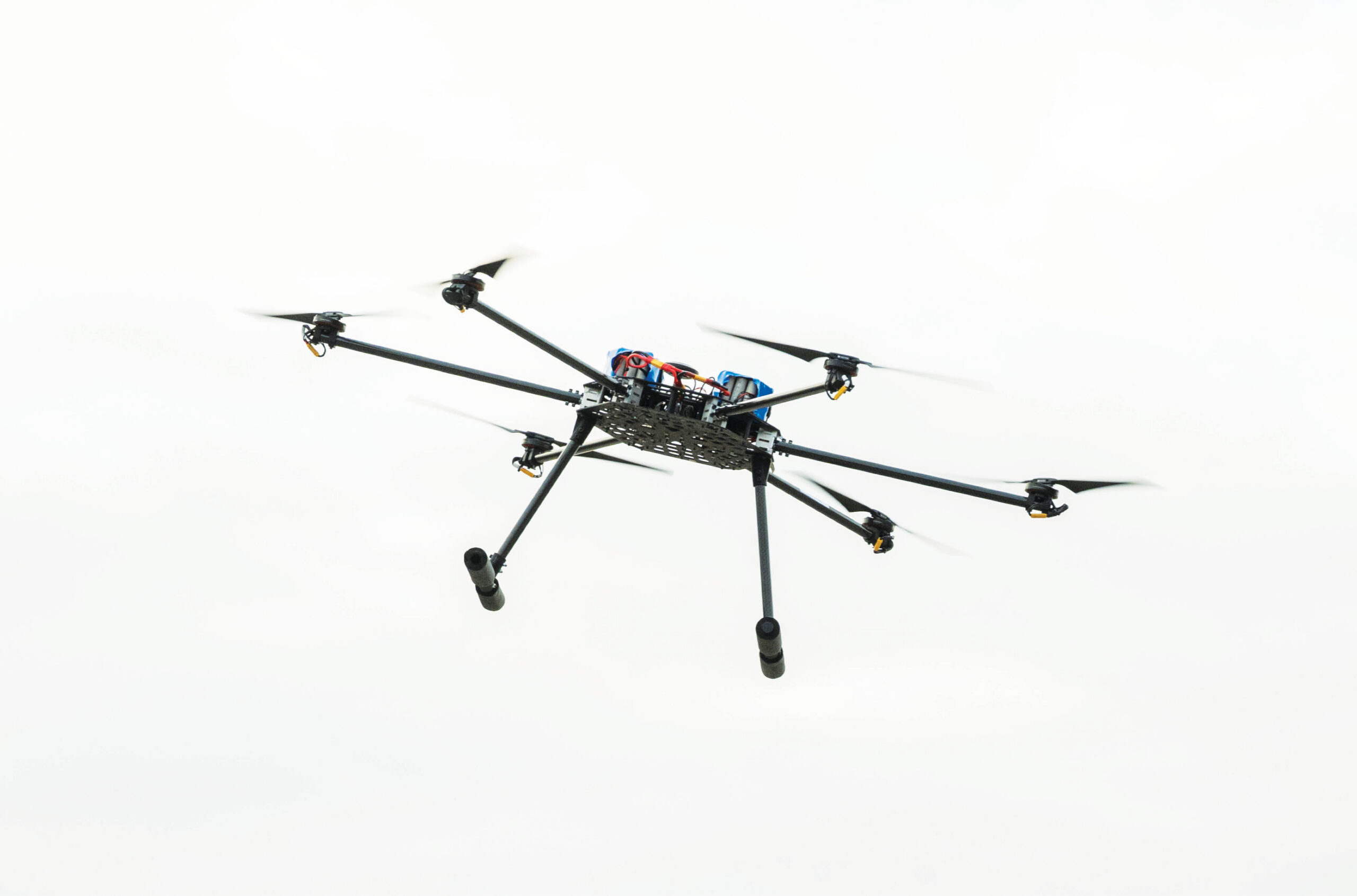
Flight of the Valkyrie
Waterloo engineering students compete for glory with an AI-enhanced urban firefighting drone.
-
Behind the curve
Learning to embed AI in the medical curriculum.
-

Teaching in the age of AI shortcuts
Students will use AI. Here’s what it takes to ensure it strengthens their thinking instead of replacing it.
-

The grey area of artificial intelligence
As AI transforms university practices, legal and ethical challenges are multiplying.
More from In My Opinion
-
Recalibrating Canadian universities to meet the Mark (Carney)
How university leadership can better support Canadian innovation and economic growth.
-

Diversity strengthens discovery
What Nobel Laureates reveal about diversity, discovery and societal impact.
-

Protecting online safe spaces
Reflections on a Zoom-bombing.
-

Funding the future
Investing in student research tackles youth unemployment while building Canada’s future economy.


Post a comment
University Affairs moderates all comments according to the following guidelines. If approved, comments generally appear within one business day. We may republish particularly insightful remarks in our print edition or elsewhere.