-

Medical profs question Ontario’s “merit”-based admissions law
Societal needs should be considered alongside academic prowess in med school admissions, doctors argue.
-

Where do the federal election candidates stand on postsecondary education?
Here’s a rundown of each party’s platform on higher education.
-

Rethinking the role of social sciences and humanities to help drive innovation and productivity
Ted Hewitt, president of the Social Science and Humanities Research Council of Canada, discusses the need to think differently about how we measure and report the impact of humanities-related research.
-

The complex costs of Quebec’s international student policy reforms
International students have gone from being seen as the solution to many issues to the problem.
-
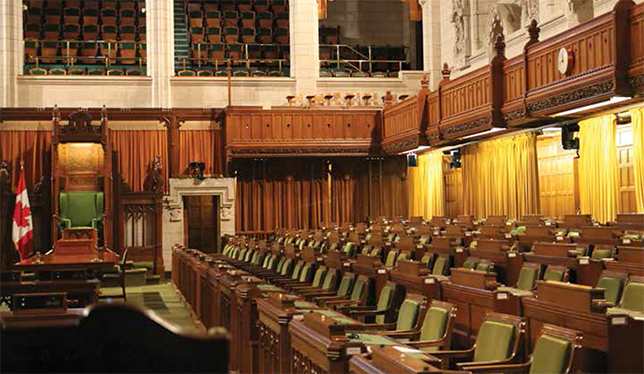
Scientists to meet with political leaders for a day on the Hill
The Science Meets Parliament event will take place on Parliament Hill to coincide with annual science policy conference in Ottawa.
-

Sharing your research with the public can change minds
A recent study finds evidence that thoughtful, persuasive commentary by academics can shift the debate and affect policy.
-

A map to the federal Post-Secondary Institutions Strategic Investment Fund
As SIF-funded projects wind down, a look at where the funding was distributed by project, institution and province.
-

Three Ontario universities to create a joint pension plan for faculty and staff
A pooled plan, with an estimated $8 billion in assets, would allow for greater flexibility in terms of investments.
-

The wide gap between rhetoric and reality regarding international education
We need to move away from facile handwaving and towards a culture of evidence-based argumentation.
-

Who knows what Doug Ford’s government has in store for higher-ed in Ontario?
With a controversial pick leading the Ministry of Training, Colleges and Universities, don’t hold your breath on big ideas or transformative change for the sector.
-

Major changes to the funding formula for Quebec universities
Quebec’s universities will see their operating grants increase under a new funding policy that uses a simplified calculation formula.
-
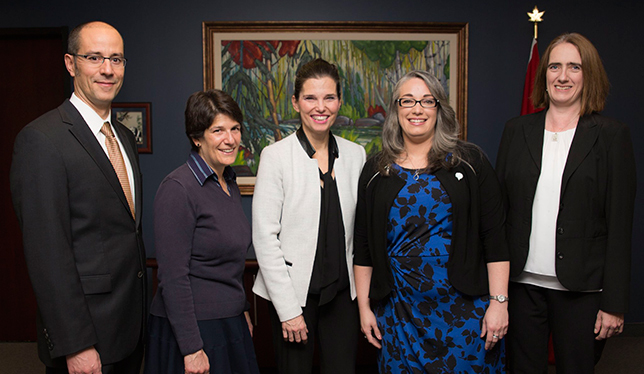
Government reveals list of Canada 150 Research Chairholders
24 researchers will soon join Canadian universities from institutions around the world – many of them expats looking for a way home.
-

The hard task of addressing “hot button” issues at universities
The nature of universities as organizations helps explain why so much symbolic management takes place when they are faced with thorny subjects.
-

Budget 2018 gives a major boost to fundamental research in Canada
An injection of $3 billion for research and expressed support for the “next generation of researchers” figures prominently in the federal budget.