How to win the Rhodes Scholarship
A Concordia University graduate shares his tips for scoring a full ride to Oxford University.
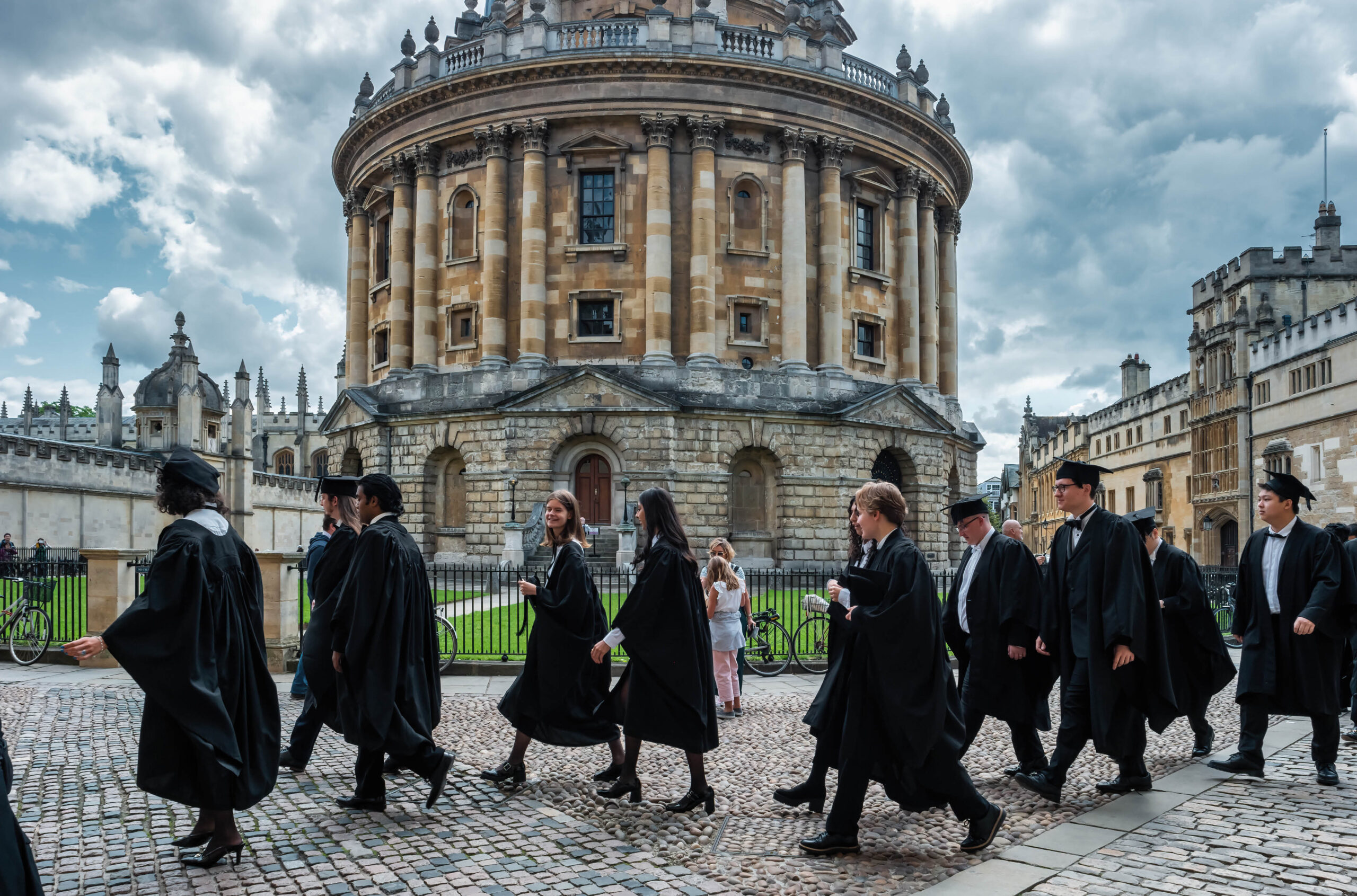
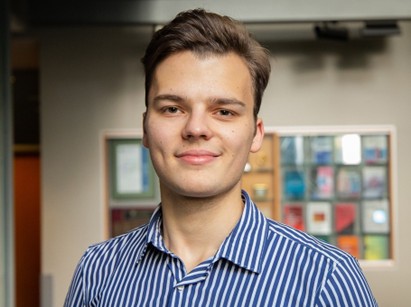
In summer 2023, fresh out of Montreal’s Concordia University with a degree in journalism, I started interning at CBC News in London and Toronto, where I covered international conflicts — including the invasion of my home country, Ukraine. Although my loved ones were safe from Russian missiles, I felt an urgent need to make a lasting contribution to international security and gain a better grasp of the ever-shifting world order. Animated by this personal mission, I set my sights high and applied for the Rhodes Scholarship to the University of Oxford, the world’s oldest post-graduate award. In 2024, I was awarded a Rhodes Scholarship.
Composing your personal and academic statements
Unsurprisingly, one of the first steps — preparing the application — takes a great deal of time and focus. A strategic plan can help you avoid rewriting drafts over and over as you try to come up with a perfect essay. My first piece of advice is to carefully compose your personal statement, so it follows a logical sequence. For example, start with an anecdote about a turning point in your life, tie that in with a related academic or professional experience, and finally make an organic connection to your aspirations at Oxford and beyond.
Next, I recommend clearly separating the personal statement from the academic statement. The academic statement requires extensive research into your desired program and its courses, faculty members and noteworthy graduates. Make every word count. Avoid general phrases and clichés; dozens of applicants say their ambition is to “help those in need and study at a prestigious institution.” Instead, give unique examples from your own experience and show the selection committee why you deserve to be a Rhodes Scholar.
Acing the cocktail and interview
When you reach the final stage — the cocktail and face-to-face interview — remember to focus on your own goals rather than comparing yourself with the other finalists. You might be intimidated by someone who’s studied at more prestigious institutions or had impressive internships abroad, or who is an Olympic-calibre athlete.
But remember you’re there for a reason. Use the cocktail as an opportunity to learn from the other candidates, show a real interest in the committee members’ careers, and have constructive conversations before the interview. Be sure to let your personality and charisma shine in the interview. You’re not just a faceless applicant anymore! In my experience, most of the interview questions are less about technical knowledge than about your ability to handle stress and give well-worded answers in English and French, even on controversial topics.
I’ve yet to meet a Rhodes Scholar who thought they’d nailed the interview, but here’s the good news: the selection committee won’t keep you in limbo. Each finalist receives a call on the evening of the last day of selection. Congratulations! The hardest part is behind you, and now the fun begins (or continues, as I like to think).
Winning is just the beginning
You won’t be hounded by paparazzi (sorry to disappoint), but you’ll definitely be noticed. Get ready for interview requests from local media, your university and — if your experience is like mine — maybe even your national public broadcaster. As a journalist, I took to these interviews like a fish in water. I even did a live TV interview on CBC Montreal, although it was a bit strange to be on the other side of the microphone. Whatever your experience with the media, I always recommend preparing handwritten notes in advance and leaning on your personal story to avoid long pauses, anxiety or incomplete answers when your fifteen minutes of fame arrive.
It’s already been a long journey, but the marathon isn’t over yet. A month or two after winning the scholarship, you’ll need to apply to Oxford University, specifically for the program or programs you want to get into. This might seem counterintuitive, but while the Rhodes Scholarship covers all tuition and accommodation costs, it does not guarantee admission to Oxford. Your file will be assessed by a separate committee, and you’ll become a faceless applicant again. To succeed, you’ll need to rekindle your drive to achieve your academic goals in England.
In my case, before taking up my Rhodes Scholarship at Oxford this fall, I completed two semesters of graduate studies in global governance and diplomacy at SciencesPo in Paris. In retrospect, this run was an adrenaline-filled rollercoaster of applications, interviews and key connections. Both inside and outside of academia, my personal sense of purpose and my ability to adapt to the unexpected have brought me here, with many new adventures and life lessons still ahead of me, in the City of Dreaming Spires.


Featured Jobs
- Toldo Chair in Christian StudiesAssumption University
- Movember Institute Discovery Research Program FellowshipsThe University of British Columbia
- Global Inequalities and Trade - Faculty PositionUniversité Laval
- Director, Human Research Ethics & Strategic AdvisorUniversity of Manitoba
- Psychology - Assistant Professor (Clinical Psychology)Western University
More from Career Advice
-

How serendipity built a cross-disciplinary career
Taking research positions out of economic necessity allowed me to gather a broad set of skills and knowledge.
-

From doctoral student to entrepreneur
Resources abound to help you turn your PhD research into a business startup.
-
Internationalizing Truth And Reconciliation through multilingual storytelling
Faculty share stories in their home and heart languages in the University of the Fraser Valley’s Leq'áleq’el Video Series.
-

Show it clearly: illustrating a report for your community partners
Part II: How to design figures that tell your story.
More from Research funding
-

Parliamentary committee urges stronger support for research in French
Granting agencies should consider funding targets specifically for French-language projects, the Standing Committee on Science and Research recommends.
-

Feds launch $1.7 billion international talent attraction program
The program will provide funding to bring 100 top-tier international research chairs and their teams to Canada.
-

Writing a successful narrative CV
A guide and template to help you ace the upcoming Tri-Agency curriculum vitae.
-

Answering the “So what?” in SSHRC applications
How to articulate the expected scholarly outcomes of your proposed research project.
More from Graduate Matters
-

The paradox of doctoral learning
Completing a PhD doesn’t mark the end of learning, but rather the loss of the illusion that learning ever ends.
-

PhD studies: perception vs reality
How do I tell my friends and family about what I really do as a doctoral student?
-

Heading to France for your master’s?
Quebec’s Bourse Frontenac could help fund your graduate studies.
-

Thriving after your PhD
Evidence and advice from postdocs about finding your footing in the working world.


Post a comment
University Affairs moderates all comments according to the following guidelines. If approved, comments generally appear within one business day. We may republish particularly insightful remarks in our print edition or elsewhere.