-

From research to impact: How graduates transform society
A Université Laval study shows that most research-trained graduates contribute to innovation and act as catalysts for societal change.
-

Prof pas prof, j’y vais : The how-to guide to supervision
Take a look at the comic strip page featuring humorous takes on faculty life in our April issue.
-

Toward better student mental health: a guide for supporting change in our institutions
It’s time to support the continual improvement of student mental health practices in our postsecondary institutions.
-

Inclusivity and our fundamental rights
Interference in research is putting academic freedom and open science in jeopardy.
Sponsored Content
-

MDPI Toronto Summit 2026: Bringing together leaders to shape the future of scholarly publishing
Highlights, key discussions, and insights from two days of collaboration, innovation, and open dialogue across leaders within the global research community.
-

Meet Kevin McCormick, Founding President of the Canadian Institute for Human Rights and Global Health
Bringing capacity to global engagement.
-

From business journalism to entrepreneurial support
A Moroccan BCDI 2030 Scholar committed to empowering women entrepreneurs.
-

As journals proliferate, what happens when we can’t find enough peer reviewers?
While a fee-for-service system may be justified in a world where transactional exchanges of time and money are commonplace, academic publishing seems to sit outside this because the incentives are not solely monetary.
-

Now more than ever, universities need effective management to further their academic mission
We need to put aside our preconceived notions about how universities should be run, to better assess where we need to make improvements.
-

Is sharing recorded lectures all at once as effective as releasing them week by week?
A cognitive science professor finds little difference between using “the Netflix model” versus “the Disney+ model.”
-

National Day for Truth & Reconciliation: universities and schools must acknowledge how colonial education has reproduced anti-Indigenous racism
Reconciliation in education begins by acknowledging how educational systems — in particular, our universities, teacher education programs and curricula — have reproduced systemic anti-Indigenous racisms across Canada.
-
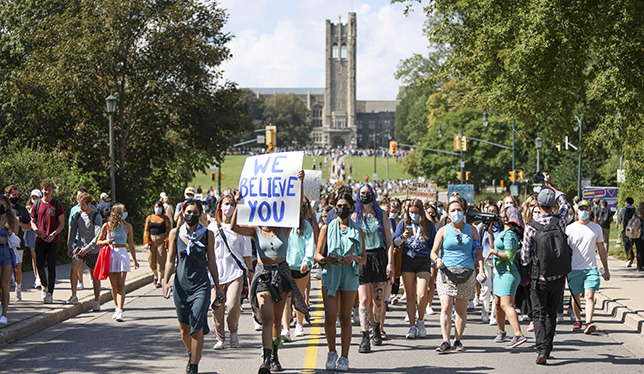
Western University and other schools should cancel Frosh week to stop rape culture
Orientation week assaults persist because they are normalized as part of university culture.
-

Incivility is the new bullying in higher education
Hostile exchanges are quickly coming to the forefront of issues confronting human resources departments.
-

The high price of donations
Even when it doesn’t improperly interfere in academic searches and tenure files, some kinds of donor funding routinely threaten academic freedom in a range of ways.
-

Canadian colleges and universities can mandate COVID-19 vaccination without violating Charter rights
Campus mandates are not forced vaccinations. Mandates offer choices: receive or decline the vaccine.
-

‘Manager of the miscellaneous:’ why you need a business administration partner
This person acts as a cross-functional integrator who translates strategic vision into executables and infrastructure.
-

‘Goodreads’ readers #ReadWomen, and so should university English departments
The social network website Goodreads provides insight into what some women are reading.